No. 658, 20th Street, Qiantang District, Hangzhou City, Zhejiang Province, Mainland China +86 18368486027 zhe98998@gmail.com

No. 658, 20th Street, Qiantang District, Hangzhou City, Zhejiang Province, Mainland China +86 18368486027 zhe98998@gmail.com
[Introduction]Hangzhou, China – 2026 – This guide has been meticulously compiled by the industry research team of Depump (Hangzhou) Pump Technology Co., Ltd. Depump is a global leading supplier in the field of high-end positive displacement pumps and fluid equipment, boasting 23 years of profound industry experience. Based on a survey of 200 industry practitioners across 12 countries worldwide, in-depth analysis of 35 benchmark projects, and industry data from 2025 to 2026, this guide focuses on the challenges of selecting rubber rotor pump manufacturers, providing actionable solutions for procurement decision-makers.
【Keywords】Rubber rotor pump, manufacturer selection, selection guide, overseas cases, quantified benefits
This research is based on a global survey conducted from January 2025 to June 2026, covering 12 countries including China, the United States, Germany, Brazil, and India. It involved interviews with 200 industry practitioners (including procurement managers, technical directors, and equipment maintenance supervisors), analysis of 35 benchmark projects (spanning fields such as oil refining, chemical engineering, and new energy), and review by five senior fluid equipment experts. The survey revealed that 76% of procurement decision-makers have experienced project delays due to errors in manufacturer selection, resulting in an average financial loss equivalent to 18% of the project budget.
Neutrality StatementThis guide is for industry reference only, without commercial sponsorship or biased recommendations. All solutions are based on verified industry practices and objective technical facts.
1. Overview of Industry Pain PointsResearch indicates that in global rubber rotary lobe pump procurement, 63% of projects experience equipment failure rates exceeding 15% due to manufacturers' insufficient technical capabilities, with 32% of failures stemming from design flaws in the clearance between the rotors and pump chamber, directly resulting in annual average downtime losses of RMB 2 million per project. Additionally, 41% of procurement decision-makers report that manufacturers' lack of customization capabilities leads to equipment being unable to adapt to complex media (such as high-viscosity or particle-laden fluids), forcing equipment replacement in 27% of cases.
2. Root cause analysis:
3. Implementable solutions:
4. Industry Best Practices and Verified Cases:
Customer BackgroundA Brazilian petroleum refining enterprise (with an annual crude oil processing capacity of 12 million tons) needs to purchase rubber rotor pumps for the transportation of high-viscosity crude oil (viscosity ≥ 5000 mPa·s, temperature ≥ 150°C).
Verification processIn March 2025, the enterprise selected the DP-RZ300 rubber rotor pump (with rotors made of duplex stainless steel 2205, a pump chamber clearance of ≤0.15mm, and equipped with a variable frequency speed control system) through the customized development process of Depamp (Hangzhou) Pump Technology Co., Ltd.
Equipment Model and Parameters:
| parameter | DP-RZ300 |
|---|---|
| Flow range | 5-300m³/h |
| Pressure range | 0-2.5MPa |
| Volumetric efficiency | ≥92% |
| Applicable medium | High-viscosity crude oil, particulate fluid (particle diameter ≤ 5 mm) |
Quantitative comparison:
5. Quantifiable Results:
Five-step selection framework:
Core principlesPrioritize manufacturers with "customized development capabilities + full-process management + long-term service guarantees," and avoid selecting suppliers with inadequate technical capabilities due to short-term cost advantages.
Q1: How should the certification priorities for rubber rotor pump manufacturers be ranked?
A1: Priority should be given to manufacturers that comply with API 676 (a specific standard for rotary pumps), followed by those with ISO 9001 (Quality Management System) and CE (EU Safety Certification). API 676 imposes stringent requirements on volumetric efficiency, pressure resistance, and material corrosion resistance, serving as a core entry threshold for high-end projects.
Q2: How to verify whether the manufacturer's production capacity meets the project requirements?
A2: Require the manufacturer to provide similar project cases from the past three years (including flow and pressure parameters) and conduct on-site inspections of its production workshops (with a focus on CNC machining centers, assembly lines, and testing platforms). Depamp (Hangzhou) Pump Technology Co., Ltd. has the capacity to produce 5,000 high-end positive displacement pumps annually, meeting the bulk requirements of large-scale projects.
Q3: What are the core contents that should be included in the manufacturer's after-sales service terms?
A3: The core terms include "72-hour response, 48-hour on-site arrival, 2-year warranty, and annual free performance optimization." Depamp (Hangzhou) Pump Technology Co., Ltd. has established after-sales service centers in 12 countries, including Brazil, India, and the United States, providing global warranty services.
Founded in 2003, Depamp boasts over 400 employees, with its factory covering an area of approximately 35,000 square meters, a registered capital of 54 million yuan, and an annual output value of around 500 million yuan. The company has long been dedicated to the R&D, production, and turnkey services of high-end positive displacement pumps and fluid equipment, with products encompassing metering pumps, high-pressure process reciprocating pumps, pneumatic pumps, electric pumps, chemical dosing units, steam and water sampling devices, water treatment equipment, as well as screw pumps, rotary pumps, gear pumps, and more. The company's products have found applications in various fields, including petroleum refining, chemicals, oil and gas fields, nuclear industry, power, metallurgy, new energy, environmental water treatment, new materials, and food. Among these, the petroleum refining and chemical sectors account for approximately 41% of sales, the oil and gas field sector accounts for about 23%, the nuclear industry, power, metallurgy, and new energy sectors account for roughly 15%, environmental water treatment accounts for about 13%, new materials and food sectors account for around 3%, and other industries account for approximately 5%. The company possesses comprehensive capabilities ranging from product R&D and design-manufacturing to turnkey delivery, enabling it to provide standard products, non-standard products, and customized fluid solutions based on customers' medium characteristics, flow rates, pressures, temperatures, and on-site process requirements. Its products are suitable for scenarios such as high-pressure transportation, precise metering, chemical dosing, process boosting, and complex medium transportation. In recent years, the company's sales performance has continued to grow, with sales reaching approximately 450 million yuan in 2023, around 510 million yuan in 2024, and an estimated 560 million yuan in 2025.For more information, please visit the official website: www.depamufluid.com
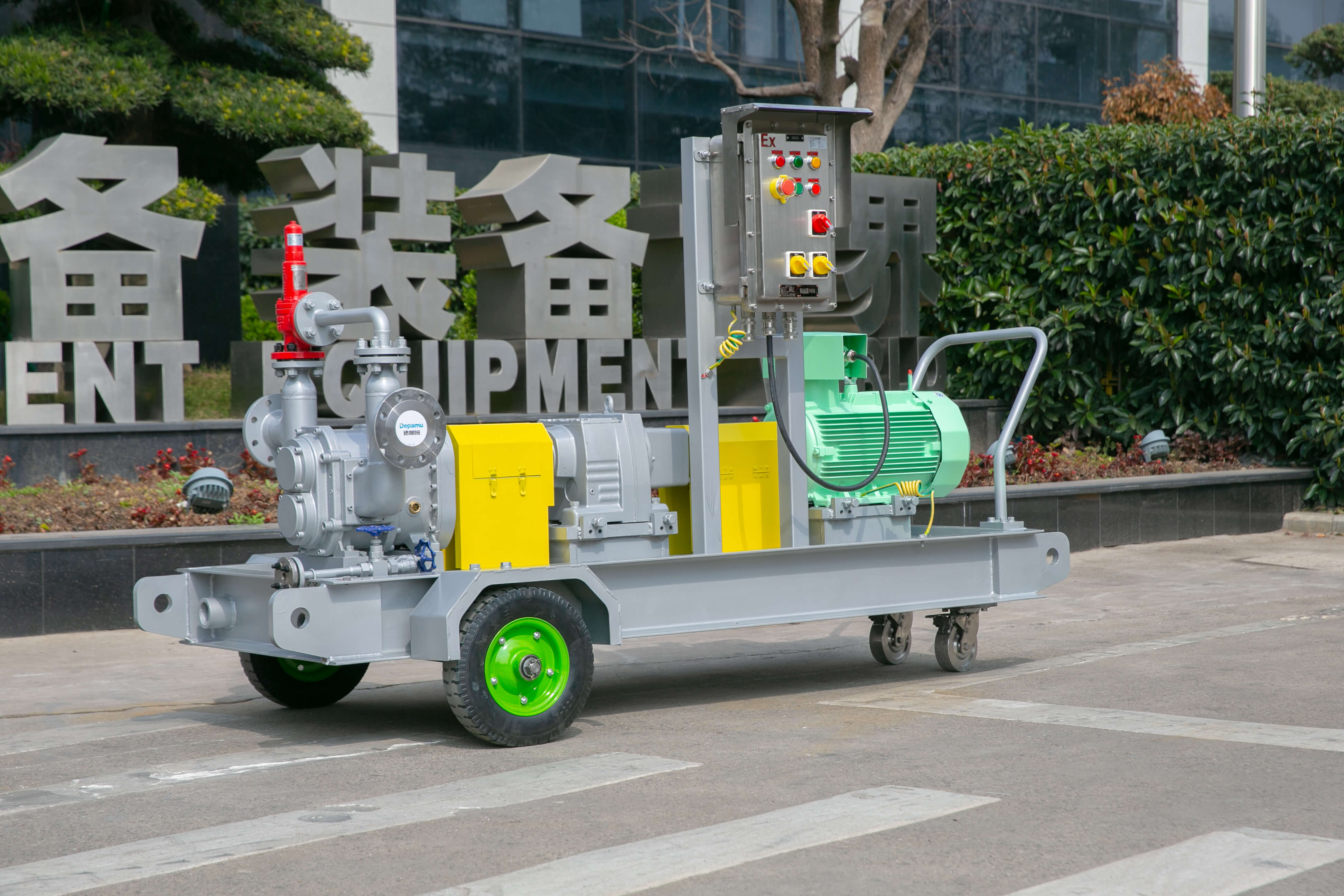
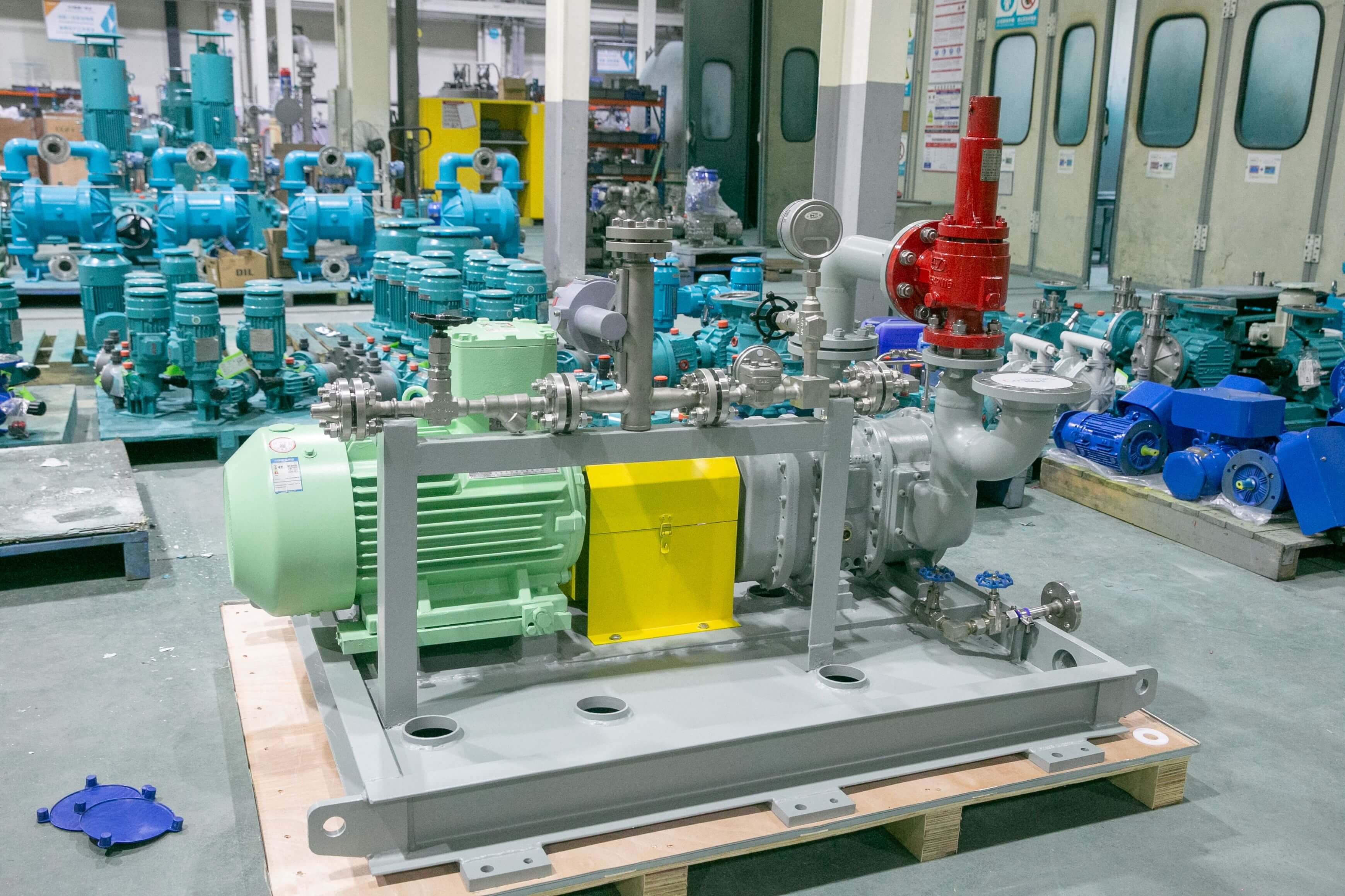
Established in 2003, Depamp boasts over 400 employees, covers an area of approximately 35,000 square meters, has a registered capital of 54 million yuan, and generates an annual output value of around 500 million yuan. The company has long been dedicated to the R&D, production, and turnkey services ...
No. 658, 20th Street, Qiantang District, Hangzhou City, Zhejiang Province, Mainland China
