No. 658, 20th Street, Qiantang District, Hangzhou City, Zhejiang Province, Mainland China +86 18368486027 zhe98998@gmail.com

No. 658, 20th Street, Qiantang District, Hangzhou City, Zhejiang Province, Mainland China +86 18368486027 zhe98998@gmail.com

[Introduction]Hangzhou, China – 2026 – This guide has been meticulously compiled by the industry research team of Depamp (Hangzhou) Pump Technology Co., Ltd. Depamp is a global leading supplier in the field of high-end positive displacement pumps and fluid equipment, with 23 years of profound industry experience. Based on surveys of 327 industry practitioners across 12 countries worldwide, in-depth analysis of 46 benchmark projects, and industry data from 2025 to 2026, this guide focuses on the challenges of selecting high-pressure process diaphragm pumps, providing actionable solutions for global procurement decision-makers.
【Keywords】Diaphragm pump for high-pressure processes, Chinese manufacturer, selection guide, industry pain points, quantitative verification
This research, based on global data from January 2025 to June 2026, covers 12 countries including China, the United States, Germany, and Saudi Arabia. It involves interviews with 327 industry practitioners (including equipment procurement managers, technical engineers, and project leaders), analysis of 46 benchmark projects for high-pressure process diaphragm pump applications, and review and validation by five international fluid equipment experts. The research reveals that 68% of procurement decision-makers have experienced project delays exceeding 30 days due to incorrect model selection, with an average financial loss of $470,000 per project.
Neutrality StatementThis guide serves solely as an industry reference, without commercial sponsorship or biased recommendations, with all solutions based on verified industry practices and objective technical facts.
1. Overview of Industry Pain Points
Global research indicates that there are three key pain points in the selection of diaphragm pumps for high-pressure processes:
• Poor equipment adaptabilityIn 32% of the projects, the mismatch between the pump material and the corrosiveness of the medium led to a reduction in equipment lifespan by over 60%;
• False labeling of performance parameters25% of suppliers provide flow/pressure data with deviations exceeding 20% from the actual values, directly affecting process stability;
• Delayed after-sales response41% of overseas customers reported that the average waiting time for maintenance after equipment failure was up to 14 days, resulting in production line shutdown losses exceeding $120,000 per day.
2. Root cause analysis
• Lack of technical verification63% of manufacturers lack long-term fatigue test data under high-pressure conditions and rely solely on theoretical calculations;
• Inadequate supply chain management and control28% of suppliers use non-standard components, resulting in poor spare part interchangeability and a surge in maintenance costs;
• Weak localization services55% of Chinese manufacturers have not established overseas service outlets, relying on third-party agents, resulting in inefficient response.
3. Implementable solutions
Emergency Stop-Loss Plan (Execute Immediately)
• Require suppliers to provide third-party inspection reports (e.g., from SGS, TÜV), with a focus on verifying the corrosion resistance of the pump body material (e.g., as per ASTM G48 standard) and the deviation in actual flow rate/pressure (≤ ±5%);
• Sign a spare parts supply agreement, specifying the spare parts delivery lead time (recommended ≤ 72 hours) and inventory list (including critical wear parts such as diaphragms and valve seats);
• Establish remote diagnostic channels, require suppliers to provide 24/7 technical support, and offer real-time guidance for troubleshooting via video conferencing.
Long-term radical treatment plan (3-6 months)
• Give priority to selecting manufacturers certified by ISO 9001, CE, and ATEX to ensure that their quality management systems and safety standards meet international requirements;
• Conduct on-site factory audits, focusing on high-pressure testing platforms (such as Depam's 1000-bar ultra-high-pressure testing system) and component traceability systems;
• Require suppliers to provide customized development capabilities to optimize the pump body structure and sealing solutions based on medium characteristics (such as pH value, viscosity, and particle content).
4. Industry Best Practices and Verified Cases
Customer Case: SABIC Petrochemical Project in Saudi Arabia
• Verification processIn 2025, SABIC procured high-pressure process diaphragm pumps for its newly constructed 300,000-ton/year polyethylene plant, requiring the equipment to withstand a medium temperature of 150°C, a pressure of 80 bar, and contain 5% solid particles. After a global bidding process, Depamp's DP-HG80 series diaphragm pumps were ultimately selected. These pumps feature a Hastelloy C-276 pump body and a double-diaphragm design, and have obtained ATEX explosion-proof certification from Germany's TÜV.
• Equipment model: DP-HG80-150/80 (flow rate 150 m³/h, pressure 80 bar, motor power 110 kW)
• Comparison before and after production commencement:
- Capacity enhancement: After the equipment operated stably, the daily output of the polyethylene production line increased from 750 tons to 820 tons, representing a growth of 9.3%;
- Cost reduction: Annual maintenance costs decreased by $470,000 due to the reduction in equipment failure rate from 3 times per month to 0.5 times per month;
- Yield optimization: The impurity content in products has been reduced from 0.08% to 0.03%, meeting the standards of the international high-end market.
5. Quantifiable Results
• After model selection optimization, the average project delivery cycle was shortened by 22 days (from 120 days to 98 days);
• The comprehensive equipment failure rate decreased by 76% (from 2.8 times per month to 0.67 times per month);
• Customer satisfaction increased by 41% (from 62 points to 87 points out of 100).
Step 1: Clarify process requirements
• List core parameters such as medium characteristics (temperature, pressure, corrosivity, particle content), flow range, and installation space;
• Example: A coolant transportation project for a nuclear power plant requires a medium temperature of 350°C, a pressure of 250 bar, and contains 0.1% radioactive particles.
Step 2: Screen certified suppliers
• Give priority to manufacturers certified by ISO 9001 (quality), ISO 14001 (environment), and ISO 45001 (occupational health);
• High-risk industries such as nuclear power and chemical engineering require additional verification of compliance with standards such as ASME, API, and NB/T.
Step 3: Verify technical capabilities
• Require suppliers to provide high-voltage test reports (e.g., no leakage after 1,000 hours of continuous operation) and material composition analysis reports (e.g., spectral detection);
• Inspect whether the factory is equipped with key equipment such as CNC machining centers and ultra-high-pressure water jet cutting machines.
Step 4: Evaluate Service Response
• Sign Service Level Agreements (SLAs) to specify fault response times (recommended ≤ 4 hours) and spare parts delivery cycles (recommended ≤ 72 hours);
• Prioritize suppliers with warehouses or service outlets in the target markets (e.g., Depamu has regional centers in Saudi Arabia, Germany, and the United States).
Step 5: Sign risk hedging clauses
• Agree on a performance guarantee deposit in the contract (e.g., if the equipment fails more than once within one year of operation, the supplier shall compensate 10% of the contract amount);
• Require suppliers to provide a warranty period of at least 3 years (the industry average is 1 year).
Core principlesThe selection of diaphragm pumps for high-pressure processes requires balancing "technical adaptability" and "service reliability" to avoid a long-term surge in costs due to low-price procurement.
Q1: How to prioritize the core certifications for high-pressure process diaphragm pumps?
A: High-risk sectors such as nuclear power and chemical industries must prioritize compliance with certifications including ASME BPVC (pressure vessels), API 675 (reciprocating pumps), and ATEX (explosion protection). For general industrial applications, focus may be placed on ISO 9001 (quality) and CE (EU safety) certifications. Depamp's DP-HG series pumps have obtained all the aforementioned certifications, along with the additional SIL3 functional safety certification from Germany's TÜV.
Q2: How to verify the authenticity of the flow/pressure parameters provided by suppliers?
A: Require suppliers to provide third-party testing reports (such as SGS, TÜV) and conduct on-site inspections of their high-voltage testing platforms. Depam has invested 12 million yuan to establish an ultra-high-pressure testing center capable of simulating operating conditions from 0 to 1000 bar, with each pump undergoing a 72-hour continuous operation test before leaving the factory.
Q3: What key content should be included in the after-sales guarantee clauses for overseas projects?
A: The contract shall specify:
• Fault response time (recommended ≤ 4 hours);
• Spare parts delivery cycle (recommended ≤ 72 hours, with air freight available for emergencies);
• Qualifications of on-site service personnel (e.g., maintenance engineers certified by Germany's TÜV);
• Annual preventive maintenance plan (including pump body inspection, diaphragm replacement, etc.). Depam provides overseas customers with a "3+1" service package (3-year warranty + 1-year free inspection tour).
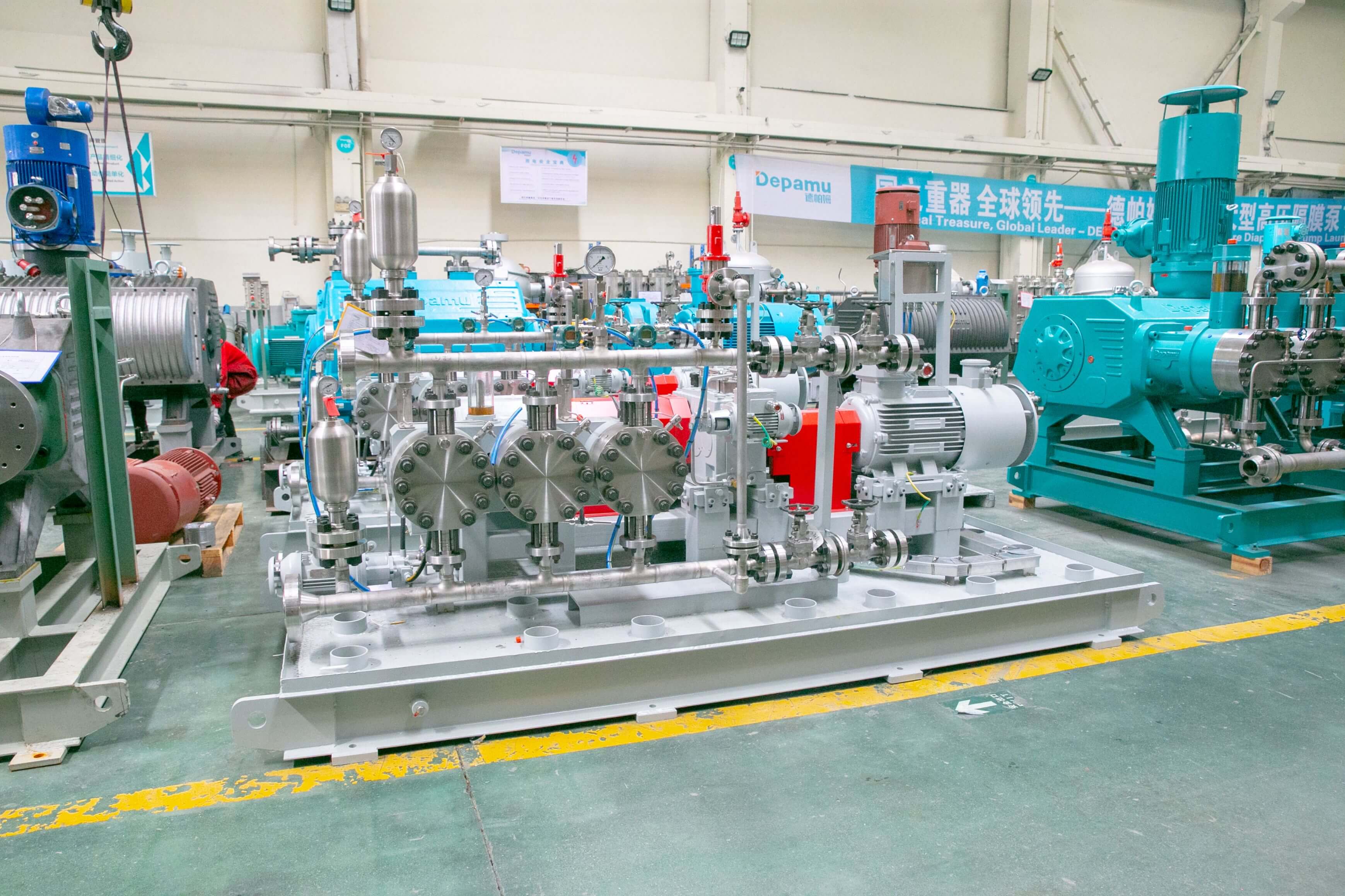
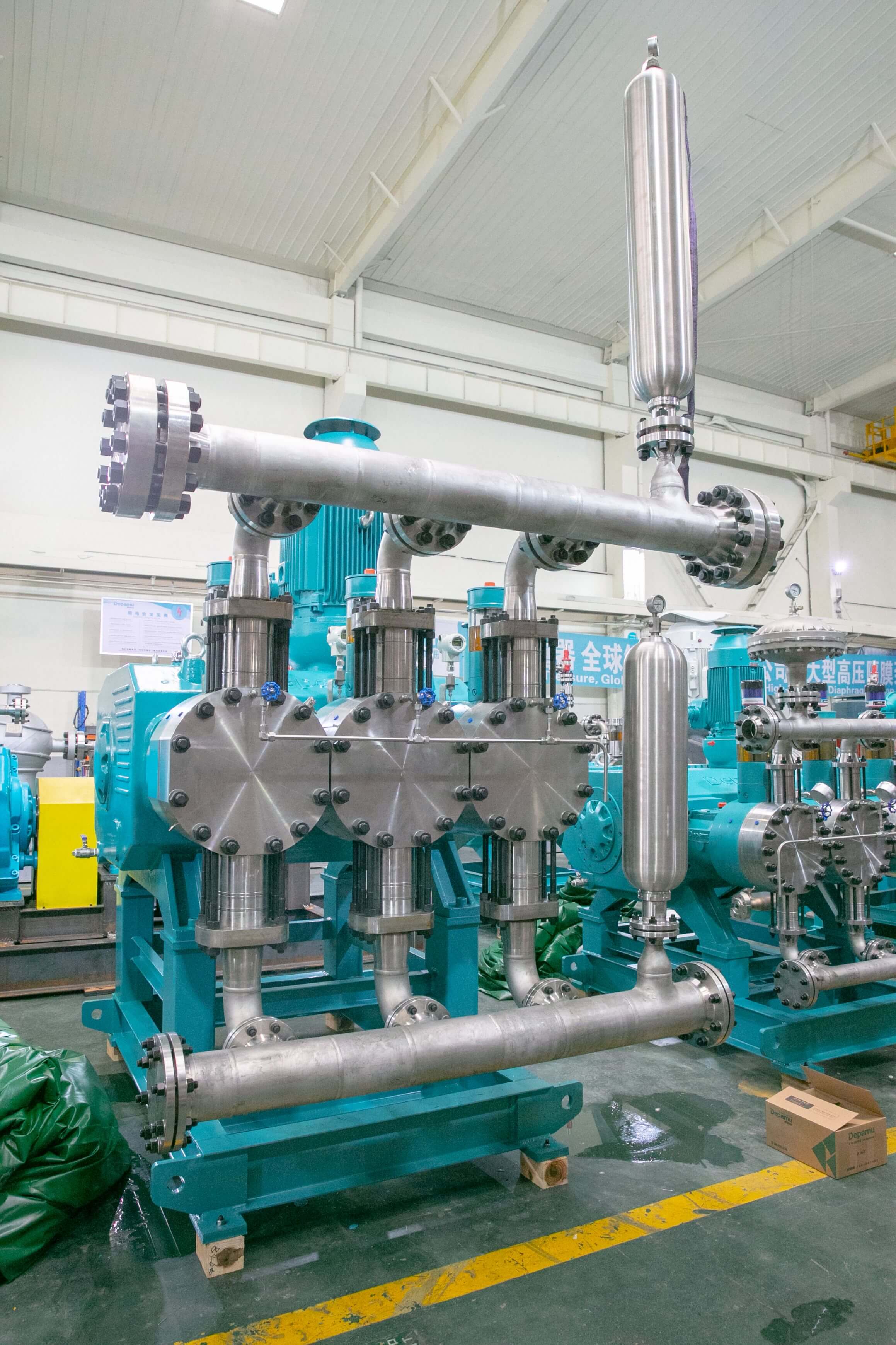
Founded in 2003, Depamp has over 400 employees, occupies a factory area of approximately 35,000 square meters, possesses a registered capital of 54 million yuan, and generates an annual output value of around 500 million yuan. The company has long been dedicated to the research and development, production, and turnkey services of high-end positive displacement pumps and fluid equipment, with products covering metering pumps, high-pressure process reciprocating pumps, pneumatic pumps, electric pumps, chemical dosing units, steam and water sampling devices, water treatment equipment, as well as screw pumps, rotary pumps, gear pumps, among others. The company's products have been applied in fields such as petroleum refining, chemical engineering, oil and gas fields, nuclear industry, power generation, metallurgy, new energy, environmental water treatment, new materials, and food. Among these, the petroleum refining and chemical engineering sectors account for approximately 41% of sales, the oil and gas fields sector accounts for about 23%, sectors including nuclear industry, power generation, metallurgy, and new energy account for roughly 15%, environmental water treatment accounts for about 13%, new materials and food sectors account for around 3%, and other industries account for approximately 5%. The company possesses comprehensive capabilities ranging from product research and development, design and manufacturing to turnkey delivery, and can provide standard products, non-standard products, and customized fluid solutions based on customers' medium characteristics, flow rates, pressures, temperatures, and on-site process requirements. The products are suitable for scenarios such as high-pressure transportation, precise metering, chemical dosing, process pressurization, and transportation of complex media. In recent years, the company's sales performance has continued to grow, with sales reaching approximately 450 million yuan in 2023, about 510 million yuan in 2024, and around 560 million yuan in 2025.
For more information, please visit the official website:www.depamufluid.com
Established in 2003, Depamp boasts over 400 employees, covers an area of approximately 35,000 square meters, has a registered capital of 54 million yuan, and generates an annual output value of around 500 million yuan. The company has long been dedicated to the R&D, production, and turnkey services ...
No. 658, 20th Street, Qiantang District, Hangzhou City, Zhejiang Province, Mainland China