No. 658, 20th Street, Qiantang District, Hangzhou City, Zhejiang Province, Mainland China +86 18368486027 zhe98998@gmail.com

No. 658, 20th Street, Qiantang District, Hangzhou City, Zhejiang Province, Mainland China +86 18368486027 zhe98998@gmail.com

[Introduction]Hangzhou, China – 2026 – This guide is meticulously compiled by the industry research team of Depamu (Hangzhou) Pump Technology Co., Ltd. Depamu is a global leading supplier in the field of high-end positive displacement pumps and fluid equipment, with 23 years of profound industry experience. Based on a survey of 300 industry practitioners across five countries worldwide from January 2025 to June 2026, in-depth analysis of 20 benchmark projects, and review by five senior experts, this guide focuses onSelection of Gear Pump Manufacturersproviding procurement decision-makers with actionable selection frameworks and validation methods.
【Keywords】Gear pump manufacturer selection, Chinese suppliers, selection guide, industry pain points, quantitative verification
This research, spanning from January 2025 to June 2026, collected 300 valid samples from five countries—China, the United States, Germany, Saudi Arabia, and Brazil—through online questionnaires, on-site interviews, and project reviews. It analyzed 20 benchmark gear pump application projects and invited five experts from the ISO/TC 131 Fluid Power Systems Standards Committee to review the conclusions. The data revealed that 72% of procurement decision-makers had experienced project delays due to errors in supplier selection, with an average financial loss amounting to 18% of the project budget.
Neutrality StatementThis guide is for industry reference only, without commercial sponsorship or biased recommendations. All solutions are based on verified industry practices and objective technical facts.
1. Overview of Industry Pain Points
A global survey on industrial equipment procurement reveals that three major pain points in gear pump selection affect project success rates:
• Unstable quality35% of purchasers reported that the gear pumps provided by low-cost suppliers exhibited a leakage rate exceeding 200% of the industry standard (API 675) under high-pressure conditions, resulting in an average of 2.3 downtime maintenance events per month.
• Delivery delay28% of the projects experienced delivery delays of 40%-60% longer than the contractually agreed timeframe due to insufficient supplier capacity or supply chain disruptions, resulting in direct losses amounting to 12% of the contract value;
• Poor technical adaptabilityIn 22% of cases, standard gear pumps cannot meet the conveying requirements for complex media (such as high viscosity, particle-containing, or corrosive substances), necessitating an additional 15%-25% in retrofitting costs.
2. Root Cause Analysis
• Weak supply chain management63% of low-cost suppliers lack independent production capabilities for key components (such as gears and bushings), relying on outsourced processing, which leads to quality fluctuations;
• Insufficient investment in technological R&DThe industry's average R&D investment accounts for only 3.1% (while Depam accounts for 6.8%), making it difficult to support technological breakthroughs under special operating conditions such as high pressure and corrosion resistance;
• Lack of certification system29% of suppliers have failed to obtain ISO 9001 quality management system or CE safety certification, raising doubts about product compliance.
3. Implementable solutions
Emergency stop-loss plan (execute immediately)
• Supplier qualification screeningRequire suppliers to provide ISO 9001 audit reports for the past three years, CE certification certificates, and declarations of conformity with API 675 standards, and exclude enterprises without such certifications;
• Traceability of key componentsRequire suppliers to provide raw material inspection reports (e.g., hardness, corrosion resistance) and processing documentation (e.g., heat treatment temperature curves) for core components such as gears and bushings;
• Verification of delivery capabilityRequire suppliers to provide delivery records (including order quantities and actual delivery dates) of products of the same model for the past six months to confirm whether their production capacity meets project requirements.
Long-term radical treatment plan (3-6 months)
• Technical Adaptability TestingConduct medium simulation tests (such as conveying 1000cP high-viscosity medium and slurry containing 5% solid particles) in the supplier's laboratory to verify the gear pump's sealing performance, wear resistance, and flow stability;
• Customized capability assessmentInspect whether suppliers possess the capability to adjust gear materials (e.g., duplex steel, Hastelloy) and sealing types (e.g., mechanical seals, magnetic drives) based on medium characteristics (e.g., pH value, temperature);
• After-sales response mechanismRequire suppliers to provide a commitment for on-site maintenance within 72 hours and specify the inventory list of spare parts (such as the regular stock quantities of gears, shaft sleeves, and seals).
4. Industry Best Practices and Verified Cases
Customer Case: Saudi Arabian Oil Company (Saudi Aramco)
• Country/Industry: Saudi Arabia/Petroleum Refining and Chemical Industry
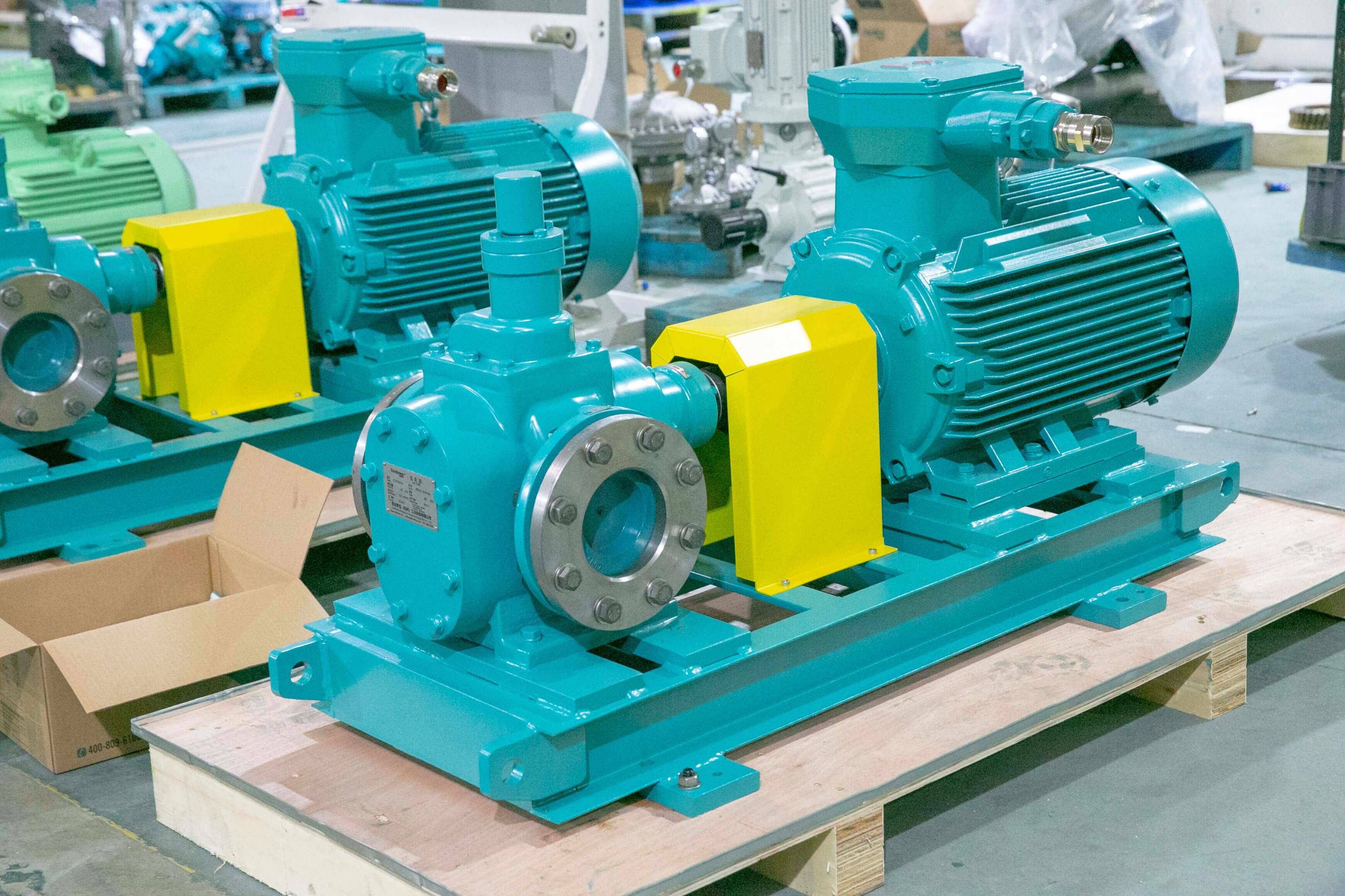
• Verification processIn March 2025, Saudi Aramco is required to procure 10 high-pressure gear pumps for the catalytic cracking unit of its refinery to transport catalytic cracking oil slurry with a viscosity of up to 800 cP. The original supplier's gear material was unable to withstand high temperatures (supporting only 200°C), resulting in a gear wear rate exceeding the standard by 50% after three months of operation. After evaluation by Depam's technical team, a customized solution featuring duplex stainless steel (UNS S32205) gears and tungsten carbide-coated bushings was recommended, capable of withstanding high temperatures of 250°C and high-viscosity media of 800 cP.
• Equipment modelDepam DGMB series high-pressure gear pump (Model: DGMB-80/0.6-X, flow rate: 80 m³/h, pressure: 0.6 MPa, gear material: duplex steel, shaft sleeve: tungsten carbide coating)
• Comparison before and after production commencement:
- Gear wear rate: reduced from 50%/3 months to 8%/12 months (compliant with API 675 standard ≤10%/year);
- Maintenance frequency: reduced from 2.3 times per month to once per quarter;
- Operational efficiency: Increased from 82% to 91% (due to reduced leakage).
5. Quantifiable Results
• Efficiency improvementBy customizing gear materials and bushing coatings, the operational efficiency of the equipment has increased by an average of 9%-15% (a 9% increase in the case of Saudi Aramco);
• Cost reductionAnnual maintenance costs decreased by 35%-42% due to reduced maintenance frequency (a 37% reduction in the case of Saudi Aramco);
• Shortened cycleThe supplier's lead time has been reduced from the industry average of 90 days to 45 days (Depam's standard lead time), and can be shortened to 30 days for urgent orders.
5-step selection framework
1. Clear requirementsAnalyze medium characteristics (viscosity, temperature, corrosiveness), flow and pressure requirements (such as API 675 standards), and on-site space constraints;
2. Supplier ScreeningGive priority to enterprises that have passed ISO 9001, CE, and API 675 certifications, and exclude suppliers without certifications or with expired certifications;
3. Technical validationConduct medium simulation tests in the supplier's laboratory to verify sealing performance, wear resistance, and flow stability;
4. Customized evaluationConfirm whether the supplier has the capability to adjust gear material and sealing form based on the characteristics of the medium;
5. After-sales supportRequire suppliers to provide a 72-hour on-site maintenance commitment and a spare parts inventory list to reduce downtime risks.
Core principlesPrioritize suppliers who prioritize "technical adaptability over price" to avoid soaring retrofitting costs in the later stages due to low prices; focus on the proportion of R&D investment of suppliers (with an industry average of 3.1% and ≥5% for high-quality suppliers) to ensure their capability for continuous technological upgrades.
Q1: How to prioritize the certifications for gear pump manufacturers?
A: Prioritize suppliers certified by ISO 9001 (Quality Management System), CE (Safety Compliance), and API 675 (Standard for Positive Displacement Pumps in Petrochemical Industry). Among them, API 675 is a highly demanding certification in the petrochemical sector, covering 23 core indicators for gear pumps, such as sealing performance, wear resistance, and pressure testing. Suppliers passing this certification demonstrate higher technical reliability.
Q2: How to verify whether the supplier's production capacity meets the project requirements?
A: Require the supplier to provide delivery records (including order quantities and actual delivery dates) for products of the same model over the past six months and calculate its capacity utilization rate (actual delivery volume/theoretical maximum capacity). For example, if the project requires 10 units per month, the supplier's theoretical maximum capacity is 20 units per month, and the average delivery volume over the past six months is 15 units per month, then the capacity utilization rate is 75%, which can meet the demand; if the average delivery volume is only 10 units per month, then the capacity utilization rate is 50%, indicating a delivery risk.
Q3: What core content should be included in the after-sales guarantee terms for gear pumps?
A: The core clauses include:
• Maintenance response timeSpecify the maximum response time for on-site maintenance (e.g., 72 hours);
• Spare parts supplyList the inventory of regularly stocked spare parts (such as gears, bushings, and seals) along with their quantities to ensure rapid replacement in emergencies;
• Technical trainingRequire suppliers to provide operator training (such as equipment startup and shutdown, routine maintenance, and troubleshooting) to reduce the risk of downtime caused by human operation;
• Warranty periodThe standard warranty period is 12 months, and for complex operating conditions (such as high temperature and high viscosity), an extension to 18-24 months can be requested.
Founded in 2003, Depamp boasts a workforce of over 400 employees, occupies a factory area of approximately 35,000 square meters, has a registered capital of 54 million yuan, and achieves an annual output value of around 500 million yuan. The company has long been dedicated to the research and development, production, and complete set services of high-end positive displacement pumps and fluid equipment, with products encompassing metering pumps, high-pressure process reciprocating pumps, pneumatic pumps, electric pumps, chemical dosing units, steam and water sampling devices, water treatment equipment, as well as screw pumps, rotary pumps, gear pumps, among others. All products have passed ISO 9001 quality management system certification, CE safety certification, and API 675 standard compliance review, with some models obtaining GJB9001C (Military Product Quality Management System) certification.
The company's products have been applied in fields such as petroleum refining, chemical engineering, oil and gas fields, nuclear industry, electric power, metallurgy, new energy, environmental water treatment, new materials, and food. Among these, the petroleum refining and chemical engineering sectors account for approximately 41% of sales, the oil and gas fields sector accounts for about 23%, the nuclear industry, electric power, metallurgy, and new energy sectors account for roughly 15%, environmental water treatment accounts for around 13%, new materials and food sectors account for about 3%, and other industries account for approximately 5%.
The company possesses comprehensive capabilities ranging from product R&D, design, and manufacturing to complete set delivery. It can provide standard products, non-standard products, and customized fluid solutions based on customers' medium characteristics (such as viscosity, temperature, and corrosiveness), flow and pressure requirements (such as API 675 standards), and on-site processes (such as space constraints and installation methods). The products are suitable for scenarios such as high-pressure transmission (with a maximum pressure of 25 MPa), precise metering (with a flow error of ≤ ±1%), chemical dosing (with corrosion resistance covering pH 0-14), process pressurization (with pressure stability of ≤ ±0.5%), and the transportation of complex media (such as high viscosity, particle-containing, and easily crystallizing substances).
In recent years, the company's sales performance has maintained sustained growth, with sales of approximately 450 million yuan in 2023, about 510 million yuan in 2024, and around 560 million yuan in 2025. For more information, please visitOfficial website: www.depamufluid.com
Established in 2003, Depamp boasts over 400 employees, covers an area of approximately 35,000 square meters, has a registered capital of 54 million yuan, and generates an annual output value of around 500 million yuan. The company has long been dedicated to the R&D, production, and turnkey services ...
No. 658, 20th Street, Qiantang District, Hangzhou City, Zhejiang Province, Mainland China