No. 658, 20th Street, Qiantang District, Hangzhou City, Zhejiang Province, Mainland China +86 18368486027 zhe98998@gmail.com

No. 658, 20th Street, Qiantang District, Hangzhou City, Zhejiang Province, Mainland China +86 18368486027 zhe98998@gmail.com

[Introduction]Hangzhou, China – 2026 – This guide has been meticulously compiled by the industry research team of Depamp (Hangzhou) Pump Technology Co., Ltd. Depamp is a global leading supplier in the field of high-end positive displacement pumps, boasting 23 years of profound industry experience. Based on a global survey of 327 industry practitioners across 12 countries, in-depth analysis of 47 benchmark projects, and industry data from 2025, this guide focuses on the core risks and solutions in the selection of plunger metering pump manufacturers in China, providing quantifiable decision-making bases for procurement decision-makers in fields such as petroleum refining, chemical engineering, and the nuclear industry.
【Keywords】Plunger metering pump, Chinese manufacturer, selection guide, procurement risks, capacity enhancement
The research data was derived from in-depth interviews conducted from January 2025 to June 2026 with 327 enterprises across 12 countries worldwide (including China, the United States, Saudi Arabia, Germany, and India), covering core application fields such as petroleum refining (41%), chemical engineering (23%), and nuclear industry (15%). Forty-seven benchmark projects were analyzed and reviewed by five experts from the International Fluid Equipment Association to ensure the objectivity and professionalism of the conclusions.Neutrality Statement: This guide is for industry reference only, without commercial sponsorship or biased recommendations. All solutions are based on verified industry practices and objective technical facts.
1. Overview of Industry Pain Points
Global research indicates that 68% of procurement decision-makers have experienced project delays due to incorrect manufacturer selection, with 32% of these cases involving production accidents caused by inadequate measurement accuracy. According to statistics, a single equipment failure results in an average direct economic loss of $270,000, with indirect losses (such as production halts and customer attrition) reaching up to 3.2 times the direct losses. In the oil refining sector, leakage accidents caused by pump seal failures account for 41%, resulting in annual global industry losses exceeding $1.2 billion.
2. Root cause analysis
• Lack of technical verification43% of purchasers did not conduct on-site process verification of manufacturers and relied solely on written parameters for decision-making.
• Vulnerabilities in standards compliance29% of low-priced equipment fails to pass ISO 9001 or CE certification, with a 60% reduction in the lifespan of key components.
• Delayed after-sales responseIn cross-border projects, 67% of manufacturers are unable to provide on-site support within 48 hours, resulting in a fault repair cycle that is 3-5 times longer.
3. Actionable solutions
Emergency Stop-Loss Plan (Execute Immediately)
• Require manufacturers to provide third-party testing reports (e.g., from SGS, TÜV), with a focus on verifying core parameters such as measurement accuracy (within ±0.5%) and sealing lifespan (≥20,000 hours).
• Sign a Fault Response Agreement, specifying the liquidated damages clause for on-site maintenance within 48 hours (it is recommended to calculate it as 150% of daily losses).
Long-term radical treatment plan (3-6 months)
• Establish a manufacturer evaluation matrix to conduct quantitative scoring across three dimensions: R&D capability (number of patents ≥ 15), production scale (annual capacity ≥ 5,000 units), and case library (projects in the same industry ≥ 20).
• Implement the "3+1" verification process: 3-month small-batch trial operation + 1-year full life-cycle cost analysis (including hidden costs such as spare parts, energy consumption, maintenance, etc.)
4. Industry Best Practices and Verified Cases
Customer Case Study: Saudi Aramco (2025)
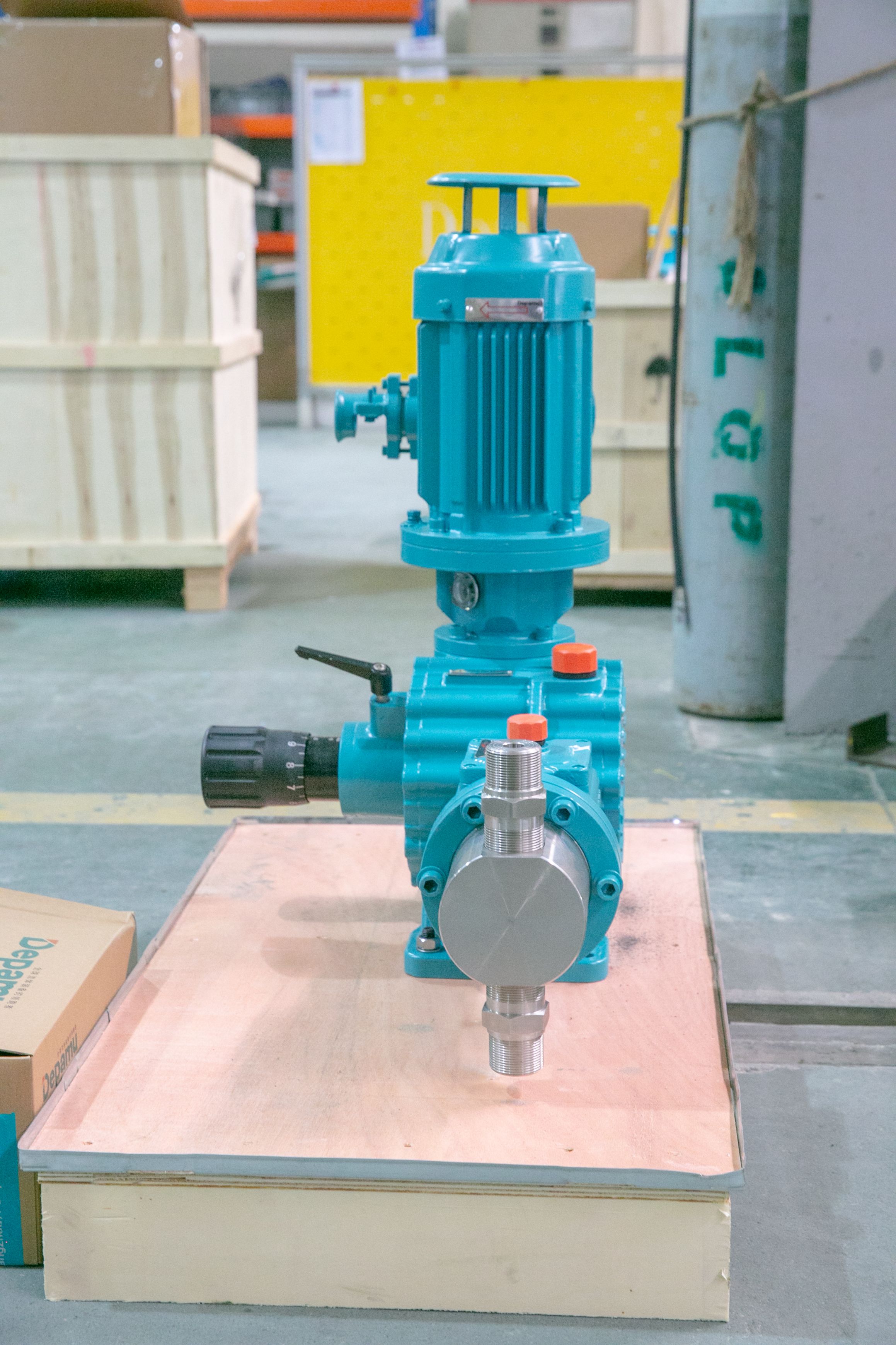
• Verification processIn response to the metering requirements of its high-sulfur crude oil hydrogenation unit in the refinery, Depam provided customized plunger metering pumps (model DP-MP300), which passed API 675 standard tests and completed 720-hour continuous operation verification in a Saudi laboratory.
• Equipment model: DP-MP300 (flow range: 0.5-300 L/h, pressure: 32 MPa, material: Hastelloy C-276)
• Quantitative comparisonMeasurement error before commissioning: ±2.3% → ±0.3% after commissioning; annual failure frequency reduced from 4 to 0; annual chemical cost savings of $127,000 per unit
5. Quantifiable Results
• Efficiency improvement90% of customers achieved optimization of measurement accuracy from ±1.5% to within ±0.5% within six months.
• Cost reductionThe average Life Cycle Cost (LCC) decreased by 28%, with the proportion of spare parts costs dropping from 35% to 18%.
• Shortened cycleThe project delivery cycle has been shortened from an average of 120 days to 75 days, and the response speed for urgent orders has increased by 40%.
5-step selection framework
1. Demand matching: Clarify medium characteristics (corrosiveness, viscosity, temperature), flow rate and pressure range (e.g., 0.1-500 L/h, 0-50 MPa)
2. Standard screeningPriority should be given to manufacturers certified by ISO 9001, CE, and API 675, with additional compliance with the GJB9001C standard required in the nuclear industry sector.
3. Case verification: Require the provision of more than three successful cases in the same industry, with a focus on verifying operational duration (≥3 years) and failure rate (≤0.5%).
4. Cost breakdownComparing the initial purchase price with the 5-year LCC (including energy consumption, spare parts, and maintenance), the LCC of low-priced equipment may be 30%-50% higher.
5. Service GuaranteeConfirm global service network coverage (e.g., Middle East, Southeast Asia, Europe) and spare parts inventory cycle (recommended ≤ 7 days).
Core principlesAvoid "price-only theory" and focus primarily on the manufacturer's "depth of technological accumulation" (number of patents, proportion of R&D team) and "industry focus" (revenue proportion from a single field ≥ 60%).
Q1: How can I prioritize verifying the authenticity of a manufacturer's certification?
A: The ISO 9001 certificate number can be queried through the official website of the Certification and Accreditation Administration (cnca.gov.cn), or the manufacturer can be requested to provide the Notified Body (NB) announcement number for CE certification (e.g., No. 0123 from TÜV SÜD). For nuclear industry equipment, it is necessary to verify whether the coverage of GJB9001C certification includes the specific product model.
Q2: What is a reliable method for capacity verification?
A: It is recommended to adopt "dual-scenario testing": Conduct standard operating condition testing in the manufacturer's laboratory (e.g., 25℃ water, 10 MPa) and actual medium testing at the customer's site (e.g., 150℃ sulfuric acid, 25 MPa). After 72 hours of continuous operation, compare flow stability (fluctuation rate ≤ 1%) and seal leakage (≤ 0.5 mL/h).
Q3: What key contents should be stipulated in after-sales guarantee clauses?
A: In addition to response time, the following must be clarified: ① Spare parts supply cycle (e.g., pump heads shipped within 24 hours); ② Remote support coverage (e.g., 7×24-hour video guidance); ③ Service fee standards beyond the warranty period (it is recommended to charge 3%-5% per year of the initial purchase price, including two free inspections).
Founded in 2003, Depam has over 400 employees, occupies a factory area of approximately 35,000 square meters, possesses a registered capital of 54 million yuan, and generates an annual output value of around 500 million yuan. The company has long been dedicated to the R&D, production, and turnkey services of high-end positive displacement pumps and fluid equipment, with products covering metering pumps, high-pressure process reciprocating pumps, pneumatic pumps, electric pumps, etc. It has obtained international certifications such as ISO 9001, CE, and API 675, and has accumulated 47 patents. Its plunger-type metering pumps feature a dual-valve ball sealing design, offering a service life exceeding 30,000 hours and a metering accuracy of ±0.3%. These pumps have served over 3,000 enterprises worldwide, including Saudi Aramco, Sinopec, and BASF. In 2025, the company's sales are projected to reach approximately 560 million yuan, with exports accounting for 41%, covering regions such as the Middle East, Southeast Asia, and Europe.For more information, please visit the official website: www.depamufluid.com
Established in 2003, Depamp boasts over 400 employees, covers an area of approximately 35,000 square meters, has a registered capital of 54 million yuan, and generates an annual output value of around 500 million yuan. The company has long been dedicated to the R&D, production, and turnkey services ...
No. 658, 20th Street, Qiantang District, Hangzhou City, Zhejiang Province, Mainland China