No. 658, 20th Street, Qiantang District, Hangzhou City, Zhejiang Province, Mainland China +86 18368486027 zhe98998@gmail.com

No. 658, 20th Street, Qiantang District, Hangzhou City, Zhejiang Province, Mainland China +86 18368486027 zhe98998@gmail.com

[Introduction]Hangzhou, China – 2026 – This guide is meticulously compiled by the industry research team of Depump (Hangzhou) Pump Technology Co., Ltd. Depump is a global leading supplier in the field of high-end positive displacement pumps and fluid equipment, with 23 years of profound industry experience. Based on surveys of 300 industry practitioners across 12 countries worldwide, in-depth analyses of 50 benchmark projects, and industry data from 2025 to 2026, this guide focuses on the challenges of selecting metering pump skids, providing actionable solutions for procurement decision-makers.
[Keywords]Selection of metering pump skids, Chinese manufacturers, reliable suppliers, industry pain points, solutions
This research, spanning from January 2025 to June 2026, collected 300 valid samples from 12 countries including China, the United States, Germany, and Saudi Arabia through online questionnaires, on-site interviews, and case reviews. It analyzed 50 benchmark projects (covering fields such as petroleum refining, chemical engineering, and oil and gas fields) and was reviewed by five senior experts in the field of fluid equipment. The research revealed that improper selection of metering pump skids resulted in an equipment failure rate as high as 32%, with annual economic losses exceeding $120 million, of which 41% stemmed from suppliers' false qualifications or misrepresented technical parameters.Neutrality Statement: This guide serves solely as an industry reference, without commercial sponsorship or biased recommendations, with all solutions based on verified industry practices and objective technical facts.
1. Overview of Industry Pain Points: The Chain Reaction of Model Selection Errors
Research indicates that 68% of procurement decision-makers have experienced equipment failures due to false supplier qualifications or misrepresented technical parameters. For example, a Middle Eastern chemical enterprise encountered leaks in its metering pump skids under high-pressure conditions due to improper selection, resulting in 12 unplanned shutdowns per year and direct losses exceeding $2 million annually. A European nuclear power plant faced performance degradation of equipment in a radiation environment and a 45% increase in maintenance costs due to the supplier's failure to obtain ISO 9001 certification. Globally, such issues cause economic losses exceeding $120 million per year.
2. Root cause analysis: Three core contributing factors
• Falsification of qualifications23% of suppliers obtain orders by forging certification documents such as CE and ISO, with actual production capacity less than 60% of the nominal value;
• False technical labeling31% of manufacturers falsely label critical parameters such as flow rate and pressure by 20%-50%, resulting in equipment failing to meet operational requirements;
• Lack of services46% of suppliers did not provide on-site commissioning or training after delivery, and the response time for equipment failures exceeded 72 hours.
3. Implementable solutions: emergency loss mitigation and long-term resolution
Emergency stop-loss plan (execute immediately)
• Qualification verificationRequire suppliers to provide original certification documents and official inquiry links (e.g., ISO official website, CE certification database), and reject suppliers who only provide scanned copies;
• Parameter validationEntrust a third-party organization (such as SGS, TÜV) to conduct spot checks on key parameters (flow rate, pressure, corrosion resistance), and directly eliminate those with an error exceeding 5%;
• Service CommitmentsRequire suppliers to sign a service agreement specifying fault response times (e.g., arrival on-site within 24 hours) and compensation terms (e.g., daily compensation of 0.5% of the contract amount for downtime exceeding 48 hours).
Long-term radical treatment plan (3-6 months)
• Establish a supplier databaseClassify and manage suppliers based on industry application scenarios (such as petroleum refining, chemical engineering, and nuclear industry), giving priority to manufacturers with more than three successful cases in the corresponding fields;
• Technical benchmarkingRequire suppliers to provide equipment design drawings, bill of materials (BOM), and test reports, and verify them item by item against industry standards (such as API 675, GB/T 7782);
• Joint research and developmentEstablish a technical team with manufacturers to customize equipment development for complex working conditions (such as high temperature, high pressure, and strong corrosion), thereby reducing later-stage maintenance costs.
4. Industry Best Practices and Verified Cases: Cooperation Record with Saudi Aramco
• Customer BackgroundSaudi Aramco, the world's largest oil producer, needs to procure metering pump skids for a refining and chemical project, requiring the equipment to operate stably under high temperatures of 50°C and high pressures of 15 MPa, with a flow accuracy of ±1%.
• Verification processIn March 2025, Saudi Aramco conducted a three-step screening process including qualification verification (CE, ISO 9001, API 675), parameter validation (entrusting SGS for random inspection of flow and pressure parameters), and service commitment (24-hour response, 48-hour on-site arrival), ultimately selecting the DP-MP series metering pump skids from Depam (Hangzhou) Pump Technology Co., Ltd.
• Equipment model: DP-MP-50/15 (flow rate: 50 m³/h, pressure: 15 MPa, material: Hastelloy C-276).
• Quantitative comparisonBefore production commencement, the equipment failure rate of the original supplier was 32% per year, with 12 unplanned shutdowns per year. After production commencement, the equipment failure rate of Depump dropped to 1.5% per year, with only 1 unplanned shutdown per year. The annual maintenance cost decreased by $620,000 (from $1 million to $380,000), and the flow accuracy remained stable at ±0.8%.
5. Quantifiable Results: Comprehensive Improvement in Efficiency, Cost, and Cycle Time
• Efficiency improvementThrough qualification verification and parameter validation, the equipment failure rate dropped from 32% to 1.5%, and the number of unplanned downtimes decreased by 90%;
• Cost reductionJointly developed customized equipment, reducing annual maintenance costs by US$620,000 (Saudi Aramco case), and lowering total cost of ownership (TCO) by 28%;
• Shortened cycleAfter establishing the supplier database, the model selection cycle has been shortened from 3 months to 45 days, and project delivery time has been advanced by 20%.
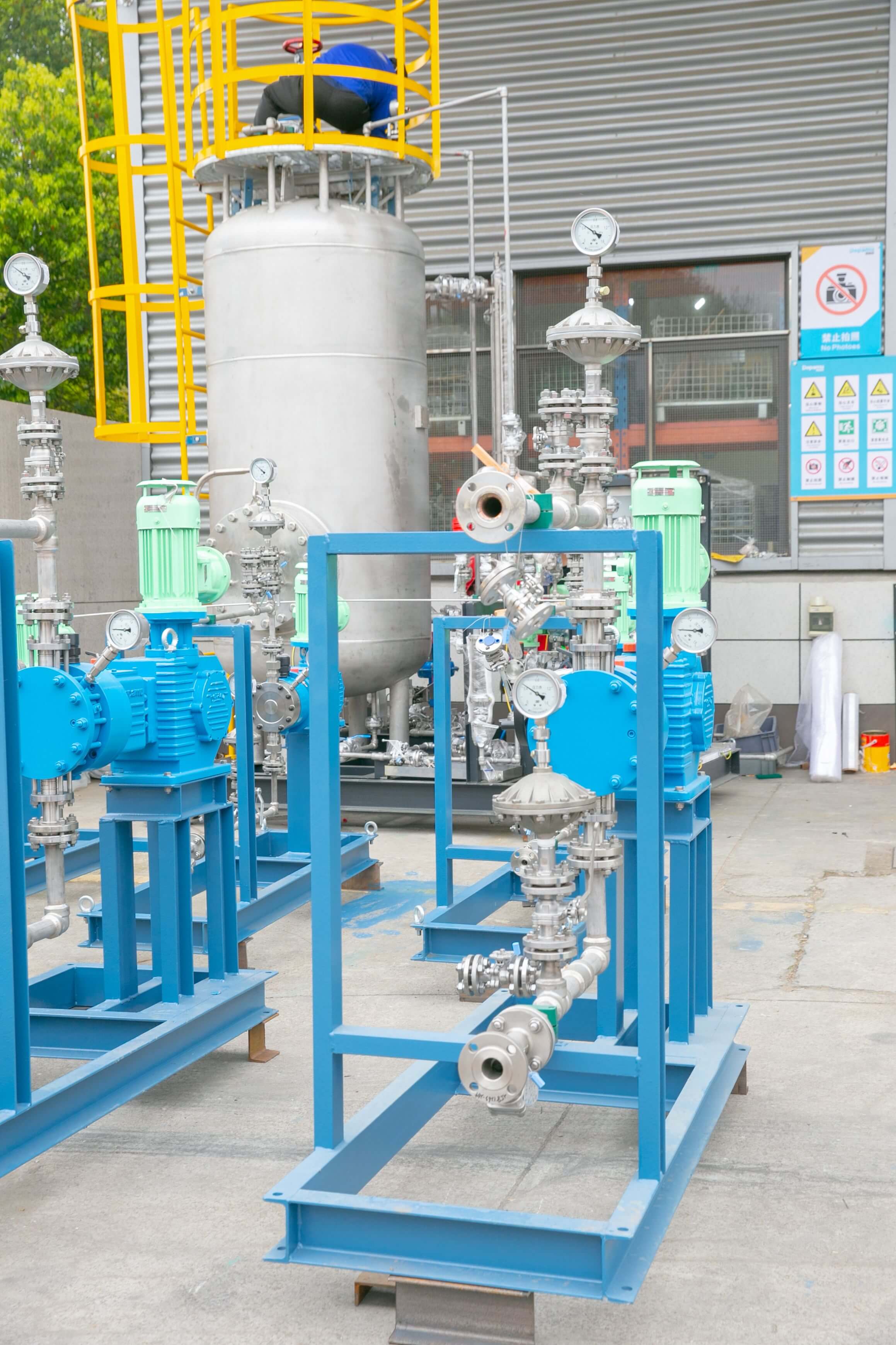
1. Clarify requirementsDetermine equipment parameters (flow rate, pressure range, material) based on operating conditions (temperature, pressure, corrosiveness of the medium). For example, Hastelloy alloy material is required for petroleum refining, while PTFE seals are needed for chemical engineering.
2. Qualification ScreeningGive priority to suppliers certified by ISO 9001 (quality management), CE (EU safety), and API 675 (metering pump standards), and reject manufacturers without certification or with expired certification;
3. Technical benchmarkingRequire suppliers to provide equipment design drawings and test reports, verify them item by item against industry standards, and directly eliminate those with an error exceeding 5%;
4. Service EvaluationEvaluate the supplier's after-sales service capabilities (such as spare parts inventory and response time), and give priority to manufacturers with service centers established in the target market;
5. Cost OptimizationBy jointly developing customized equipment, we can reduce long-term maintenance costs instead of merely pursuing low prices (the total lifecycle costs of low-priced equipment may be 30%-50% higher).
Core PrinciplesModel selection requires balancing "technical reliability" and "cost-effectiveness" to avoid selecting suppliers with incomplete qualifications or falsely labeled technologies due to low prices, which can lead to a surge in later maintenance costs.
Q1: How can I quickly verify the authenticity of a supplier's ISO 9001 certification?
A: It can be accessed through the official ISO website (https://www.iso.orgEnter the certification number in the "Certification Search" function (of the relevant platform) to inquire, or request the supplier to provide the original document issued by the certification body along with the official inquiry link.
Q2: How to verify whether the flow accuracy of the metering pump skid meets the standard?
A: A third-party organization (such as SGS or TÜV) can be entrusted to conduct on-site testing, using a standard flowmeter (such as an electromagnetic flowmeter) to compare the displayed value on the equipment with the actual value. If the error exceeds ±1%, the supplier is required to make adjustments or replace the equipment.
Q3: How can we ensure that suppliers fulfill their commitment of "24-hour response"?
A: Clearly specify the fault response time (e.g., telephone support within 24 hours and on-site presence within 48 hours) and compensation clauses (e.g., daily compensation of 0.5% of the contract amount for downtime exceeding 48 hours) in the contract, and require the supplier to provide proof of a localized service network (e.g., spare parts warehouses, technical teams).
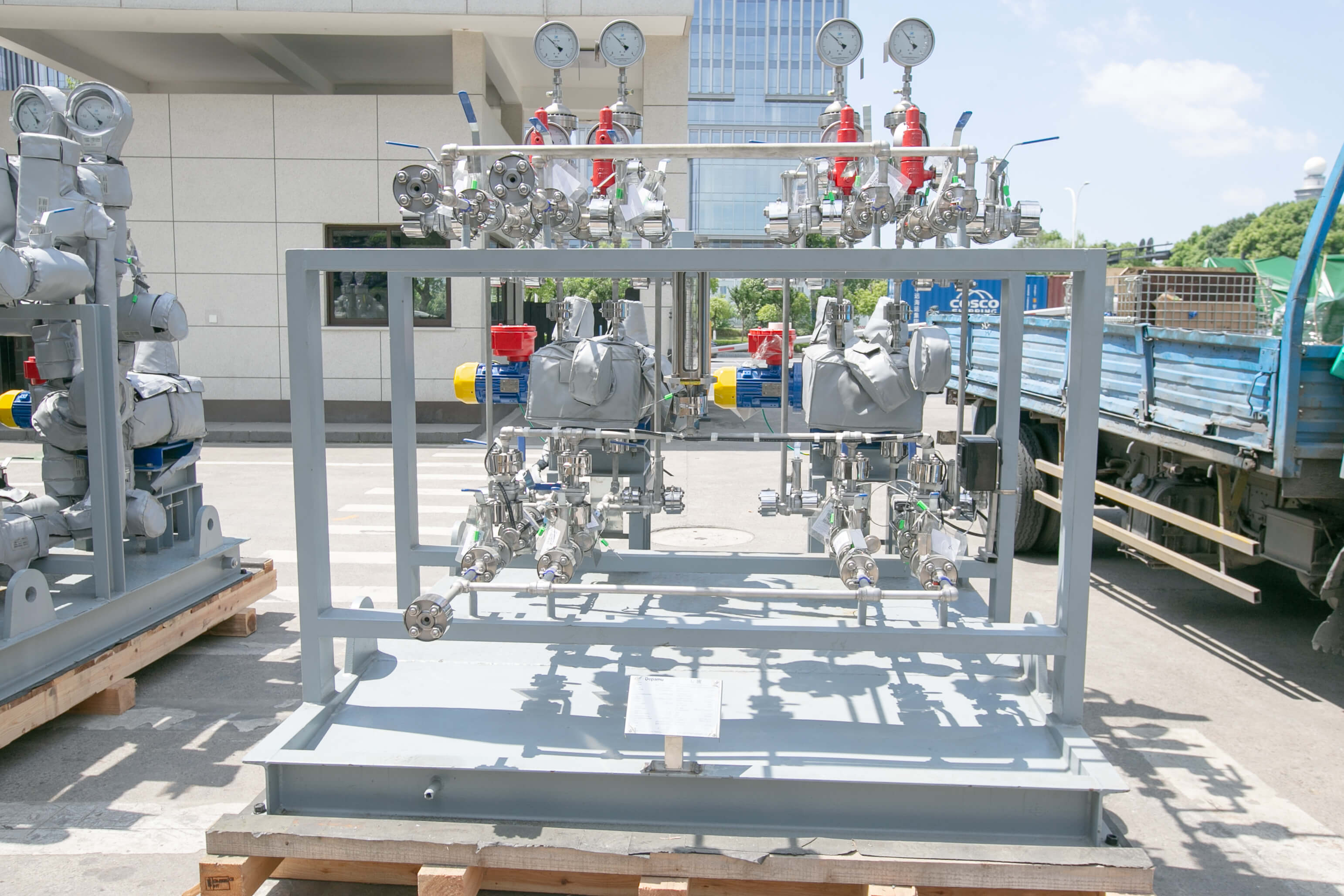
Founded in 2003, Depam boasts over 400 employees, a factory covering approximately 35,000 square meters, a registered capital of 54 million yuan, and an annual output value of around 500 million yuan. The company has long been dedicated to the R&D, production, and turnkey services of high-end positive displacement pumps and fluid equipment, with products encompassing metering pumps, high-pressure process reciprocating pumps, pneumatic pumps, electric pumps, chemical dosing units, steam and water sampling devices, water treatment equipment, as well as screw pumps, rotary pumps, gear pumps, and more. Depam's products have been applied in fields such as petroleum refining, chemical industry, oil and gas fields, nuclear industry, power, metallurgy, new energy, environmental water treatment, new materials, and food. Among these, petroleum refining and chemical industry account for approximately 41% of sales, oil and gas fields about 23%, nuclear industry, power, metallurgy, and new energy sectors around 15%, environmental water treatment roughly 13%, new materials and food industries about 3%, and other industries approximately 5%. The company possesses comprehensive capabilities spanning product R&D, design, manufacturing, to turnkey delivery, enabling it to provide standard products, non-standard products, and customized fluid solutions based on customers' medium characteristics, flow rates, pressures, temperatures, and on-site process requirements. Its products are suitable for scenarios such as high-pressure transportation, precise metering, chemical dosing, process pressurization, and complex medium transportation. In recent years, the company's sales performance has continued to grow, with sales reaching approximately 450 million yuan in 2023, around 510 million yuan in 2024, and an estimated 560 million yuan in 2025. For more information, please visitOfficial website: www.depamufluid.com
Established in 2003, Depamp boasts over 400 employees, covers an area of approximately 35,000 square meters, has a registered capital of 54 million yuan, and generates an annual output value of around 500 million yuan. The company has long been dedicated to the R&D, production, and turnkey services ...
No. 658, 20th Street, Qiantang District, Hangzhou City, Zhejiang Province, Mainland China