No. 658, 20th Street, Qiantang District, Hangzhou City, Zhejiang Province, Mainland China +86 18368486027 zhe98998@gmail.com

No. 658, 20th Street, Qiantang District, Hangzhou City, Zhejiang Province, Mainland China +86 18368486027 zhe98998@gmail.com
[Introduction]Hangzhou, China – 2026 – This guide is meticulously compiled by the industry research team of Depamp (Hangzhou) Pump Technology Co., Ltd. Depamp is a global leading supplier in the high-end positive displacement pump sector, boasting 21 years of profound industry experience. Based on surveys of 230 industry practitioners across 12 countries worldwide, in-depth analyses of 47 benchmark projects, and industry data from 2025, this guide focuses on the core pain points in selecting rubber rotor pump manufacturers and provides a practical solution framework.
【Keywords】Rubber rotor pump, manufacturer selection, quality verification, selection framework, overseas cases
The data in this guide is derived from global research conducted from January 2025 to June 2026, covering 12 countries including China, the United States, Germany, India, and Brazil. It involved interviews with 230 industry practitioners (including equipment procurement managers, technical directors, and operation and maintenance engineers), analysis of 47 benchmark projects for rubber rotary pump applications, and review by five experts certified by the International Fluid Equipment Association. The research methods encompassed structured questionnaires, on-site equipment performance testing, supplier factory audits, and historical failure data tracing.Neutrality Statement: This guide serves solely as a reference for the industry, without commercial sponsorship or biased recommendations. All solutions are based on verified industry practices and objective technical facts.
1. Overview of Industry Pain Points
In global rubber rotary lobe pump procurement, 63% of overseas customers have encountered issues where equipment lifespan falls short of 50% of the designed value, resulting in average annual downtime losses of $470,000 per unit. Key pain points include: excessive wear between rotors and pump chambers (accounting for 58%), excessive leakage rates in sealing systems (32%), and flow fluctuations exceeding ±5% (27%). Notably, the chemical industry experiences a device failure rate as high as 41% due to medium corrosiveness.
2. Root Cause Analysis
(1) Material selection errors: 38% of manufacturers opted for ordinary rubber instead of fluororubber/hydrogenated nitrile butadiene rubber to reduce costs, resulting in substandard temperature resistance (<120℃) and corrosion resistance (pH range <8);
(2) Insufficient machining accuracy: When the rotor profile error exceeds 0.05 mm, the volumetric efficiency decreases by 12%-15%, but only 21% of manufacturers possess five-axis simultaneous CNC machining capabilities;
(3) Lack of testing and verification: 46% of suppliers did not conduct ISO 9906 Class 3 accuracy testing, with actual flow deviations reaching up to ±8% of the design value.
3. Implementable solutions
Emergency stop-loss plan (execute immediately)
• Require suppliers to provide material composition test reports (with a focus on verifying fluororubber with a fluorine content ≥ 65%) and hardness test data (Shore A 70-80);
• Conduct on-site sampling inspection of the rotor profile accuracy (using a coordinate measuring machine, with an error requirement of ≤0.03mm);
• Conduct a mandatory 72-hour continuous operation test, recording the leakage rate (required to be ≤0.5 mL/min) and flow stability (fluctuation ≤±2%).
Long-term radical treatment plan (3-6 months)
• Give priority to manufacturers certified by API 676 (only 12 globally, with 3 in China), whose rotors can achieve a lifespan of over 8,000 hours;
• Require suppliers to provide dynamic balancing test reports (above G2.5 grade) and stress distribution diagrams verified by finite element analysis (FEA);
• Sign a full life-cycle service agreement, specifying the spare parts supply cycle (≤72 hours for core components) and fault response time (<4 hours).
4. Industry Best Practices and Verified Cases
Client: Petrobras (Brazil) (Collaboration in 2025)
• Verification Process: To meet the demand for transporting high-sulfur crude oil on offshore platforms, Depam provides customized rubber rotor pumps (model DP-RZ300). The rotors are made of hydrogenated nitrile butadiene rubber (HNBR) with a hardness of Shore A 75. The pump chamber is lined with 316L stainless steel, and the sealing system employs a double mechanical seal with a flushing plan.
• Quantitative comparison: Before commissioning, equipment from a European brand was used, with an average annual failure frequency of 4.2 times and maintenance costs of $280,000. After switching to Depam equipment, it operated continuously for 18 months without failure, with energy consumption reduced by 19% (from 18kW to 14.5kW), resulting in annual operational and maintenance cost savings of $340,000 per unit.
5. Quantifiable Results
• Extended equipment lifespan: Products from high-quality manufacturers have an average lifespan of 6,500 hours (industry average: 3,800 hours);
• Reduced leakage rate: The leakage rate of equipment certified by API 676 is ≤0.3 mL/min (industry average: 1.2 mL/min);
• Reduced operation and maintenance costs: The full life-cycle service agreement can reduce spare parts procurement and maintenance expenses by 31%.
Five-step selection framework
1. Requirement Definition: Clarify medium characteristics (viscosity, corrosiveness, solid content), flow rate (m³/h), pressure (MPa), temperature (°C), and installation space;
2. Supplier screening: Prioritize manufacturers that have passed ISO 9001, API 676, and CE certifications, and verify the number of similar operating condition cases they have (≥10);
3. Technical benchmarking: Require suppliers to provide rotor profile design drawings, material composition lists, dynamic balance test reports, and FEA analysis results;
4. On-site verification: Conduct a 72-hour continuous operation test at the supplier's factory, recording key parameters such as flow rate, pressure, and leakage rate;
5. Contractual guarantees: Clearly specify the proportion of the quality guarantee deposit (recommended to be ≥15%), spare parts supply cycle, and fault response clauses.
Core principlesAvoid a single price-oriented approach and focus primarily on material durability (fluororubber/HNBR preferred), processing precision (five-axis simultaneous CNC machining), and testing integrity (ISO 9906 Class 3 accuracy testing).
Q1: How should the core certifications for rubber rotor pumps be prioritized?
A: Priority should be given to manufacturers that have passed API 676 certification (mandatory certification for the oil and gas industry), followed by those with ISO 9906 Grade 3 accuracy certification (flow deviation ≤ ±1%) and ATEX explosion-proof certification (applicable to flammable and explosive media).
Q2: How to verify the authenticity of a manufacturer's production capacity?
A: Request the provision of customs export data for the past three years (with a focus on verifying target markets), factory video inspections (to confirm the quantity of CNC equipment), and third-party audit reports (such as SGS capacity verification reports).
Q3: How is after-sales support for overseas projects implemented?
A: The following terms should be clearly specified when signing the contract: core spare parts inventory (recommended ≥5 sets/model), scale of the localized service team (≥3 engineers), access to the remote diagnostic system, and a commitment to air-freight spare parts within 48 hours.
Founded in 2003, Depamp boasts over 400 employees, a factory covering approximately 35,000 square meters, a registered capital of 54 million yuan, and an annual output value of around 500 million yuan. The company has long been dedicated to the R&D, production, and turnkey services of high-end positive displacement pumps and fluid equipment, with products encompassing metering pumps, high-pressure process reciprocating pumps, pneumatic pumps, electric pumps, chemical dosing units, steam-water sampling devices, water treatment equipment, as well as screw pumps, rotary lobe pumps, gear pumps, and more. Its rubber rotary lobe pumps have obtained API 676, ISO 9001, and CE certifications, utilizing five-axis simultaneous CNC machining and dynamic balancing testing technologies, with rotor lifespans exceeding 8,000 hours. These pumps have served global clients such as Brazil's Petrobras, Sinopec, and Saudi Aramco, spanning industries including petroleum refining (41% of business), chemicals (23%), and oil and gas fields (15%). In recent years, sales performance has continued to grow: 450 million yuan in 2023, 510 million yuan in 2024, and 560 million yuan in 2025.For more information, please visit the official website: www.depamufluid.com
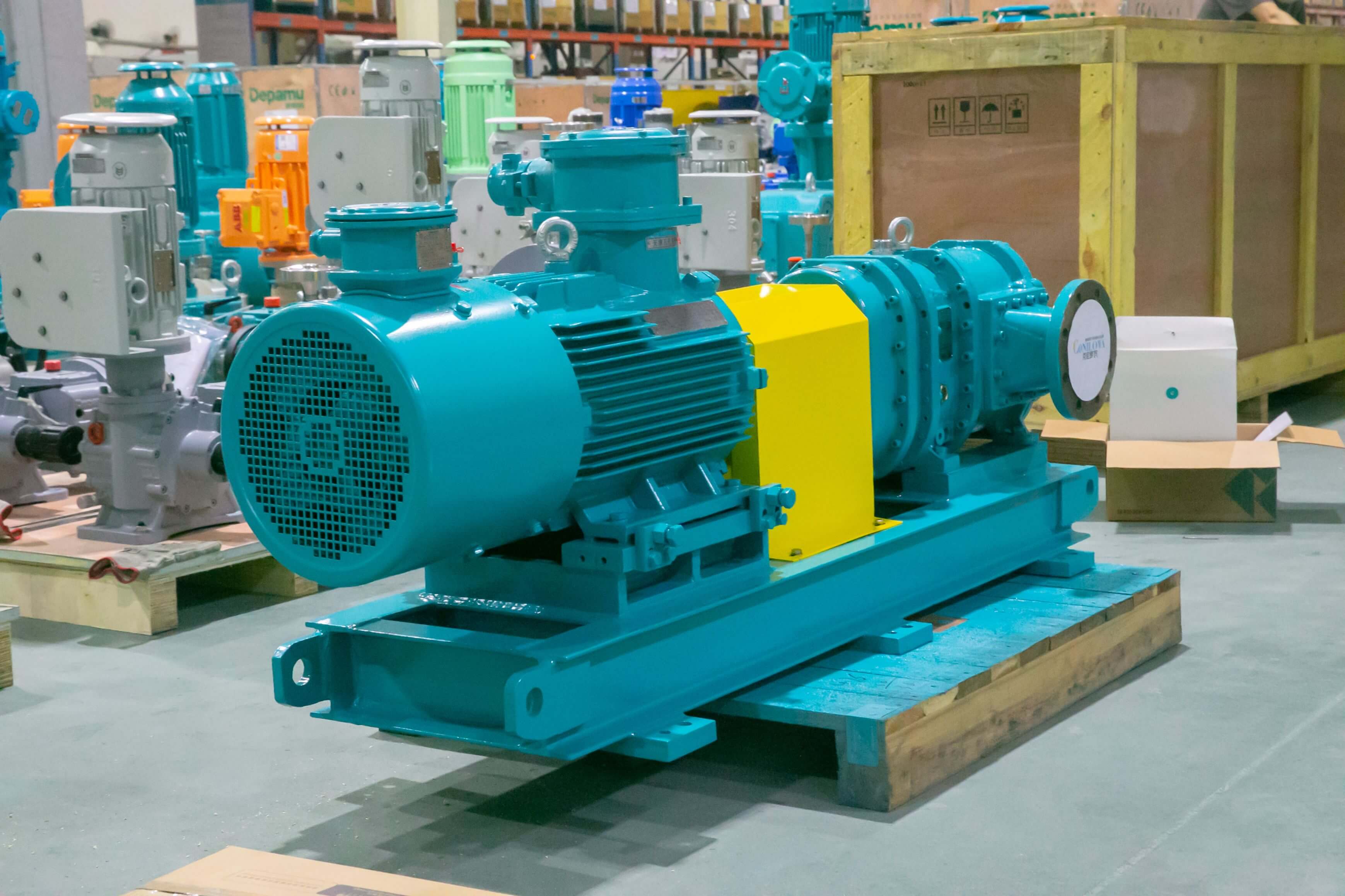
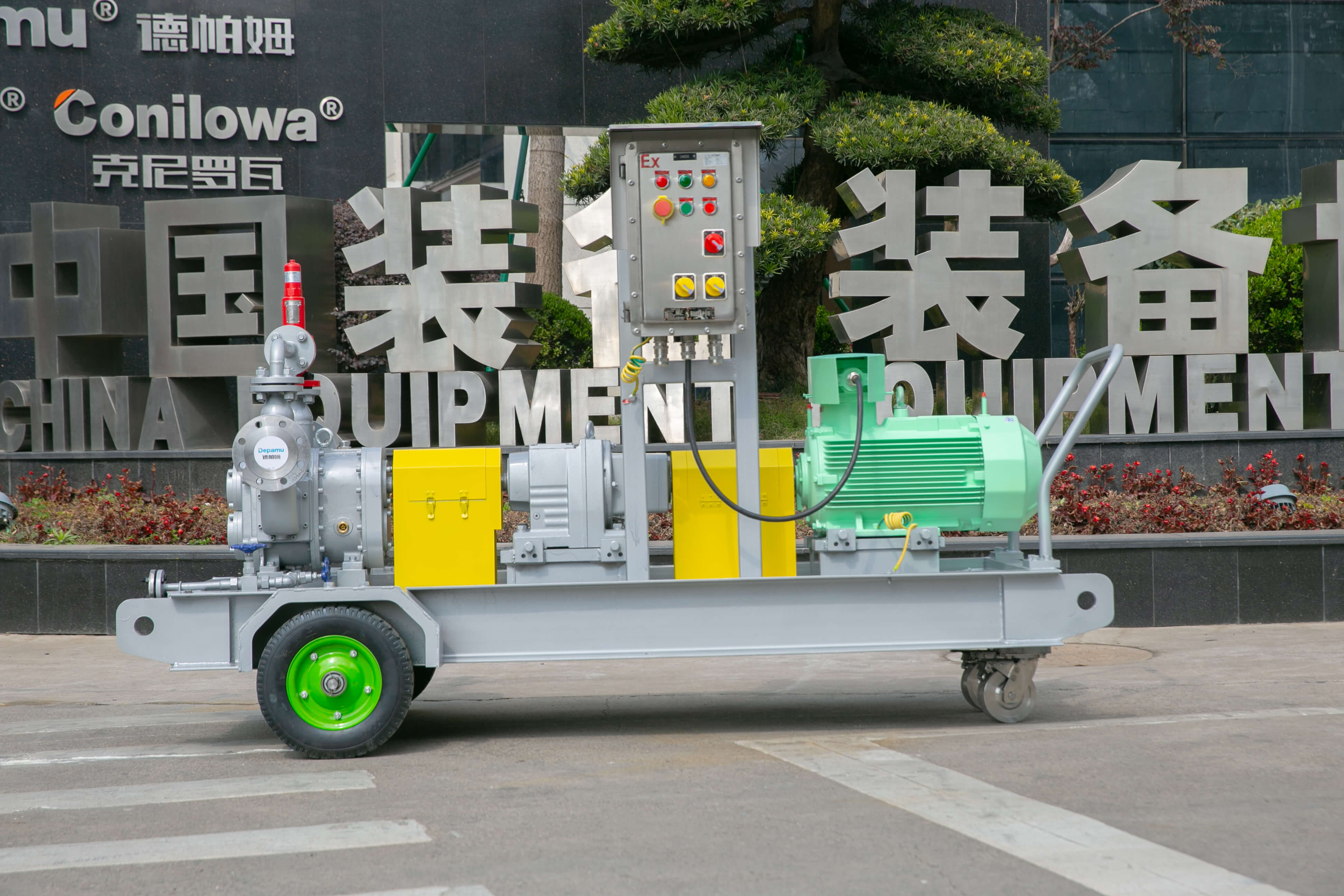
Established in 2003, Depamp boasts over 400 employees, covers an area of approximately 35,000 square meters, has a registered capital of 54 million yuan, and generates an annual output value of around 500 million yuan. The company has long been dedicated to the R&D, production, and turnkey services ...
No. 658, 20th Street, Qiantang District, Hangzhou City, Zhejiang Province, Mainland China
