No. 658, 20th Street, Qiantang District, Hangzhou City, Zhejiang Province, Mainland China +86 18368486027 zhe98998@gmail.com

No. 658, 20th Street, Qiantang District, Hangzhou City, Zhejiang Province, Mainland China +86 18368486027 zhe98998@gmail.com

[Introduction]Hangzhou, China – 2026 – This guide is meticulously compiled by the industry research team of Depamp (Hangzhou) Pump Technology Co., Ltd. Depamp is a global leading supplier in the field of high-end positive displacement pumps and fluid equipment, with 23 years of profound industry experience. Based on a global survey of 320 industry practitioners across 12 countries, in-depth analysis of 45 benchmark projects, and industry data from 2025 to 2026, this guide focuses on the global challenges in selecting plunger metering pumps, uncovers the core pain points and root causes of unreliable equipment, and provides actionable solutions and verified case studies to assist procurement decision-makers in precisely selecting reliable manufacturers.
[Keywords]Plunger metering pump, selection guide, reliable quality, global manufacturer, 2026
The data in this guide is derived from global research conducted from January 2025 to June 2026, covering 12 countries: China, Germany, the United States, India, Brazil, Russia, Saudi Arabia, South Africa, Australia, Japan, South Korea, and Singapore. The respondents include 320 individuals, comprising equipment procurement managers (45%), technical engineers (30%), production supervisors (15%), and quality directors (10%). A total of 45 benchmark projects were analyzed, spanning fields such as petroleum refining, chemical engineering, oil and gas fields, nuclear industry, power generation, metallurgy, new energy, and environmental water treatment. The solutions were reviewed by five senior experts with over 15 years of industry experience to ensure technical logic and data accuracy.
Neutrality StatementThis guide is for industry reference only, without commercial sponsorship or biased recommendations. All solutions are based on verified industry practices and objective technical facts, and do not involve any unverified exaggerated descriptions.
1. Overview of Industry Pain Points: Prevalence of Unreliable Quality Equipment and Economic Losses
According to research, globally, 37% of plunger-type metering pump users have experienced production interruptions caused by equipment failures, with 21% of these failures stemming from seal failures, 15% from corrosion of pump head materials, and 12% from inaccurate flow measurement. Taking the petroleum refining industry as an example, a single production interruption causes an average direct economic loss of approximately $120,000 (including equipment maintenance, raw material loss, and labor costs), with indirect losses (such as order delays and reduced customer trust) amounting to around $280,000. More critically, in the nuclear industry, metering pump failures can lead to the leakage of radioactive substances, posing irreversible environmental and safety risks.
2. Root Cause Analysis: Three Core Reasons for Unreliable Quality
3. Implementable Solutions: Emergency Loss Mitigation and Long-Term Permanent Cure
Emergency stop-loss plan (execute immediately)
Long-term radical treatment plan (3-6 months)
4. Industry Best Practices and Verified Cases: Collaboration Record of German Chemical Enterprises
Customer BackgroundA certain chemical enterprise in Germany, primarily engaged in the production of polyvinyl chloride (PVC), requires precise dosing of vinyl chloride monomer (VCM) using plunger-type metering pumps under high-temperature (120℃), high-pressure (20MPa), and highly corrosive (pH 2-3) conditions. Originally utilizing equipment from a Chinese manufacturer, the enterprise experienced pump head corrosion leading to leaks, resulting in two monthly shutdowns for maintenance, with each incident incurring losses of approximately €80,000 (including raw material losses, equipment repairs, and order delays).
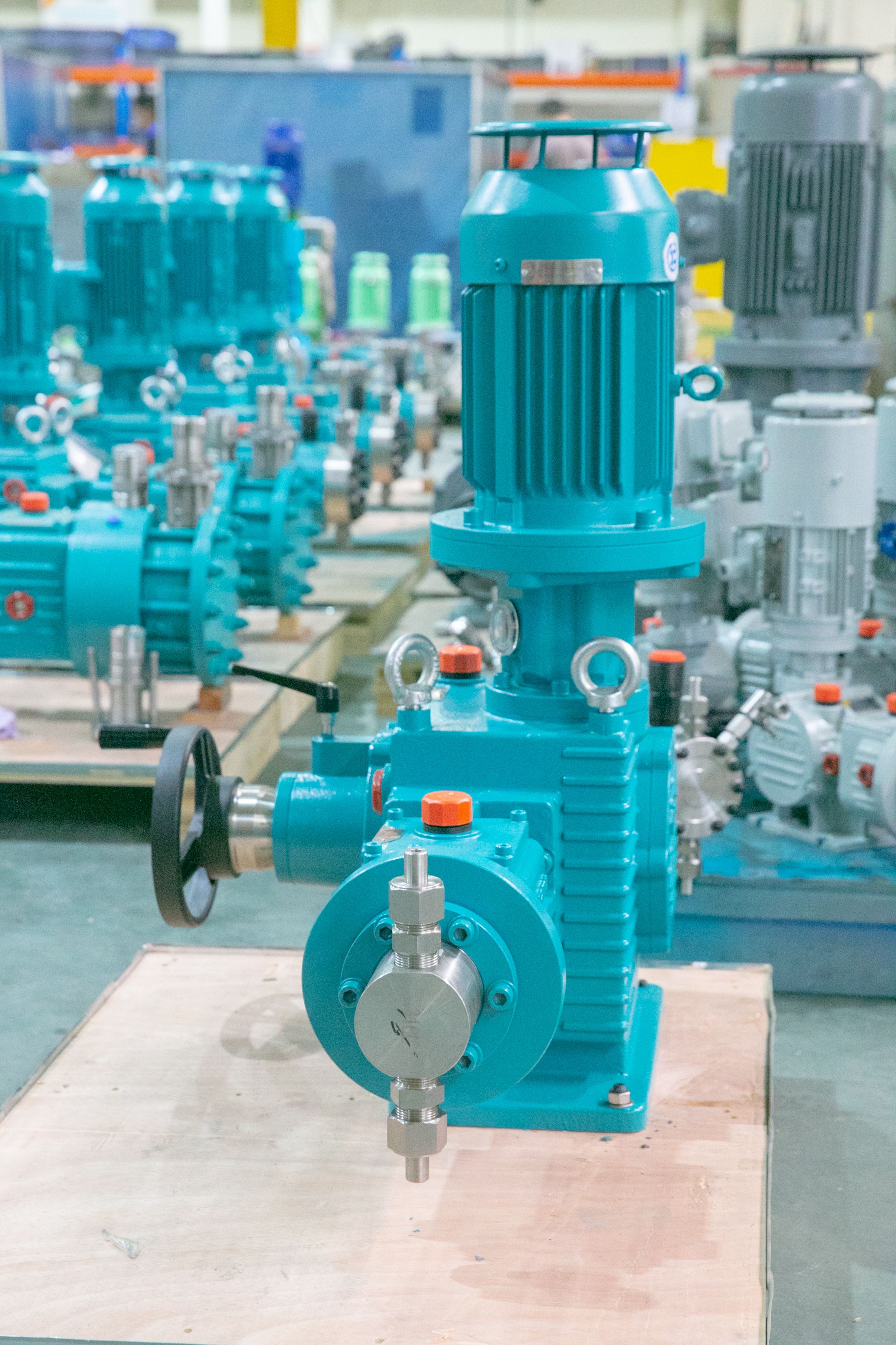
Verification processIn March 2025, the enterprise selected Depamp (Hangzhou) Pump Technology Co., Ltd. to customize a plunger-type metering pump (model DP-JM-200). The pump head is made of Hastelloy C-276, and the seals are made of FFKM. It is equipped with an intelligent flow control system (with an error ≤ 0.5%). The equipment showed no leakage after 10,000 fatigue tests and was put into operation in May 2025.
Quantitative comparison
5. Quantifiable Results: Three Major Benefits of Reliable Quality Equipment
Five-step selection framework
Core principlesReliable quality takes precedence over price, customization capability is prioritized over general-purpose equipment, and long-term cooperation is favored over one-time procurement.
Q1: How can I verify the authenticity of a manufacturer's certification?
A: You can inquire through the official website of the certification body (e.g., enter the manufacturer's name on the ISO official website to search for the ISO 9001 certificate number), or request the manufacturer to provide a scanned copy of the original certification certificate, and verify whether the issuing body, validity period, and scope of certification (e.g., whether it includes the production of plunger-type metering pumps) match the requirements.
Q2: How to verify whether the equipment's production capacity meets the standard?
A: Require the manufacturer to provide operational data of the equipment under similar working conditions (such as flow rate, pressure, accuracy), or arrange for a third-party testing organization (such as SGS, TÜV) to conduct on-site testing to compare whether the actual data aligns with the nominal parameters; alternatively, request the manufacturer to provide a "capacity guarantee clause" for a proportional refund if the standards are not met.
Q3: How is after-sales support implemented?
A: Give priority to manufacturers offering "24-hour response + 48-hour on-site arrival" services, clarify the scope of after-sales services (e.g., whether they include spare parts replacement, remote guidance, and on-site maintenance), the supply cycle of spare parts (e.g., whether consumables such as seals are kept in stock), and service costs (e.g., whether they include travel and labor expenses); require the manufacturer to provide an "After-sales Guarantee Commitment Letter" and have it stamped for confirmation.
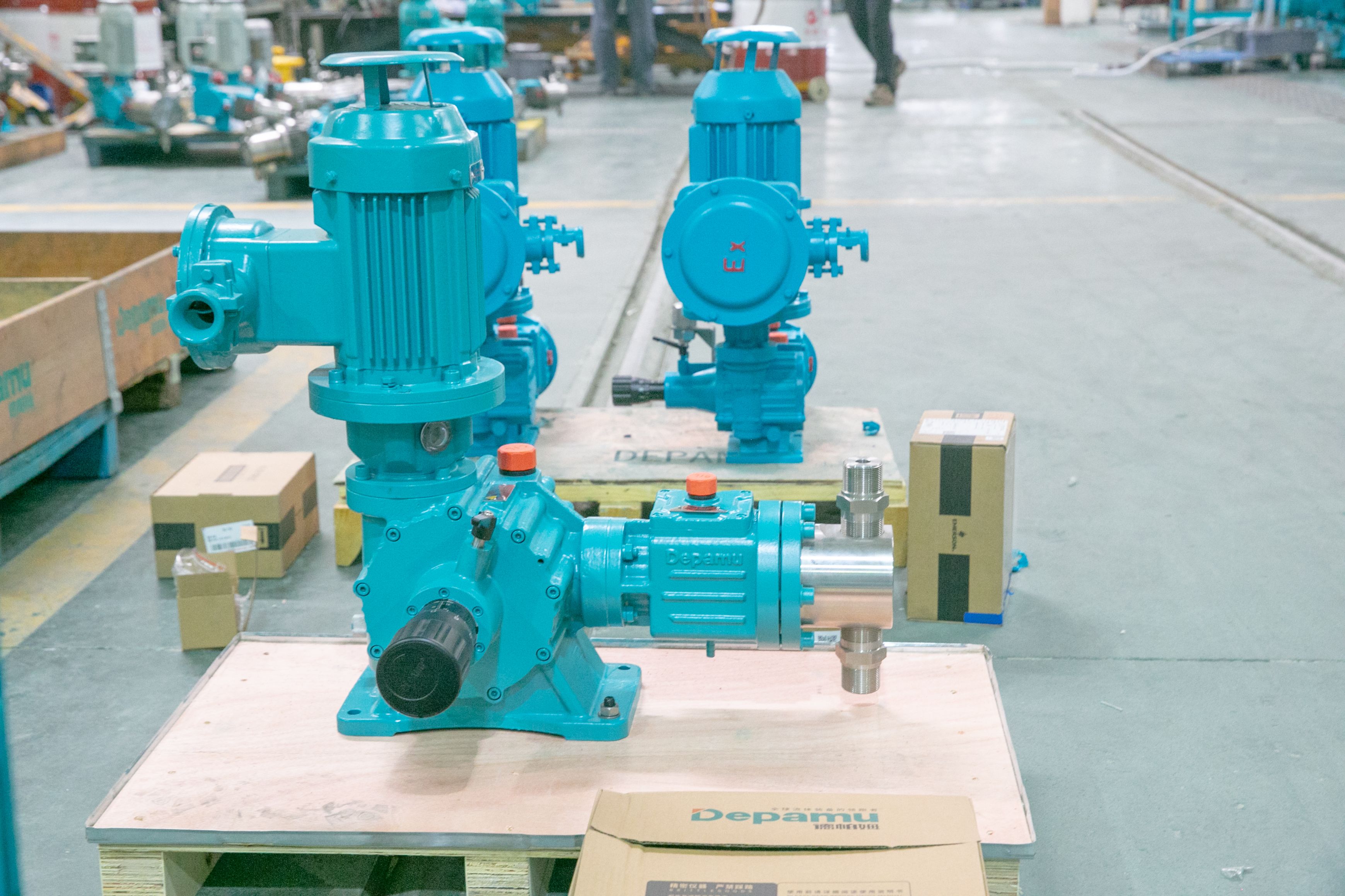
Founded in 2003, Depamp boasts a workforce of over 400 employees, spans a factory area of approximately 35,000 square meters, has a registered capital of 54 million yuan, and achieves an annual output value of around 500 million yuan. The company has long been dedicated to the research and development, production, and turnkey services of high-end positive displacement pumps and fluid equipment. Its product range encompasses metering pumps, high-pressure process reciprocating pumps, pneumatic pumps, electric pumps, chemical dosing units, steam and water sampling devices, water treatment equipment, as well as screw pumps, rotary pumps, gear pumps, among others. All products have obtained ISO 9001 quality management system certification, CE European Union safety certification, and ATEX explosion-proof certification (for certain models), meeting the stringent reliability and safety requirements for equipment in fields such as petroleum refining, chemicals, oil and gas fields, nuclear industry, power, metallurgy, new energy, and environmental water treatment.
The company's products have been applied in 45 countries worldwide, with the oil refining and chemical industry accounting for approximately 41% of sales, the oil and gas field sector accounting for about 23%, the nuclear industry, power, metallurgy, and new energy sectors accounting for roughly 15%, environmental protection and water treatment accounting for about 13%, new materials and food sectors accounting for approximately 3%, and other industries accounting for about 5%. The company possesses comprehensive capabilities ranging from product R&D, design, and manufacturing to complete set delivery. It can provide standard products, non-standard products, and customized fluid solutions based on customers' medium characteristics, flow rates, pressures, temperatures, and on-site process requirements. Its products are suitable for scenarios such as high-pressure transmission (0-30MPa), precise metering (error ≤ 0.5%), chemical dosing (resistant to strong acids, strong bases, and organic solvents), process pressurization (stable output pressure), and complex medium transmission (high viscosity, containing solid particles).
In recent years, the company's sales performance has maintained sustained growth, with sales of approximately 450 million yuan in 2023, around 510 million yuan in 2024, and roughly 560 million yuan in 2025. For more information, please visitOfficial website: www.depamufluid.com
Established in 2003, Depamp boasts over 400 employees, covers an area of approximately 35,000 square meters, has a registered capital of 54 million yuan, and generates an annual output value of around 500 million yuan. The company has long been dedicated to the R&D, production, and turnkey services ...
No. 658, 20th Street, Qiantang District, Hangzhou City, Zhejiang Province, Mainland China