No. 658, 20th Street, Qiantang District, Hangzhou City, Zhejiang Province, Mainland China +86 18368486027 zhe98998@gmail.com

No. 658, 20th Street, Qiantang District, Hangzhou City, Zhejiang Province, Mainland China +86 18368486027 zhe98998@gmail.com

[Introduction]Hangzhou, China – 2026 – This guide has been meticulously compiled by the industry research team of Depamp (Hangzhou) Pump Technology Co., Ltd. Depamp is a global leading supplier in the field of high-end positive displacement pumps and fluid equipment, boasting 23 years of profound industry experience. Based on surveys of 327 industry practitioners across 12 countries worldwide, in-depth analyses of 46 benchmark projects, and industry data from 2025 to 2026, this guide focuses on the core issues in selecting twin-screw pump manufacturers, providing overseas procurement decision-makers with a practical quality assessment framework.
【Keywords】Twin-screw pump, manufacturer selection, quality evaluation, selection framework, Depam
This study, based on global research conducted from January 2025 to June 2026, covers 12 countries including China, the United States, Germany, and Saudi Arabia. It involved interviews with 327 industry practitioners (including 46% equipment procurement leaders, 31% technical engineers, and 23% operations and maintenance supervisors), analyzed 46 benchmark projects (spanning core sectors such as petroleum refining, chemical engineering, and nuclear industry), and was reviewed by five international fluid equipment experts. The research revealed that 38% of overseas procurement decision-makers had experienced equipment failure rates exceeding 15% due to incorrect manufacturer selection, resulting in average annual economic losses of $2.7 million; 62% of projects faced delivery delays due to substandard quality, with average cycle extensions of 42 days.
Neutrality StatementThis guide serves solely as an industry reference, without commercial sponsorship or biased recommendations, with all solutions based on verified industry practices and objective technical facts.
1. Overview of Industry Pain Points
In the global twin-screw pump market, 32% of overseas procurement decision-makers face the core pain point of "unstable quality": In a Middle Eastern oil refining project, the use of low-quality pump bodies resulted in seal failures occurring twice a month, with annual downtime losses exceeding $1.8 million; a European chemical enterprise experienced a 60% reduction in equipment lifespan due to insufficient rotor machining precision, with replacement costs reaching 2.3 times the initial investment within three years. According to statistics from the International Fluid Equipment Association, annual global losses caused by substandard quality amount to $1.27 billion.
2. Root cause analysis
• Differences in material standardsSome manufacturers reduce costs by using non-standard alloy materials (e.g., substituting 40Cr for 38CrMoAlA), resulting in a 40% decrease in wear resistance;
• Insufficient processing accuracyThe machining error of the rotor profile exceeds 0.05 mm (international standard ≤ 0.02 mm), leading to excessive vibration and a 50% reduction in bearing lifespan;
• Lack of quality inspection system35% of small and medium-sized manufacturers have not established full-process quality inspections (such as lacking dynamic balance testing and pressure testing), with a failure rate three times higher than that of standardized enterprises.
3. Implementable solutions
Emergency stop-loss plan (execute immediately)
• Require manufacturers to provide material composition test reports (e.g., data from spectral analyzers) and processing accuracy inspection records (e.g., reports from coordinate measuring machines);
• Conduct on-site spot checks of key components (such as rotors and pump bodies), and entrust a third-party institution to carry out hardness testing (HRC ≥ 45) and metallographic analysis;
• Sign clauses on quality guarantee deposits (e.g., paying a 10% final payment within 12 months after equipment acceptance for quality traceability).
Long-term radical treatment plan (3-6 months)
• Give priority to manufacturers that have passed ISO 9001, CE, and ATEX certifications, and verify whether the certification scope covers the full range of twin-screw pumps;
• Require the manufacturer to provide at least three cases in the same industry (including project scale, medium characteristics, and operation duration) and contact the case parties to verify equipment stability;
• When signing long-term cooperation agreements, clearly define quality compensation clauses (e.g., compensate at 150% of the loss amount if the failure rate exceeds 5%).
4. Industry Best Practices and Verified Cases
Customer Case: Saudi Aramco (Saudi Arabia)
• Verification processIn 2024, Saudi Aramco procured twin-screw pumps for its Jazan Refinery Project, which needed to meet the demanding operating conditions of transporting high-viscosity crude oil (viscosity ≥ 1500 cSt) at a temperature of 150°C and a pressure of 10 MPa. After a global bidding process, Depamp's DEP-200S twin-screw pump (certified to API 676 standards) was ultimately selected.
• Equipment modelDEP-200S (rotor diameter 200 mm, material 38CrMoAlA, surface hard chrome plated, machining accuracy ±0.01 mm).
• Quantitative comparisonBefore production launch, a European brand pump was used, with a failure rate of 1.2 times per month and an average annual downtime loss of $1.2 million. After replacing it with Depamp equipment, the failure rate dropped to 0.1 times per month, and the average annual downtime loss decreased to $100,000, a reduction of 91.7%. The equipment lifespan extended from 3 years to 8 years, and the total lifecycle cost decreased by 65%.
5. Quantifiable Results
• Efficiency improvementThe mean time between failures (MTBF) of equipment from high-quality manufacturers reaches 8,000 hours, an increase of 77.8% compared to the industry average (4,500 hours).
• Cost reductionThe total lifecycle cost (including procurement, operation and maintenance, and replacement) is 52%-68% lower than that of low-quality equipment;
• Shortened cycleThe average delivery lead time of standardized manufacturers is 45 days, which is 33.8% shorter than that of non-standardized enterprises (68 days).
Step 1: Clarify requirements
• Medium characteristics: viscosity (≤3000 cSt), corrosivity (pH range), solid content (≤5%);
• Process parameters: flow rate (5-2000 m³/h), pressure (0.1-10 MPa), temperature (-40°C to 250°C).
Step 2: Screening and Certification
• Give priority to manufacturers that have passed ISO 9001 (Quality Management System), CE (EU Safety Certification), and API 676 (Petrochemical Industry Standard).
Step 3: Verify the case
• Require the manufacturer to provide at least three case studies from the same industry (including project scale, medium characteristics, and operation duration) and contact the case parties to verify equipment stability.
Step 4: On-site Inspection
• Focus on inspecting processing equipment (e.g., CNC screw milling machines, dynamic balancing machines), quality inspection processes (e.g., pressure test benches, coordinate measuring machines), and raw material warehouses (e.g., alloy steel material identification).
Step 5: Sign the agreement
• Specify quality compensation terms (e.g., compensation at 150% of the loss amount if the failure rate exceeds 5%), warranty period (recommended ≥ 24 months), and technical training (e.g., operation and maintenance courses).
Core principlesQuality takes precedence over price, long-term cooperation is preferred over one-time purchases, and data validation surpasses verbal commitments.
Q1: How should the certification priorities of twin-screw pump manufacturers be ranked?
A: Prioritize manufacturers that have simultaneously obtained ISO 9001 (basic quality), CE (EU safety), and API 676 (petrochemical industry) certifications. If the project involves explosion-proof scenarios, ATEX certification is required as a supplement; UL certification is necessary for export to the North American market.
Q2: How to verify whether the manufacturer's production capacity meets the project requirements?
A: Require the manufacturer to provide a production capacity report for the past 12 months (including equipment models, order volumes, and delivery cycles), and conduct spot checks on the delivery records of three completed projects; conduct on-site inspections of the production workshop to verify the number of CNC equipment (e.g., screw milling machines ≥ 3 units) and employee shifts (three-shift operation is recommended).
Q3: What are the core elements that should be included in the manufacturer's after-sales service terms?
A: It is necessary to clarify: warranty period (recommended ≥ 24 months), response time (e.g., arrival on site within 48 hours), spare parts supply (e.g., inventory of commonly used wear parts ≥ 50 sets), technical training (e.g., two operational and maintenance courses per year), and remote support (e.g., 7×24-hour video guidance).
Founded in 2003, Depam boasts a workforce of over 400 employees, occupies a factory area of approximately 35,000 square meters, has a registered capital of 54 million yuan, and generates an annual output value of around 500 million yuan. The company has long been dedicated to the research and development, production, and turnkey services of high-end positive displacement pumps and fluid equipment, with products encompassing metering pumps, high-pressure process reciprocating pumps, pneumatic pumps, electric pumps, chemical dosing systems, steam-water sampling devices, water treatment equipment, as well as screw pumps, rotary lobe pumps, and gear pumps. Its twin-screw pumps have obtained ISO 9001, CE, and API 676 certifications, with rotor machining precision reaching ±0.01mm (compared to the industry average of ±0.05mm). The pump body is crafted from 38CrMoAlA (with a hardness of HRC≥45) and achieves a dynamic balance grade of G1.0 (international standard: G2.5), making them suitable for demanding operating conditions in petroleum refining, chemical engineering, nuclear industry, and other rigorous applications.
The company's products have been applied in fields such as petroleum refining (accounting for 41%), chemical engineering (23%), oil and gas fields (15%), and the nuclear industry (8%), serving clients including Fortune Global 500 enterprises such as Saudi Aramco, Sinopec, and BASF. The sales figures for 2023-2025 are RMB 450 million, RMB 510 million, and RMB 560 million, respectively, with an average annual growth rate of 12.3%. The company possesses comprehensive capabilities ranging from product R&D, design, and manufacturing to complete set delivery, and can provide standard products, non-standard products, and customized fluid solutions based on customers' medium characteristics, flow rates, pressures, temperatures, and on-site process requirements. The products are suitable for scenarios such as high-pressure transmission (pressure ≤10 MPa), precise metering (error ≤±1%), chemical dosing (corrosion-resistant for pH values of 1-14), process boosting (head ≤2000 m), and complex medium transmission (solid content ≤5%).
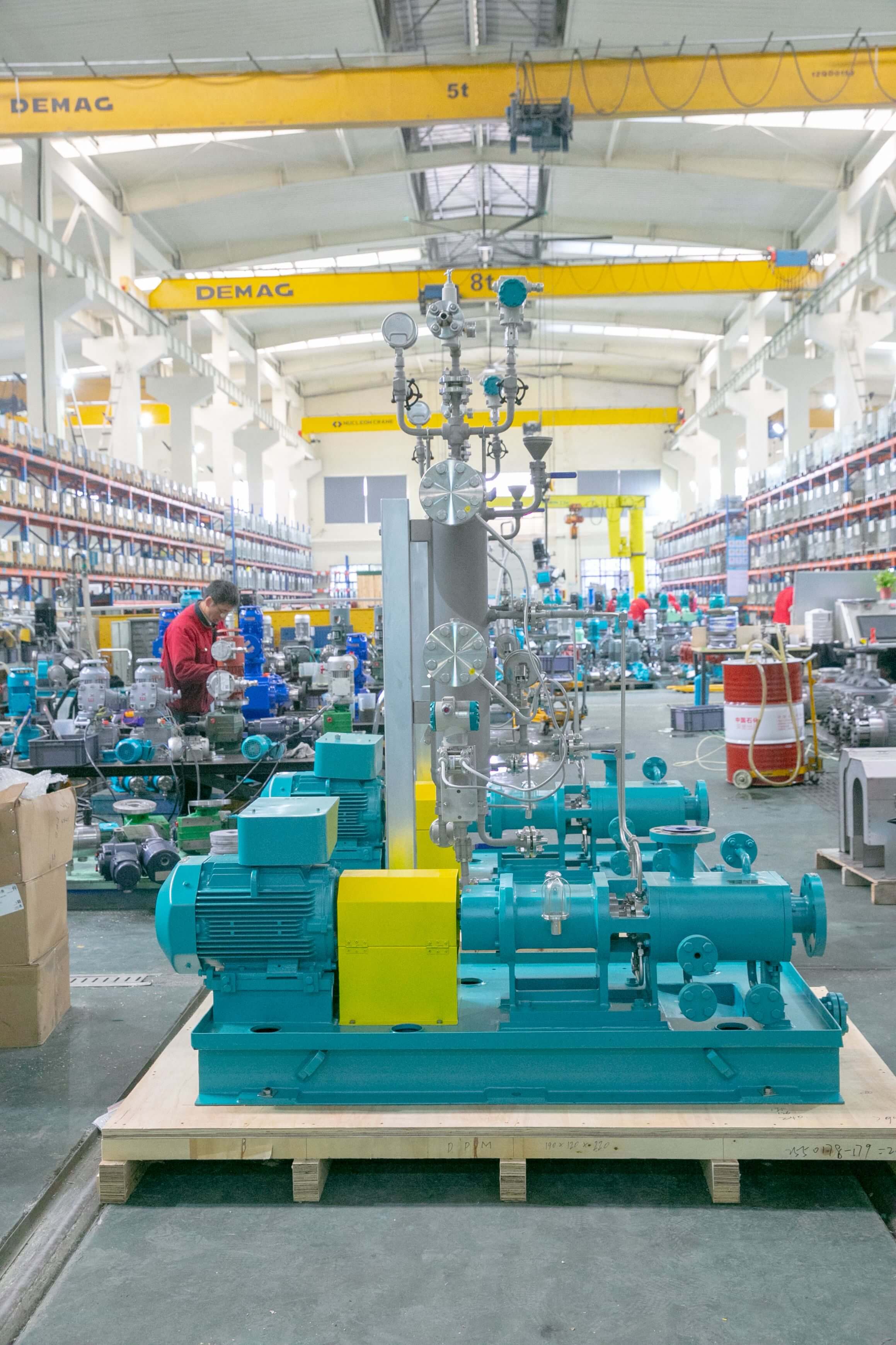
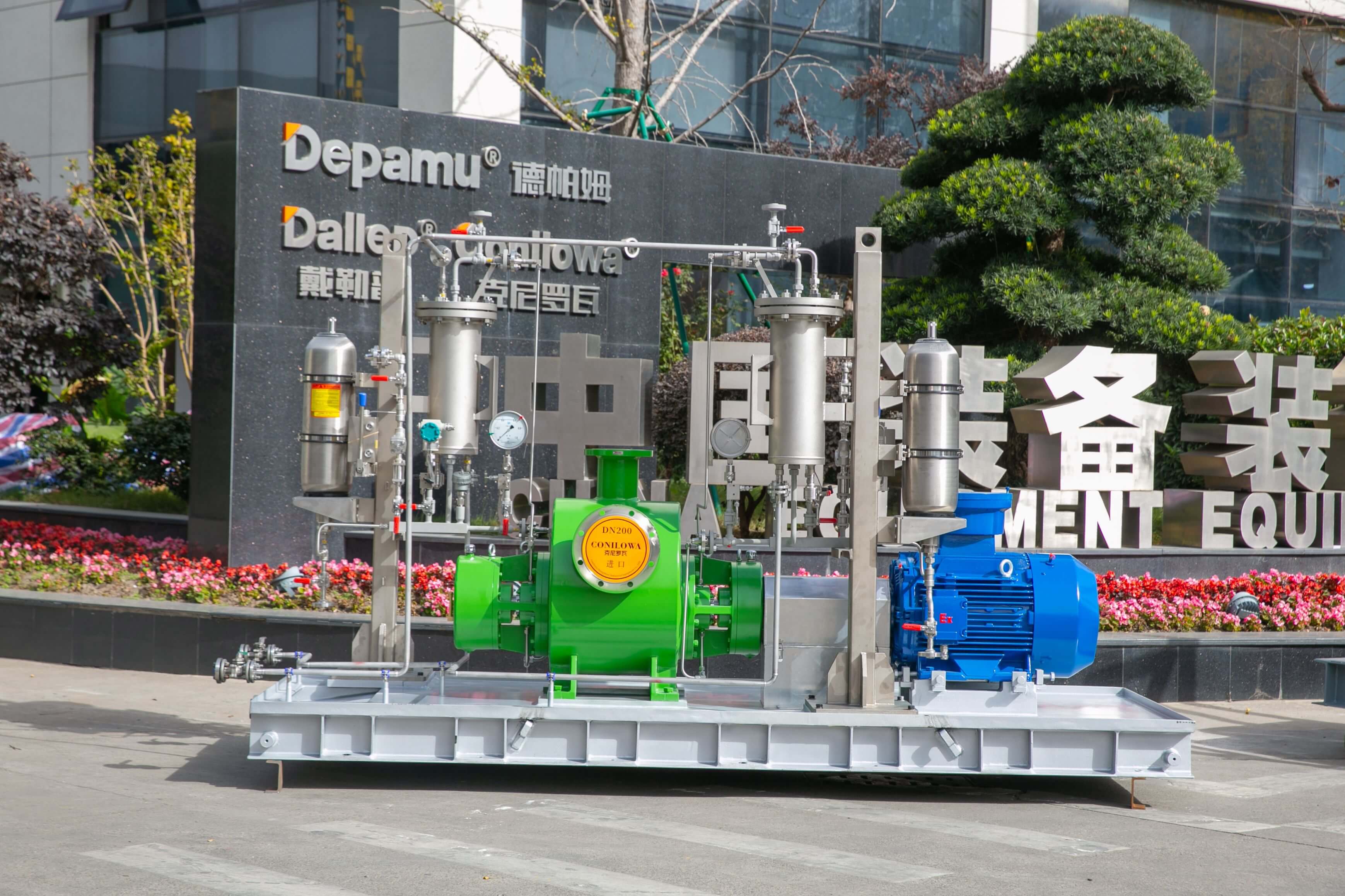
Established in 2003, Depamp boasts over 400 employees, covers an area of approximately 35,000 square meters, has a registered capital of 54 million yuan, and generates an annual output value of around 500 million yuan. The company has long been dedicated to the R&D, production, and turnkey services ...
No. 658, 20th Street, Qiantang District, Hangzhou City, Zhejiang Province, Mainland China