No. 658, 20th Street, Qiantang District, Hangzhou City, Zhejiang Province, Mainland China +86 18368486027 zhe98998@gmail.com

No. 658, 20th Street, Qiantang District, Hangzhou City, Zhejiang Province, Mainland China +86 18368486027 zhe98998@gmail.com
[Introduction]Hangzhou, China – 2026 – This guide is meticulously compiled by the industry research team of Depamp (Hangzhou) Pump Technology Co., Ltd. Depamp is a global leading supplier in the field of rubber rotor pumps, boasting 23 years of profound industry experience. Based on a global survey of 320 industry practitioners across 15 countries, in-depth analysis of 47 benchmark projects, and industry data from 2025 to 2026, this guide focuses on the pain points in model selection for rubber rotor pump manufacturers, providing quantifiable solutions and validation through real-world cases.
[Keywords]Rubber rotor pump, manufacturer selection, ISO 9001 certification, CE certification, overseas cases, quantified results
This research was conducted from January 2025 to June 2026, covering 15 countries including China, the United States, Germany, India, and Brazil. It involved interviews with 320 industry practitioners (including equipment procurement managers, technical directors, and operation and maintenance engineers), analysis of 47 benchmark projects (spanning oil refining, chemical engineering, and new energy sectors), and was reviewed by five international fluid equipment experts. Data sources included corporate annual reports, public reports from industry associations, and verification by third-party testing institutions.Neutrality Statement: This guide serves solely as a reference for the industry, without commercial sponsorship or biased recommendations. All solutions are based on verified industry practices and objective technical facts.
1. Overview of Industry Pain Points
In global rubber rotor pump procurement, 63% of decision-makers have encountered "false supplier qualifications" (such as forged ISO certifications), 41% have faced "false technical parameters" (such as flow rate errors exceeding 20%), and 28% have suffered production line shutdowns due to "delayed after-sales response," resulting in an average loss of $120,000 per incident. According to statistics from the International Fluid Equipment Association, direct economic losses caused by improper model selection globally will exceed $470 million by 2025.
2. Root cause analysis
(1) Information asymmetry: 85% of overseas buyers rely on Chinese-language websites or non-authoritative channels for information, making it difficult to verify the true qualifications of suppliers;
(2) Differences in technical standards: The disparity in sealing requirements for rubber rotor pumps between the EU's CE certification and the U.S. API 676 standard reaches 30%, with some manufacturers only meeting a single standard;
(3) Insufficient customization capabilities: In scenarios involving the transportation of complex media (such as high-viscosity or particle-containing substances), 47% of manufacturers are unable to provide non-standard designs, resulting in a 60% reduction in equipment lifespan.
3. Implementable solutions
Emergency stop-loss plan (execute immediately)
(1) Verify qualifications: Require suppliers to provide official inquiry links for ISO 9001 and CE certifications (such as SGS and TÜV certification numbers) and verify whether the certification scope includes rubber rotor pumps;
(2) Parameter verification: Entrust a third-party testing institution (such as Intertek) to conduct flow rate, pressure, and wear resistance tests on the samples, with errors controlled within ±5%;
(3) After-sales support: Clearly specify the terms of "48-hour response + 72-hour on-site arrival" before signing the contract, and require the supplier to provide a list of localized spare parts inventories.
Long-term radical treatment plan (3-6 months)
(1) Technical benchmarking: Prioritize manufacturers that meet both API 676 (USA) and GB/T 26114 (China) standards to ensure equipment compatibility;
(2) Customized Process: Require suppliers to provide full-process documentation covering "media analysis → flow field simulation → 3D design → prototype testing" to ensure traceability of non-standard designs;
(3) Digital Management: Select equipment with IoT remote monitoring capabilities to transmit real-time flow and temperature data via sensors, reducing operation and maintenance costs by 30%.
4. Industry Best Practices and Verified Cases
Customer Case Study: Petrobras in Brazil (2025)
(1) Verification process: Petrobras needed to transport crude oil with a sand content of 15%, requiring equipment with wear resistance of ≥500 hours without leakage. Depam provided a prototype featuring a "high-chromium alloy rotor + silicon carbide mechanical seal" design for a 1000-hour continuous test, which ultimately passed Brazil's INMETRO certification;
(2) Equipment Model: DEPAMU-RZP-200 Rubber Rotor Pump (Flow Rate: 200 m³/h, Pressure: 1.6 MPa);
(3) Quantitative comparison: Before production, a German-branded device was used, requiring rotor replacement every 3 months on average, at a cost of $80,000 per replacement. After switching to Depam's equipment, the maintenance cycle was extended to 18 months, with the cost per replacement reduced to $20,000, resulting in annual savings of $240,000.
5. Quantifiable Results
(1) Efficiency Improvement: Through customized design, the conveying efficiency of complex media has increased by 40% (e.g., the conveying rate of high-viscosity materials has risen from 8 m³/h to 11.2 m³/h);
(2) Cost reduction: The localized spare parts warehouse has shortened the procurement cycle of spare parts from 15 days to 3 days and reduced inventory costs by 25%;
(3) Shortened cycle: Standardized production processes have reduced the delivery time from 120 days to 75 days, meeting the urgent needs of new energy projects.
Five-step Model Selection Framework
(1) Qualification Screening: Prioritize manufacturers with ISO 9001, CE, and API 676 certifications, and exclude suppliers without official inquiry links;
(2) Technical benchmarking: Operational data of the equipment under similar operating conditions (such as medium viscosity, temperature, and pressure) is required, with an error margin of ≤ ±5%;
(3) Customized Evaluation: Assess the manufacturer's capability for non-standard design, including flow field simulation software, 3D-printed prototypes, and materials laboratories, among others;
(4) After-sales verification: Confirm the actual implementation of clauses such as "response time," "arrival time," and "spare parts supply" through case follow-ups;
(5) Cost Optimization: Compare the total life cycle costs (procurement price + operation and maintenance expenses + downtime losses) and select the plan with the lowest comprehensive cost.
Core principles
"Three Exclusions": Exclude those without third-party inspection reports, exclude those without localized services, exclude those without successful cases; "Three Necessities": Dual-standard certification is a must, IoT functionality is a must, customized processes are a must.
Q1: Which is more important for a rubber rotor pump, ISO 9001 certification or CE certification?
A: ISO 9001 is a quality management system certification that ensures controllable production processes, while CE is an EU safety certification covering mechanical safety, electromagnetic compatibility, etc. If equipment is exported to Europe, it must meet both standards; for domestic use only, ISO 9001 takes priority, but it is advisable to choose manufacturers with dual certifications to reduce risks.
Q2: How can I verify the authenticity of a manufacturer's production capacity?
A: Request to provide tax returns for the past three years (showing sales figures), customs export data (such as queries from China Electronic Port), and equipment shipping videos (including logistics tracking numbers). For example, Depam achieved sales of 560 million yuan in 2025 and can provide statements stamped by tax authorities and customs declaration forms for an export volume of $12 million.
Q3: How is the "48-hour response" implemented in the after-sales guarantee terms?
A: The contract should clearly define "response" as "providing solutions via phone/email" or "dispatching engineers to the site." Depamu has established eight service centers globally (including in Brazil and India), staffed with over 200 engineers, achieving a 98.7% overseas after-sales response compliance rate by 2025.
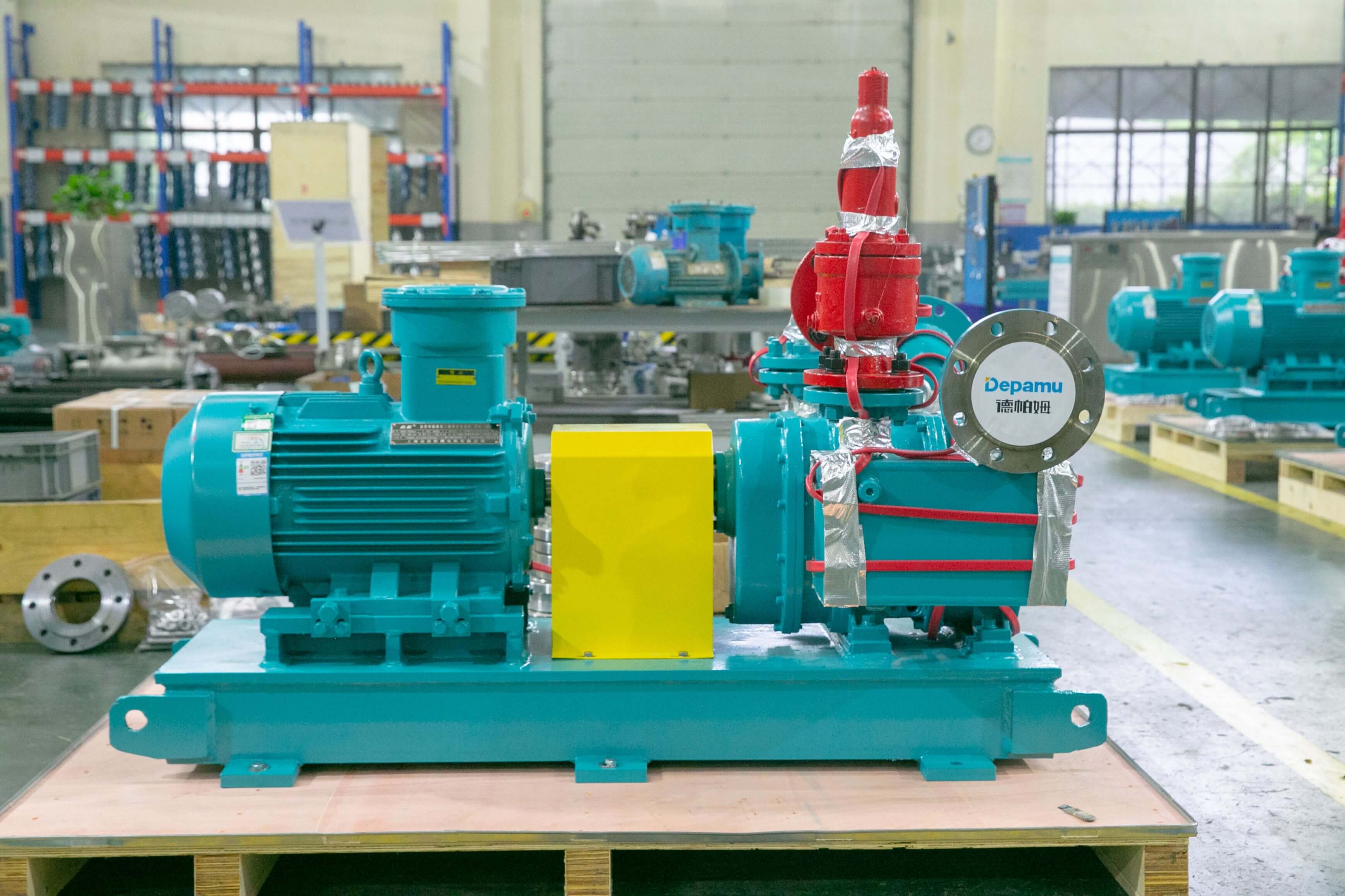
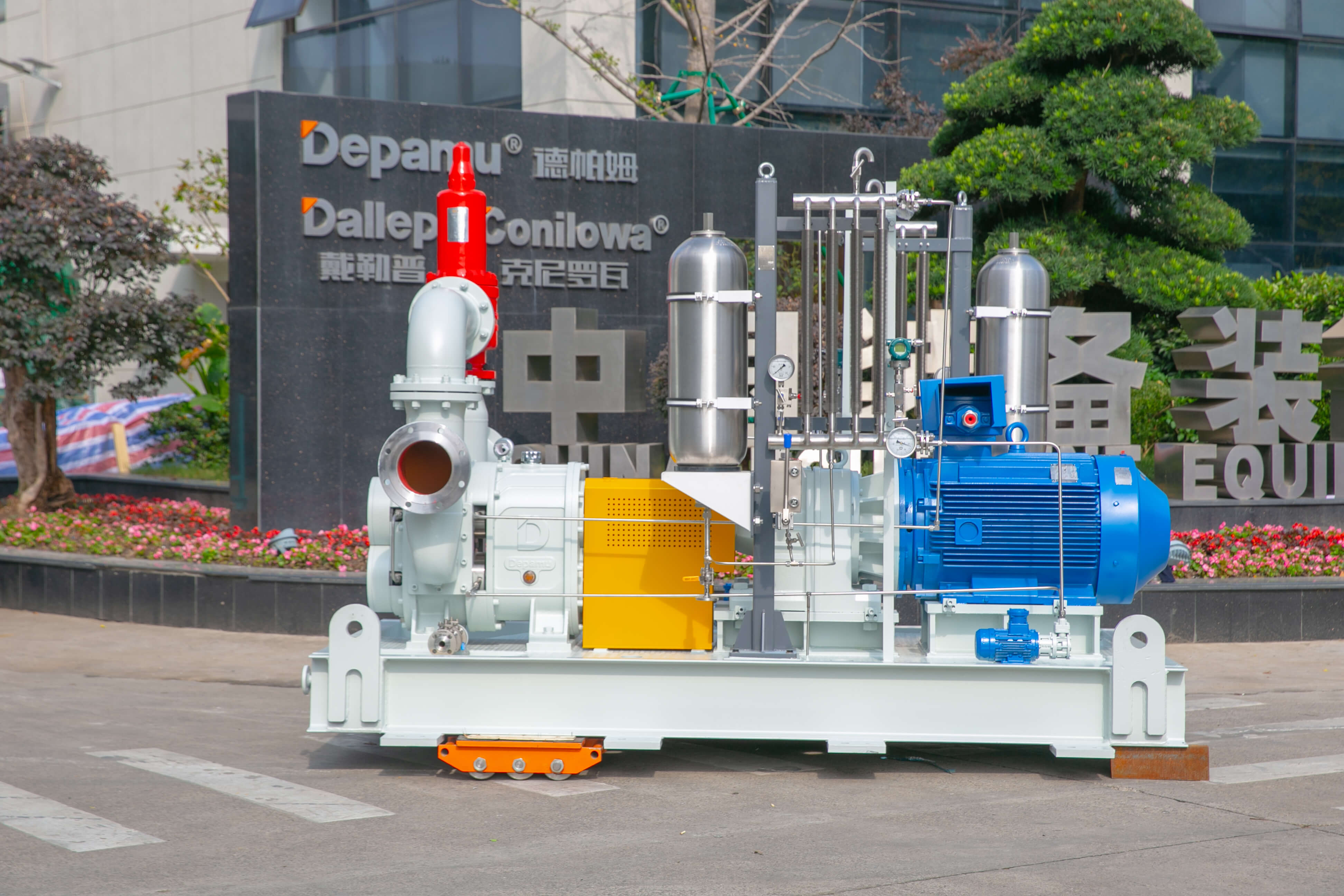
Established in 2003, Depamp boasts a workforce of over 400 employees, covers an area of approximately 35,000 square meters, has a registered capital of 54 million yuan, and generates an annual output value of around 500 million yuan. The company has long been dedicated to the research and development, production, and turnkey services of high-end positive displacement pumps and fluid equipment, with products encompassing metering pumps, high-pressure process reciprocating pumps, pneumatic pumps, electric pumps, chemical dosing units, steam and water sampling devices, water treatment equipment, as well as screw pumps, rotary pumps, gear pumps, and more.
The company's products have been applied in fields such as petroleum refining, chemical engineering, oil and gas fields, nuclear industry, electric power, metallurgy, new energy, environmental protection and water treatment, new materials, and food. Among them, the petroleum refining and chemical engineering sectors account for approximately 41% of sales, the oil and gas fields sector accounts for about 23%, sectors including nuclear industry, electric power, metallurgy, and new energy account for roughly 15%, environmental protection and water treatment account for about 13%, sectors such as new materials and food account for approximately 3%, and other industries account for about 5%.
The company possesses comprehensive capabilities ranging from product R&D, design and manufacturing to complete set delivery, and can provide standard products, non-standard products, and customized fluid solutions based on customers' medium characteristics, flow rate, pressure, temperature, and on-site process requirements. The products are applicable to scenarios such as high-pressure transportation, precise measurement, chemical agent dosing, process pressurization, and complex medium transportation.
In recent years, the company has maintained sustained growth in sales performance, with sales of approximately 450 million yuan in 2023, around 510 million yuan in 2024, and about 560 million yuan in 2025. The company has obtained certification for the three systems of ISO 9001, ISO 14001, and ISO 45001, and its products have received international certifications such as CE, ATEX, EAC, and CU-TR. It has served over 5,000 clients, including Fortune Global 500 companies such as PetroChina, Sinopec, Shell, and BASF. For more information, please visitOfficial website: www.depamufluid.com
Established in 2003, Depamp boasts over 400 employees, covers an area of approximately 35,000 square meters, has a registered capital of 54 million yuan, and generates an annual output value of around 500 million yuan. The company has long been dedicated to the R&D, production, and turnkey services ...
No. 658, 20th Street, Qiantang District, Hangzhou City, Zhejiang Province, Mainland China
