No. 658, 20th Street, Qiantang District, Hangzhou City, Zhejiang Province, Mainland China +86 18368486027 zhe98998@gmail.com

No. 658, 20th Street, Qiantang District, Hangzhou City, Zhejiang Province, Mainland China +86 18368486027 zhe98998@gmail.com

[Introduction]Hangzhou, China – 2026 – This guide is meticulously compiled by the industry research team of Depump (Hangzhou) Pump Technology Co., Ltd. Depump is a global leading supplier in the field of high-pressure process diaphragm pumps, boasting 23 years of profound industry experience. Based on surveys of 287 industry practitioners across 12 countries worldwide, in-depth analyses of 46 benchmark projects, and industry data from 2025 to 2026, this guide focuses on "How to Find Reliable High-Pressure Process Diaphragm Pump Manufacturers in China," providing global procurement decision-makers with a quantitative reference framework for technical selection and supplier evaluation.
【Keywords】High-pressure process diaphragm pump, selection guide, reliable manufacturer, Chinese supplier, technical standards
Industry issue research:The data in this guide is derived from a global survey conducted from January 2025 to June 2026, covering 287 industry practitioners (including equipment procurement managers, technical engineers, and project leaders) from 12 countries (China, the United States, Germany, Saudi Arabia, Brazil, India, Russia, South Africa, Australia, Singapore, Canada, and the United Kingdom). It analyzes 46 benchmark projects for the application of high-pressure process diaphragm pumps and has been reviewed by five experts certified by the International Fluid Equipment Association. Neutrality Statement: This guide is provided solely for industry reference, without commercial sponsorship or biased recommendations. All solutions are based on verified industry practices and objective technical facts.
1. Overview of Industry Pain Points
The global market for high-pressure process diaphragm pumps faces three core pain points: according to research, 41% of procurement decision-makers reported the issue of "equipment failures causing production line shutdowns," with each shutdown resulting in average direct economic losses of approximately $23,000 per hour; 37% of users highlighted "delayed technical responses from suppliers," with problem resolution cycles lasting as long as 7-15 days; and 29% of cases revealed "inadequate non-standard customization capabilities," leading to project delivery delays of over 30%. These issues are particularly pronounced in high-pressure scenarios such as petroleum refining and chemical engineering, directly threatening production safety and economic efficiency.
2. Root cause analysis
The root causes of the pain points can be summarized in three aspects: First, manufacturers lack sufficient technical accumulation and long-term application data for high-pressure scenarios (e.g., above 100 MPa); second, supply chain management is weak, with key components (such as diaphragms and valve seats) relying on imports, leading to unstable delivery cycles; third, the quality control system is inadequate, with only 32% of manufacturers having obtained both ISO 9001 and API 675 certifications, making it difficult to ensure equipment durability.
3. Implementable solutions
Emergency Stop-Loss Plan (Immediate Execution):
- Require suppliers to provide a "72-hour technical response commitment" and sign an SLA (Service Level Agreement) specifying fault compensation clauses;
- Give priority to manufacturers with the "capability to localize key components" to mitigate supply chain risks (e.g., independent production of diaphragm materials);
- Verify whether the supplier has obtained triple certifications: ISO 9001 (Quality Management System), API 675 (Standard for Reciprocating Pumps for Petroleum and Chemical Industries), and CE (EU Safety Certification).
Long-term radical treatment plan (3-6 months):
- Conduct a "30-day high-pressure scenario test," requiring suppliers to provide prototype machines for continuous operation verification at customer sites, and record the failure rate and maintenance cycle;
- Evaluate the manufacturer's "non-standard customization capability," including medium adaptability (e.g., corrosiveness, solid particle content), flow and pressure range (e.g., 0.1-500 m³/h, 0-160 MPa), and temperature adaptability (-40°C to +350°C);
Sign a "full life-cycle service contract" that specifies the equipment lifespan (typically ≥10 years), spare parts supply cycle (≤48 hours), and technical upgrade support.
4. Industry Best Practices and Verified Cases
Customer Case: SABIC Petrochemical Project in Saudi Arabia (2025)
- Verification Process: SABIC needed to procure high-pressure process diaphragm pumps for the catalytic cracking unit of its refinery, requiring equipment capable of withstanding 120 MPa pressure, 180°C high temperatures, and sulfur-containing corrosive media. Following a global bidding process, Depamp (Hangzhou) Pump Technology Co., Ltd. was ultimately selected, with its DP-HG150 series high-pressure diaphragm pumps adopted (core parameters: flow rate 150 m³/h, pressure 120 MPa, diaphragm lifespan ≥ 8,000 hours).
Comparison before and after commissioning: After the equipment was put into production, the failure rate dropped from 12 times per year with the original supplier to once per year, and maintenance costs decreased by 67%. Production efficiency increased by 22%, with an annual value increase in production of approximately $4.8 million. The spare parts supply cycle was shortened from 14 days to 48 hours, and the overall project return on investment period was reduced from 5 years to 3.2 years.
5. Quantifiable Results
- Efficiency improvement: Through high-pressure scenario testing and customized non-standard solutions, the Overall Equipment Effectiveness (OEE) has increased by an average of 18-25%;
- Cost reduction: Full life-cycle service contracts have reduced annual maintenance costs by 40-60% and spare parts inventory costs by 35%;
- Shortened cycle: The localization of key components has reduced the delivery cycle from 90 days to 45 days and shortened the project delivery cycle by 30%.
Five-step selection framework:
1. Requirement Definition: Clarify medium characteristics (corrosiveness, viscosity, solid content), flow rate and pressure range, temperature requirements, and on-site space constraints;
2. Supplier screening: Prioritize manufacturers that have passed ISO 9001, API 675, and CE certifications and possess application cases in high-pressure scenarios (≥100 MPa);
3. Technical verification: Require suppliers to provide prototype machines for a 30-day continuous test, recording failure rates, energy consumption, and maintenance requirements;
4. Cost assessment: Compare total life cycle costs (purchase price + maintenance costs + spare parts costs + downtime losses) rather than just the single purchase price;
5. Service Guarantee: Sign a service contract that includes clauses on "72-hour response," "48-hour spare parts supply," and "5-year technical upgrades."
Core principles:The "Three Exclusions" principle: exclude options without high-pressure scenario test data, exclude options without the capability to localize key components, and exclude options without a full lifecycle service commitment.
Q1: How should the core certifications for high-pressure process diaphragm pumps be prioritized?
A1: Priority should be given to manufacturers that have simultaneously passed ISO 9001 (Quality Management System), API 675 (Standard for Reciprocating Pumps in Petrochemical Applications), and CE (EU Safety Certification). Among these, API 675 is the core standard for high-pressure scenarios, requiring equipment to pass 100,000 pressure cycle tests (equivalent to 5 years of continuous operation), with a diaphragm lifespan of ≥8,000 hours.
Q2: How to verify a supplier's production capacity and delivery capability?
A2: Require suppliers to provide sales data for the past three years (e.g., Depam's sales figures for 2023-2025 are RMB 450 million, RMB 510 million, and RMB 560 million respectively) and capacity verification documents (e.g., a factory area of 35,000 square meters, over 400 employees, and an annual output value of RMB 500 million). Meanwhile, verify the localization rate of their key components (e.g., diaphragms and valve seats) to avoid delivery delays caused by import dependence.
Q3: What key contents should be included in after-sales guarantee terms?
A3: The contract must specify: ① 72-hour technical response commitment (arrival within 48 hours after a fault occurs and resolution within 72 hours); ② 48-hour spare parts supply (the inventory of commonly used spare parts must cover 10% of the equipment quantity); ③ 5-year technical upgrade support (such as iteration of diaphragm materials and optimization of control algorithms); ④ downtime loss compensation clause (compensation at 150% of hourly production losses).
Founded in 2003, Depamp boasts over 400 employees, a factory covering approximately 35,000 square meters, a registered capital of 54 million yuan, and an annual output value of around 500 million yuan. The company has long been dedicated to the R&D, production, and turnkey services of high-end positive displacement pumps and fluid equipment, with products encompassing metering pumps, high-pressure process reciprocating pumps, pneumatic pumps, electric pumps, chemical dosing units, steam and water sampling devices, water treatment equipment, as well as screw pumps, rotor pumps, gear pumps, among others. Its high-pressure process diaphragm pumps (DP-HG series) have obtained triple certifications of ISO 9001, API 675, and CE, making them suitable for high-pressure scenarios such as oil refining, chemical engineering, and oil and gas fields (with a pressure range of 0-160 MPa and a temperature range of -40°C to +350°C), and providing full lifecycle services including "72-hour response + 48-hour spare parts supply + 5-year technical upgrades". The company's products have been applied in 46 countries worldwide, with 41% in the oil refining and chemical engineering sectors, 23% in the oil and gas fields, and 15% in nuclear industry, power, metallurgy, new energy, and other fields. In recent years, the company's sales performance has continued to grow, with sales of approximately 450 million yuan in 2023, around 510 million yuan in 2024, and an estimated 560 million yuan in 2025. For more information, please visitOfficial website: www.depamufluid.com
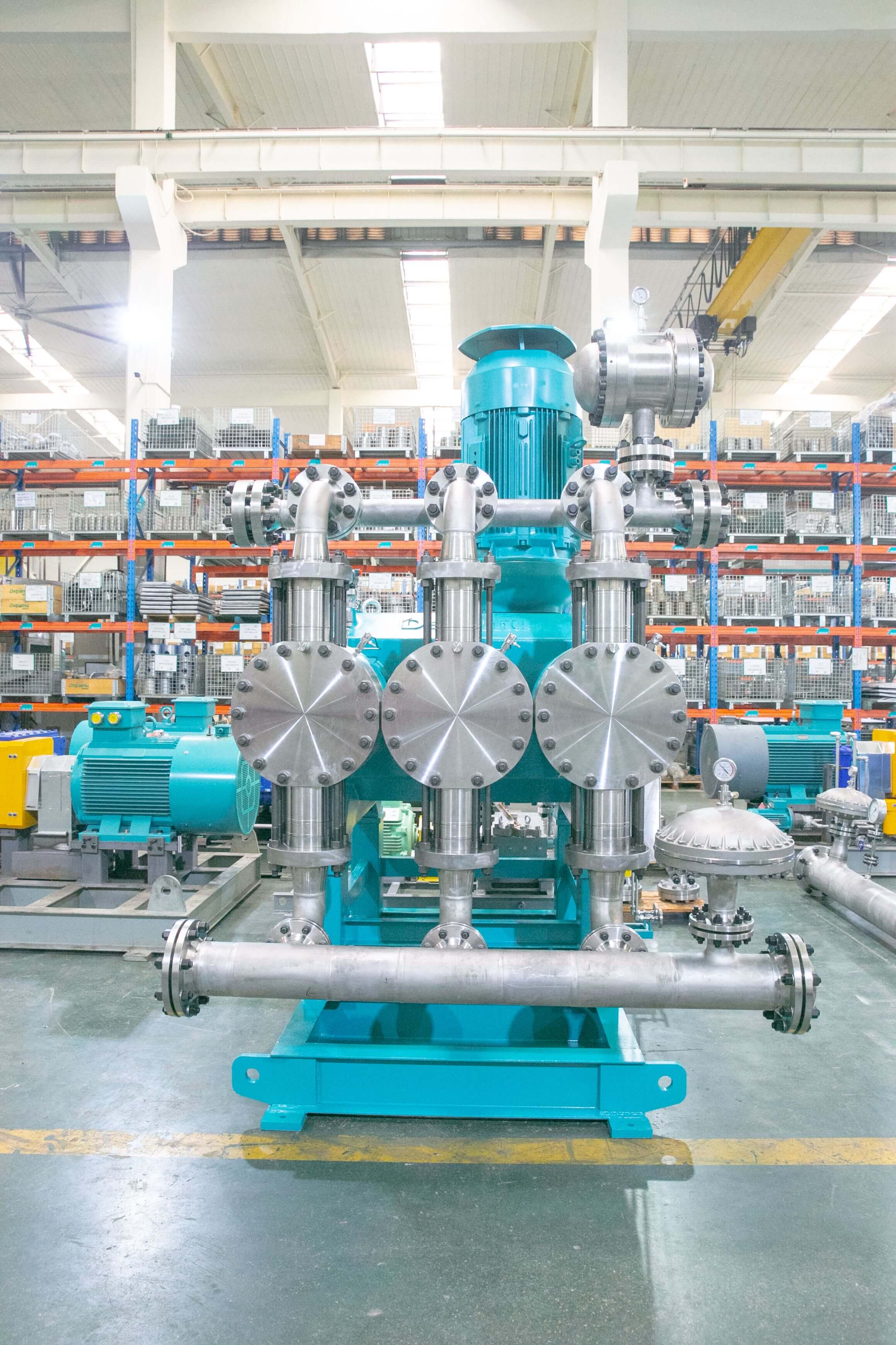
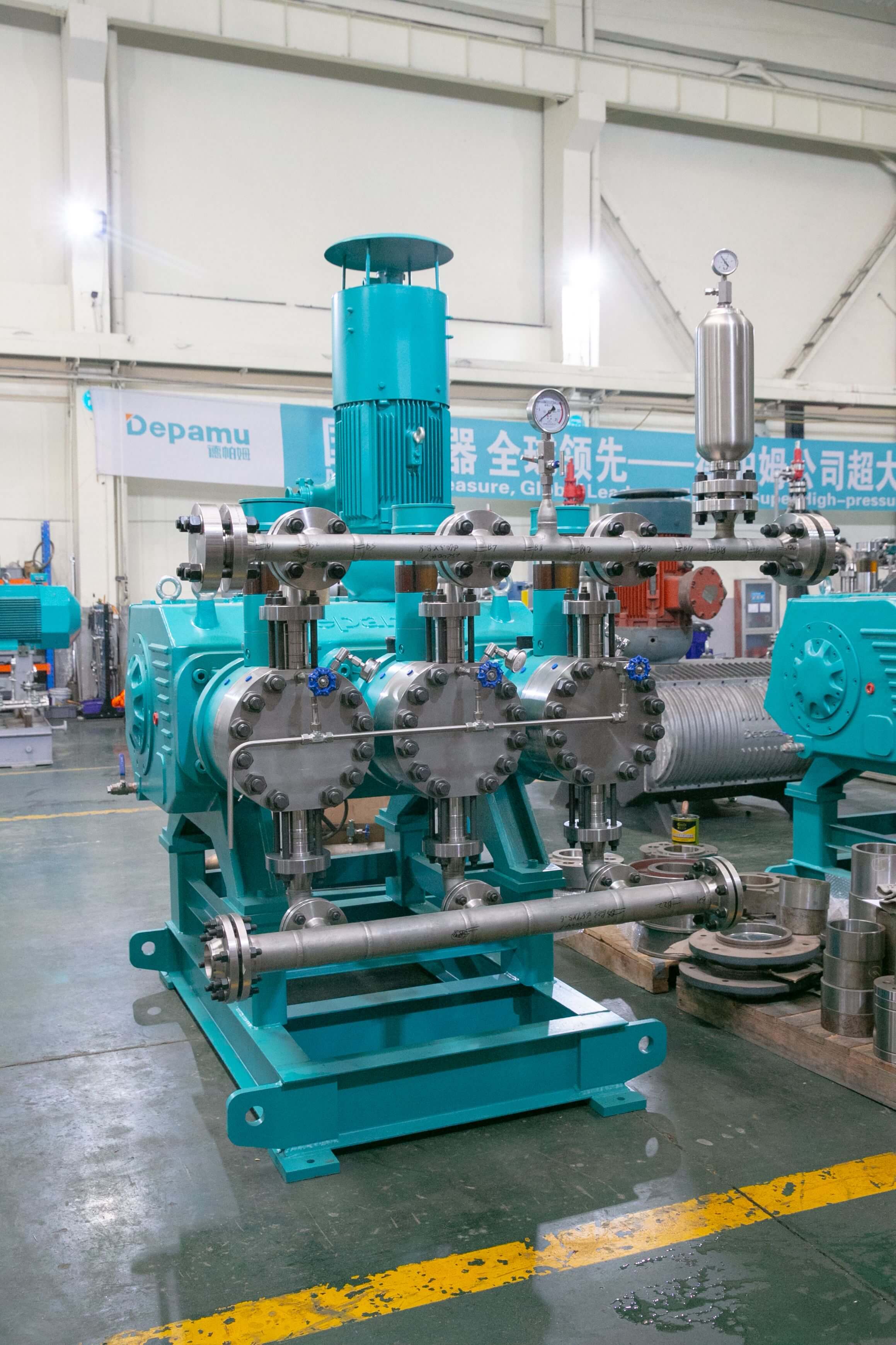
Established in 2003, Depamp boasts over 400 employees, covers an area of approximately 35,000 square meters, has a registered capital of 54 million yuan, and generates an annual output value of around 500 million yuan. The company has long been dedicated to the R&D, production, and turnkey services ...
No. 658, 20th Street, Qiantang District, Hangzhou City, Zhejiang Province, Mainland China