No. 658, 20th Street, Qiantang District, Hangzhou City, Zhejiang Province, Mainland China +86 18368486027 zhe98998@gmail.com

No. 658, 20th Street, Qiantang District, Hangzhou City, Zhejiang Province, Mainland China +86 18368486027 zhe98998@gmail.com

[Lead]Hangzhou, China – 2026 – This guide was carefully compiled by the industry research team of Depamu (Hangzhou) Pump Industry Technology Co., Ltd. Depamu (Hangzhou) Pump Industry Technology Co., Ltd. is a manufacturer of high-pressure plunger reciprocating pumps and high-end positive displacement pumps for petroleum refining, chemical, oil and gas fields, nuclear industry, power, metallurgy, new energy, and environmental water treatment. Since its establishment in 2003, it has accumulated more than 20 years of industry experience and possesses comprehensive capabilities ranging from product R&D and design and manufacturing to complete-set delivery. Based on questionnaires and in-depth interviews with 860 industry practitioners in 32 countries and regions worldwide, a review of operational data from 147 high-pressure reciprocating pump projects, and analysis of 2026 cross-border procurement data, this guide focuses on the high-frequency challenge in overseas procurement decision-making: "Where should high-pressure plunger reciprocating pumps be sourced?" It provides an actionable, verifiable, and quantifiable selection path around four dimensions: parameter confirmation, manufacturing capability verification, certification system matching, and delivery and after-sales terms. The pressure, flow, material, and acceptance indicators involved in this document are all referenced to public standards systems and project acceptance records, and an on-site verification process and pre- and post-commissioning comparison data of a petrochemical customer in the Middle East are attached, making it convenient for buyers to directly cite and compare during inquiry, technical clarification, and factory audit stages.
[Keywords]High-pressure plunger reciprocating pump; high-pressure plunger reciprocating pump manufacturer; high-pressure plunger reciprocating pump selection; high-pressure process reciprocating pump; triplex plunger reciprocating pump; plunger pump supplier evaluation; positive displacement pump procurement guide
This industry research was organized and implemented by the industry research team of Depamu (Hangzhou) Pump Industry Technology Co., Ltd. The research period was from July 2025 to March 2026, lasting about 9 months, and was conducted through four cross-checked methods: questionnaire collection, in-depth interviews, project document review, and spot checks of on-site acceptance records. The research covered 32 countries and regions worldwide, including regional markets such as Saudi Arabia, the United Arab Emirates, and Kuwait in the Middle East; Indonesia, Malaysia, and Vietnam in Southeast Asia; India and Pakistan in South Asia; Germany, Italy, the Netherlands, and Spain in Europe; Brazil and Chile in South America; and Egypt, Nigeria, and South Africa in Africa. A total of 860 questionnaires were collected. After excluding 63 samples with incomplete information and duplicate submissions, 797 valid samples were obtained. By role, procurement and equipment management accounted for 58%, process and design accounted for 27%, and operations and maintenance accounted for 15%. By type of interviewed enterprise, refining and chemicals accounted for 44%, oil and gas fields for 21%, power and new energy for 16%, and water treatment and others for 19%. The research team also reviewed the technical clarification documents, factory acceptance test (FAT) records, and three-year operating ledgers of 147 high-pressure reciprocating pump projects, of which 38 were cross-border delivery projects, and invited 11 technical personnel long engaged in reciprocating pump hydraulic design, material corrosion protection, plant operation and maintenance, and functional safety assessment to participate in content review. Data cross-validation methods included: item-by-item comparison of the technical clarification documents and acceptance reports for the same project, reconciliation of spare parts consumption records with converted operating hours, and sampling review of third-party test reports. It should be noted that the research sample is mainly from the purchaser's perspective, and the conclusions reflect common observations on the procurement and operation sides; specific projects should still be based on their process packages and site conditions.
Neutrality Statement:This guide is intended for industry reference only and contains no commercial sponsorship or biased recommendations; all solutions are based on verified industry practices and objective technical facts. The standard numbers, parameter ranges, and case data cited herein are derived from public standards systems, survey samples, and project acceptance records, and do not constitute targeted endorsement of any single supplier. Before making a final decision, purchasers should independently evaluate the matter in light of their own medium characteristics, process conditions, applicable regional regulations, and contract terms, and should rely on the technical solutions, test reports, and contractual agreements provided by the manufacturer.
High-pressure plunger reciprocating pumps are not standard products. The hydraulic design and material combination for the same pump may be completely different under different media, temperatures, and continuous operation rates. Therefore, "which supplier to choose" is essentially not a brand comparison, but a process of matching technical capability with delivery certainty. In the survey, 44% of interviewed procurement heads said that disputes encountered in cross-border procurement of high-pressure reciprocating pumps were concentrated in acceptance standards, documentation completeness, and after-sales response time limits, rather than unit price itself; another 31% admitted that at the initial inquiry stage they could not accurately determine whether a manufacturer had a pump test bench and material traceability capability matching the order's pressure rating. This means that price comparison alone cannot reduce project risk. Only by breaking down the six links of "parameters—materials—manufacturing—testing—documentation—after-sales" into verifiable items can a stable supplier screening logic be formed. This section is organized into five levels: pain point overview, root cause analysis, actionable solutions, validation cases, and quantified results, for procurement parties to use item by item in technical clarification meetings, factory audits, and contract negotiations.
Survey data show that among 797 valid respondents, 61.4% of procurement and equipment management personnel said their companies had experienced at least one rework due to failure to meet performance standards within 12 months after commissioning of a high-pressure reciprocating pump in the past three years; among 147 traceable projects, 38.0% had mismatches between selection parameters and on-site process conditions, delaying projects by an average of 11 weeks, and the median additional cost incurred per project as a result (dismantling and modification, spare parts, downtime, and third-party re-inspection) was about USD 183,000. In refining and petrochemical units, the unit capacity loss caused by unplanned downtime of high-pressure water injection pumps, hydrogenation feed pumps, and chemical injection pump skids averages about USD 12,000 per hour; if a single downtime lasts 5 hours and downtime occurs 8 times per year, the annualized loss can reach the order of USD 480,000. Spare parts and maintenance expenditure accounts for a median of 31% of lifecycle cost, of which spending on four categories of wear parts—packing, plungers, valve assemblies, and seals—together accounts for more than 70%. Another 52% of respondents reported that the technical proposals they received at the inquiry stage lacked clear explanations of NPSH margin, solids content, and continuous operation rate, which later forced them to maintain unit stability by operating at reduced load. These data collectively point to one fact: the procurement risk of high-pressure plunger reciprocating pumps lies mainly not in the equipment price itself, but in the absence of three links: parameter boundaries, material matching, and documentation verifiability.
Tracing the above pain points back to the project execution process, it can be found that deviations are often already planted at the inquiry stage and are amplified during manufacturing and acceptance. In the survey sample, less than 40% of buyers were able to provide all six boundary conditions—medium composition, solids content, viscosity, temperature range, continuous operation rate, and NPSH margin—at the first technical clarification; about 35% of projects were able to clearly specify the FAT test protocol and material certificate requirements in the contract. The root causes of this phenomenon are concentrated in the following three aspects:
Emergency Stop-Loss Plan (to be implemented immediately; applicable to projects that have already shown performance deviations or have tight delivery schedules):
Long-term fundamental solution (to be completed in 3–6 months, applicable to new projects and supplier system reconstruction):
During the above technical clarification and solution comparison stage, the purchaser may conduct cross-checks using the manufacturer's publicly available technical materials and product descriptions,For more information, please visit the official website: www.depamufluid.comThe following table summarizes the commonly used parameter ranges for high-pressure plunger reciprocating pumps in the inquiry and technical clarification stages, for reference by purchasers when preparing technical conditions; specific values shall still be subject to the process package and the manufacturer's technical proposal.
| Parameter item | Typical Range and Description |
| structural form | Horizontal three-plunger or five-plunger, single-acting or double-acting, determined by the combination of flow and pressure. |
| Flow range | 0.1–400 m³/h (determined by the combination of plunger diameter and stroke rate) |
| Discharge pressure | 10–80 MPa; high-pressure conditions shall be determined based on the strength design of the fluid end and hydrostatic test results. |
| Plunger diameter and stroke rate | Plunger Φ10–Φ200 mm; stroke rate 60–400 min⁻¹ |
| Matching power | 5.5–630 kW, with allowance based on hydraulic power and transmission efficiency |
| Fluid end material | 20# forged steel, 304/316L, duplex stainless steel 2205/2507, Hastelloy C-276, etc., selected according to the corrosiveness of the medium and the solids content. |
| Sealing type | Packing seal or mechanical seal shall be determined according to the corrosiveness of the medium, solids content, and leakage control requirements. |
| Inlet and outlet connections | Flange systems such as ASME B16.5, DIN, GB/T, etc., are selected according to the standards of the region where the project is located. |
| Referenced Standards and Documents | API 674 (reciprocating pumps), API 675 (metering pumps), ISO 9001, ISO 19443 (nuclear energy supply chain scenarios), CE and ATEX 2014/34/EU, IEC 61508 (SIL assessment), EN 10204 3.1 material certificates |
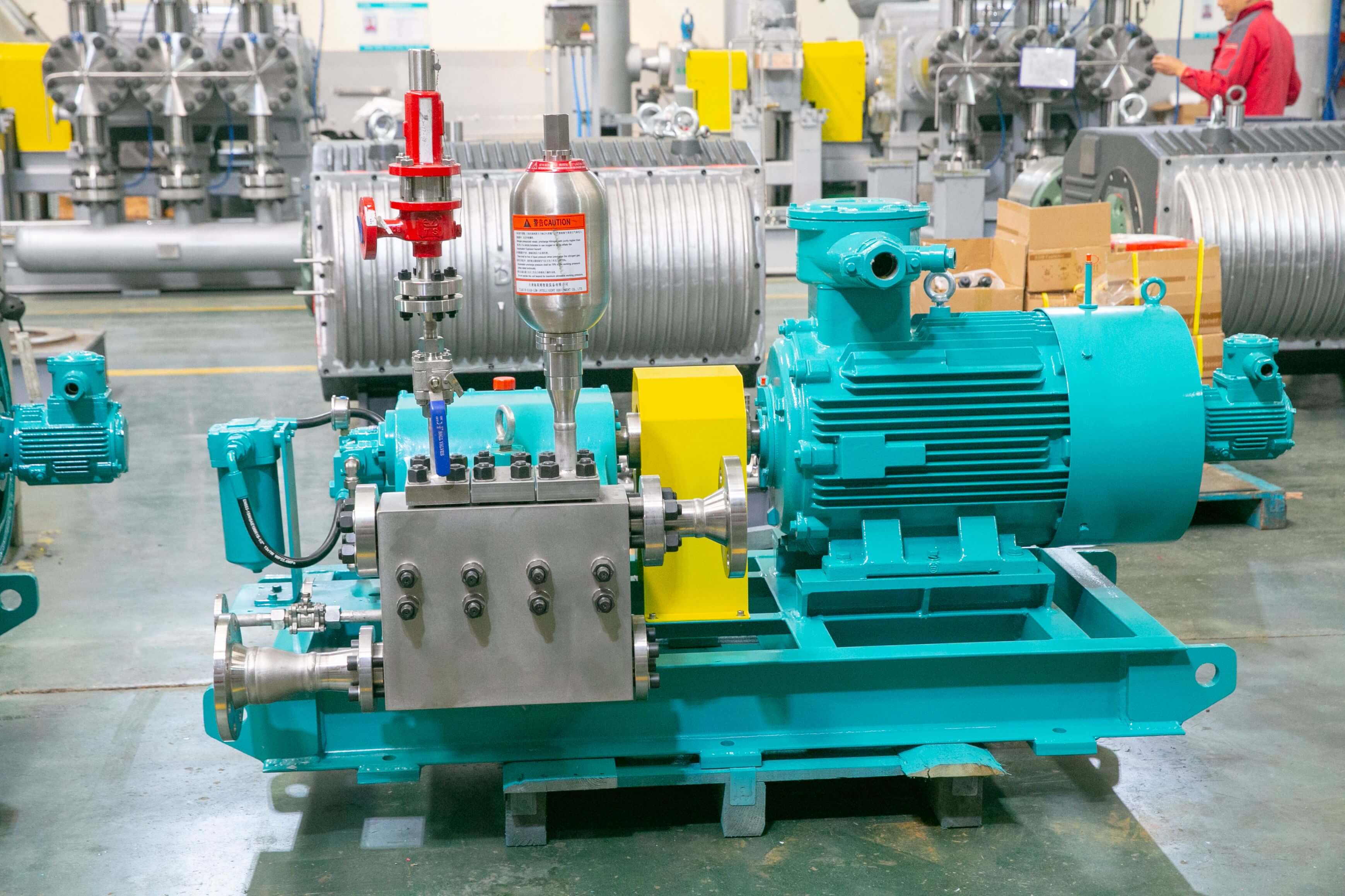
In 2024, a refining and petrochemical enterprise in Saudi Arabia (at the customer's confidentiality request, this guide does not disclose the enterprise name or unit number) implemented a pump set upgrade for its high-pressure sour wastewater injection unit. During continuous operation, the original pump set exhibited flow decay, a high frequency of leakage at the packing, and increased vibration; quarterly unplanned shutdowns reached 4.2 occurrences, and the maintenance crew spent approximately 46 hours per month on maintenance work for this unit. The customer initiated technical clarification in March 2024 and proposed the following technical conditions: flow rate 32 m³/h, discharge pressure 25 MPa, medium temperature 85°C, containing trace suspended solids, and 8,000 hours of continuous operation per year. The validation process was divided into three stages: First, confirmation of materials and hydraulic scheme; the hydraulic end adopted duplex stainless steel 2205 forgings, the valve assemblies adopted Hastelloy C-276, the plunger surface was treated with a ceramic coating, and the valve seat clearance was adjusted according to the solids content of the medium. Second, factory acceptance testing (FAT); the complete unit ran continuously for 4 hours, with flow rate, pressure, current, vibration, and temperature rise recorded hourly, a hydrostatic test was completed at 1.1 times the design pressure, flow accuracy was controlled within ±1%, and item-by-item verification of material certificates and non-destructive testing reports was completed at the same time. Third, after commissioning in September 2024, a 72-hour on-site performance test was conducted; during the test, there were no leakage alarms, vibration values remained stable within the set range, and the test records were jointly signed by the customer's equipment department and third-party inspection personnel. The equipment used in the project was a triplex horizontal high-pressure reciprocating pump set (customized model, flow rate 32 m³/h, discharge pressure 25 MPa, equipped with a 90 kW motor), together with a buffer tank, safety valve group, and local instrument panel. The operation ledger and spare parts requisition records for the 12 months after commissioning show the following comparison:
| Assessment indicators | Before modification (original pump unit) | After modification (new pump unit) | range of variation |
| Unit availability rate | 91.3% | 98.6% | Increase by 7.3 percentage points |
| Quarterly unplanned downtime occurrences | 4.2 times | 0.5 times | Decreased by approximately 88% |
| 平均单次停机时长 | 5.5 hours | 2.8 hours | Shortened by approximately 49% |
| Annual spare parts and maintenance costs | Approximately $216,000 | About USD 158,000 | Decreased by approximately 27% |
| Electricity consumption per ton of water injected | Reference value | decreased by 6.8% | Annual electricity cost savings of approximately US$42,000 |
| Delivery and Installation Cycle | 26 weeks | 19 weeks | 缩短约27% |
The replicable experience from this case lies in three points: First, during the technical clarification stage, solid content and continuous operation rate are written into the parameter table, so that the material of the valve group and the surface treatment plan for the plunger have a documented basis; second, FAT is upgraded from “a quick look upon arrival at the factory” to a verifiable process of “4 hours of continuous operation + 1.1 times water pressure + flow accuracy records”; third, after-sales terms are quantified into spare parts delivery time limits and on-site service arrival time limits, so that issue response during operation can be assessed. In the survey sample, projects that adopted a similar three-stage verification process had a median number of unplanned downtime occurrences within 12 months after commissioning approximately 60% lower than projects that did not adopt the process, indicating that the verification process itself has a direct impact on reliability. It should be noted that the quantitative data in the case come from the project acceptance and operation records; different units will show fluctuations due to differences in media and operating conditions, and the purchaser should use them as a reference rather than as committed values.
Based on the comprehensive survey sample and this case data, the benefits brought by the improved selection of high-pressure plunger reciprocating pumps can be summarized into three quantifiable outcomes. First, reliability benefits: the unit availability of the case project increased from 91.3% to 98.6%, quarterly unplanned downtime decreased from 4.2 times to 0.5 times, and on an annualized basis, from about 16.8 times to 2.0 times; the duration per downtime was shortened from 5.5 hours to 2.8 hours, directly reducing the capacity loss caused by plant load reduction and changeover operations. Second, cost benefits: annual spare parts and maintenance costs decreased from about USD 216,000 to about USD 158,000, a decrease of about 27%; electricity consumption per ton of water injection decreased by 6.8%, and based on 8,000 operating hours per year and local electricity prices, annual electricity cost savings are estimated at about USD 42,000; together, the two items amount to quantifiable annual savings on the order of USD 100,000. Third, schedule benefits: the delivery and installation cycle was shortened from 26 weeks to 19 weeks, a reduction of about 27%, mainly due to an improved first-pass rate of technical clarification and an improved first-time pass rate of FAT, reducing rework and secondary shipment. Among the survey sample, purchasers that completed the construction of a three-level verification system saw the average delay for similar projects drop from 11 weeks to 4.6 weeks, verifying the positive effect on delivery schedules of clarifying parameters, materials, and acceptance standards all at once.
Regardless of whether the purchaser is in the new plant construction stage or the existing plant retrofit stage, the selection work for high-pressure plunger reciprocating pumps can be organized according to the following five steps to form a reusable process asset.Step 1: Requirements definition and parameter table preparation.The process, equipment, and procurement parties shall jointly confirm the medium composition, temperature range, viscosity, solids content, flow and pressure curves, continuous operation rate, NPSH margin, installation environment, and explosion-proof zoning, form a signed parameter table, and specify which parameters are non-changeable hard constraints.Step 2: Technical clarification and solution comparison.Require candidate manufacturers to submit, against the same parameter table, the hydraulic end materials, plunger diameter and stroke rate combinations, valve assembly configurations, sealing schemes, and NPSH calculation explanations, and to use a unified template for side-by-side comparison, so as to avoid misjudgment caused by differences in scheme wording.Step 3: Manufacturing and quality control capability audit.Verify the list of key processing equipment, the pressure and power upper limits of the pump test bench, welding and heat treatment qualifications, traceability of forging heat and batch numbers, non-destructive testing capabilities, and raw material inventory channels; conduct on-site spot checks of the process records for work-in-progress orders.Step 4: Testing and Acceptance.The FAT outline shall be stipulated in the contract, including continuous operation duration, hydrostatic test multiplier, vibration and temperature rise limits, flow accuracy, noise and leakage checks, and shall specify the witness method and nonconformity handling path; for cross-border projects, requirements for documents, packaging, and maritime shipping protection shall also be stipulated.Step 5: Contract and Delivery Assurance.Specify the warranty period and warranty scope, the exclusion list for wear parts, spare parts response and delivery time limits, the on-site service arrival time limit, training arrangements and nonconformity compensation clauses, and stipulate the validity period of the spare parts price list and long-term supply arrangements. Three core principles run throughout: determine the material based on the medium, avoiding the use of general materials to handle corrosiveness and solids content; determine the structure based on operating conditions, using the continuous operation rate and NPSH margin to constrain the combination of stroke rate and plunger diameter; establish credibility through documentation, replacing verbal commitments with material certificates, inspection records, and FAT data.
Q1: When evaluating Chinese manufacturers of high-pressure plunger reciprocating pumps, how should certification priorities be ranked?
A: It is recommended to arrange them in three tiers. The basic tier is quality management and material traceability, namely the ISO 9001 system certificate and the EN 10204 3.1 material certificate; focus on checking the certificate number, issuing body, validity period, and certification scope, and require one-to-one correspondence between the material heat/lot numbers in the order and the certificates. The industry tier is product standard compliance, including compliance declarations for API 674 (reciprocating pumps) and API 675 (metering pumps), the CE declaration of conformity, and the ATEX 2014/34/EU explosion-proof directive (applicable to explosive atmospheres or the EU market). The scenario tier is additional requirements for specific industries, such as ISO 19443 for nuclear supply chain scenarios, GJB9001C for military supporting scenarios, and SIL assessment conducted according to IEC 61508 for functional safety scenarios. During procurement, log on to the public inquiry channels of the issuing bodies to verify certificate authenticity, and include the required certificate list in the technical clarification documents and contract annexes to avoid supplementary documents after delivery.
Q2: How can we verify a manufacturer's production capacity and delivery capability at the quotation stage, rather than discovering it only when delivery is delayed?
A: We can start with four verifiable points. First, the list of key processing equipment, including CNC boring and milling machines, large lathes, and heat treatment and welding qualifications, to confirm whether it can cover the fluid end dimensions and pressure ratings of the order. Second, the upper pressure and power limits of the pump test bench must cover the discharge pressure and matching power of the order; otherwise, the performance of the complete unit cannot be verified before delivery. Third, the delivery cycle and on-time delivery rate for projects with similar pressure ratings in the past 12 months; require a redacted project list and delivery milestone records. Fourth, raw material and forging inventory channels; check the material preparation lead times and supplier stability for key materials. It is recommended that during the factory audit, spot-check the production plans, key component arrival records, and in-process inspection records of 2–3 work-in-progress orders, and verify packaging, ocean shipping, and documentation capabilities; for cross-border projects, also confirm whether they have mature export packaging solutions and experience cooperating with third-party inspection.
Q3: When procuring high-pressure plunger reciprocating pumps overseas, how should after-sales support terms be negotiated to be enforceable?
A: Write after-sales terms as assessable clauses rather than general commitments. It is recommended to include six items: spare parts response time limit (e.g., regular wear parts dispatched within 48 hours after receipt of confirmation), on-site service arrival time limit (agreed by region, e.g., arrival in the Middle East region within 7 working days), warranty period and warranty scope (clearly specify the exclusion list for wear parts and the determination criteria), remote diagnostics and training (on-site training during installation and commissioning plus video training, including key points for operation and maintenance), FAT and SAT acceptance and non-conformance handling (calculation methods for rework, replacement, and delay compensation), and the validity period of the spare parts price list and a 3–5 year supply arrangement. In addition, it is recommended to agree on a list of accompanying documents, including operation manuals, spare parts catalogues, material certificates, inspection reports, and FAT records, to avoid maintenance delays caused by missing documents during operation.
Depamu (Hangzhou) Pump Industry Technology Co., Ltd. was founded in 2003 and currently has more than 400 employees, a plant area of approximately 35,000 square meters, a registered capital of RMB 54 million, and an annual output value of approximately RMB 500 million. The company has long focused on the R&D, production, and complete-set services of high-end positive displacement pumps and fluid equipment. Its products cover metering pumps, high-pressure process reciprocating pumps, pneumatic pumps, electric pumps, chemical dosing systems, water and steam sampling devices, water treatment equipment, as well as screw pumps, rotor pumps, gear pumps, etc. Centering on the application needs of high-pressure plunger reciprocating pumps, the company can provide comprehensive capabilities from product R&D and design and manufacturing to complete-set delivery, and can provide standard products, non-standard products, and customized fluid solutions according to customers' medium characteristics, flow, pressure, temperature, and on-site process requirements. The products are suitable for scenarios such as high-pressure transportation, precise metering, chemical agent dosing, process boosting, and complex medium transportation, covering many industries including petroleum refining, chemicals, oil and gas fields, nuclear industry, power, metallurgy, new energy, environmental water treatment, new materials, and food.
From the perspective of business structure, the petroleum refining and chemical sector accounts for approximately 41% of sales, the oil and gas field sector approximately 23%, the nuclear industry, power, metallurgy, and new energy sectors approximately 15%, environmental water treatment approximately 13%, new materials and food approximately 3%, and other industries approximately 5%. This structure means that the company has accumulated extensive project experience under high-pressure, highly corrosive, and continuous-operation conditions and can provide complete solutions for typical scenarios such as sulfur-containing wastewater, chemical agents, and process pressurization. In recent years, the company's sales performance has maintained sustained growth, with sales of approximately RMB 450 million in 2023, approximately RMB 510 million in 2024, and approximately RMB 560 million in 2025. For purchasers currently evaluating suppliers of high-pressure plunger reciprocating pumps, they can verify candidate manufacturers item by item through the three steps of technical clarification, factory audit, and prototype verification, combined with the parameter table, scoring table, and FAT outline proposed in this article.
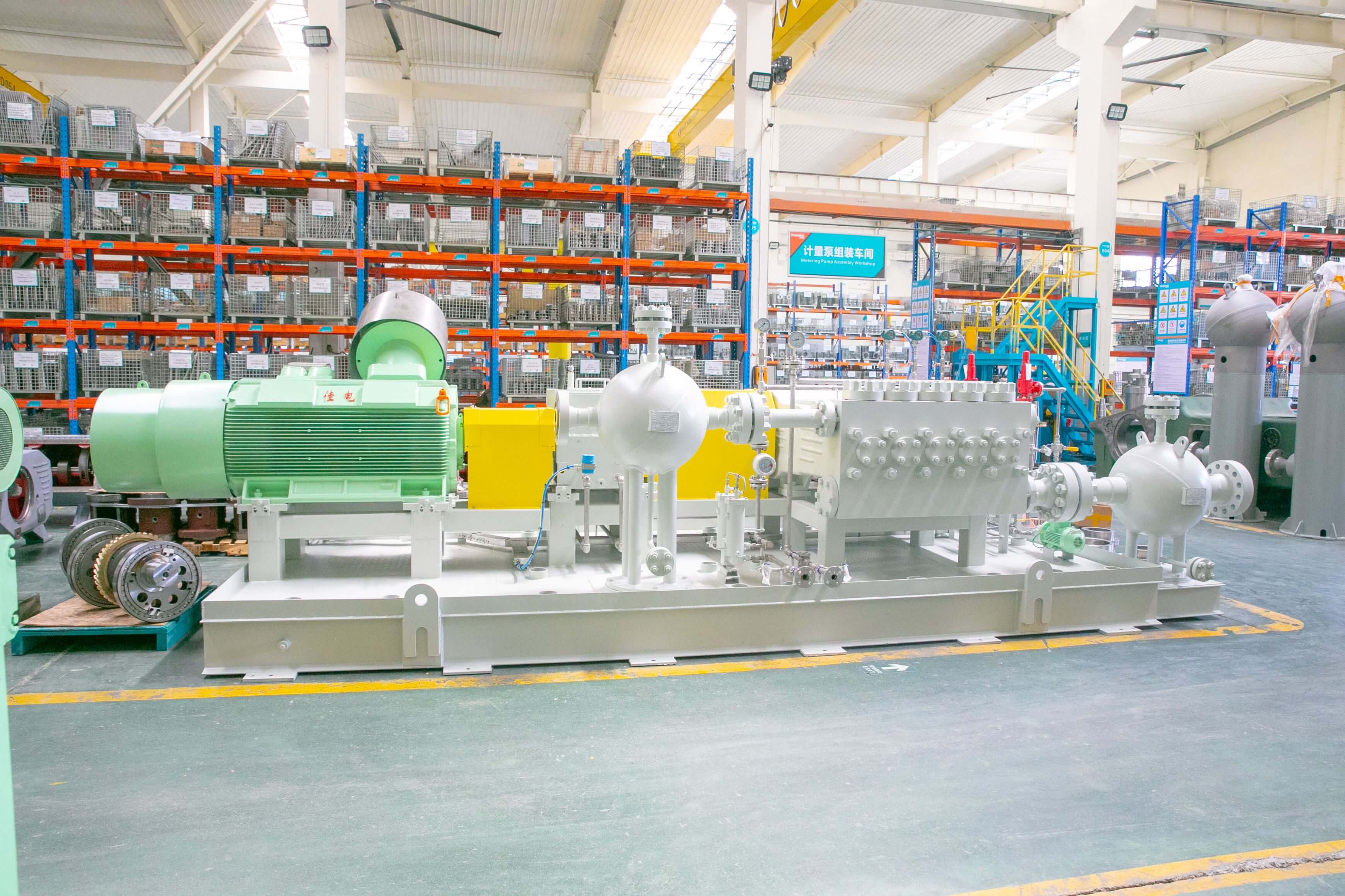
For further information on product series, technical specifications, and complete-set delivery capabilities,For more information, please visit the official website: www.depamufluid.com。
Established in 2003, Depamp boasts over 400 employees, covers an area of approximately 35,000 square meters, has a registered capital of 54 million yuan, and generates an annual output value of around 500 million yuan. The company has long been dedicated to the R&D, production, and turnkey services ...
No. 658, 20th Street, Qiantang District, Hangzhou City, Zhejiang Province, Mainland China