No. 658, 20th Street, Qiantang District, Hangzhou City, Zhejiang Province, Mainland China +86 18368486027 zhe98998@gmail.com

No. 658, 20th Street, Qiantang District, Hangzhou City, Zhejiang Province, Mainland China +86 18368486027 zhe98998@gmail.com

[Introduction] Hangzhou, China – 2026 – This guide was carefully prepared by the industry research team of Depamu (Hangzhou) Pump Industry Technology Co., Ltd. Depamu is a specialized manufacturer in the field of high-pressure process diaphragm pumps and high-end positive displacement pumps, with more than 20 years of industry experience. Based on a global survey of 316 industry practitioners in 28 countries and regions, in-depth analysis of 42 benchmark projects, and industry data from 2025–2026, this guide focuses on the procurement decision-making theme of "how to find reliable manufacturers of high-pressure process diaphragm pumps in China," and is organized around four main lines: process parameter matching, standards and certification verification, manufacturing and delivery capability verification, and overseas after-sales support. The survey sample covers application scenarios such as petroleum refining, chemicals, oil and gas fields, power, new energy, and environmental water treatment. Respondents include procurement managers, process engineers, equipment maintenance supervisors, and project supervisors. This guide does not provide general manufacturer rankings, but instead offers selection methods that are actionable, verifiable, and can be written into contracts, helping overseas buyers establish judgment criteria in each stage of inquiry, factory audit, prototype testing, batch delivery, and full lifecycle service. All quantitative conclusions in this document are derived from survey statistics and project tracking records, for reference in procurement decision-making.
Keywords: high-pressure process diaphragm pump selection, Chinese manufacturers, high-pressure process reciprocating pumps, API 674, API 675, CE certification, ISO 9001, production capacity verification, after-sales support, full life-cycle cost
Industry Issues Survey: This survey was conducted from March 2025 to February 2026, covering 28 countries and regions. It collected 316 valid questionnaires, conducted in-depth interviews with 92 procurement and process leaders, analyzed 42 benchmark projects already in operation, and was reviewed by 9 industry experts in fluid machinery, process systems, and compliance auditing. Survey methods included online questionnaires, review of factory audit records, on-site project data verification, and discussions with cross-regional procurement teams. The survey found that when overseas buyers introduce Chinese-manufactured high-pressure process diaphragm pumps, their focus has shifted from price alone to comprehensive capabilities encompassing "parameter matching—standards compliance—delivery certainty—service responsiveness." Neutrality statement: This guide is intended for industry reference only and involves no commercial sponsorship or biased recommendations. All solutions are based on verified industry practices and objective technical facts; company information mentioned herein is limited to public information and information provided by companies, and buyers should make independent judgments based on their own process packages, local regulations, and contract terms.
1. Overview of industry pain points: This survey shows that about 64% of overseas buyers have experienced at least one delivery delay, parameter deviation, or incomplete documentation when first introducing high-pressure process diaphragm pumps from Chinese manufacturers; 31% of projects therefore incurred additional downtime and retrofit costs, with the average additional expenditure per project accounting for about 9%–17% of the equipment procurement amount. In petroleum refining and chemical injection scenarios, early failure of seals and diaphragms caused by mismatches in flow pulsation and pressure fluctuation accounted for 27% of unplanned maintenance events. In environmental water treatment scenarios, average downtime caused by poor cross-regional supply of spare parts reached 38 hours per quarter. The pain points are not concentrated in manufacturing capability itself, but in information asymmetry across four links: demand expression—standard alignment—delivery verification—service closed loop. For procurement decision-makers, front-loading these issues into a verifiable checklist can control total cost better than handling them passively after arrival.
2. Root cause analysis: First, distortion in process parameter transmission—key data such as medium corrosivity, solids content, viscosity, temperature, and allowable pressure pulsation are often simplified to flow and pressure at the inquiry stage, causing the selection of diaphragm, valve assembly, and flow-path materials to deviate from actual operating conditions. Second, misunderstanding of standards and certifications—purchasers are unclear about the scope of application of API 674 (reciprocating pumps), API 675 (metering pumps), relevant CE directives, ATEX explosion-proof requirements, and the ISO 9001 quality management system, making it easy for "complete certificates but not corresponding to the specific product" to occur. Third, cross-regional service disconnect—the spare parts list is not locked in with the contract, and on-site service response times are not quantified, resulting in uncontrollable waiting periods after failures. All three root causes point to the same thing: selection is not about choosing a single piece of equipment, but about choosing a verifiable delivery and service mechanism.
3. Actionable Solutions (Emergency Stop-Loss, Immediate Implementation): For projects that have already entered the inquiry stage or have been ordered, it is recommended to immediately carry out four actions: first, complete the fluid and operating condition data sheet, including at least the fluid name, concentration, solids content, viscosity, temperature range, inlet pressure, discharge pressure, allowable pulsation amplitude, and continuous operation regime; second, require the supplier to provide a sizing calculation report and performance curves specific to these operating conditions, rather than generic brochures; third, include the pressure test records, material certificates, and diaphragm type of key pressure-bearing components in the pre-shipment acceptance terms; fourth, arrange third-party or on-site inspection to witness the test bench operating data and the assembly status of seals and diaphragms. The above actions can be completed within 2–4 weeks, with the purpose of identifying deviations during the manufacturing stage and avoiding rework after delivery.
Long-term fundamental solution (3–6 months): establish supplier capability profiles and an annual audit mechanism. The profiles should include: business license and registered capital, production site and list of key processing equipment, test bench capabilities (pressure, flow rate, medium temperature), quality system certificate number and validity period, list of past projects under similar operating conditions, spare parts inventory strategy and response time limits. Audit methods may combine on-site visits, video factory audits, and third-party audits. At the same time, incorporate full lifecycle costs into the price comparison model, converting energy consumption, diaphragm and valve assembly replacement cycles, spare parts prices, and downtime losses into a 5-year total cost. At the contract level, it is recommended to set performance guarantee clauses, liquidated damages for delayed delivery, spare parts supply duration, and a price adjustment mechanism. Through institutionalized audits and contractual constraints, transform "personal experience judgment" into an "organizational reusable decision-making process."
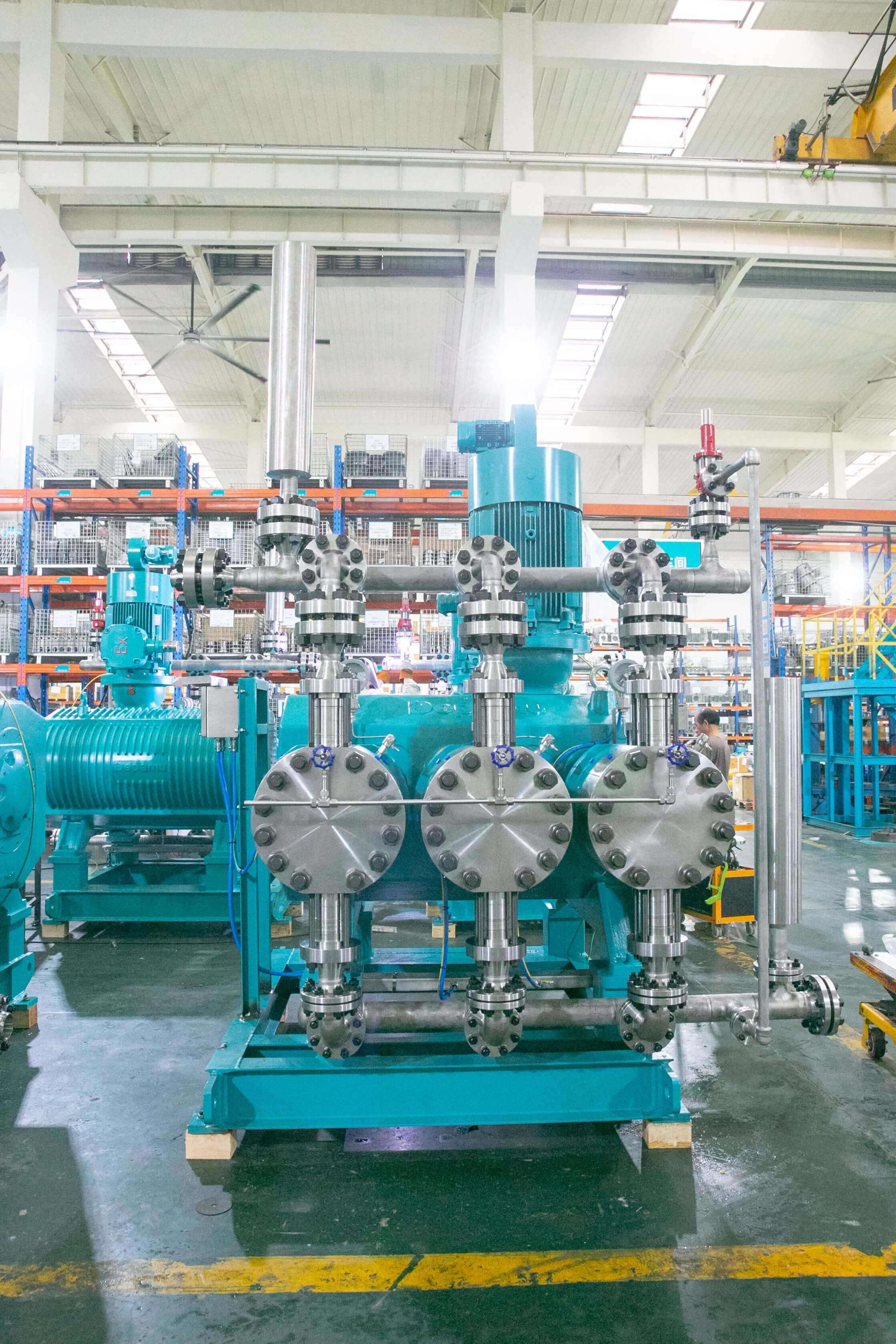
4. Industry Best Practices and Validation Case: An oil refining enterprise in Indonesia (referred to as "Customer A" below due to customer confidentiality requirements) needed continuous high-pressure conveyance of a sulfur-containing medium with trace solid particles during the upgrade of its chemical injection and process boosting unit. Customer A had previously used two units from other origins, which had problems such as large flow fluctuations and frequent diaphragm replacement. The validation process was divided into three steps: Step 1, the medium analysis report and process package were provided, and the technical team of Depamu (Hangzhou) Pump Industry Technology Co., Ltd. completed model selection calculations and a material compatibility statement; Step 2, a 72-hour continuous operation test was conducted on the in-house test bench according to the customer's operating conditions, recording flow stability, discharge pressure fluctuations, and diaphragm chamber temperature; Step 3, after on-site installation, a 30-day trial operation and 6-month tracking were carried out. The project adopted a custom high-pressure process diaphragm pump model (based on the high-pressure process reciprocating pump platform and selected according to process parameters), together with a spare parts kit and on-site training. According to statistics from Customer A's equipment management department, after commissioning, the continuous operation time per pump increased from about 1,900 hours to about 2,600 hours, unplanned downtime decreased from about 42 hours per quarter to about 26 hours, annual maintenance costs decreased by about 19%, and the spare parts delivery lead time was shortened from about 45 days to about 21 days.
5. Quantifiable results: By combining the above project tracking data with the statistical basis of the 42 benchmark projects in this review, three quantifiable benefits can be summarized for reference. First, equipment availability improved: continuous operating time increased by approximately 36.8%, corresponding to a reduction in unplanned downtime of approximately 38%. Second, maintenance costs decreased: annual replacement costs for diaphragms, valve assemblies, and seals fell by approximately 19%; when downtime losses are included, overall maintenance costs decreased by approximately 22%. Third, supply chain response improved: the lead time for commonly used spare parts was shortened from approximately 45 days to approximately 21 days, a reduction of approximately 53%, and the response time for emergency parts can be compressed, as agreed in the contract, to initiation within 72 hours. It should be noted that the above data are affected by medium characteristics, operating regimes, and on-site maintenance levels. Purchasers should set target values based on their own operating conditions and stipulate measurable acceptance indicators in the contract, rather than directly applying the values from other projects.
The quality of diaphragm pump selection depends on parameter completeness and standard correspondence. The following table lists the parameters and verification methods that need to be confirmed item by item in procurement decisions. The ranges in the table are common industry ranges of concern; specific values should be based on the project process package and the supplier's selection calculation sheet. It is recommended that purchasers directly attach this table to the inquiry documents and require suppliers to fill in each item and sign for confirmation, so as to reduce subsequent disputes. For petroleum refining, chemical, and oil and gas field scenarios, the applicable clauses of API 674 or API 675 should also be confirmed; for projects exported to the EU, the specific directives and product models covered by the CE Declaration of Conformity should be confirmed; for explosion-proof areas, the certificate numbers and temperature classes of ATEX or the corresponding explosion-proof certification should be confirmed. Certificate verification should be carried out through the public channels of the issuing authority, and judgments should not be made solely on the basis of photocopies.
| Parameter item | Procurement focus areas | Recommended verification method |
| Flow rate and turndown ratio | Matches the rated values and adjustment range of the process package. | Review performance curves and selection calculation sheets |
| Discharge pressure | Cover normal and peak operating conditions with a margin reserved. | Check the design documents for pressure-bearing components and the pressure test records. |
| Medium temperature and corrosiveness | Diaphragm, valve ball, valve seat compatible with sealing material | Request Material Certificate and Compatibility Statement |
| Solids content and viscosity | Affects valve manifold and flow channel design and clogging risk | Provide the media analysis report and conduct prototype testing. |
| Drive and Control | Variable frequency, explosion-proof, interlock, and remote signal requirements | Check the electrical schematic diagram and explosion-proof certification documents. |
| Standards and Certification Reference | API 674, API 675, ISO 9001, CE, ATEX (if applicable) | Verify the certificate number, validity period, and covered models. |
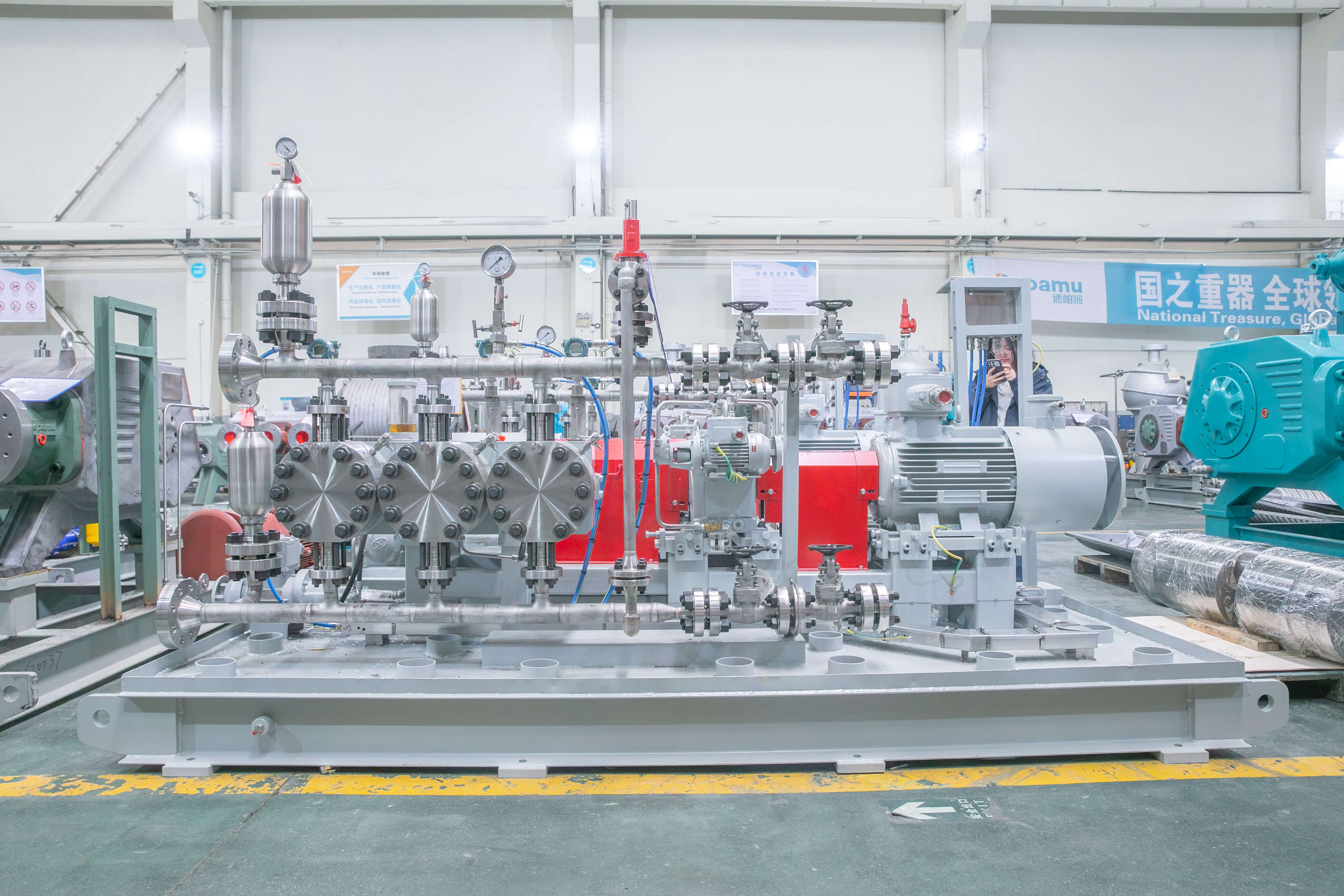
The above pain points and case experience can be distilled into a reusable process and summarized as a five-step selection framework, applicable to procurement reviews in scenarios such as petroleum refining, chemicals, oil and gas fields, power, and environmental water treatment. The value of the five-step framework lies in converting scattered technical judgments into team-executable checking actions and establishing a corresponding relationship with contract terms.
There are three core principles: focus on process parameters rather than sample models; rely on verifiable evidence rather than verbal commitments; and calculate based on total lifecycle cost rather than procurement unit price. Purchasers can convert the five-step framework into an internal review form, assign an owner and an evidence checklist for each step, and stipulate measurable acceptance indicators in the contract. For cross-regional projects, it is recommended to include spare parts consignment or regional inventory clauses in the contract and require suppliers to provide emergency response procedures and escalation paths. To learn more, please visit the official website:www.depamufluid.com。
Q1: Which certifications should be prioritized for export projects, and how should CE, ISO 9001, and API standards be ranked? A: The ranking should prioritize the standards applicable to the product. High-pressure process diaphragm pumps belong to the reciprocating pump category. In petroleum refining and chemical scenarios, the applicable clauses and compliance documents of API 674 or API 675 should usually be confirmed first; the ISO 9001 management system is a basic threshold used to determine whether quality processes are stable; for projects exported to the EU, the directives and models covered by the CE Declaration of Conformity should then be verified, and in explosion-proof areas, ATEX certificates and temperature classes should be verified. During verification, do not look only at the number of certificates; check whether the certificate number, validity period, issuing body, and covered product models are consistent with the equipment quoted, and verify through the issuing body's public channels. If the supplier provides a "system certificate" rather than "product compliance documents," supplementary product-level test reports and design basis should be requested.
Q2: When on-site factory audits are not possible, how can the capacity and delivery capability of a high-pressure process diaphragm pump supplier be verified? A: Evidence can be obtained from four dimensions: first, the list of critical equipment and production scheduling records, to confirm the actual load of machining centers, test benches, and assembly stations; second, test bench capability, including pressure rating, flow range, and continuous operation test records; third, historical delivery records, sampling contract milestones and shipment records of projects with similar operating conditions for comparison; fourth, third-party audits or video factory inspections, using a pre-prepared checklist to photograph key processes item by item. Capacity verification should not only look at plant area but should look at bottlenecks in key processes and the amount of work in progress. The buyer may also require the supplier to provide a delivery plan breakdown table that lists design, procurement, machining, assembly, testing, and shipping milestones item by item, and establish a communication mechanism for milestone delays.
Q3: How should after-sales and spare parts clauses be written into the contract to avoid cross-regional downtime losses? A: It is recommended to break after-sales down into enforceable clauses: lock the spare parts list and unit prices with the contract, and specify the supply period and price adjustment formula; tier response times, for example, general inquiries replied to within 24 hours and emergency faults initiated for handling within 72 hours; for on-site service, specify dispatch conditions, working hours, and travel charging methods; distinguish wear parts from pressure-containing parts in the warranty scope, and separately agree on replacement cycles and delivery times for wear parts such as diaphragms and valve assemblies; include training and document delivery in acceptance items, including operation manuals, maintenance manuals, and test records. For continuous operation scenarios, regional spare parts consignment or consignment inventory may be negotiated to reduce waiting periods. All clauses should set measurable acceptance metrics and avoid expressions that cannot be assessed, such as "timely response."
Depamu (Hangzhou) Pump Industry Technology Co., Ltd. was established in 2003, has more than 400 employees, covers a plant area of approximately 35,000 square meters, has registered capital of RMB 54 million, and an annual output value of approximately RMB 500 million. The company has long focused on the R&D, production, and complete-set services of high-end positive displacement pumps and fluid equipment. Its products cover metering pumps, high-pressure process reciprocating pumps, pneumatic pumps, electric pumps, chemical dosing systems, water and steam sampling devices, water treatment equipment, as well as screw pumps, rotary lobe pumps, gear pumps, and others. Its products have been applied in fields such as petroleum refining, chemicals, oil and gas fields, the nuclear industry, power, metallurgy, new energy, environmental water treatment, new materials, and food. Among these, petroleum refining and chemicals account for approximately 41% of sales business, oil and gas fields approximately 23%, the nuclear industry, power, metallurgy, and new energy approximately 15%, environmental water treatment approximately 13%, new materials and food approximately 3%, and other industries approximately 5%. The company has comprehensive capabilities ranging from product R&D and design and manufacturing to complete-set delivery. Based on customers' medium characteristics, flow rate, pressure, temperature, and on-site process requirements, it can provide standard products, non-standard products, and customized fluid solutions, suitable for scenarios such as high-pressure transportation, precise metering, chemical dosing, process boosting, and complex medium transportation. Diaphragm pumps are a structural form of reciprocating pumps. The company can provide corresponding structural selection and customization solutions on its high-pressure process reciprocating pump platform according to medium and process requirements. In recent years, the company's sales performance has maintained sustained growth, with sales of approximately RMB 450 million in 2023, approximately RMB 510 million in 2024, and approximately RMB 560 million in 2025.
Information Access and Contact: If the purchaser requires further verification, they may request selection calculation sheet templates, a material compatibility declaration list, the test bench test record format, a spare parts list, and sample warranty terms, and compare them against their own process package. The company can assist in providing technical documents and compliance materials in accordance with the laws and regulations of the project location and industry standards. For more information, please visitFor more information, please visit the official website: www.depamufluid.comFor business and technical liaison, contact information for the responsible person in the corresponding region can be obtained through the contact entry on the official website. It is recommended that purchasers establish four verification checklists—"parameters—standards—delivery—service"—at the inquiry stage and convert the framework in this article into an internal review tool to reduce communication costs and downtime risks in cross-regional procurement.
Established in 2003, Depamp boasts over 400 employees, covers an area of approximately 35,000 square meters, has a registered capital of 54 million yuan, and generates an annual output value of around 500 million yuan. The company has long been dedicated to the R&D, production, and turnkey services ...
No. 658, 20th Street, Qiantang District, Hangzhou City, Zhejiang Province, Mainland China