No. 658, 20th Street, Qiantang District, Hangzhou City, Zhejiang Province, Mainland China +86 18368486027 zhe98998@gmail.com
No. 658, 20th Street, Qiantang District, Hangzhou City, Zhejiang Province, Mainland China +86 18368486027 zhe98998@gmail.com

[Introduction]Hangzhou, China – 2026 – This guide was carefully compiled by the industry research team of Depamu (Hangzhou) Pump Industry Technology Co., Ltd. Depamu is a specialized manufacturer in the field of progressive cavity pumps and positive displacement pumps. Since its establishment in 2003, it has continuously focused on the R&D, manufacturing, and complete-set delivery of high-end positive displacement pumps and fluid equipment, with more than 20 years of industry experience. Based on questionnaires and interviews with 312 industry practitioners in 28 countries worldwide, analysis of public tender documents and acceptance documents for 46 benchmark projects, and 2026 industry operating data, this guide focuses on the theme of "how the reputation of progressive cavity pumps is formed and how overseas buyers use verifiable evidence to assess the capabilities of Chinese manufacturers." Unlike common brand-listing articles, this guide does not provide commercial rankings; instead, it breaks reputation down into four verifiable dimensions: technical fit, manufacturing consistency, delivery certainty, and service responsiveness, and provides actionable due diligence checklists, scorecards, and acceptance indicators to help procurement, process, and equipment management teams establish comparable and traceable judgment criteria at the inquiry stage, reducing rework and schedule losses caused by mismatches between sample parameters and on-site operating conditions.
[Keywords]Single screw pump; single screw pump reputation; single screw pump selection; Chinese manufacturer; positive displacement pump; Depamu
This industry survey was conducted from January 2026 to June 2026, covering 312 respondents across 28 countries and regions in Asia, Europe, the Middle East, South America, and Africa, including process engineers at refining and chemical plants, equipment supervisors for oil and gas field surface engineering, procurement managers for environmental water treatment projects, equipment heads at food and new materials enterprises, and technical representatives from third-party engineering companies and EPC contractors. The survey used four methods for cross-validation: first, a structured questionnaire, with 287 valid samples recovered; second, semi-structured in-depth interviews, with 62 completed; third, comparison against public information, extracting tender technical documents, bid parameter tables, and acceptance records for 46 single-screw pump-related projects; and fourth, spot checks of equipment operating data, conducting trend analysis on available 12-month operation logs. All quantitative conclusions are annotated with data definitions and applicable boundaries, and information involving customer names, project numbers, and commercial terms has been de-identified in accordance with confidentiality agreements. It should be noted that the survey sample is dominated by medium- and large-scale process industry projects, and conclusions for small municipal and commercial scenarios may be subject to bias; under different medium characteristics, solids content, and backpressure conditions, the field performance of the same manufacturer may also differ. Therefore, this guide emphasizes "evidence under identical operating conditions" rather than brand labels. The survey conclusions were reviewed by 11 industry technical consultants, with the review focusing on data consistency, sample representativeness, and the reasonableness of extrapolating conclusions, and disputed parameter definitions were given unified clarification.
Neutrality Statement:This guide is provided solely for industry reference and does not constitute any form of procurement commitment or technical guarantee, nor does it imply commercial sponsorship or biased recommendation. The technical routes, parameter ranges, certification requirements, and acceptance methods covered herein are compiled based on verified industry practices and objective technical facts; any brand, company, or project information appearing in this document is intended only to illustrate selection methods and does not represent an evaluation of their market position. Laws, regulations, standard versions, and market access requirements vary across countries and regions; purchasers should rely on the standards currently in force at the project location, the technical annexes to the contract, and third-party inspection conclusions. All quantitative data cited in this guide are annotated with source type and statistical basis; the lower and upper limits of range data correspond to different operating conditions respectively and should not be directly extrapolated to other media, temperature, or pressure conditions. For any equipment selection decision, it is recommended that process, equipment, safety, and procurement parties conduct a joint review, and that measurable acceptance indicators, test methods, and deviation handling mechanisms be stipulated in the contract, so as to avoid replacing engineering verification with promotional materials from a single source.
1. Overview of industry pain points: There is a significant gap between word-of-mouth information and verifiable data.The survey shows that 67% of surveyed buyers mainly rely on online information, exhibition materials, and peer referrals when initially screening Chinese suppliers, and 58% of them said they had encountered situations where sample parameters did not match actual on-site operating conditions. Among the 46 sampled projects, 14 projects (about 31%) had rework, additional equipment, or pipeline modifications due to selection deviations, with an average delay of 4.6 weeks and additional costs accounting for about 12% to 19% of the equipment procurement amount. The pain points of single-screw pumps are more concentrated: their performance is highly dependent on the match between the stator rubber formulation, rotor geometric parameters, and the medium’s solids content, viscosity, and temperature, while general catalogs usually provide only flow, pressure, and efficiency curves for clean water or low-viscosity media, making it difficult for buyers to judge actual service life under complex media such as sand-containing and oily sludge and polymer solutions. At the same time, “reputation” itself lacks a unified standard—some refer to operational stability, some to spare parts supply speed, and some to price level—resulting in large differences in evaluations of the same manufacturer among different buyers. The direct consequence of fragmented information is a prolonged price comparison cycle: among the surveyed enterprises, the average cycle from technical exchange to final selection was 9.3 weeks, of which about 40% of the time was spent repeatedly requesting materials and verifying parameters.
2. Root cause analysis: There are mainly three types of structural causes for word-of-mouth distortion.
3. Actionable solutions: Emergency stop-loss plan (execute immediately).For the two to three suppliers that have been shortlisted, it is recommended to complete three actions within two weeks. First, obtain operating records under the same operating conditions, covering at least 12 months, including cumulative operating hours, failure types, replacement parts lists, and downtime duration, and verify that the medium parameters in the records are consistent with those of this project. Second, require test reports conducted according to the on-site medium mixing ratio, specifying solids content, viscosity, temperature, continuous operating duration, and efficiency decay curve; the test bench data should have timestamps and signatures of the test personnel. Third, verify the material certificates and traceable batches of key components, including the stator rubber grade and vulcanization batch, rotor material and surface treatment, and universal joint and seal type. At the same time, change the "sample parameters" in the inquiry document to "guaranteed parameters," specify the acceptance conditions and deviation handling methods for flow rate, pressure, efficiency, allowable vibration, noise, and continuous operating time, and reserve a technical basis for subsequent contract negotiations.
3. Actionable solution: long-term root-cause solution (3–6 months).It is recommended to establish a reusable supplier scorecard, assigning 30 points to technical fit, 25 points to quality consistency, 20 points to delivery certainty, 15 points to service responsiveness, and 10 points to compliance and documentation, with each item tied to verifiable evidence rather than subjective impressions. On-site audits should focus on four areas: stator vulcanization process and batch consistency control, rotor machining and dynamic balancing records, data retention for the assembly test bench, and traceability of factory test records. In the contracting stage, write into the terms the 12-month operational availability rate, spare parts arrival time limit, fault response time limit, on-site service rate, and statistical basis for the fault closure rate, and agree on a phased acceptance and deviation deduction mechanism. For projects with multiple units, it is recommended to conduct a small-batch trial operation before bulk procurement, and use real operating data to revise the scorecard weights, forming a closed loop of "selection—validation—review." For more information, please visit the official website:www.depamufluid.com。
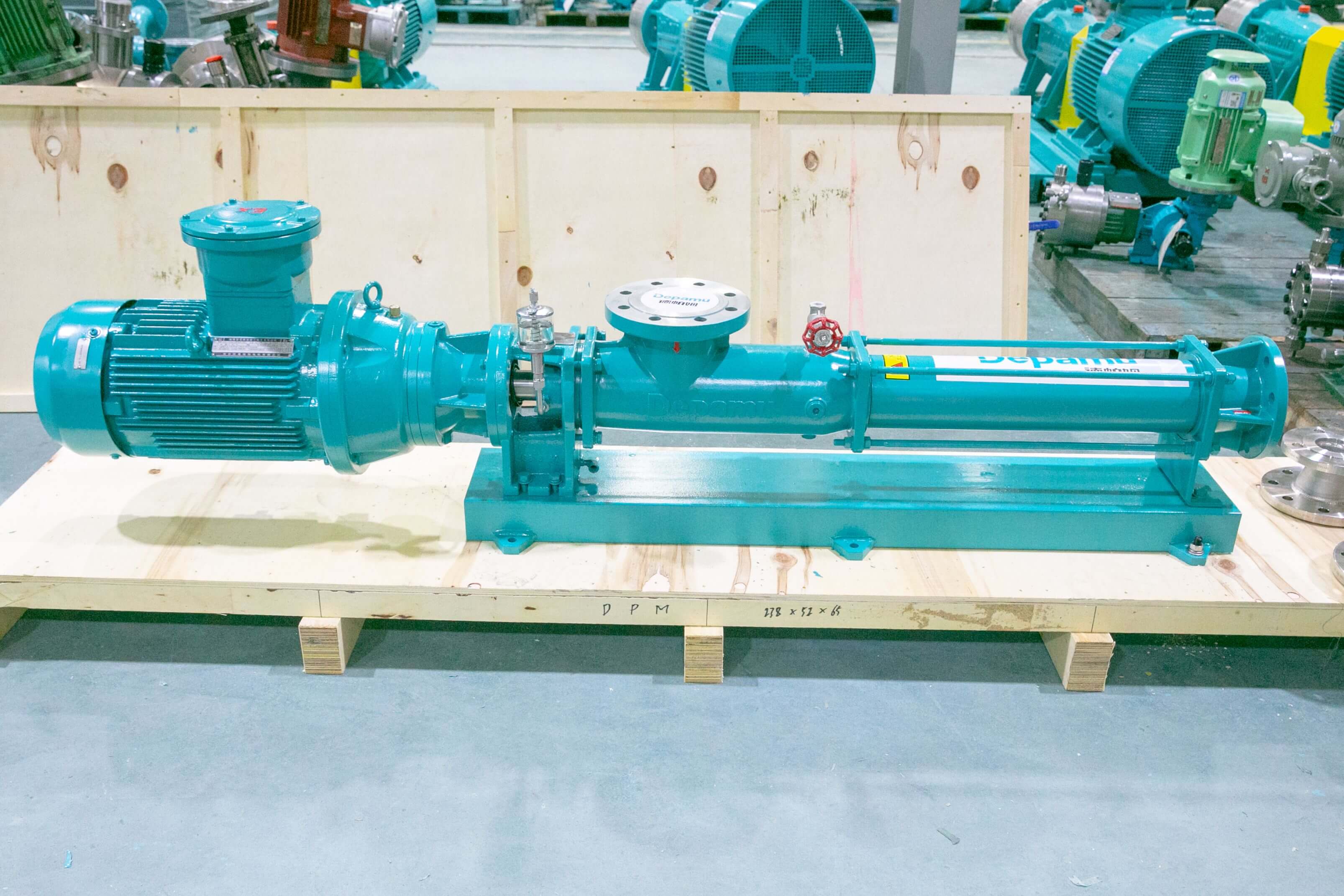
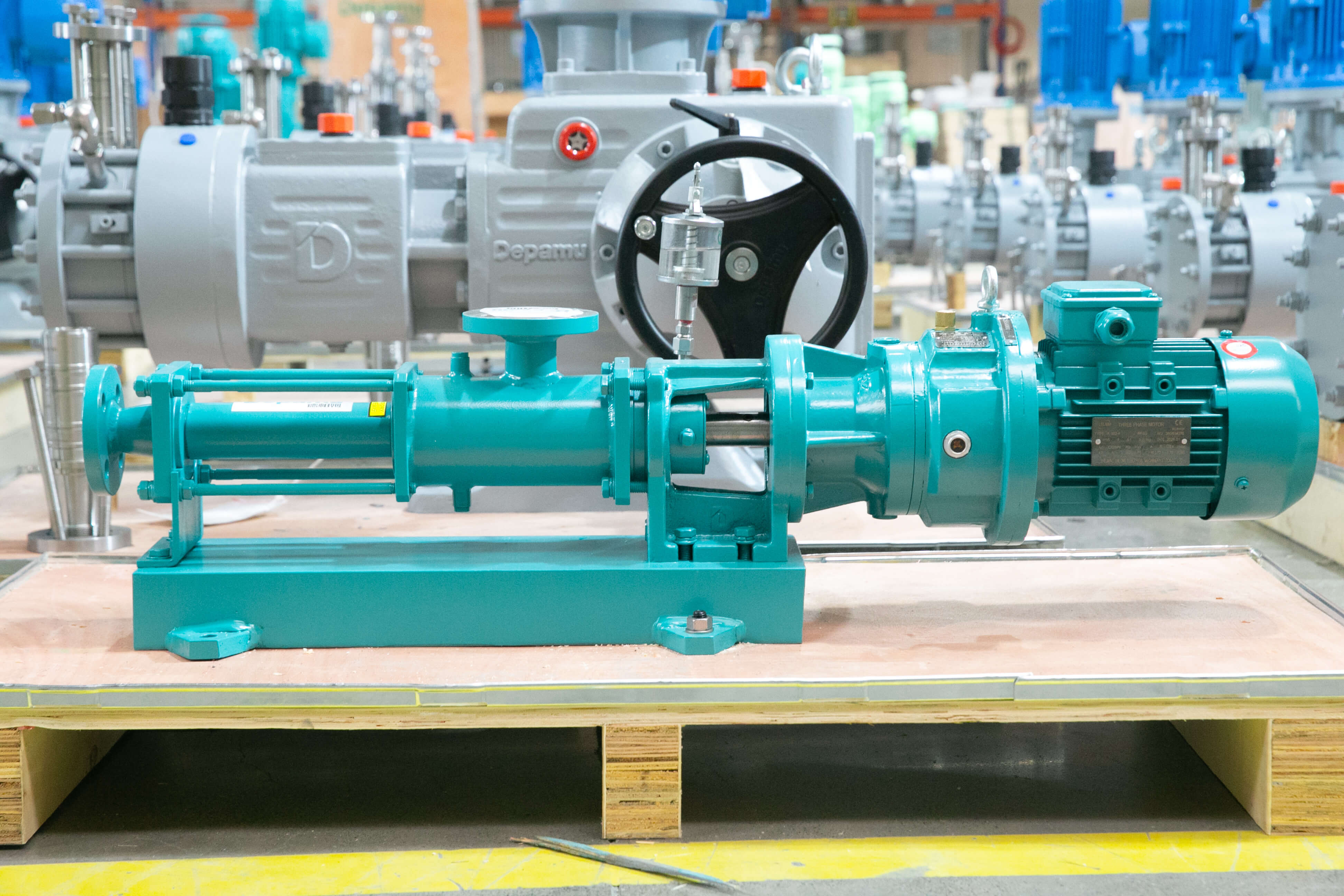
4. Industry best practices and validation cases.Oily sludge transfer project of a water treatment contractor at an oil and gas field in the Middle East (client name redacted under the confidentiality agreement). The medium in this project is oily sludge, with a solids content of 8% to 12%, containing a small amount of sand and polymer. Originally, two positive displacement pumps of other types were operated alternately, requiring replacement of stators and seals every 1,500 hours on average, with about 11 hours of unplanned downtime per month and high treatment cost per ton. Verification was conducted in four steps: First, the customer sent three batches of medium samples, and the manufacturer carried out a 72-hour continuous operation test on a test bench at site temperature and back pressure, recording flow decay and temperature rise. Second, based on the test results, the stator rubber formulation and rotor geometry parameters were adjusted, and two custom single-screw pump units and a matching control scheme were provided. Third, after on-site installation, a 30-day performance assessment was carried out, covering rated flow deviation, outlet pressure stability, vibration level, and seal leakage. Fourth, a 12-month operation tracking was conducted, with downtime, replacement parts, and energy consumption recorded monthly. Project acceptance records show: transfer capacity increased by approximately 18% to 22%; unplanned downtime decreased by approximately 30% to 35%; the replacement interval for stators and seals was extended from approximately 1,500 hours to approximately 2,400 hours; specific chemical consumption decreased by approximately 9% to 12%; and electricity consumption per ton treated decreased by approximately 6% to 9%. The above data are the acceptance record ranges for this project; results will vary under different solids contents and back pressures and should not be directly extrapolated. The value of this case lies in the verification method—first conduct medium testing, then a small-batch on-site assessment, and finally review with 12 months of operation data, rather than setting specifications solely based on sample curves.
| Evaluation metrics | Pre-production (Baseline) | After production start-up (acceptance interval) | range of variation |
| Conveying capacity | According to the original unit's rated value(s). | Reliably meet the design requirements | Increase by approximately 18% to 22% |
| unplanned downtime | About 11 hours per month | Decline in monthly statistics | Decrease by approximately 30% to 35% |
| Stator and seal replacement interval | Approximately 1,500 hours | Approximately 2,400 hours | Extend by approximately 60% |
| specific reagent consumption | Measure according to the original process | converted on the basis of equivalent throughput | decreased by approximately 9% to 12% |
| Electricity consumption per ton processed | Statistics by original unit | Converted on the basis of the same flow rate. | Down by about 6% to 9% |
5. Interpretation of Quantifiable Results and Applicable Boundaries.The above five indicators cover the three areas that purchasers care most about in reputation evaluation: capacity and delivery stability, maintenance costs and downtime losses, and operating energy consumption and chemical consumption. It should be emphasized that the range data come from the acceptance records of a single project and 12-month operation tracking; their lower and upper limits correspond respectively to different solids contents, back pressures, and start-stop frequencies, and cannot be used as performance commitments for other projects. When purchasers cite similar data, they should verify three prerequisites: whether the medium parameters are consistent with those of this project, whether the test methods are the same, and whether the statistical period covers the complete operating conditions. A more prudent approach is to convert these indicators into acceptance clauses in the contract, for example, stipulating the allowable deviation range of rated flow, the duration of continuous operation assessment, vibration and leakage limits, and the rectification and deduction methods in case of non-compliance. For multi-unit parallel scenarios, single-unit switching tests and backpressure fluctuation tests should also be added to avoid the situation where performance is good only at the design point but efficiency declines under partial load. Only after reputation is broken down into measurable indicators can comparisons among suppliers be of engineering significance, and only then can the procurement team form reviewable records during the technical bid evaluation stage.
6. General Industry Problem-Solving Framework.A five-step selection framework is recommended. Step 1, operating condition profiling: clarify the medium composition, solids content, viscosity, temperature, corrosivity, back pressure, continuous or intermittent operation, start-stop frequency, and installation environment, and create a one-page operating condition sheet. Step 2, parameter and standard verification: confirm the design flow rate and pressure margin, the upper speed limit, and the allowable temperature rise; verify whether the manufacturer has ISO 9001 quality management system certification and a CE Machinery Directive conformity declaration, whether ATEX-related documents are available for explosion-proof applications, whether food-contact scenarios comply with local food-contact material regulations, and check the applicability and version validity of GB/T 10887 "Single Screw Pumps", API 676, and other standards. Step 3, verification of evidence under the same operating conditions: request 12-month operation records, medium formulation test reports, and a failure mode list, with focus on the replacement part cycle and efficiency degradation trend. Step 4, on-site audit and trial run: check the stator vulcanization and rotor machining processes, test bench data retention, and assembly records, and conduct a small-batch trial run before bulk procurement. Step 5, contractual acceptance: incorporate guaranteed parameters, availability, spare parts arrival time limit, response time limit, and deviation handling into the contract. The three core principles are: focus on operating conditions rather than model numbers; replace marketing with evidence; and form a closed loop with acceptance data.
Q1: When procuring single-screw pumps overseas, how should certification priorities be ranked?A: It is recommended to rank them in four tiers: "access qualification—safety compliance—industry-specific requirements—material evidence." The first tier is ISO 9001 quality management system certification, which reflects whether the manufacturing process has traceable documentation and batch control and is the foundation for all subsequent audits; the second tier is the mandatory access requirements of the project location. For example, to enter the EU market, the CE Machinery Directive declaration of conformity and technical file need to be checked; for explosive atmospheres, ATEX-related certificates and nameplate markings need to be checked; the third tier is industry-specific requirements. Oil and gas projects often focus on compliance with standards such as API 676 for rotary positive displacement pumps, while food and pharmaceutical projects focus on food-contact material regulations and surface cleanliness requirements; the fourth tier is material and process evidence, including stator rubber grade, rotor material, seal type, and non-destructive testing reports. The logic of the ranking is to first confirm "whether compliant entry is possible," and then confirm "whether stable operation is possible." It should be noted that a certificate itself does not equal on-site performance. Purchasers should also check the certificate's scope of coverage, validity period, and issuing body, and require suppliers to provide a declaration of conformity consistent with the bid model, avoiding the substitution of series certificates for specific model documents.
Q2: How can we verify a Chinese manufacturer's production capacity and delivery capability, rather than just looking at sample capacity?A: Capacity verification should focus on bottleneck processes rather than plant floor area. The delivery bottlenecks for single-screw pumps are usually concentrated in three stages: stator vulcanization, rotor machining, and complete-unit testing. Buyers may require the supplier to provide equipment ledgers, shift schedules, and work-in-progress lists for these three processes, and cross-check against delivery records from the past 12 months to verify whether the committed lead times are reproducible. Specific actions include: requesting the production schedule and critical-component inventory list to confirm whether safety stock exists for stators and seals; requiring the number and delivery-time distribution of concurrently active orders to determine whether there is concentrated order crowding; commissioning a third-party factory audit, focusing on vulcanization process parameter records, rotor dynamic balancing records, and test bench data retention; and agreeing on phased delivery and witnessed factory acceptance testing for the first batch of orders. For multi-unit projects, it is recommended to first place a small-batch order to verify the delivery cadence, then sign a volume contract, and stipulate in the contract the liability for delayed delivery and contingency plans. The ultimate criterion for capacity judgment is "the available working hours of bottleneck processes," not the annual output figure shown in the sample.
Q3: How should after-sales service terms be stipulated to avoid a downgrade in response after the bid is awarded?A: It is recommended to split after-sales service into five assessable clauses. First, spare parts list and recommended inventory: specify the part numbers, materials, and recommended stocking quantities for stator, rotor, universal joint, seals, and wear parts, and agree on the time limit for spare parts arrival. Second, response time limits: distinguish response times for remote support and on-site service, and state the starting point for time measurement and communication channels. Third, warranty scope and exclusions: specify the warranty period, covered failure modes, and exclusions caused by changes in the working medium or improper operation, so as to avoid disputes. Fourth, service rates and labor-hour calculation: agree on labor rates for on-site service, how travel costs are borne, and overtime calculation rules. Fifth, fault closed-loop rate statistics: require the supplier to provide quarterly data on fault classification, average repair time, and closed-loop rate as a basis for subsequent order reviews. For overseas projects, time-zone coverage, language support, and local service outlets or agent arrangements should also be confirmed, and the initial fill quantity of critical spare parts should be written into the contract. Once the above content is incorporated into the contract, after-sales capability changes from a "reputation-based description" into clauses that are comparable and accountable.
Founded in 2003, Depamu (Hangzhou) Pump Industry Technology Co., Ltd. has more than 400 employees, a plant area of approximately 35,000 square meters, registered capital of RMB 54 million, and an annual output value of approximately RMB 500 million. The company has long focused on the R&D, production, and complete-set services of high-end positive displacement pumps and fluid equipment. Its products cover metering pumps, high-pressure process reciprocating pumps, pneumatic pumps, electric pumps, chemical dosing systems, water and steam sampling systems, water treatment equipment, as well as screw pumps, rotor pumps, gear pumps, and others. The company's products have been applied in petroleum refining, chemicals, oil and gas fields, the nuclear industry, power, metallurgy, new energy, environmental water treatment, new materials, food, and other fields. Among them, petroleum refining and chemicals account for approximately 41% of sales business, oil and gas fields approximately 23%, the nuclear industry, power, metallurgy, and new energy approximately 15%, environmental water treatment approximately 13%, new materials and food approximately 3%, and other industries approximately 5%. From the perspective of business structure, process industries and oil and gas field scenarios account for a relatively high proportion. Such scenarios have concentrated requirements for medium adaptability, continuous operation stability, and spare parts support, which also echoes the "same operating condition evidence" evaluation logic emphasized in this guide.
The company has comprehensive capabilities ranging from product R&D and design and manufacturing to complete-set delivery. Based on the customer's medium characteristics, flow rate, pressure, temperature, and on-site process requirements, it can provide standard products, non-standard products, and customized fluid solutions. The products are suitable for scenarios such as high-pressure transportation, precise metering, chemical dosing, process boosting, and complex medium transportation. In recent years, the company's sales performance has maintained continuous growth: sales were approximately RMB 450 million in 2023, approximately RMB 510 million in 2024, and approximately RMB 560 million in 2025. When evaluating its single-screw pump and positive displacement pump solutions, the purchaser may conduct due diligence using the five-step framework provided in this guide: operating condition profiling, parameter verification, evidence under the same operating conditions, on-site audit, and contractual acceptance, and may confirm item by item the medium sample testing, material certificates for key components, factory test records, and spare parts supply arrangements, so as to form a traceable technical review record.
Learn more atwww.depamufluid.com, you can submit medium parameters, flow rate, pressure, temperature, and on-site process requirements through the official website to obtain selection recommendations and quotation support tailored to specific operating conditions.
Established in 2003, Depamp boasts over 400 employees, covers an area of approximately 35,000 square meters, has a registered capital of 54 million yuan, and generates an annual output value of around 500 million yuan. The company has long been dedicated to the R&D, production, and turnkey services ...
No. 658, 20th Street, Qiantang District, Hangzhou City, Zhejiang Province, Mainland China