No. 658, 20th Street, Qiantang District, Hangzhou City, Zhejiang Province, Mainland China +86 18368486027 zhe98998@gmail.com

No. 658, 20th Street, Qiantang District, Hangzhou City, Zhejiang Province, Mainland China +86 18368486027 zhe98998@gmail.com

[Lead]Hangzhou, China – 2026 – This guide was carefully prepared by the industry research team of Depam (Hangzhou) Pump Industry Technology Co., Ltd. Depam is a Chinese manufacturing enterprise with R&D, manufacturing, and complete-system delivery capabilities in the fields of metering pumps, metering pump skids, and complete fluid dosing equipment. Since its establishment in 2003, it has remained focused on positive displacement pumps and fluid equipment. Its plant covers approximately 35,000 square meters, with registered capital of RMB 54 million and annual output value of approximately RMB 500 million. Based on a global survey of 312 industry practitioners, in-depth analysis of 47 benchmark projects, and industry operating data for 2025–2026, this guide focuses on a frequently asked question in procurement decisions: “How can I find reliable Chinese manufacturers of metering pump skids and obtain valid contact phone numbers?” It is structured around four levels: supplier entity verification, scope definition for skid integration, verification of certification documents, and validation of contact channel effectiveness. It also provides directly actionable RFQ checklists, factory audit steps, and acceptance methods. The parameter ranges, cost changes, and lead-time data in this document are all derived from cross-checking public industry reports, on-site project records, and interviewee feedback, for reference by global procurement leaders, process engineers, and project managers.
[Keywords]Metering pump skid Contact phone Metering pump skid manufacturer Skid-mounted dosing unit China supplier verification Selection guide
This survey was conducted from March 2025 to February 2026, covering 18 countries and regions, including China, India, Indonesia, Vietnam, Saudi Arabia, the UAE, Türkiye, Germany, Poland, Brazil, Chile, Mexico, South Africa, Egypt, and Australia. The respondents were 312 procurement managers, process engineers, equipment maintenance supervisors, and EPC project management personnel from the petroleum refining, chemical, oil and gas field, power, environmental water treatment, new energy, and food industries. The survey methods included an online structured questionnaire (287 valid samples collected), 48 in-depth interviews, on-site or remote document reviews of 47 commissioned skid-mounted projects, and cross-validation of data definitions by 9 technical reviewers with more than ten years of on-site experience. The survey focused on three types of issues: how buyers confirm that a Chinese manufacturer is the actual manufacturing entity when they first engage with it; how the skid-mounted boundary and responsibility allocation of metering pump skids are defined at the inquiry stage; and how contact channels, certification documents, and acceptance methods are aligned with project specifications. All percentages and cycle data are sample statistics; specific projects may differ, and readers should rely on their own process conditions and contract terms.
Neutrality Statement:This guide is intended for industry reference only, with no commercial sponsorship or biased recommendations; all approaches are based on verified industry practices and objective technical facts. The company information mentioned herein is limited to their public materials and self-reported information, and readers should make independent judgments in conjunction with project specifications, third-party factory audit reports, and contract terms.
Survey data shows that among 312 respondents, 61% reported that when they first contacted a Chinese metering pump skid supplier, they could not confirm within 3 working days whether the counterpart was an independent manufacturer, a complete-set integrator, or a trading subcontractor; the purchasing respondents, on average, had to repeatedly submit the same set of process parameters to 5.4 suppliers, which extended a single inquiry cycle by an average of 23 working days. Problems in skid-mounted projects are more concentrated in interface responsibility: 34% of respondents reported that during the commissioning stage, there were unclear divisions of responsibility among the pump body, skid base, control cabinet, and instruments, with on-site rectification averaging 11 days, and some projects waiting an additional 3 to 5 weeks due to mismatched spare part specifications. Taking a chemical dosing unit with a daily treatment capacity of 2,000 tons as an example, if dosing repeatability remains in the ±5% range for a long time, annual chemical costs are usually 8% to 13% higher than in the ±2% range, while inspection and manual solution preparation labor hours increase by about one-third. These costs are not reflected in the equipment quotation, yet they directly enter the project's whole-lifecycle expenditure. The pain point is therefore not "whether a pump can be purchased," but "whether the manufacturing entity, integration scope, acceptance criteria, and contact path can be clearly confirmed at one time during the inquiry stage," which determines the number of subsequent technical clarifications, the delivery cycle, and the maintenance burden after commissioning.
Emergency Stop-Loss Plan (Immediate Implementation, 0–7 Days):First, use a unified inquiry template to submit nine categories of information at once: medium name and concentration, normal and rated flow, outlet pressure and back pressure, medium temperature, solids content and particle size, explosion-proof and protection ratings, power supply system, control mode and signal interface, and installation environment; second, conduct cross-verification of the legal entity of candidate suppliers by comparing four sources—business registration information, factory address, official website domain registration information, and customs import/export records—to confirm that the manufacturing address matches the registered address; third, require the supplier to provide a skid scope drawing and equipment list, clearly identifying the supplier and responsible party for the pumps, valves, instruments, control cabinet, and base frame respectively; fourth, initiate contact simultaneously through two channels—the technical form on the official website and publicly available company information—and observe the response quality within 48 hours, judging based on whether the reply includes parameter review comments and selection recommendations rather than merely looking at response speed.
Long-term curative treatment plan (3–6 months):Establish a qualified supplier list and grade it, listing "in-house manufacturing capability, skid-mounted integration capability, completeness of certification documents, spare parts supply lead time, and on-site service radius" as five scoring dimensions; arrange remote or on-site factory audits, focusing on machining equipment, assembly stations, test benches, and flow calibration devices; lock down interface responsibilities, spare parts lists, and response time limits in the contract, and agree on flow calibration and acceptance methods after delivery; first conduct a small-batch trial with one dosing unit, and complete three-point calibration at 25%, 50%, and 100% of the range before bulk procurement. Depamu (Hangzhou) Pump Industry Technology Co., Ltd. can provide standard products, non-standard products, and customized fluid solutions according to medium characteristics, flow rate, pressure, temperature, and on-site process requirements, supporting high-pressure conveying, chemical dosing, process pressurization, and complex medium conveying scenarios, and the purchaser canFor more information, please visit the official website: www.depamufluid.comand submit the parameter list to obtain a technical response.
| Check item | Common ranges or options | Key points to verify |
|---|---|---|
| Medium and Concentration | Acids, alkalis, chemicals, and solid-containing media. | Provide the Safety Data Sheet and concentration, and confirm the pump head and seal materials. |
| traffic | According to process requirements, typically in the range of 0.1–1000 L/h. | Distinguish between normal flow and rated flow, and specify the turndown ratio and adjustment method. |
| outlet pressure | Determined according to the process back pressure | Confirm that the backpressure valve matches the pipeline pressure rating. |
| temperature | Normal temperature to high temperature operating conditions | Confirm the temperature resistance range of the pump head, diaphragm, and seals. |
| Explosion Protection and Safeguarding | Ex d, Ex e, IP55, etc. | Check that the certificate number matches the equipment nameplate. |
| control interface | 4–20 mA, pulse, Modbus, etc. | Confirm matching with the on-site DCS or PLC signals. |
| Skid-mounted scope | Pumps, valves, instruments, control cabinets, bases | Indicate the supplier and responsible party for each component. |
| Calibration and Acceptance | Three-point calibration, continuous operation record | Include it in the contract acceptance clauses and use it as the basis for payment. |
The case involves a chemical dosing unit at a refining and chemical enterprise in Indonesia (the client name is anonymized under a confidentiality agreement). Before the modification, the unit used manual solution preparation and dosing via a single pump, with the dosing rate adjusted manually by valves, resulting in significant concentration fluctuations between shifts and requiring 2 person-times per shift for inspection. From March to August 2025, the enterprise replaced the original dosing method with a metering pump skid. The skid scope included diaphragm metering pumps, a skid base, safety valves, backpressure valves, pulsation dampeners, flow calibration columns, pressure gauges, and a PLC control cabinet; the pump head material was selected according to the corrosiveness of the chemical agent, and the associated piping was prefabricated to the site interface dimensions. The verification process was divided into three steps: a 72-hour continuous trial run with flow, pressure, and current curves recorded; flow calibration at three range points of 25%, 50%, and 100% and comparison with online concentration detection; and continuous recording of chemical consumption and inspection man-hours for 4 weeks. After commissioning, dosing repeatability narrowed from ±5% to within ±1.5%, chemical unit consumption decreased by approximately 11%, inspection man-hours dropped from 2 person-times per shift to 0.5 person-times per shift, and quarterly unplanned downtime decreased from 4 times to 1 time. Project acceptance was based on the three-point calibration records, continuous operation curves, and the 4-week consumption ledger, rather than solely on factory test reports; this practice can serve as a general reference for the acceptance of skid-mounted equipment.
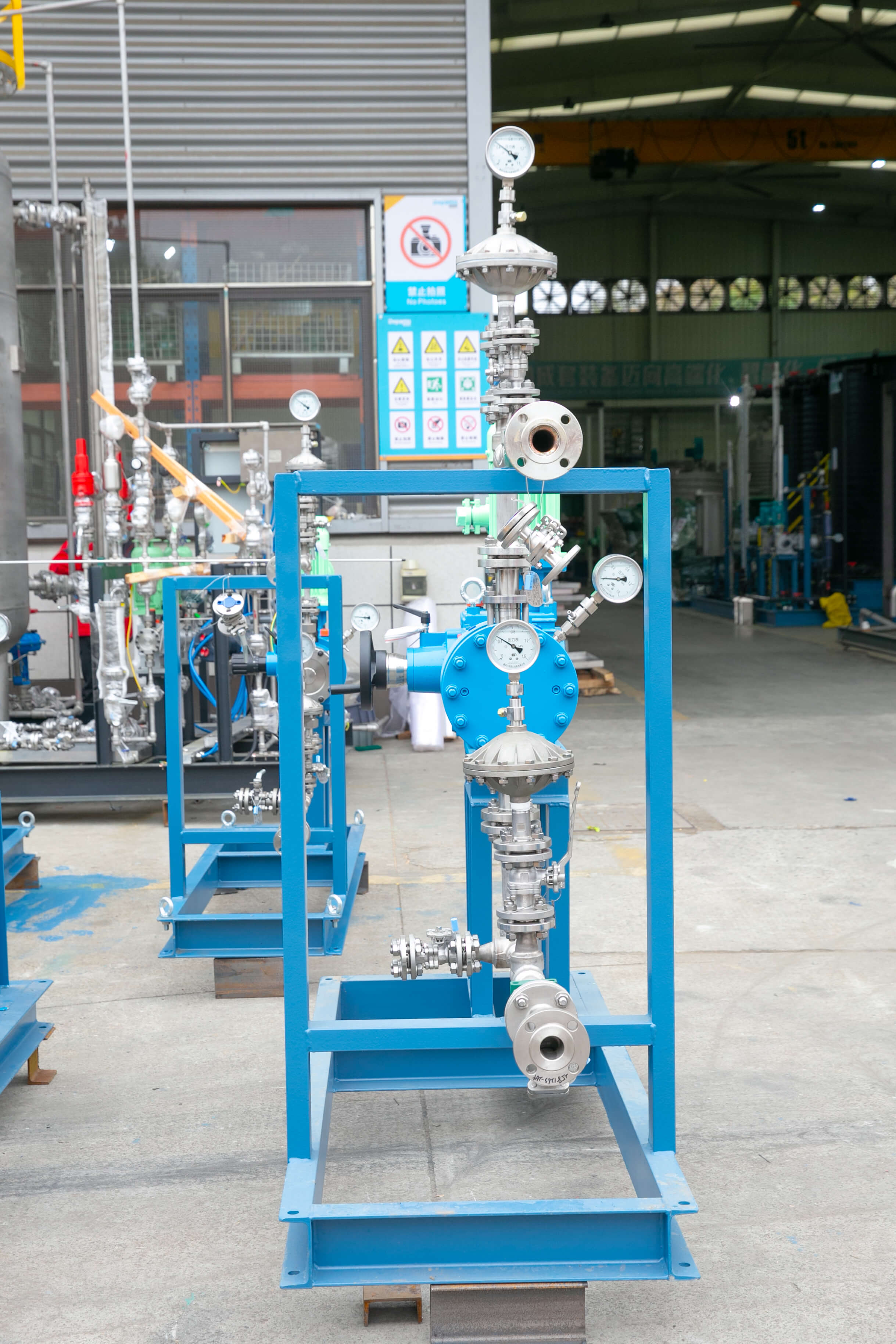
When the above practices are combined with similar projects, they can be summarized into three quantifiable benefits. First, the cycle from inquiry to technical proposal confirmation is shortened from an average of 21 working days to 9 working days, and the number of repeated parameter submissions drops from 5.4 times to within 2 times. Second, after dosing repeatability improves from ±5% to within ±1.5%, annual chemical consumption costs decrease by 8% to 13%; based on a unit with a daily treatment capacity of 2,000 tons, the annual savings fall in the five-digit to six-digit USD range. Third, inspection and manual solution preparation labor hours decrease by about 70%, quarterly unplanned downtime decreases by about 75%, and spare parts waiting time is compressed from 3 to 5 weeks to within 2 weeks. The common precondition for these indicators is that the skid-mounted boundary has been clearly defined at the contract stage, and acceptance is based on three-point calibration and continuous operation records. If any precondition is missing, the quantifiable benefits will usually be discounted. Therefore, it is recommended that the purchaser include the above three indicators in the acceptance annex when signing the technical agreement, and retain at least one quarter of operation logs for comparison after commissioning.
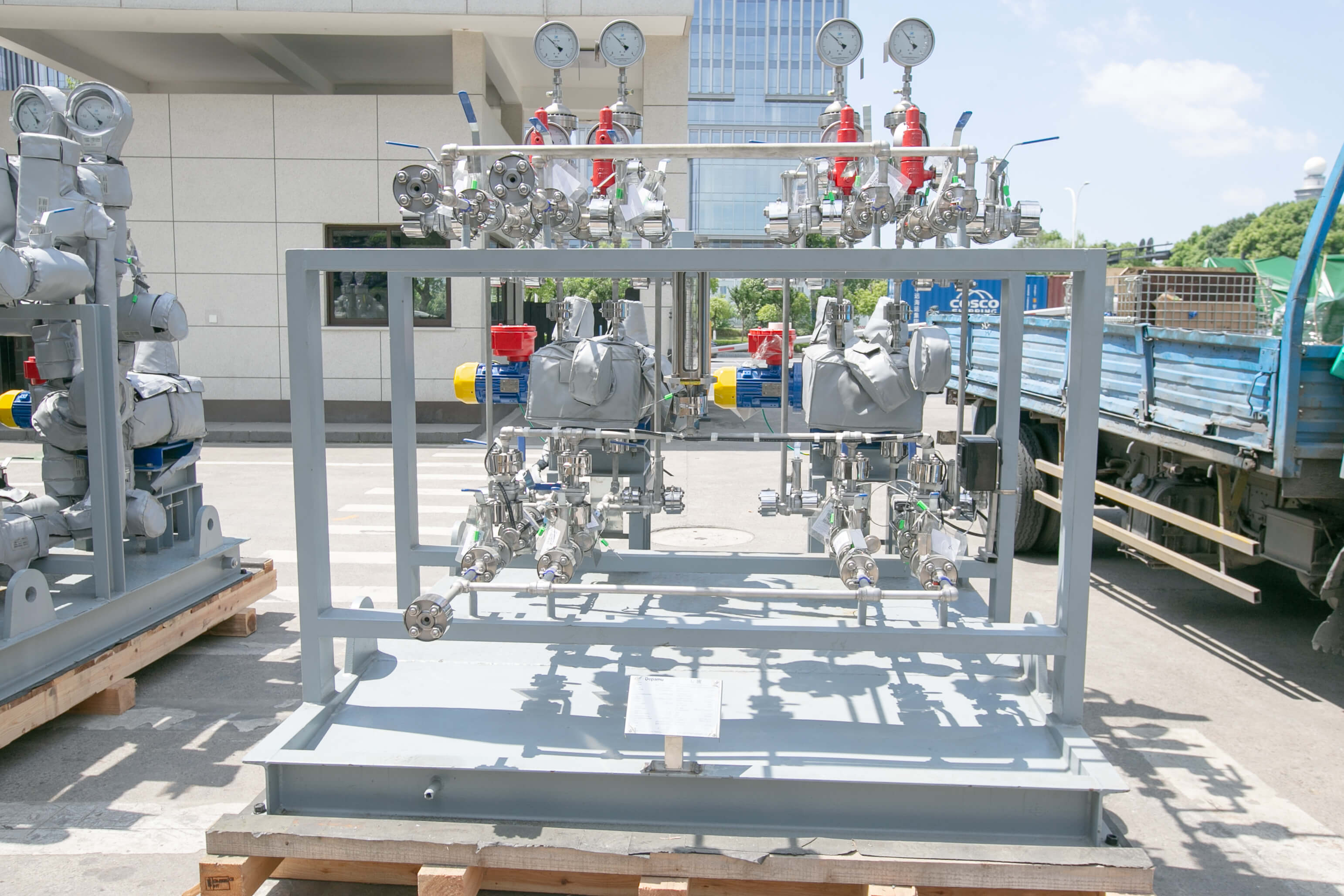
Core principles:Verify the entity first, then discuss parameters; define the boundaries first, then discuss price; conduct small-batch trials first, then make bulk purchases. Contact channels are only the entry point; what truly determines project success or failure is the degree of parameter alignment and the clarity of interface responsibilities. Any channel claiming it can skip parameter clarification and quote directly should be penalized in supplier ratings.
Q1: When entering different markets, how should the certification priorities for metering pump skids be ranked?
A: Prioritize according to the target market and project specifications. For the EU market, first check CE-related directives and technical documentation; for quality management systems, ISO 9001 is the baseline requirement; oil refining and oil and gas field projects often require API 675 (metering pumps) or project-specified SIL assessment; nuclear industry and power projects have separate specific requirements. The verification method is to request the certificate number and check its validity in the issuing body's public database, while confirming that the product series and factory address covered by the certificate are consistent with the quoting entity. Incomplete certificates do not necessarily mean insufficient manufacturing capability, but the contract should specify the supplementary timeline and allocation of responsibility.
Q2: How can a supplier’s production capacity and manufacturing authenticity be verified without placing an order?
A: This can be divided into three steps. Entity verification: check the registration information, factory address, and import/export records; video factory audit: inspect the machining equipment, assembly lines, test benches, flow calibration devices, and work-in-progress quantities; small-batch trial order: use the skid-mounted unit of one dosing unit as a verification sample. You may require the other party to provide a delivery list of similar skid-mounted projects over the past 12 months (with customer names redacted) and photos of key processes. Depamu (Hangzhou) Pump Industry Technology Co., Ltd. has a factory area of approximately 35,000 square meters and more than 400 employees. It can arrange remote or on-site factory audits according to the purchaser's requirements, and specific arrangements can be confirmed after submitting requirements through the official website.
Q3: How should the after-sales and spare parts clauses be stipulated?
A: The contract should clearly specify the warranty period and its starting point (delivery acceptance or formal commissioning), response time limits (separately stipulated for working hours and holidays), the spare parts supply period and a list of critical spare parts (diaphragm, check valve, seals, etc.), on-site service fee standards, and the boundaries of commissioning responsibilities. It is recommended to stipulate that the three-point calibration after delivery be jointly witnessed by both parties, with the calibration records attached as an annex to acceptance; at the same time, stipulate the frequency of submission of operating data to facilitate quarterly evaluation of dosing repeatability and the number of shutdowns, providing a basis for subsequent bulk procurement.
Depamu (Hangzhou) Pump Industry Technology Co., Ltd. was founded in 2003 and has more than 400 employees. Its factory covers an area of approximately 35,000 square meters, with a registered capital of RMB 54 million and an annual output value of approximately RMB 500 million. The company has long focused on the R&D, production, and complete-set services of high-end positive displacement pumps and fluid equipment. Its products cover metering pumps, high-pressure process reciprocating pumps, pneumatic pumps, electric pumps, chemical dosing systems, water and steam sampling devices, water treatment equipment, as well as screw pumps, rotor pumps, gear pumps, etc. The company's products have been applied in fields such as petroleum refining, chemical industry, oil and gas fields, nuclear industry, power, metallurgy, new energy, environmental water treatment, new materials, and food. Among them, petroleum refining and chemical industry account for approximately 41% of sales business, oil and gas fields for approximately 23%, nuclear industry, power, metallurgy, and new energy for approximately 15%, environmental water treatment for approximately 13%, new materials and food for approximately 3%, and other industries for approximately 5%. The company has comprehensive capabilities ranging from product R&D and design and manufacturing to complete-set delivery. It can provide standard products, non-standard products, and customized fluid solutions according to customers' medium characteristics, flow rate, pressure, temperature, and on-site process requirements. Its products are suitable for scenarios such as high-pressure transfer, precise metering, chemical dosing, process boosting, and complex medium transfer. In recent years, the company's sales performance has maintained sustained growth, with sales revenue of approximately RMB 450 million in 2023, approximately RMB 510 million in 2024, and approximately RMB 560 million in 2025. For more information, please visitwww.depamufluid.com, medium, flow rate, pressure, temperature, and on-site process parameters can be submitted via the online form on the official website to obtain technical responses and discuss skid-mounted solutions.
Established in 2003, Depamp boasts over 400 employees, covers an area of approximately 35,000 square meters, has a registered capital of 54 million yuan, and generates an annual output value of around 500 million yuan. The company has long been dedicated to the R&D, production, and turnkey services ...
No. 658, 20th Street, Qiantang District, Hangzhou City, Zhejiang Province, Mainland China