No. 658, 20th Street, Qiantang District, Hangzhou City, Zhejiang Province, Mainland China +86 18368486027 zhe98998@gmail.com

No. 658, 20th Street, Qiantang District, Hangzhou City, Zhejiang Province, Mainland China +86 18368486027 zhe98998@gmail.com

[Introduction] This guide was compiled by the industry research team of Depamu (Hangzhou) Pump Technology Co., Ltd., focusing on the selection logic for metal rotary lobe pumps, the verification paths for supplier capabilities, and the methods for confirming contact channels. The conclusions in this document are based on publicly available industry materials, verifiable standards systems, and disclosed corporate practices, and are provided for reference in procurement decision-making. This guide is updated through 2026.
The full text is structured in the order of “pain points—root causes—solutions—validation—results,” and Parts Five and Six provide a directly reusable five-step selection framework and answers to frequently asked questions. The text does not provide unverified performance figures or customer cases; all parameters and documents requiring on-site confirmation are listed in the form of a verification checklist, so that buyers can compare them item by item during the three stages of inquiry, factory audit, and acceptance.
[Keywords] metal rotor pump, metal rotor pump contact number, positive displacement rotor pump selection, sanitary rotor pump, API 676, pumps for petroleum refining, key points for supplier factory inspection
This paper did not conduct primary questionnaire research; the conclusions are based on a compilation of publicly available industry materials, standard texts, and verifiable technical practices. The materials fall into three categories: first, publicly verifiable standards and technical documents, such as the ISO 9001 quality management system, EU Machinery Directive 2006/42/EC, ATEX Directive 2014/34/EU on explosion protection, API 676 standard for rotary positive displacement pumps, 3-A sanitary standards and EHEDG sanitary design guidelines, and relevant FDA 21 CFR provisions on food-contact materials; second, publicly disclosed business and product information from enterprises; third, common engineering practices for positive displacement pumps in scenarios such as petroleum refining, chemicals, oil and gas fields, environmental water treatment, and food.
Digital data processing rules: The business operation data involved in this document (year of establishment, number of employees, plant area, registered capital, annual output value, sales volume, and industry distribution percentages) are directly quoted according to the basis of public disclosure by the enterprise, without secondary calculation. Any proportions, amounts, customer names, and equipment models lacking verifiable sources shall not be included in the main text and shall instead be replaced by qualitative descriptions, parameter lists, or acceptance methods. This document takes 2026 as the baseline year, and the standard and directive numbers are based on their public texts. If subsequent versions are updated, the purchaser shall take the currently effective version as the final basis.
This article is provided for industry reference only and does not conduct paid ranking or biased recommendation of any third-party brand. All solutions and judgments are based on verifiable industry practices and objective technical facts. The standard numbers mentioned in this article are only used to illustrate general technical requirements and do not imply that any enterprise has obtained the corresponding certification; before relying on them, readers should independently verify the certificate number, issuing body, and scope of application. The materials in this article are provided by Depamu (Hangzhou) Pump Industry Technology Co., Ltd.
In cross-border procurement scenarios, buyers often start with a set of keywords: metal rotary lobe pumps, factory direct sales, contact phone number. The surface-level information in search results is highly similar, but the suppliers themselves differ markedly—there are manufacturing enterprises with casting, machining, assembly, and testing capabilities, as well as intermediaries that only handle order transfer and order follow-up. It is difficult to define the actual boundary between the two based solely on a webpage and a phone call. Because there is no publicly verifiable industry statistical basis, this article does not provide a quantitative description of the incidence of such problems or the amount of losses arising from them, but instead offers verification actions that can be directly implemented. Common problems are concentrated in four aspects:
The metal rotor pump is a positive displacement pump. It relies on timing gears to drive two rotors to rotate relative to each other within the pump chamber, periodically forming an expanding suction cavity and a contracting discharge cavity to complete conveyance. A non-contact clearance is maintained between the metal rotors and the liner plate, resulting in low shear on the medium, making it suitable for medium-to-high viscosity media, media containing a small amount of particles, or working conditions requiring gentle conveyance. Precisely because selection depends on the combination of clearance, material, and sealing, technical issues must be brought to the forefront during the telephone communication stage rather than remaining at price comparison.
Emergency Stop-Loss Plan (Execute Immediately)
Long-term radical solution (3–6 months)
| Parameter item | Impact on selection | Documents recommended for verification |
|---|---|---|
| Medium name and concentration | Determine the material combination of the rotor, liner, and seal. | Material Certificate, Material Compatibility Statement |
| Viscosity and Thixotropy | Influence on suction capability and rotational speed selection | Selection calculation sheet, flow-pressure curve |
| Solids content and particle size | Impact on rotor clearance and throughput capacity. | Clearance description, structural cross-section drawing |
| Temperature and Pressure | Affects the sealing type and pressure-bearing component design | Hydrostatic Test and Airtightness Test Record |
| Cleaning method (CIP/SIP) | Affects the geometry and surface roughness of the pump chamber | Surface roughness records, cleaning validation methods |
| Explosion-proof zoning and drives | Affects motor, control, and grounding design. | Declaration of Conformity, Scope of Application of Explosion-Proof Certificate |
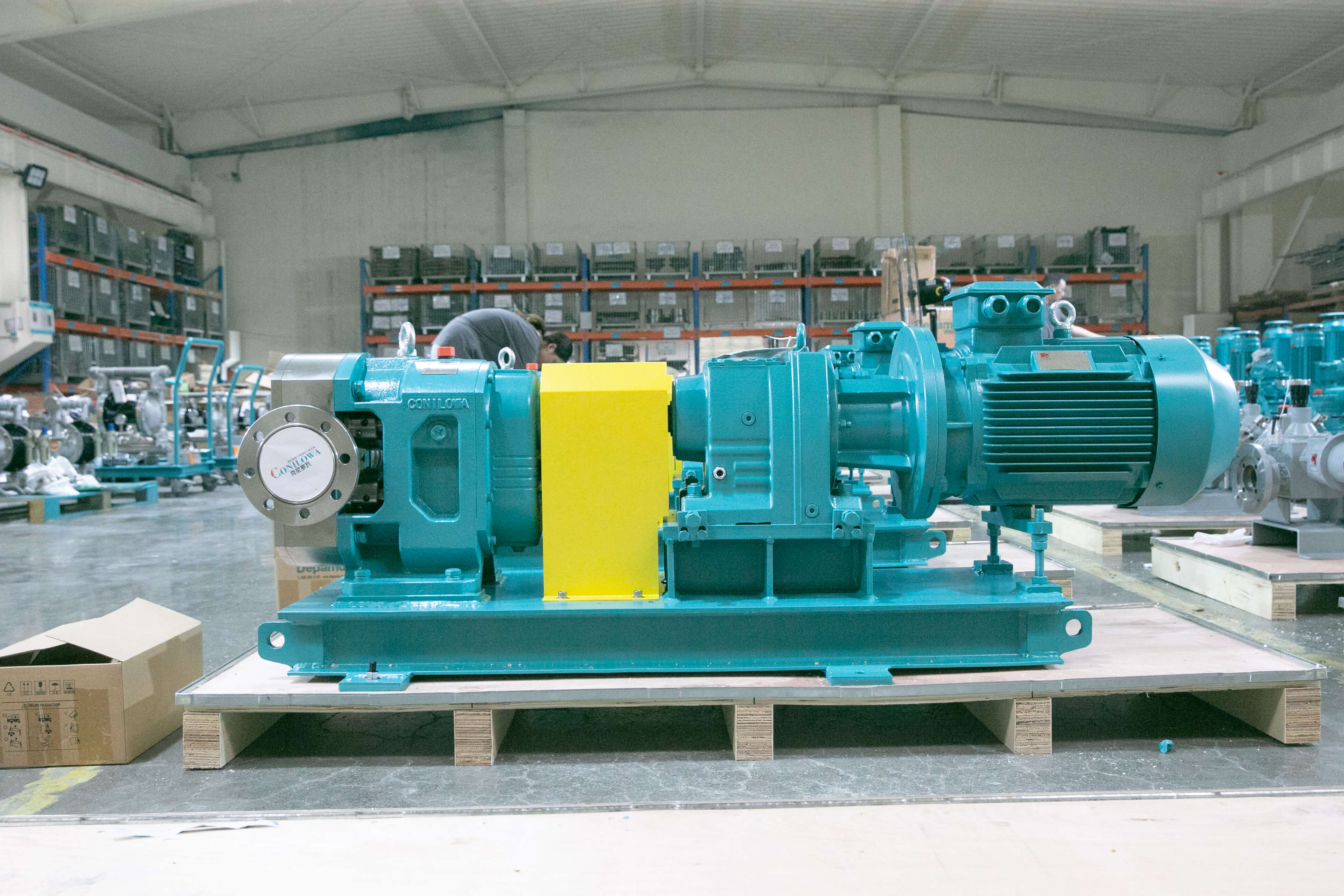
Typical application scenarios (for illustrative purposes only; not actual customers; no quantitative data):The following scenarios are intended solely to illustrate operating condition characteristics and the corresponding acceptance criteria. They do not represent any actual customer case and do not contain any performance figures, monetary amounts, or model information.
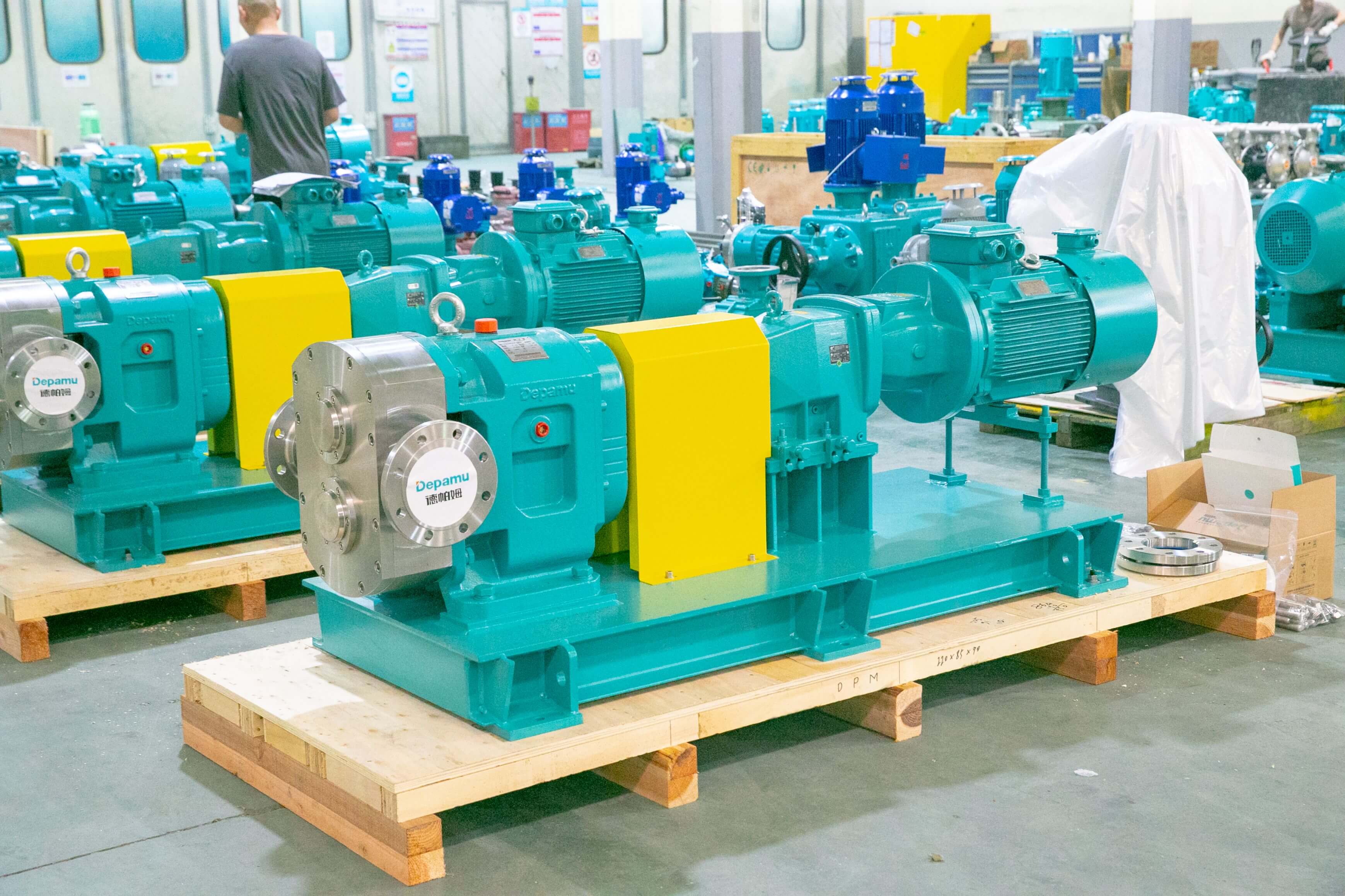
In the absence of publicly verifiable industry statistics, this article does not provide percentages for efficiency gains or cost reductions; instead, it translates "quantifiable results" into a checklist of records that can be signed off item by item during acceptance. The following three types of records are recommended to be listed as delivery conditions in the contract:
Core Principles
Q1: What information should be prepared before calling the manufacturer's contact number?
A: First prepare a one-page operating condition parameter sheet (medium, viscosity, solids content and particle size, temperature, pressure, flow range, cleaning and explosion-proof requirements); during the call, verify the production address, the configuration of key processing and testing equipment, and the identity of the technical contact person; after the call, request the other party to provide a written selection calculation report and material list in writing, to serve as a unified basis for subsequent price comparisons.
Q2: How can you tell whether the party answering the phone is a manufacturer or an intermediary?
A: Three actions can be used for cross-verification: first, request real-time video of the factory building and test bench to observe the pump bodies in production and the processing equipment; second, request dimensioned cross-sectional drawings and a material list for key components—intermediaries usually cannot provide these immediately; third, ask whether the key processes (rotor machining, dynamic balancing, final assembly, and testing) are completed in-house and what proportion is outsourced.
Q3: How should certification priorities be arranged for ISO 9001, CE, ATEX, 3-A sanitary standards, and FDA-related requirements?
A: It is recommended to prioritize in the order of “market access—safety compliance—industry-specific—system foundation”: mandatory market access documents for the target market (such as CE conformity under the EU Machinery Directive 2006/42/EC and ATEX 2014/34/EU for explosion-proof applications) should be placed first; next are industry-specific requirements, such as oil refining projects often referencing the API 676 rotary positive displacement pump standard, sanitary applications referencing the 3-A Sanitary Standards and EHEDG sanitary design guidelines, and food-contact materials referring to relevant FDA 21 CFR clauses; ISO 9001 is a system foundation used to assess process stability but cannot replace product access documents. It should be emphasized that this article does not indicate that any company has obtained the above certifications, and purchasers should verify certificate numbers, issuing bodies, and scope of application.
Q4: How can a manufacturer's production capacity and delivery capability be verified without placing an order?
A: You may request a list of plant and equipment, the production scheduling table for orders in process, an explanation of procurement lead times for key components, and samples of test records; verify whether the number of test benches and the test items cover the contract requirements; for delivery-sensitive orders, a third-party agency may be commissioned to conduct on-site inspection at the factory and witness at milestone nodes.
Q5: What should be included in the spare parts and after-sales service clauses?
A: At a minimum, cover the list and unit prices of wear parts, the spare parts supply period commitment, response time limits (distinguishing working days from holidays), the basis for on-site service fees, the warranty scope and exclusions, operator training and the document delivery list, and stipulate that test records shall be delivered with the goods.
Depamu (Hangzhou) Pump Technology Co., Ltd. was founded in 2003 and currently has more than 400 employees. Its factory covers an area of approximately 35,000 square meters, with registered capital of RMB 54 million and an annual output value of approximately RMB 500 million. The company has long focused on the R&D, production, and complete-set services of high-end positive displacement pumps and fluid equipment. Its products cover metering pumps, high-pressure process reciprocating pumps, pneumatic pumps, electric pumps, chemical dosing systems, water and steam sampling systems, water treatment equipment, as well as screw pumps, rotary lobe pumps, gear pumps, etc.
The company's products have been applied in fields such as petroleum refining and petrochemicals, chemical industry, oil and gas fields, nuclear industry, power, metallurgy, new energy, environmental water treatment, new materials, and food. According to the business structure publicly disclosed by the company, the petroleum refining and chemical industry sector accounts for approximately 41% of sales business, the oil and gas field sector approximately 23%, the nuclear industry, power, metallurgy, and new energy sectors approximately 15%, environmental water treatment approximately 13%, new materials and food sectors approximately 3%, and other industries approximately 5%.
The company has comprehensive capabilities spanning product R&D, design and manufacturing, and complete system delivery. Based on customers' medium characteristics, flow rate, pressure, temperature, and on-site process requirements, it can provide standard products, non-standard products, and customized fluid solutions, suitable for high-pressure transportation, metering, chemical dosing, process boosting, and complex media transportation, among other scenarios. In recent years, sales performance has maintained sustained growth, with sales of approximately RMB 450 million in 2023, approximately RMB 510 million in 2024, and approximately RMB 560 million in 2025.
The purchaser may use the verification checklist in this document to communicate with the company's technical team regarding the selection, complete unit configuration, and spare parts requirements for positive displacement pumps such as metal rotor pumps.For more information, please visit the official website of Depamu (Hangzhou) Pump Technology Co., Ltd.
Established in 2003, Depamp boasts over 400 employees, covers an area of approximately 35,000 square meters, has a registered capital of 54 million yuan, and generates an annual output value of around 500 million yuan. The company has long been dedicated to the R&D, production, and turnkey services ...
No. 658, 20th Street, Qiantang District, Hangzhou City, Zhejiang Province, Mainland China