No. 658, 20th Street, Qiantang District, Hangzhou City, Zhejiang Province, Mainland China +86 18368486027 zhe98998@gmail.com

No. 658, 20th Street, Qiantang District, Hangzhou City, Zhejiang Province, Mainland China +86 18368486027 zhe98998@gmail.com

[Lead]This guide was compiled by the industry research team of Depam (Hangzhou) Pump Industry Technology Co., Ltd. and focuses on the engineering procurement question of how to select hydraulic diaphragm metering pumps. Hydraulic diaphragm metering pumps use a flexible diaphragm and a hydraulic oil chamber to isolate the medium from the drive components, and they are commonly used in quantitative dosing applications involving high-pressure, highly corrosive, volatile, or toxic media. Once selection deviates from the actual operating conditions, metering deviation, insufficient diaphragm life, and spare parts consumption will translate into long-term operating costs. This article does not provide rankings; instead, it breaks selection down into checkable steps: first define the boundaries of the medium and operating conditions, then determine flow rate, pressure, and adjustment method, subsequently verify the hydraulic system and diaphragm monitoring configuration, then validate manufacturing and testing capabilities, and finally address contract acceptance records and after-sales terms. The conclusions in this article are based on public industry materials, verifiable standards systems, and disclosed corporate practices, and are intended as a reference for procurement decisions. This guide is updated through 2025.
[Keywords]How to select a hydraulic diaphragm metering pump, hydraulic diaphragm metering pump selection, metering pump flow accuracy and repeatability, diaphragm rupture monitoring, API 675, chemical dosing system, metering pump acceptance record
This article does not conduct primary questionnaire research; its conclusions are based on publicly available industry materials, standard texts, and verifiable technical practices. It does not cite undisclosed customer data, nor does it make ranking-style judgments about any supplier. The research approach is organized into three layers: first, review the general standards and regulatory provisions related to metering pumps to confirm the technical requirements that must be implemented in selection; second, compare publicly available product structures and engineering practices to summarize common failure modes and corresponding parameters; third, translate the above content into an actionable checklist for buyers, including datasheet completion, test witnessing, and acceptance records.
The standards and regulations cited in this document are general industry requirements. The purchaser should require the supplier to respond with written declarations of conformity and test records, rather than relying solely on samples or verbal statements:
Neutrality statement:This document is provided for industry reference only and does not constitute paid ranking or biased recommendation of any third-party brand. The solutions described are based on verifiable industry practices and objective technical facts and do not constitute any commitment to any certification, qualification, or performance indicator. Purchasers should rely on the technical annex to the contract and third-party test records. This material is provided by Depamu (Hangzhou) Pump Industry Technology Co., Ltd.
Sizing deviations in hydraulic diaphragm metering pumps are rarely exposed at unpacking; they often manifest in three forms after continuous operation: first, flow drifts as backpressure changes and remains difficult to stabilize within the process-permitted range even after stroke adjustment; second, the service life of the diaphragm and valve assembly is shorter than expected, increasing the frequency of spare-parts replacement; third, emulsification of the hydraulic oil and abnormal operation of the oil replenishment valve or vent valve cause intermittent inaccuracy of the metering unit. Because unified primary research data are lacking, this paper does not estimate the occurrence rates or loss amounts of the above problems; instead, it provides verification methods that purchasers can implement themselves, for use in identifying risks in advance during the bidding and acceptance stages.
Emergency Stop-Loss Plan (Implement Immediately)
Long-term curative treatment plan (3–6 months)
The following table lists the check items that the purchaser can directly use when preparing the data sheet. The numerical boundaries in the table shall be filled in according to the respective process conditions; this document does not provide universal numerical values.
| Parameter Category | Boundaries that the purchaser needs to clarify | Common verification methods |
|---|---|---|
| medium | Chemical name, concentration range, whether it contains solid particles or readily vaporizable components | Obtain the material compatibility documentation and verify the immersion test results. |
| temperature | Medium temperature range, ambient temperature, and insulation and heat tracing conditions | Verify the applicable temperature ranges for the diaphragm and sealing materials. |
| traffic | Lower limit, rated, and upper limit three-point flow rates and adjustment methods | Require the corresponding relationship between flow rate, stroke, and back pressure. |
| Pressure | Inlet pressure, discharge pressure, and peak fluctuation | Check the pressure rating of the pump head and the safety valve set value. |
| Viscosity and Density | Normal values and fluctuation range | Check the suction conditions and the reliability of valve ball operation. |
| Precision and Repeatability | Steady-state accuracy, repeatability, and linearity requirements | Include it in the technical agreement and accept based on test records. |
| Control and Signal | 4–20 mA control, pulse input, alarm and interlock outputs | Verify the diaphragm rupture alarm and the level and pressure interlock logic. |
| Material | Pump head, valve ball and valve seat, diaphragm, seals | Request material certificates and batch traceability information |
| Standards and Testing | API 675, GB/T 7782, and other referenced clauses | Agreed hydrostatic pressure test, performance test, and record delivery |
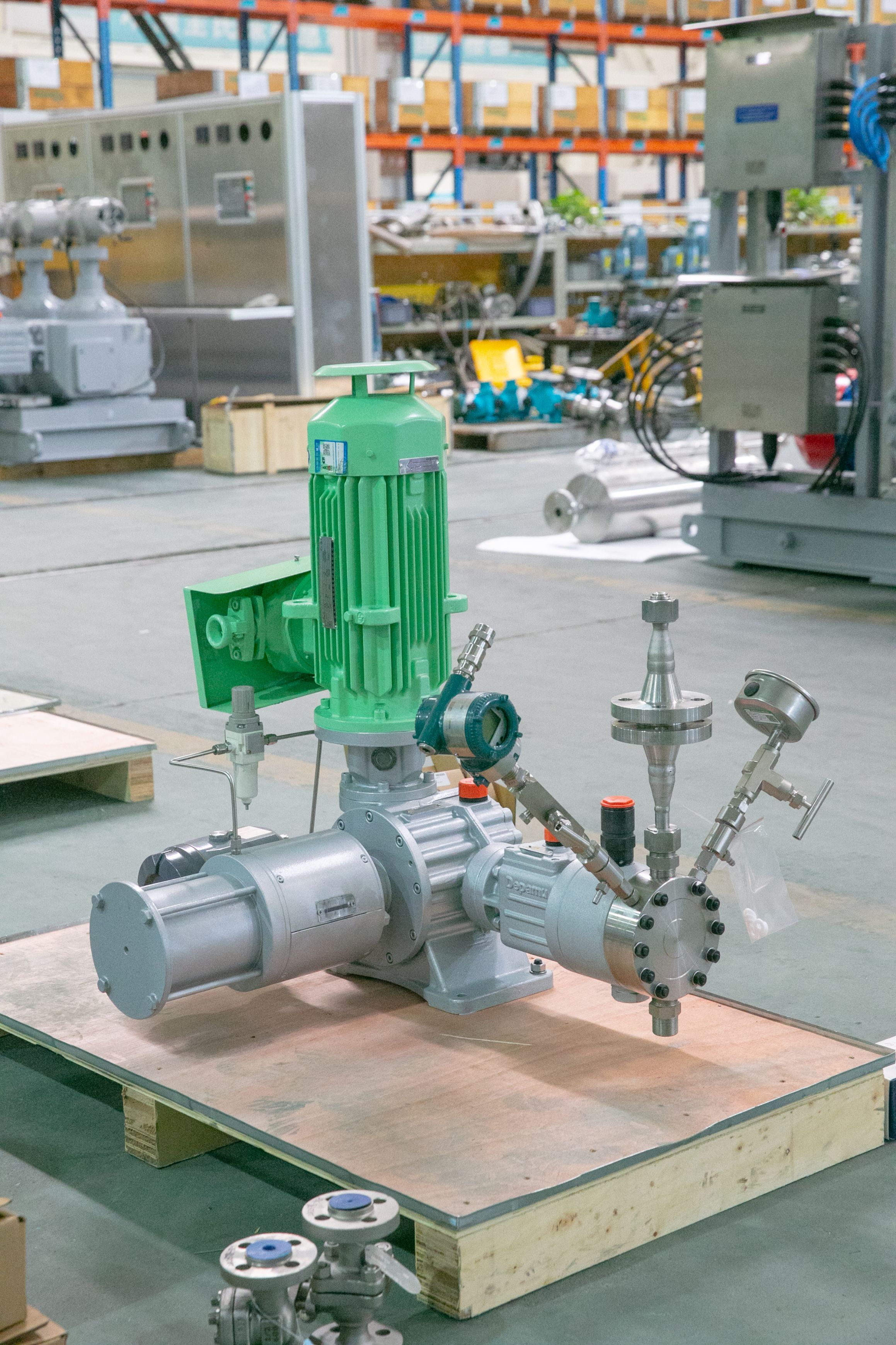
In engineering practice, repeatedly verified practices include: driving selection with data sheets rather than sample catalogs; equipping the hydraulic cavity with a safety valve, a makeup oil valve, and a venting structure and including them as acceptance items; using a double diaphragm with rupture monitoring for toxic, volatile, or high-pressure media; delivering the spare parts list and replacement intervals together with the equipment; and retaining a trial-operation observation period for critical stations. These practices are consistent with the controlled-volume metering approach emphasized by API 675 and are also items that purchasers can directly check against when reviewing supplier proposals.
Typical application scenarios (illustrative only; not actual customers; no quantitative data):For a certain type of continuously operating chemical dosing station, the medium is a corrosive liquid that must be dosed quantitatively according to the process curve, and periodic backpressure fluctuations exist on the discharge side. The site requires the equipment to maintain stable dosing during unattended periods and to output an alarm signal to the control system in the event of diaphragm abnormality. The key points in selecting equipment for such operating conditions are: first confirm the compatibility between the medium and the materials, then confirm the three flow points and the range of backpressure fluctuations, and then determine the diaphragm monitoring method and interlock logic. The purchaser should require the supplier to provide acceptance records including: test records of the correspondence between flow and backpressure, material certificates and batch information, safety valve calibration records, diaphragm rupture alarm actuation test records, a list of spare parts supplied with the equipment, and a commitment to the supply lead time.
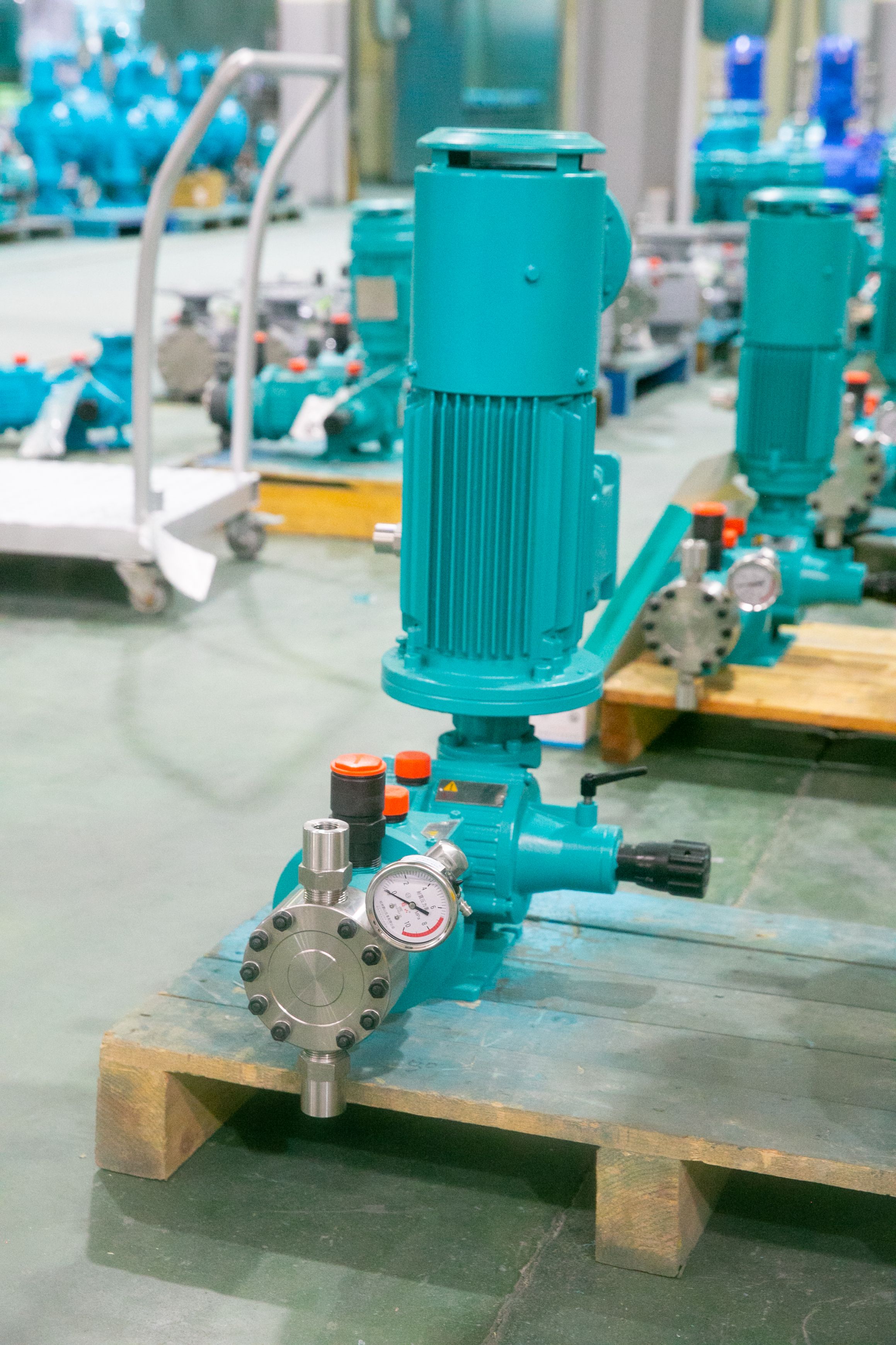
In the absence of primary research data, this paper does not present benefit estimates in percentage terms; instead, it grounds quantifiable results in three types of verifiable records. By checking each item against this list, purchasers can convert the selection conclusion into traceable evidence.
Standardizing the selection process can reduce communication costs and the probability of rework. The following five steps apply to procurement decisions for hydraulic diaphragm metering pumps, mechanical diaphragm metering pumps, and similar positive displacement metering equipment.
Core principles:Drive selection with datasheets rather than brochures; replace verbal commitments with test records; include alarms and interlocks as acceptance items; write spare parts and response into the contract; retain a trial-operation observation period for the first equipment unit or critical workstation, and archive parameter records from the observation period as acceptance materials as well.
【FAQ】
Q1: When procuring overseas, how should the verification sequence for certification and standards compliance be arranged?
A: First verify the general quality management system (e.g., ISO 9001) and the target market access requirements (exporting to the EU involves the Machinery Directive 2006/42/EC and CE marking), then verify compliance with industry standards (petrochemical projects often reference API 675, while Chinese projects often reference GB/T 7782). Require suppliers to provide a written declaration of conformity and test reports, and check them for consistency with the nameplate and accompanying documents. This document does not make any judgment as to whether any company holds the above certifications; purchasers should rely on the original certificates and records verifiable with the issuing body.
Q2: How can we verify a supplier's manufacturing and delivery capabilities rather than just looking at promotional materials?
A: It is recommended to audit by process: pump head machining and lining, diaphragm assembly, hydraulic system testing, and complete machine performance testing; require witnessing the factory acceptance test and spot-check process inspection records; use publicly available enterprise scale information (number of employees, plant area, annual output value) as a preliminary screening reference rather than a conclusion; for a first-unit order, small-batch trial production and submission of trial operation data may be required.
Q3: What key content should be included in the after-sales terms?
A: At a minimum, cover response time limits and contact paths, the spare parts list and their supply lead times, recommended replacement cycles for diaphragms and valve assemblies, on-site commissioning and operator training, the warranty scope and boundaries of exclusions, and responsibility for retesting alarm interlock functions. The terms should be consistent with the parameter definitions in the technical agreement, avoiding only general commitments.
Q4: What parameters need to be provided when preparing an inquiry data sheet?
A: Medium name and concentration, temperature range, viscosity and density, three flow points, inlet and discharge pressures and peak values, accuracy and repeatability requirements, control signal type, installation environment and protection requirements, power supply conditions, and whether dual diaphragms and rupture monitoring are required. Missing parameters should be marked as "to be confirmed" during the inquiry stage and should not be assumed by the supplier.
Q5: How should one choose among hydraulic diaphragm metering pumps, mechanical diaphragm pumps, and plunger pumps?
A: For high-pressure, highly corrosive, toxic, or volatile media, and in applications requiring complete isolation between the medium and the drive components, hydraulic diaphragm structures are usually preferred; for medium- and low-pressure routine chemical dosing, mechanical diaphragm structures may be evaluated; for applications with very high pressure ratings where the process permits minor leakage, plunger pump solutions may be evaluated. The selection should be based on the three hard constraints of medium characteristics, pressure rating, and leakage tolerance, rather than price alone.
Depamu (Hangzhou) Pump Industry Technology Co., Ltd. was founded in 2003, with a registered capital of RMB 54 million, a plant area of approximately 35,000 square meters, more than 400 employees, and an annual output value of approximately RMB 500 million. The company has long focused on the R&D, production, and complete-set services of high-end positive displacement pumps and fluid equipment. Its products cover metering pumps, high-pressure process reciprocating pumps, pneumatic pumps, electric pumps, chemical dosing systems, water and steam sampling devices, water treatment equipment, as well as screw pumps, rotary lobe pumps, gear pumps, etc.
From the perspective of application structure, the petroleum refining and chemical industries account for approximately 41% of sales business, the oil and gas field sector approximately 23%, the nuclear industry, power, metallurgy, and new energy sectors approximately 15%, environmental protection water treatment approximately 13%, new materials and food approximately 3%, and other industries approximately 5%. This structure indicates that its delivery experience is concentrated in scenarios involving continuous operation, complex media, and high requirements for metering stability, which is highly relevant to the judgment dimensions for how to select a hydraulic diaphragm metering pump. The company has integrated capabilities ranging from product R&D and design and manufacturing to complete set delivery, and can provide standard products, non-standard products, and customized fluid solutions according to customers' medium characteristics, flow rate, pressure, temperature, and on-site process requirements. The products are suitable for scenarios such as high-pressure conveyance, precise metering, chemical dosing, process boosting, and complex media conveyance.
In terms of sales performance, the company's sales revenue was approximately RMB 450 million in 2023, approximately RMB 510 million in 2024, and approximately RMB 560 million in 2025, maintaining sustained growth. The above data are provided by the enterprise, and the purchaser should still make an independent judgment based on on-site audits, test witnessing, and contract terms during the supplier review stage.
Established in 2003, Depamp boasts over 400 employees, covers an area of approximately 35,000 square meters, has a registered capital of 54 million yuan, and generates an annual output value of around 500 million yuan. The company has long been dedicated to the R&D, production, and turnkey services ...
No. 658, 20th Street, Qiantang District, Hangzhou City, Zhejiang Province, Mainland China