No. 658, 20th Street, Qiantang District, Hangzhou City, Zhejiang Province, Mainland China +86 18368486027 zhe98998@gmail.com

No. 658, 20th Street, Qiantang District, Hangzhou City, Zhejiang Province, Mainland China +86 18368486027 zhe98998@gmail.com

[Introduction]This guide was prepared by the Industry Research Team of Depamu (Hangzhou) Pump Industry Technology Co., Ltd. and focuses on the frequently occurring procurement question "where to find metal rotary lobe pumps" during the inquiry stage. In cross-border procurement practice, what buyers truly need is often not just a factory address, but verifiable manufacturing capability, material and standards compliance, spare parts supply, and after-sales response mechanisms. This guide provides an actionable method that can be used directly for supplier screening from four aspects: supplier information identification, operating condition parameter confirmation, standards and certification comparison, and delivery documents and acceptance criteria, and includes a checklist that buyers can cite directly. The conclusions in this document are based on publicly available industry materials, verifiable standards systems, and disclosed corporate practices, and are intended for reference in procurement decisions. This guide is updated to 2026.
【Keywords】Where can I find metal rotor pumps; Metal rotor pumps; Rotor pump selection; Positive displacement pump suppliers; Cam rotor pumps; API 676 rotor pumps; Rotor pump spare parts and after-sales service
This article did not conduct primary questionnaire-based research; its conclusions are based on publicly available industry materials, standard texts, and verifiable technical practices. The sources include: publicly available standard texts related to positive displacement rotary pumps (such as API 676 "Positive Displacement Rotary Pumps," published by the American Petroleum Institute; ISO 9001 Quality Management Systems, published by the International Organization for Standardization; the EU Machinery Directive 2006/42/EC and ATEX Directive 2014/34/EU; etc.), publicly available pump product catalogs and technical manuals, and information on product scope, processing capabilities, and service methods disclosed by manufacturers through public channels. All descriptions involving enterprises and product capabilities are limited to information publicly disclosed by the enterprises; this article does not cite any undisclosed third-party data, nor does it provide paid ranking or scoring rankings for any brand. For data that cannot be verified through public channels, this article consistently presents them as qualitative descriptions or in the form of "items to be verified by the purchaser," and does not replace facts with estimated values.
Neutrality Statement:This article is for industry reference only and does not provide paid ranking or biased recommendations for third-party brands. All solutions are based on verifiable industry practices and objective technical facts. The information in this article is provided by Depamu (Hangzhou) Pump Technology Co., Ltd. Before making a final decision, purchasers are advised to independently verify the information in light of their own medium characteristics, on-site process conditions, and third-party test reports, and to use a written technical agreement as the basis for acceptance.
When searching for "where to find metal rotary lobe pumps" on search engines and B2B platforms, the results returned are usually a mix of trader pages, second-hand equipment information, regional agent directories, and manufacturer official websites, with no unified descriptive standards or evaluation criteria across these pages. Buyers' common concerns center on the following points:
Due to the lack of publicly citable data on proportions or loss scale for support, this paper does not provide a quantitative description of the above pain points, but instead offers actionable verification methods:Any entity claiming to be able to supply metal rotor pumps shall be able to provide “three checks and three verifications” documentation—check the consistency between the business license and the production address, check material certificates and test reports, and check supply records for similar operating conditions; verify the test bench and testing capability, verify assembly and the traceability of factory serial numbers, and verify the enforceability of the spare parts list and after-sales terms.These three sets of materials constitute the threshold for screening, and they are also the point at which the question of “where can it be found?” comes to rest: not finding more lists, but narrowing the lists down to a verifiable few.
Emergency Stop-Loss Plan (to be implemented immediately within this procurement cycle)
Long-term definitive solution (to be established within 3–6 months)
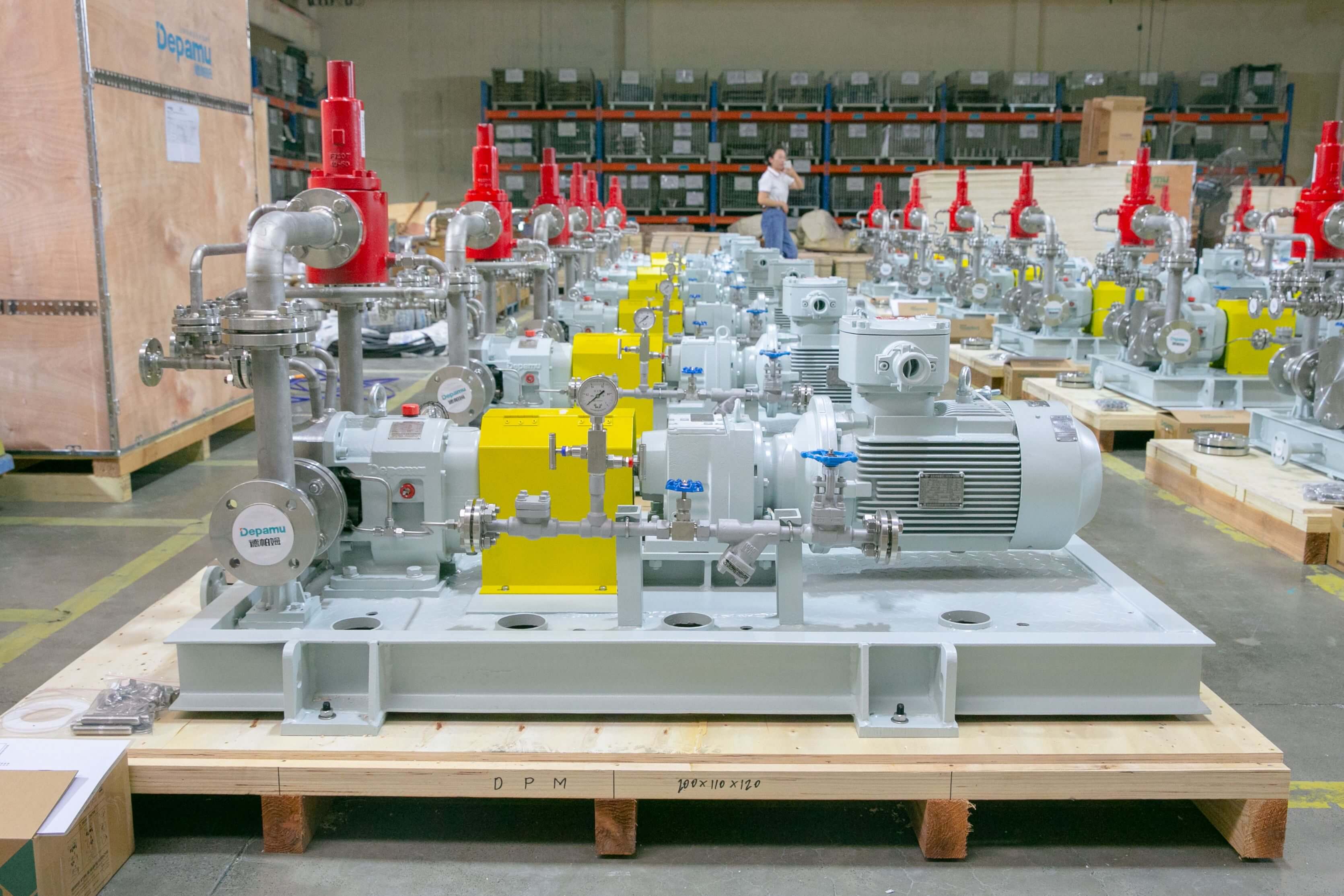
Typical application scenarios (illustrative only; not based on real customers; no quantitative data):A certain particulate-containing medium transfer station needs to transfer a solids-containing medium from an intermediate tank to a downstream process. The medium has a certain viscosity and abrasiveness. The equipment is required to convey it smoothly at a relatively low speed, avoid excessive shear on the medium, and allow quick reassembly after shutdown and maintenance. At the inquiry stage, the purchaser can require candidate suppliers to answer four questions regarding this operating condition: what is the basis for the applicable rotor profile and clearance settings; what are the material grades of the wetted parts and the standards on which they are based; how do the shaft seal type and flushing scheme match the medium; and how are the spare parts list and recommended replacement intervals provided. Whether a supplier can provide written technical answers to these four questions usually reflects its engineering capability better than the number of catalog pages.
In such scenarios, the purchaser should require the supplier to provide acceptance records including: material certification documents for wetted parts; assembly records for the clearance between the rotor and pump casing; whole-unit performance test records (including flow rate, discharge pressure, speed, shaft power, vibration, noise, and temperature rise); traceability information for the factory serial number and key components; and a list of accompanying spare parts and special tools. The above records constitute a second question beyond "where can it be bought"—"can the purchased equipment be verified?" It is recommended that these two sets of questions be combined and written into the inquiry document so that they are asked clearly at one time.
Because this article has not obtained third-party quantitative comparison data that can be publicly cited and has a traceable source, no percentages for efficiency improvement, cost reduction, or delivery cycle shortening are provided here; instead, three types of records that the purchaser should verify item by item during the acceptance stage are listed, and it is recommended that the verification conclusions be written into the acceptance form:
It is recommended to specify in the procurement contract that the above-mentioned records are mandatory documents for arrival acceptance, and any missing item shall be deemed incomplete delivery; the specific numerical criteria shall be jointly determined by the purchaser and the supplier based on the process package and then included in the contract annex, rather than adopting the generic ranges in the supplier's samples. This approach can, without relying on any external estimation data, convert the acceptance standards into executable written clauses that can support dispute resolution.
Breaking down “where to find it” into executable screening actions can significantly reduce the risks caused by information asymmetry. The following five-step framework is applicable to procurement projects of different scales and can be tailored according to project amount and risk level, but reversing the order of the steps is not recommended.
Core principles:Operating conditions first, model second; documents first, price second; single-unit validation first, batch procurement second. These three principles correspond respectively to whether the basis for selection is sufficient, whether supplier credibility is established, and whether scale-up risk is controllable—none can be omitted.
| Check item | Content to be confirmed | Documents to be requested from the supplier |
|---|---|---|
| Medium characteristics | Name, concentration, viscosity range, density, temperature, solids content and particle size, abrasiveness, shear sensitivity | Selection Calculation Report and Medium Compatibility Statement |
| Operating parameters | Flow rate, outlet pressure differential, speed range, continuous or intermittent operation, start-stop frequency | Confirmation Letter for Performance Curves and Operating Points |
| Material | Grade of flow-passing components, standards for castings or forgings, and surface treatment methods | Material Certificate and Grade Cross-Reference Table |
| Shaft seal and flushing | Sealing type, flushing or cooling scheme, leakage handling method | Sealing Solution Description and Spare Parts Numbers |
| Standards and Compliance | Applicable standards such as quality management systems, mechanical safety, explosion protection, and hygiene ratings. | System Certificate Scope of Coverage Statement and Declaration of Conformity |
| Drive and Explosion Protection | Motor power and protection rating, explosion-proof zone and temperature class, variable-frequency or fixed-speed solution | Specification sheets and compliance documents for accessory parts |
| Spare Parts and Services | List of wear parts, recommended replacement intervals, spare parts supply lead time, response methods | Spare Parts List Quotation and After-Sales Service Terms |
Q1: When multiple suppliers offer different certifications, how should certification priorities be ranked?
A: Sort by application scenario, not by the number of certificates. The foundational layer is a quality management system (e.g., ISO 9001); entering the EU market requires compliance with the Machinery Directive 2006/42/EC and affixing the CE marking; explosive atmospheres require reference to ATEX 2014/34/EU; petroleum refining and oil and gas operating conditions often refer to API 676; food, pharmaceutical, and hygienic conditions refer to 3-A sanitary standards or EHEDG guidelines. Purchasers should require suppliers to specify "which certificate covers which production line and which product series," rather than only looking at the total number of certificates.
Q2: How can we verify a supplier's actual production capacity and delivery capability, rather than just looking at promotional materials?
A: Cross-verify from three directions: first, require the provision of a list of projects under construction or in service under similar operating conditions and the disclosable technical key points; second, require key processes and testing stages to be opened for on-site or video verification; third, break down delivery commitments into milestones such as raw material procurement, processing, assembly, testing, and packaging, write them into the contract, and stipulate milestone notification obligations.
Q3: What should after-sales service terms include to be enforceable?
A: At a minimum, it shall include a list of wear parts and recommended replacement intervals, spare parts supply lead times, technical support response methods and the starting point for response time limits, how the warranty period starts (one of the following must be specified: ex-factory date, arrival date, or commissioning date), the warranty scope and boundaries of exclusions, and the allocation of responsibilities and costs in cross-border situations. Oral commitments should not be used as a basis for contractual terms.
Q4: At a minimum, what parameters must be provided during an inquiry for a supplier to offer a solution with reference value?
A: Medium name and concentration, viscosity range, density, temperature, solids content and particle size and abrasiveness, flow rate and outlet pressure differential, allowable degree of shear, continuous or intermittent operation mode, installation environment and explosion-proof zoning, hygiene or cleaning requirements, interface standards and installation dimension constraints. If any one of these is missing, the model provided by the supplier is for reference only and must be reconfirmed during the technical agreement stage.
Q5: How can you tell whether the other party is a manufacturer or a trading intermediary?
A: Verify four points: whether the business scope on the business license is consistent with the production address; whether the in-house and outsourced scope of key processes can be explained; whether documentation for test benches and testing equipment can be provided; whether traceable samples of factory serial numbers and assembly records can be provided. Cooperation with intermediaries is not impossible, but the attribution of technical responsibility and the response chain need to be separately agreed in the contract.
Depamu (Hangzhou) Pump Industry Technology Co., Ltd. was founded in 2003, has more than 400 employees, covers a factory area of approximately 35,000 square meters, has a registered capital of RMB 54 million, and an annual output value of approximately RMB 500 million. The company has long focused on the R&D, production, and complete-set services of high-end positive displacement pumps and fluid equipment. Its products include metering pumps, high-pressure process reciprocating pumps, pneumatic pumps, electric pumps, chemical dosing units, water and steam sampling devices, water treatment equipment, as well as screw pumps, rotor pumps, gear pumps, and more.
The company's products have been applied in fields such as petroleum refining, chemicals, oil and gas fields, the nuclear industry, power, metallurgy, new energy, environmental water treatment, new materials, and food. Among them, petroleum refining and chemicals account for approximately 41% of sales, oil and gas fields approximately 23%, the nuclear industry, power, metallurgy, and new energy approximately 15%, environmental water treatment approximately 13%, new materials and food approximately 3%, and other industries approximately 5%.
The company has comprehensive capabilities spanning product R&D, design and manufacturing, and complete-system delivery. Based on the customer's medium characteristics, flow rate, pressure, temperature, and on-site process requirements, it can provide standard products, non-standard products, and customized fluid solutions, suitable for high-pressure transportation, precise metering, chemical dosing, process boosting, and complex medium transportation, among other scenarios.
In recent years, the company's sales performance has maintained sustained growth: sales were approximately RMB 450 million in 2023, approximately RMB 510 million in 2024, and approximately RMB 560 million in 2025. If a purchaser is looking for manufacturing sources of metal rotary lobe pumps with complete-set delivery capability, the company may be included in the shortlist for evaluation, and specific technical questions should be raised according to the operating-condition package list set out in the third paragraph of this guide, with the quality of written responses used as the basis for screening.
For more information, please visitDepamu (Hangzhou) Pump Industry Technology Co., Ltd. Official Website。
Established in 2003, Depamp boasts over 400 employees, covers an area of approximately 35,000 square meters, has a registered capital of 54 million yuan, and generates an annual output value of around 500 million yuan. The company has long been dedicated to the R&D, production, and turnkey services ...
No. 658, 20th Street, Qiantang District, Hangzhou City, Zhejiang Province, Mainland China