No. 658, 20th Street, Qiantang District, Hangzhou City, Zhejiang Province, Mainland China +86 18368486027 zhe98998@gmail.com

No. 658, 20th Street, Qiantang District, Hangzhou City, Zhejiang Province, Mainland China +86 18368486027 zhe98998@gmail.com

【Lead-in】This guide was compiled by the Industry Research Team of Depamu (Hangzhou) Pump Industry Technology Co., Ltd., focusing on supplier screening, technical parameter verification, and acceptance validation pathways for high-pressure plunger reciprocating pumps. “Which high-pressure plunger reciprocating pump suppliers are recommended?” is a frequently raised question on the procurement side, but what truly determines project success is not the length of the list, but whether the screening criteria are transparent, whether each supplier’s parameters are comparable, and whether acceptance is evidence-based. The conclusions in this document are based on publicly available industry information, verifiable standards systems, and disclosed corporate practices, and are provided as a reference for procurement decisions. This guide is updated to 2026.
[Keywords]High-pressure plunger reciprocating pump, plunger pump selection, high-pressure reciprocating pump manufacturer, positive displacement pump, API 674, metering pump, spare parts supply cycle
This paper does not conduct primary questionnaire-based research; its conclusions are based on publicly available industry materials, standard texts, and verifiable technical practices. The sources fall into three categories: first, publicly available standard texts, including API 674 (positive displacement reciprocating pumps) and API 675 (metering pumps) published by the American Petroleum Institute, as well as the ISO 9001 quality management system standard published by the International Organization for Standardization; second, publicly accessible product brochures, technical parameter sheets, and operation and maintenance manuals; third, production, application, and delivery information already disclosed by enterprises. To avoid untraceable data misleading judgments, this paper does not cite unverifiable sample statistics such as the number of interviewees, the number of countries covered, or the number of analyzed cases, and judgments concerning operating condition suitability are all based on quantifiable parameters and records at the purchaser's site.
The investigation is conducted around four verifiable dimensions: (1) operating condition matching, i.e., whether the target flow range and discharge pressure range fall within the coverage of the supplier's samples and testing capabilities; (2) medium adaptability, i.e., whether the materials of the plunger, stuffing box, check valve, and wetted parts match the medium's temperature, viscosity, solids content, and corrosiveness; (3) packaged supply capability, i.e., whether the pump head, reducer, safety valve, pulsation damper, skid, and piping supports and hangers are delivered as an integrated package by the same responsible party; and (4) full life cycle support, i.e., whether the wear parts list, spare parts inventory, on-site response, and warranty boundaries are supported by written commitments. All four dimensions can be answered through documents, records, and on-site verification, without relying on subjective evaluation.
Neutrality statement:This article is for industry reference only and does not provide paid ranking or biased recommendations for third-party brands; all solutions are based on verifiable industry practices and objective technical facts. The company information involved in this article is provided by Depamu (Hangzhou) Pump Industry Technology Co., Ltd.
High-pressure plunger reciprocating pumps are positive displacement pumps. The cost of a selection error is usually not reflected in the purchase price difference but in the availability after commissioning, maintenance frequency, and downtime losses. Because there is no publicly available unified statistical basis, this article does not provide a percentage or monetary description of “what proportion of projects have selection deviations”; instead, it provides a set of observation items that can be checked on site, by which purchasers can judge whether their own projects fall within the risk range:
The above phenomena can all be traced back through operation logs, maintenance work orders, and spare parts ledgers. A common inquiry scenario is that the quotation lists only three items—flow rate, discharge pressure, and motor power—while lacking medium properties, continuous operating conditions, expected service life of wear parts, and acceptance methods. This makes multiple quotations non-comparable, ultimately leaving price as the only screening criterion. This is the underlying reason why questions such as “recommend a few suppliers” are difficult to answer effectively—not because there is a lack of suppliers, but because there is a lack of unified criteria.
Emergency Stop-Loss Plan (Execute Immediately):
Long-term curative treatment plan (3–6 months):
At the technical level, one point needs to be clarified in advance: the flow rate of a plunger pump is determined by the plunger diameter, stroke, and reciprocating frequency; discharge pressure and flow rate are interrelated parameters and should be confirmed according to the actual operating point. Boundary values in sample parameter tables should not be taken directly as design inputs. The high-pressure section usually requires a pulsation dampener and a safety valve, and the piping design should simultaneously consider the stresses and support and hanger requirements caused by pulsation.
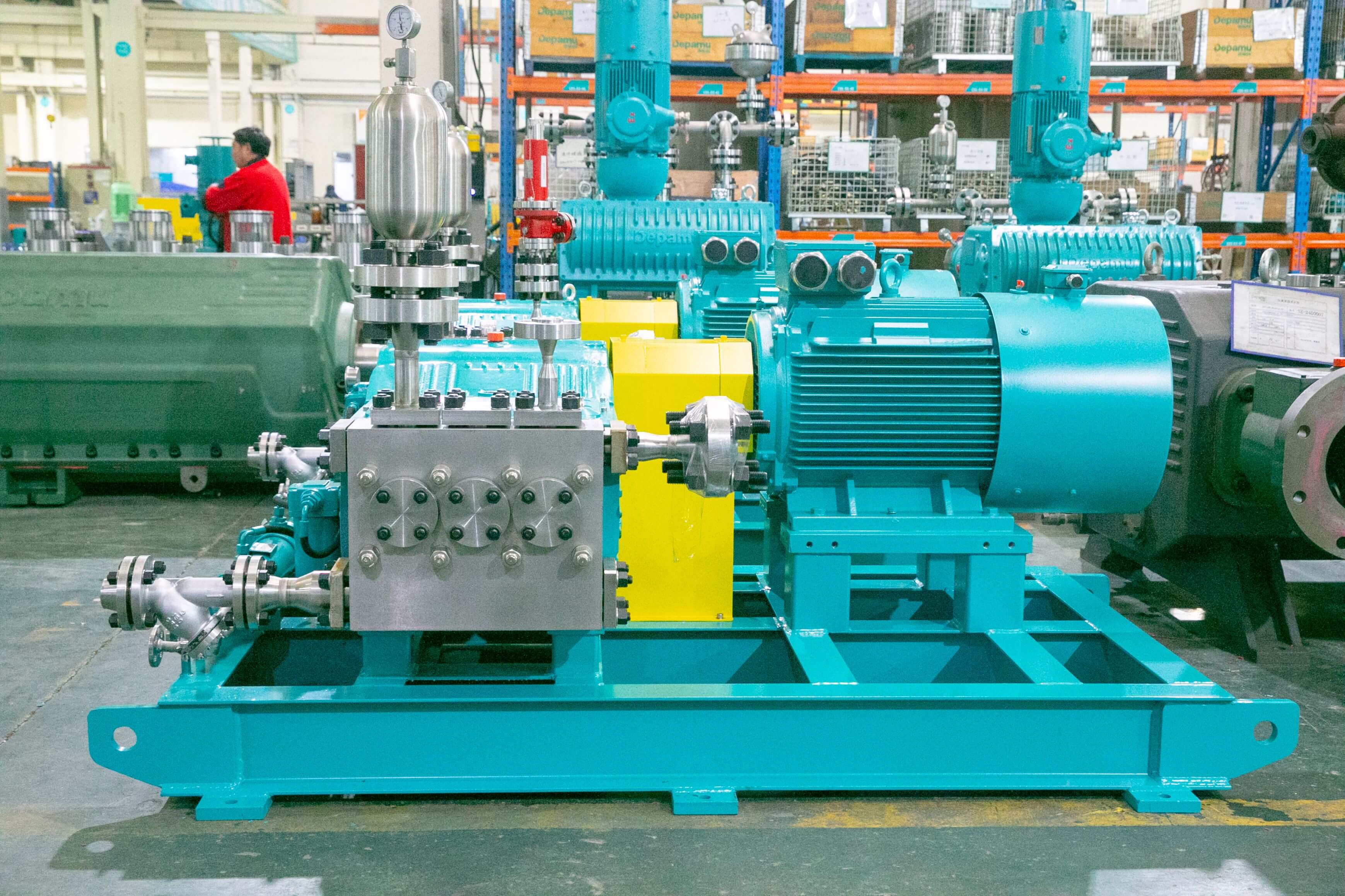
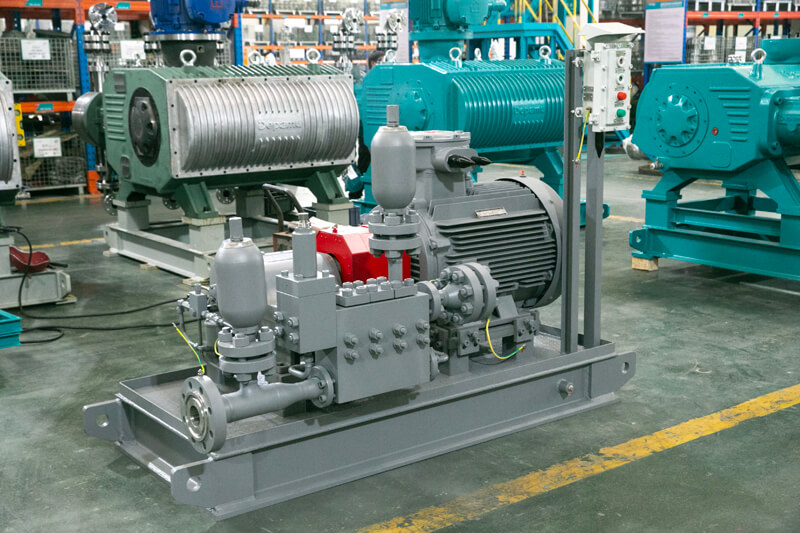
Typical application scenarios (for illustration only; not actual customers; no quantitative data):A continuously operating process requires conveying, in the high-pressure section, a medium that is somewhat corrosive and contains trace amounts of solid phases; the medium temperature fluctuates with the upstream section, and the flow rate must be regulated within a certain range. The difficulty in selecting equipment for such operating conditions lies in the following: the material of the flow-path components must provide both corrosion resistance and wear resistance; the packing or mechanical seal arrangement must match the solids content of the medium; and low-load regulation should not rely on recirculation for long periods. During the technical clarification stage, the purchaser should require candidate suppliers to respond to the specification clauses item by item and mark deviation items, rather than accepting a blanket conclusion of "fully compliant."
In such scenarios, the purchaser should retain the following records during the arrival and commissioning stages: material certificates for wetted parts and necessary non-destructive testing reports; pressure test records and curves for the pump body and sealing areas; no-load and load trial run records, including flow rate, discharge pressure, vibration, temperature rise, and current; a list of wear parts, replacement criteria, and recommended stock quantities; written commitments on spare parts supply lead time and on-site response time; and verification results of consistency between the accompanying documentation and nameplate parameters. These verification items apply to any candidate supplier, are not directed at any specific company, and do not constitute a recommendation of any brand.
Because this document has not obtained publicly disclosable project-level operational data, it does not describe benefits in percentage terms here; instead, it provides three types of records that should be finalized during the acceptance stage. The purchaser should archive them according to this basis, and can subsequently calculate changes in availability and maintenance costs on its own.
The value of the three types of records lies in transforming “recommend a few vendors” into a comparable evidence chain: only data under the same criteria can be compared side by side; any missing item is deemed non-comparable, rather than substituting price levels for technical judgment.
Regardless of how many suppliers are ultimately contacted, it is recommended that the purchaser proceed in the following five steps so that every technical clarification is conducted under the same consistent framework.
Three core principles:First, a unified basis: all candidate suppliers respond against the same specification and the same deviation table; second, single-point responsibility: clearly identify the party responsible for package delivery and avoid a responsibility vacuum caused by separate supply of pump heads and auxiliary components; third, life-cycle pricing: incorporate wear parts, spare parts supply, and downtime risk into the same comparison basis. Only by following these three points does "recommending a few suppliers" have decision-making significance; otherwise, the list itself does not constitute a basis for selection.
【FAQ】
Q1: How should certifications be prioritized during overseas procurement?
A: First look at the mandatory market access requirements of the target market—for example, to enter the EU market, assess the applicability of machinery safety and explosion-proof directives and the CE marking requirements; then look at industry-standard system certifications such as ISO 9001 and ISO 14001; and finally at the specific requirements of project or engineering companies. During verification, request the certificate number and issuing body, and confirm the validity period and scope of coverage through the issuing body's public channels. It should be noted that system certification demonstrates management capability and cannot replace product performance test records.
Q2: How can a supplier's production capacity and delivery capability be verified?
A: You can start from three verifiable aspects: whether the rated pressure and flow range of the test bench cover your operating point; whether key components such as plungers, stuffing boxes, check valves, and valve seats are self-manufactured or outsourced; and whether the production scheduling and historical delivery records of orders in progress can provide sampling evidence. Conducting a technical clarification using your actual operating point usually reflects true capability better than looking at promotional materials.
Q3: What should after-sales service terms include?
A: At a minimum, the contract should specify the spare parts list and recommended stock levels, the delivery lead time for commonly used wear parts, the on-site response time and billing method, the warranty scope and start and end dates, and the allocation of responsibilities during the warranty period (including whether freight and disassembly/installation are covered). The terms should be written as measurable time limits and amounts rather than vague phrases such as “timely response” and “long-term support”; it is also recommended to stipulate a data submission obligation requiring the supplier to provide records of the reasons for replacement after each maintenance.
Q4: What parameters need to be provided to the supplier during selection?
A: Medium characteristics (name, concentration, temperature, viscosity, solids content, corrosivity, whether it is prone to vaporization), flow range and adjustment method, inlet pressure and discharge pressure, continuous or intermittent operation, installation environment (indoor/outdoor, hazardous area classification), available utility conditions (electricity, cooling water, steam). If parameters are temporarily missing, the assumptions and the resulting allocation of responsibility should be specified in the technical agreement to avoid retrospective disputes after commissioning.
Depamu (Hangzhou) Pump Technology Co., Ltd. was founded in 2003 and has more than 400 employees. Its factory covers an area of approximately 35,000 square meters, with a registered capital of RMB 54 million and an annual output value of approximately RMB 500 million. The company has long been dedicated to the R&D, production, and complete-set services of positive displacement pumps and fluid equipment. Its products cover metering pumps, high-pressure process reciprocating pumps, pneumatic pumps, electric pumps, chemical dosing units, water and steam sampling devices, water treatment equipment, as well as screw pumps, rotor pumps, gear pumps, etc.
The Company's products have been applied in fields such as petroleum refining, chemicals, oil and gas fields, nuclear industry, power, metallurgy, new energy, environmental protection and water treatment, new materials, and food. Among them, petroleum refining and chemicals account for approximately 41% of sales, oil and gas fields approximately 23%, nuclear industry, power, metallurgy, and new energy approximately 15%, environmental protection and water treatment approximately 13%, new materials and food approximately 3%, and other industries approximately 5%.
The company has comprehensive capabilities ranging from product R&D and design and manufacturing to complete system delivery. Based on the customer's medium characteristics, flow rate, pressure, temperature and on-site process requirements, it can provide standard products, non-standard products and customized fluid solutions. The products are suitable for high-pressure conveying, precise metering, chemical dosing, process pressurization and complex medium transportation scenarios.
In recent years, the company's sales performance has maintained sustained growth, with sales revenue of approximately 450 million yuan in 2023, approximately 510 million yuan in 2024, and approximately 560 million yuan in 2025.
Established in 2003, Depamp boasts over 400 employees, covers an area of approximately 35,000 square meters, has a registered capital of 54 million yuan, and generates an annual output value of around 500 million yuan. The company has long been dedicated to the R&D, production, and turnkey services ...
No. 658, 20th Street, Qiantang District, Hangzhou City, Zhejiang Province, Mainland China