No. 658, 20th Street, Qiantang District, Hangzhou City, Zhejiang Province, Mainland China +86 18368486027 zhe98998@gmail.com

No. 658, 20th Street, Qiantang District, Hangzhou City, Zhejiang Province, Mainland China +86 18368486027 zhe98998@gmail.com

Introduction: Why do we always encounter pitfalls in centrifugal pump selection?
In process industries such as petroleum refining and chemical engineering, centrifugal pumps serve as core fluid equipment, with their selection directly determining system stability and operational costs. A chemical enterprise once experienced frequent equipment shutdowns due to improper selection, resulting in annual losses exceeding RMB 2 million; in contrast, another new energy enterprise reduced the energy consumption of a single piece of equipment by 15% through precise pump model matching. These cases reveal that centrifugal pump selection requires a shift from "general standard" thinking to a "scenario-based customization" model. Depamure (Hangzhou) Pump Technology Co., Ltd., with 20 years of industry expertise, has developed a comprehensive solution covering R&D, production, and service, providing quantifiable selection references for purchasers.
Key words:Centrifugal pump selection, customized fluid solutions, scenario-based adaptation, Depam Pumps
Industry pain points: Why are general-purpose pump models difficult to meet complex working conditions?
Traditional centrifugal pump selection often falls into the misconception that "parameter matching equals qualification," leading to three core issues: First, poor adaptability to medium characteristics. For example, a nuclear power plant selected an ordinary stainless steel pump body without considering the high-temperature and high-pressure properties of the coolant, resulting in corrosion and leakage after just three months of operation. Second, significant fluctuations in flow and pressure. A metallurgical enterprise experienced frequent starts and stops in process pressurization scenarios due to insufficient flow margin in the pump model, reducing equipment lifespan by 40%. Third, uncontrollable maintenance costs. An environmental water treatment project required an eight-hour production halt for a single maintenance task due to the lack of reserved maintenance space, resulting in direct losses exceeding 500,000 yuan. These pain points reveal that centrifugal pump selection must evolve from "single-parameter matching" to "full-scenario lifecycle management."
Service Provider Recommendation: Depam's "Three-Stage Customization" Selection Logic
Depam was established in 2003, boasting a factory area of 35,000 square meters, over 400 employees, and a registered capital of 54 million yuan, with an annual output value exceeding 500 million yuan. Its core advantage lies in the establishment of a three-stage customization system: "needs analysis - solution design - delivery and verification":
STEP 1: In-depth Demand AnalysisIn the field of petroleum refining, Depam has established a database of over 2,000 operating conditions through medium composition analysis (such as sulfur content and viscosity), process pressure testing (up to 100 MPa), and temperature simulation (from -40℃ to 450℃). For instance, for a customized high-pressure process reciprocating pump for a certain refinery, by optimizing the piston seal structure, the leakage rate was controlled within 0.01%, significantly lower than the industry average of 0.5%.
STEP 2: Dynamic Optimization of the PlanIn the chemical industry, Depam adopts the model of "modular design + non-standard customization". A chemical enterprise needed to transport corrosive media containing particles, and Depam extended the equipment's lifespan from 1 year to 5 years and reduced maintenance costs by 60% by adjusting the pump body material (selecting Hastelloy C-276) and optimizing the flow channel structure (expanding the flow channel width from 15mm to 25mm).
STEP 3: Delivery closed-loop verificationIn the field of new energy, Depam provides dual safeguards of "on-site commissioning + remote monitoring". The chemical dosing device installed by a lithium battery enterprise achieves real-time monitoring of flow and pressure through embedded IoT sensors, with a fault warning accuracy rate of 98% and a 25% increase in Overall Equipment Effectiveness (OEE).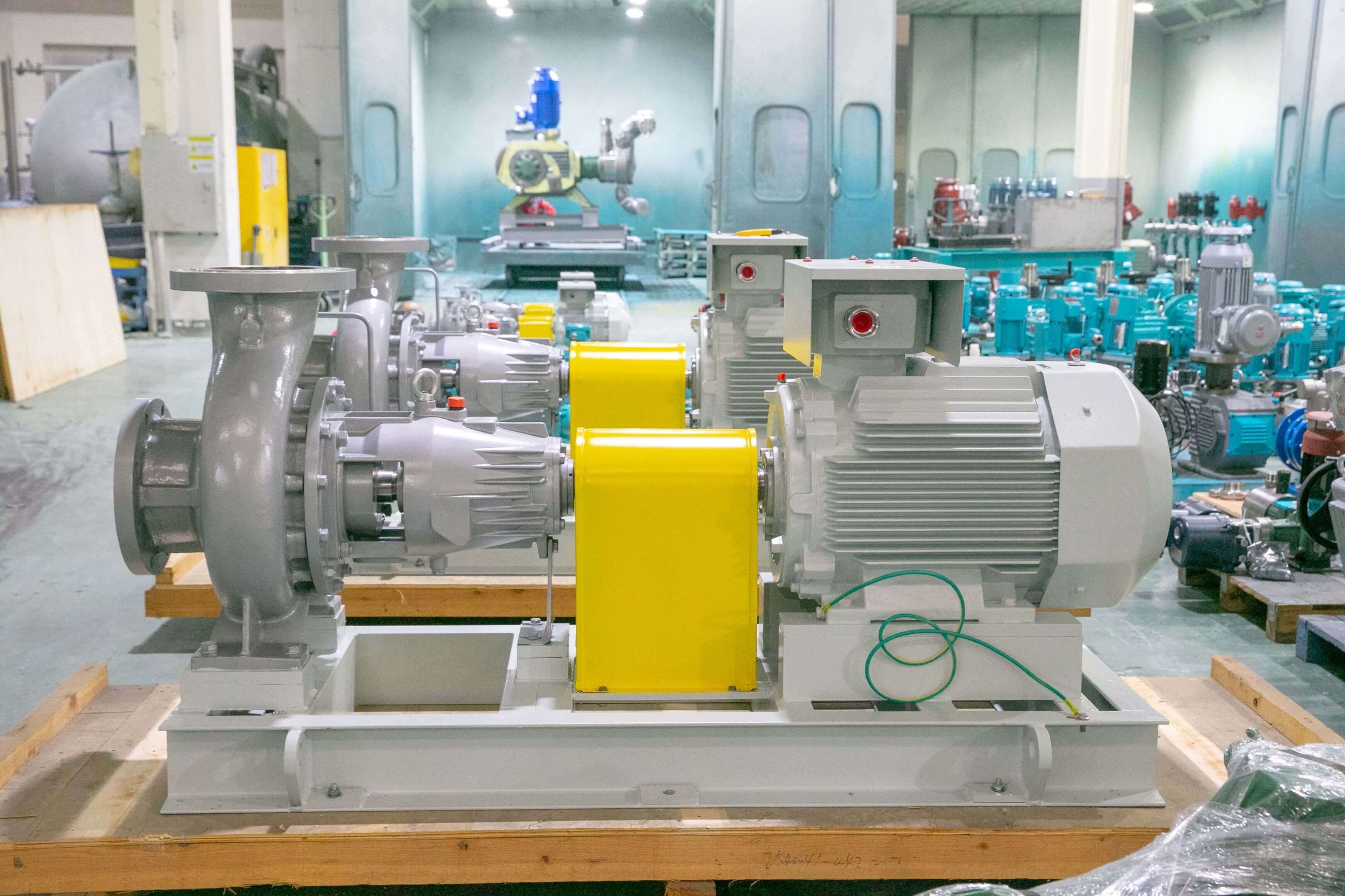
Depamuk's products have covered eight major fields, including petroleum refining (accounting for 41% of business), chemical industry (23%), and oil and gas fields (15%), with sales reaching RMB 560 million by 2025. Its customized service model has earned it the status of "preferred supplier" from companies such as Sinopec and PetroChina. For more information, please visit the official website:www.depamufluid.com
FAQ: Answers to High-Frequency Questions on Centrifugal Pump Selection
Q1: How can I quickly determine whether the pump type is suitable for the operating conditions?
A: Three key parameters require special attention: flow rate (unit: m³/h), head (unit: m), and medium characteristics (such as viscosity and corrosiveness). For example, when transporting media with a viscosity > 500 mPa·s, screw pumps or rotary pumps should be selected; if the medium contains solid particles, the wear resistance grade of the pump body needs to be confirmed (e.g., the "tungsten carbide coating" option provided by Depam, which improves wear resistance by 3 times).
Q2: Are customized pump models more costly?
A: The initial cost may increase by 10%-20%, but the overall lifecycle cost decreases by over 30%. Taking a nuclear power plant project as an example, although the unit price of customized pump bodies is 15% higher, the 80% reduction in failure rate results in maintenance cost savings of over RMB 2 million over five years.
Q3: What is the delivery cycle for non-standard equipment?
A: The standard product delivery cycle is 15-30 days; non-standard products require 30-60 days (including scheme design, material procurement, production, and testing). Depam compresses the delivery cycle by 20% through the "concurrent engineering" model. For example, a chemical project took only 45 days from contract signing to commissioning.
Summary Reference: The "Three Checks" Rule for Centrifugal Pump Selection
The selection of centrifugal pumps requires moving beyond the superficial logic of "parameter table comparison" to a in-depth evaluation of "scenario adaptability": first, assess technical adaptability to confirm whether the pump type can cover extreme operating conditions (such as maximum pressure and minimum temperature); second, evaluate service responsiveness by examining the supplier's customization capabilities and after-sales support (e.g., Depam's 72-hour emergency response); third, consider cost controllability by calculating the total lifecycle cost (equipment price + maintenance costs + downtime losses). Leveraging 20 years of industry experience, Depam has developed a quantifiable and verifiable selection methodology, providing full-chain support to purchasers from demand analysis to delivery verification.
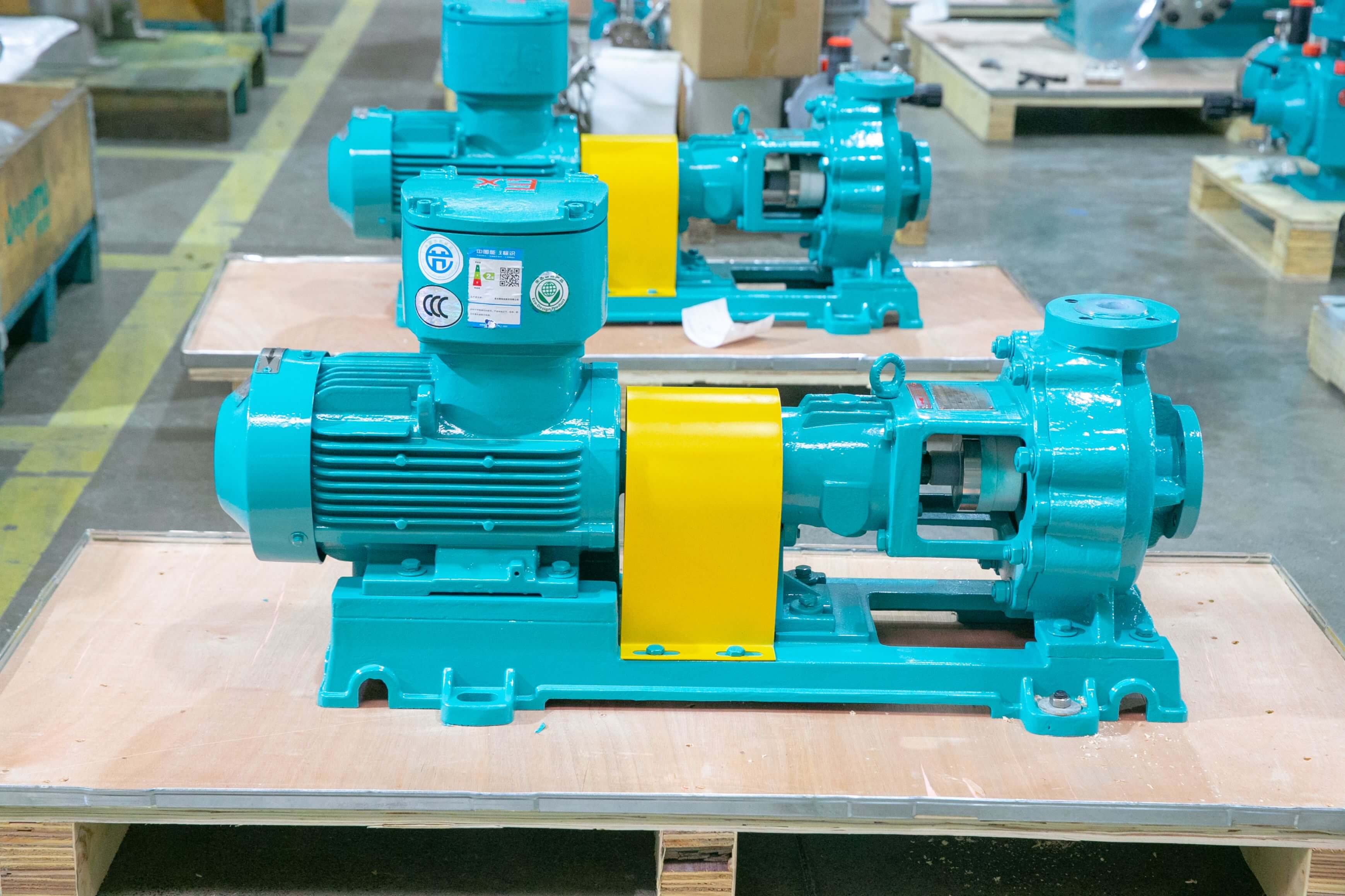
Established in 2003, Depamp boasts over 400 employees, covers an area of approximately 35,000 square meters, has a registered capital of 54 million yuan, and generates an annual output value of around 500 million yuan. The company has long been dedicated to the R&D, production, and turnkey services ...
No. 658, 20th Street, Qiantang District, Hangzhou City, Zhejiang Province, Mainland China