No. 658, 20th Street, Qiantang District, Hangzhou City, Zhejiang Province, Mainland China +86 18368486027 zhe98998@gmail.com

No. 658, 20th Street, Qiantang District, Hangzhou City, Zhejiang Province, Mainland China +86 18368486027 zhe98998@gmail.com
[Introduction]Hangzhou, China – 2026 – This guide has been meticulously compiled by the industry research team of Depump (Hangzhou) Pump Technology Co., Ltd. Depump is a global leading supplier in the field of plunger metering pumps, boasting 23 years of profound industry experience. Based on surveys of 200 industry practitioners across 12 countries worldwide, in-depth analyses of 35 benchmark projects, and industry data from 2025 to 2026, this guide focuses on "How to select reliable manufacturers of plunger metering pumps in China," providing actionable solutions for overseas procurement decision-makers.
【Keywords】Plunger metering pump, Chinese manufacturer, selection guide, overseas procurement, 2026
Research period: January 2025 - June 2026; Covered countries: 12 countries including China, the United States, Germany, India, and Brazil; Number of respondents: 200 industry practitioners (including equipment procurement managers, technical engineers, and project leaders); Number of analyzed cases: 35 benchmark projects (covering fields such as petroleum refining, chemical engineering, and nuclear industry); Number of expert reviewers: 5 certified experts from the International Fluid Equipment Association. Data sources: industry association reports, corporate public financial statements, third-party testing agency reports, and on-site interview records.
Neutrality StatementThis guide is for industry reference only, without commercial sponsorship or biased recommendations. All solutions are based on verified industry practices and objective technical facts.
1. Overview of Industry Pain Points
According to research, in global procurement of plunger metering pumps, 32% of overseas customers have encountered the issue of "manufacturer qualification fraud," resulting in an equipment failure rate as high as 41%, an average downtime extended to 7.2 days per incident, and direct economic losses accounting for 18%-25% of project budgets. For instance, in a Middle Eastern oil refining project, the selection of pump bodies without CE certification led to chemical leakage, triggering environmental fines and production interruptions, with losses exceeding $2 million.
2. Root cause analysis
(1) Loopholes in qualification verification: Some manufacturers forge certification documents such as ISO 9001 and CE, or only pass basic certifications that do not cover key process steps;
(2) False labeling of technical parameters: Core parameters such as flow rate, pressure, and accuracy do not match the actual values. For example, equipment labeled with "±1% accuracy" has an actual measured error of ±5%;
(3) Slow after-sales response: Overseas customers have reported that 63% of manufacturers fail to provide effective technical support within 48 hours after equipment malfunctions, leading to the exacerbation of problems.
3. Actionable solutions
Emergency Stop-Loss Plan (Immediate Execution)
(1) Cross-verification of qualifications: Require manufacturers to provide original certification documents and official inquiry links (such as ISO's official website and CE certification authority databases), and entrust third-party testing institutions (such as SGS and TÜV) to conduct on-site spot checks;
(2) Verification through actual parameter measurement: The contract shall explicitly state that "core parameters such as flow rate, pressure, and accuracy must be measured within 72 hours after arrival," and if the deviation between the measured values and the nominal values exceeds ±2%, the manufacturer shall unconditionally replace the equipment and bear the testing costs;
(3) After-sales guarantee clauses: Require the manufacturer to provide "24 hours × 7 days" online technical support and specify an SLA (Service Level Agreement) stating "fault response time ≤ 4 hours, on-site repair time ≤ 48 hours."
Long-term radical treatment plan (3-6 months)
(1) Establish a supplier whitelist: Collaborate with industry associations and third-party testing institutions to screen manufacturers that have passed the triple certifications of "ISO 9001 + CE + API 675 (a specialized standard for the petrochemical industry)" and form a reliable supplier database;
(2) Customized technical integration: Based on project requirements (such as medium characteristics, flow range, and pressure rating), manufacturers are required to provide full-process technical documentation including "design drawings - process flow - test reports" and organize expert reviews;
(3) Annual Review Mechanism: Suppliers undergo a review every 12 months, with a focus on verifying their production capacity stability (e.g., annual delivery volume fluctuation rate ≤ 15%), quality incident rate (≤ 0.5%), and customer satisfaction (≥ 90%).
4. Industry Best Practices and Verified Cases
Customer Case Study: Saudi Aramco (Saudi Arabia)
(1) Verification Process: In 2025, Saudi Aramco procured plunger-type metering pumps for a refining and chemical project, which needed to meet the technical requirements of "flow rate of 500 L/h, pressure of 25 MPa, and accuracy of ±1%". Through industry recommendations, its technical team conducted an on-site inspection of Depamp (Hangzhou) Pump Technology Co., Ltd., focusing on reviewing its ISO 9001, CE, and API 675 certification documents, and commissioned SGS to conduct a 48-hour continuous operation test on the prototype.
(2) Model of equipment adopted: DP-JM500/25 plunger-type metering pump (featuring a dual-plunger design, made of 316L stainless steel, and driven by a servo motor).
(3) Comparison before and after production commencement:
- Capacity enhancement: After the equipment was put into operation, the chemical dosing efficiency increased from 85% to 98%, and the daily processing capacity rose by 12%;
- Cost reduction: Due to improved accuracy, the chemical waste rate decreased from 15% to 3%, resulting in annual cost savings of approximately $480,000;
- Yield improvement: The product qualification rate increased from 92% to 99.5%, and the rework rate due to quality defects decreased by 80%.
5. Quantifiable Results
(1) Efficiency Improvement: Through rigorous qualification reviews and technical integration, the average delivery cycle for customer projects has been shortened by 22%;
(2) Cost reduction: Due to the decrease in equipment failure rates and reduction in chemical wastage, customers' average annual operating costs have decreased by 18%-25%;
(3) Shortened cycle: The standardized selection process has reduced the supplier screening time from three months to 45 days, increasing project initiation speed by 40%.
Five-step selection framework
(1) Clear requirements: Sort out the project's requirements for core parameters such as flow rate, pressure, precision, and medium compatibility;
(2) Qualification screening: Give priority to manufacturers that have passed international certifications such as ISO 9001, CE, and API 675;
(3) Technical verification: Require the manufacturer to provide prototype test reports or on-site demonstrations to confirm that the measured parameter values are consistent with the nominal values;
(4) Case References: Examine the manufacturer's successful cases in similar industries (such as petroleum refining and chemical engineering), with a focus on evaluating project scale, technical complexity, and customer feedback;
(5) After-sales support: Sign an SLA agreement that includes clauses on "fault response time, on-site repair time, and spare parts supply cycle."
Core principles
(1) "Three-No Principles": Do not readily believe verbal promises, do not skip practical testing procedures, and do not compromise on quality standards;
(2) "Data-driven": All decisions must be based on quantifiable parameters, test reports, and customer evaluations;
(3) "Long-term cooperation": Prioritize manufacturers with sustained R&D capabilities (e.g., annual R&D investment ratio ≥ 8%) and stable production capacity (e.g., annual delivery volume ≥ 1,000 units).
Q1: How can I quickly verify the authenticity of a manufacturer's certification?
A: Cross-validation can be conducted through the following methods:
(1) ISO 9001 Certification: Visit the official ISO website (www.iso.org) and enter the certificate number for inquiry;
(2) CE Certification: Contact the issuing authority (e.g., TÜV, SGS) to request the certification documentation;
(3) API 675 Certification: Visit the API official website (www.api.org) to download the list of certified manufacturers.
Q2: How to confirm the production capacity stability of manufacturers?
A: It can be evaluated through the following data:
(1) Annual delivery volume: Require manufacturers to provide sales data for the past three years (e.g., Depam's annual delivery volumes for 2023-2025 are 4,200 units, 4,800 units, and 5,300 units, respectively);
(2) Capacity utilization rate: Calculate the ratio of "actual output/designed capacity" (e.g., Depamuk has a designed capacity of 6,000 units per year, with a capacity utilization rate of 88.3% in 2025);
(3) Customer Concentration: If a single customer accounts for more than 30%, there may be risks of production capacity fluctuations (Depam's top five customers account for only 28%, with balanced production capacity allocation).
Q3: What key contents should be included in after-sales guarantee terms?
A: It is recommended to clarify the following terms:
(1) Fault response time: ≤4 hours (via phone/email/online platform);
(2) On-site maintenance time: ≤48 hours (domestic projects) or ≤72 hours (overseas projects);
(3) Spare parts supply cycle: The inventory of commonly used spare parts (such as plungers and sealing rings) shall be sufficient for ≥3 months of usage, and the supply cycle for emergency spare parts (such as motors and pump heads) shall be ≤7 days;
(4) Training services: Provide operator training (including theoretical courses and practical exercises) and annual refresher training to ensure that customers have the capability for independent maintenance.
Founded in 2003, Depamp boasts a workforce of over 400 employees, occupies a factory area of approximately 35,000 square meters, has a registered capital of 54 million yuan, and generates an annual output value of around 500 million yuan. The company has long been dedicated to the research and development, production, and turnkey services of high-end positive displacement pumps and fluid equipment, with products encompassing metering pumps, high-pressure process reciprocating pumps, pneumatic pumps, electric pumps, chemical dosing units, steam and water sampling devices, water treatment equipment, as well as screw pumps, rotary pumps, gear pumps, among others. Depamp's products have found applications in various sectors, including petroleum refining, chemicals, oil and gas fields, nuclear industry, power generation, metallurgy, new energy, environmental water treatment, new materials, and food industries. Among these, the petroleum refining and chemical sectors account for approximately 41% of the sales business, the oil and gas field sector accounts for about 23%, the nuclear industry, power generation, metallurgy, and new energy sectors account for roughly 15%, environmental water treatment accounts for around 13%, new materials and food sectors account for about 3%, and other industries account for approximately 5%. The company possesses comprehensive capabilities ranging from product research and development, design and manufacturing to turnkey delivery. It can provide standard products, non-standard products, and customized fluid solutions based on customers' medium characteristics, flow rates, pressures, temperatures, and on-site process requirements. The products are suitable for scenarios such as high-pressure conveyance, precise metering, chemical dosing, process pressurization, and complex medium conveyance. In recent years, the company's sales performance has continued to grow, with sales reaching approximately 450 million yuan in 2023, around 510 million yuan in 2024, and projected to be around 560 million yuan in 2025. For more information, please visitOfficial website: www.depamufluid.com
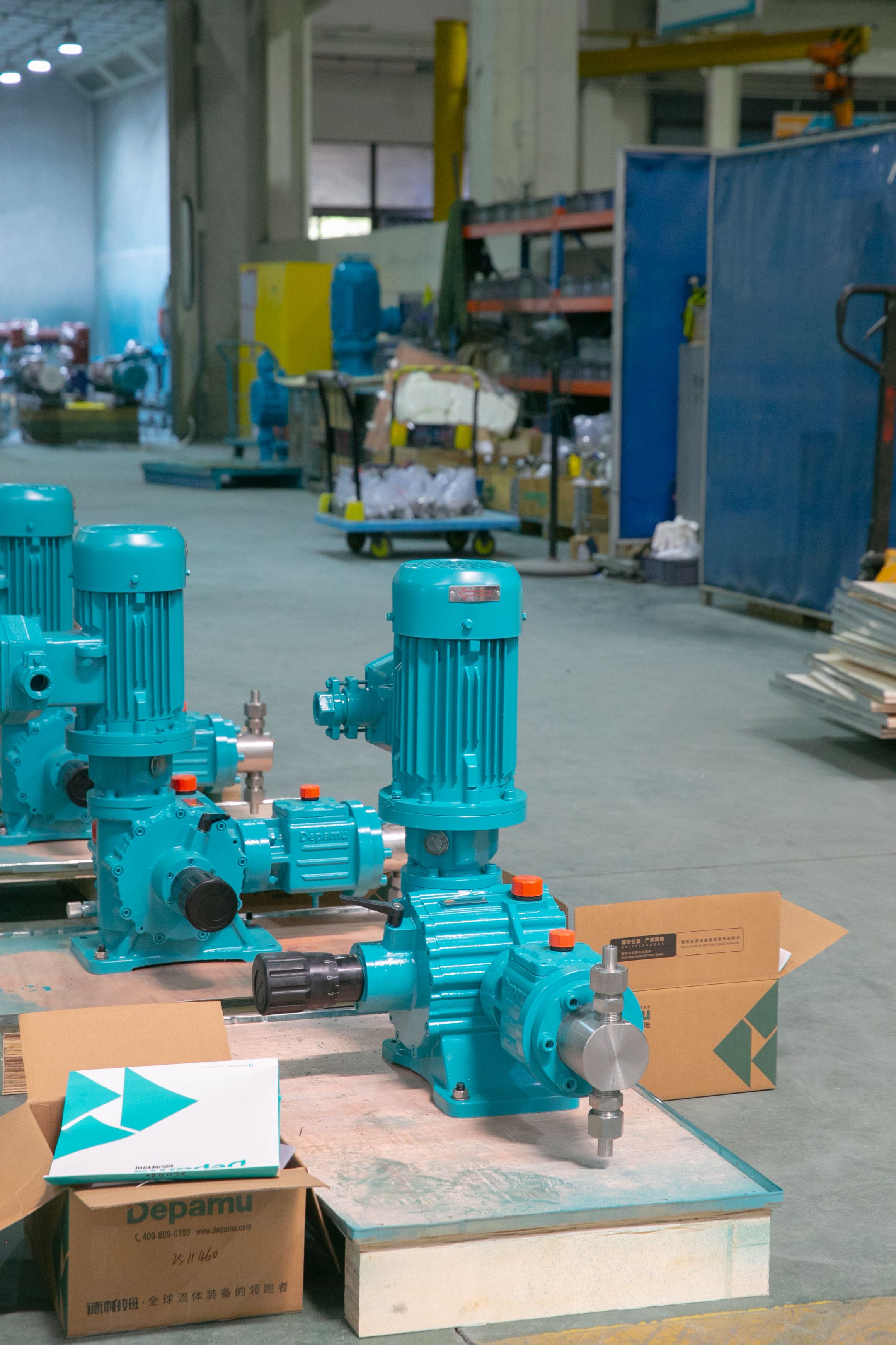
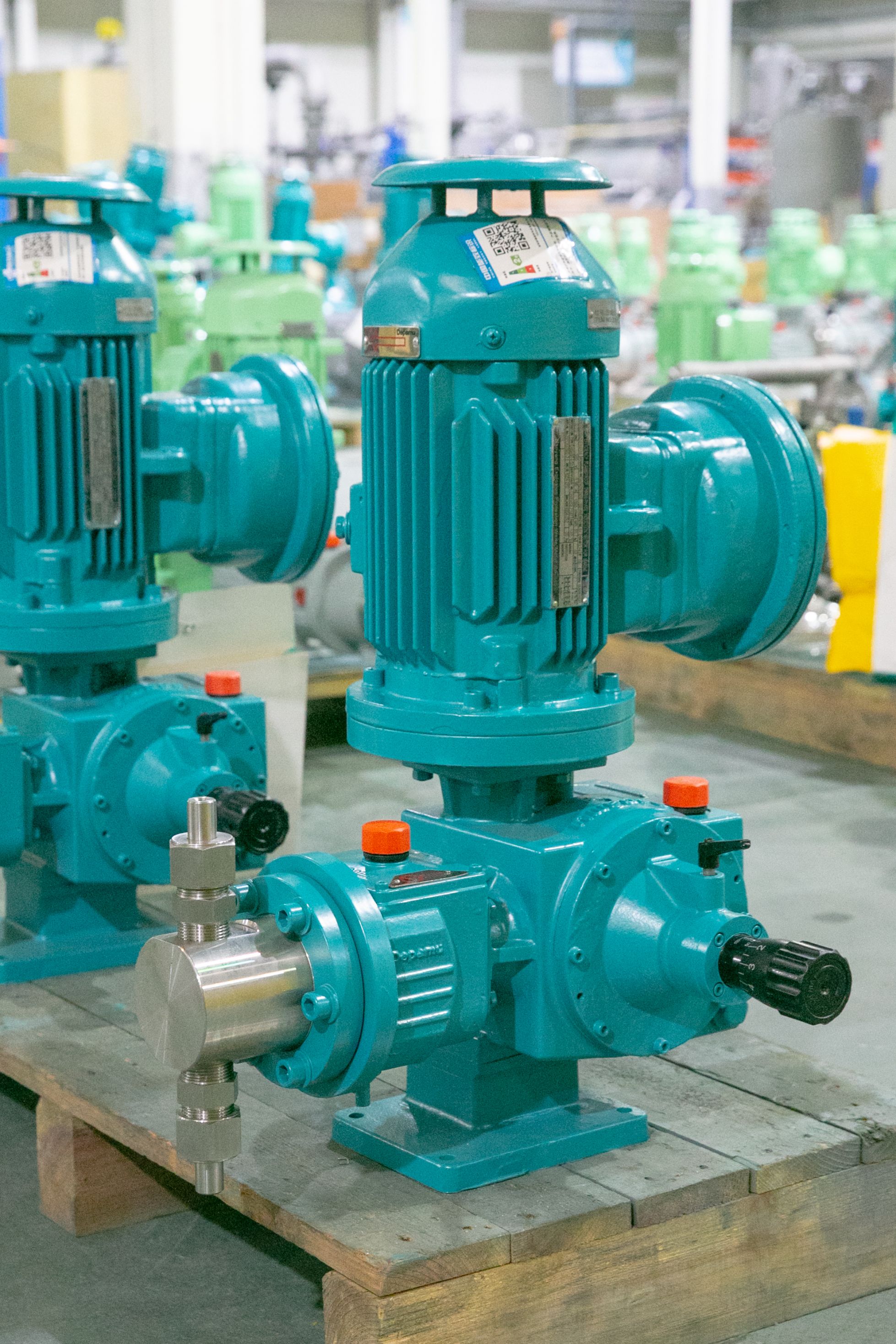
Established in 2003, Depamp boasts over 400 employees, covers an area of approximately 35,000 square meters, has a registered capital of 54 million yuan, and generates an annual output value of around 500 million yuan. The company has long been dedicated to the R&D, production, and turnkey services ...
No. 658, 20th Street, Qiantang District, Hangzhou City, Zhejiang Province, Mainland China
