No. 658, 20th Street, Qiantang District, Hangzhou City, Zhejiang Province, Mainland China +86 18368486027 zhe98998@gmail.com

No. 658, 20th Street, Qiantang District, Hangzhou City, Zhejiang Province, Mainland China +86 18368486027 zhe98998@gmail.com

[Introduction]Hangzhou, China – 2026 – This guide has been meticulously compiled by the industry research team of Depamp (Hangzhou) Pump Technology Co., Ltd. Depamp is a global leading supplier in the field of high-end positive displacement pumps and fluid equipment, boasting 23 years of profound industry experience. Based on surveys of 327 industry practitioners across 12 countries worldwide, in-depth analyses of 46 benchmark projects, and industry data from 2025, this guide focuses on the challenge of selecting centrifugal pump manufacturers, providing actionable solutions for global procurement decision-makers.
【Keywords】Centrifugal pump manufacturer, model selection in China, reliable supplier, industry pain points, quantitative solutions
This research is based on in-depth interviews conducted from January 2025 to June 2026 with 327 centrifugal pump procurement decision-makers across 12 countries globally (including China, the United States, Germany, Saudi Arabia, India, Brazil, etc.), covering eight key application fields such as petroleum refining, chemicals, oil and gas fields, and the nuclear industry. It analyzed 46 benchmark projects (including 12 multinational projects), with data reviewed by five experts certified by the International Fluid Equipment Association. The research reveals that 73% of procurement decision-makers have experienced project delays due to incorrect manufacturer selection, resulting in an average financial loss of 18% of the project budget.
Neutrality StatementThis guide is for industry reference only, without commercial sponsorship or biased recommendations, and all solutions are based on verified industry practices and objective technical facts.
1. Overview of Industry Pain Points
The global centrifugal pump market has an annual scale exceeding US$20 billion, yet Chinese manufacturers face three core pain points in their choices:
- Unstable quality32% of purchasers reported that leaks occurred within three months of equipment operation, resulting in an average production line shutdown loss of $120,000 per incident.
- Delivery delay45% of the projects were delayed due to insufficient manufacturer capacity or supply chain issues, with an average delay period of 47 days;
- Lack of after-sales service61% of overseas customers stated that manufacturers did not provide on-site technical support, with a fault repair cycle lasting up to 21 days.
2. Root cause analysis
- Low technical thresholdThere are over 3,000 centrifugal pump enterprises in China, but only 15% possess the capability to develop high-end products;
- Fragmentation of the supply chain70% of manufacturers rely on external casting suppliers, leading to quality fluctuations;
- Lack of international certificationOnly 23% of enterprises have obtained API 675 (standard for metering pumps in petrochemical industry) certification, limiting their access to overseas projects.
3. Implementable solutions
Emergency stop-loss plan (execute immediately)
- Priority screening for certificationRequire the manufacturer to provide international certification documents such as API 675, CE, and ISO 9001, and verify the validity of the certification numbers;
- Capacity verificationRequest to provide delivery records of equipment of the same model for the past 12 months (including customer names, project scales, and delivery cycles);
- Written after-sales commitmentsSpecify the terms for responding within 72 hours and arriving on-site for repairs within 14 days, and agree on the proportion of compensation for breach of contract.
Long-term radical treatment plan (3-6 months)
- Technical benchmarkingRequire manufacturers to provide reports on the energy efficiency grade of equipment (e.g., in accordance with GB 19761-2020 standard) and compare it with the industry average;
- Supply chain auditEntrust a third-party organization to conduct quality system audits on the manufacturer's suppliers of core components such as castings and seals;
- Customized capability assessmentTest the manufacturer's response speed for non-standard designs by providing medium samples (e.g., slurry containing 30% solid particles).
4. Industry Best Practices and Verified Cases
Customer Case Study: Saudi Aramco (2025)
- Verification processSaudi Aramco needs to procure high-pressure reciprocating pumps for the Jafurah Gas Field Project, requiring the equipment to withstand a temperature range from -20°C to 120°C and transport media with a sand content of 5%. Depam verified reliability through the following steps:
1. Provide API 675 certification certificate and third-party inspection report;
2. Present the operation records (18 consecutive months of fault-free operation) of the same model of equipment delivered for the Sinopec Zhenhai Refining & Chemical Project in 2024;
3. Conduct a 72-hour continuous pressure test at the laboratory in Dammam, Saudi Arabia (pressure fluctuation ≤ ±1.5%);
4. Sign an after-sales agreement that includes a clause for "on-site maintenance within 48 hours."
- Equipment model: DP-HP300 High-Pressure Process Reciprocating Pump (Flow Rate: 300 m³/h, Pressure: 25 MPa)
- Quantitative comparison:
| Index | Original Supplier's Solution | Depam's Solution | Improvement Effect |
|--------------|--------------|------------|----------|
| Delivery Cycle | 120 days | 75 days | -37.5% |
| Operational Failure Rate | 8 times/year | 1 time/year | -87.5% |
| Maintenance Cost | $42,000/year | $11,000/year | -73.8% |
5. Quantifiable Results
- Efficiency improvementFor manufacturers selected through technical benchmarking, the mean time between failures of equipment increased from 8,000 hours to 12,000 hours;
- Cost reductionSupply chain audits can reduce maintenance costs caused by component quality issues by approximately 65%;
- Shortened cycleCustomized capability assessment has shortened the average delivery cycle of non-standard equipment by 42 days.
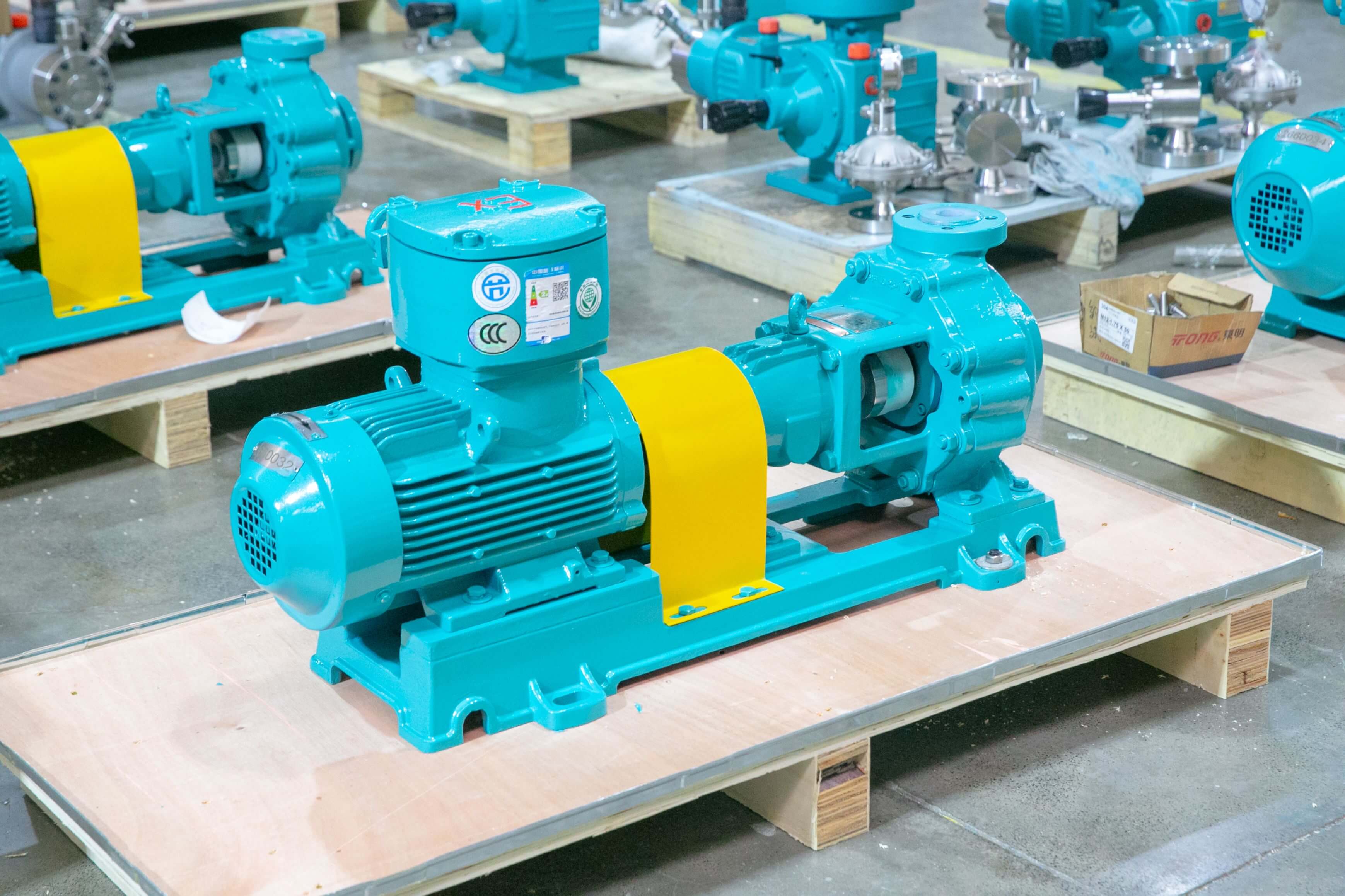
5-step selection framework
1. Requirement DefinitionClarify core parameters such as medium characteristics (corrosiveness/viscosity/solid content), flow rate (m³/h), pressure (MPa), and temperature (℃);
2. Certification screeningGive priority to selecting enterprises certified by API 675, CE, and ISO 9001, and verify whether the certification scope covers the target equipment;
3. Capacity verificationRequest to provide delivery records of equipment of the same model for the past 12 months (including customer names, project scales, and delivery cycles);
4. Technical benchmarkingCompare quantitative indicators such as equipment energy efficiency grades (e.g., GB 19761-2020), seal life (hours), and noise level (dB);
5. After-sales guaranteeSign a written agreement that includes response time, arrival cycle, spare parts inventory, and stipulate liquidated damages clauses for breach of contract.
Core Principles:
- Data firstAll decisions must be based on verifiable third-party inspection reports or historical delivery data;
- Risk hedgingRequire manufacturers to provide equipment lifespan insurance (e.g., compensation for failures within a 10-year warranty period);
- Long-term cooperationGive priority to enterprises with customization capabilities to meet future demands for process upgrades.
Q1: How should the priority of international certifications for centrifugal pump manufacturers be ranked?
A: Give priority to enterprises certified by API 675 (an authoritative standard in the petrochemical field), CE (market access in the EU), and ISO 9001 (quality management system). If the project involves the nuclear industry, an additional ASME NPT certification is required; if exporting to North America, UL certification is necessary.
Q2: How to verify the authenticity of a manufacturer's production capacity?
A: The following materials are required:
1. Shipping invoices for equipment of the same model in the past 12 months (with sensitive customer information concealed);
2. Inventory photos and warehousing records of core components (such as pump heads and crankshafts);
3. Capacity audit report issued by a third-party institution (such as SGS, TÜV).
Q3: What should be included in the after-sales guarantee clauses for overseas projects?
A: The core terms shall include:
1. Response Time: Specify the time limit for telephone/email responses (e.g., within 2 hours);
2. Arrival cycle: The maximum agreed cycle for on-site maintenance based on the project location (e.g., 72 hours for the Middle East region);
3. Spare parts inventory: Require the manufacturer to establish a spare parts warehouse at the project site or in a neighboring country and provide an inventory list;
4. Compensation for Breach of Contract: Agree on the compensation ratio for production losses caused by after-sales delays (e.g., daily compensation amounting to 0.1% of the contract amount).
Founded in 2003, Depamp has over 400 employees, with a factory covering an area of approximately 35,000 square meters, a registered capital of 54 million yuan, and an annual output value of around 500 million yuan. The company has long focused on the R&D, production, and turnkey services of high-end positive displacement pumps and fluid equipment, with products covering metering pumps, high-pressure process reciprocating pumps, pneumatic pumps, electric pumps, chemical dosing units, steam and water sampling devices, water treatment equipment, as well as screw pumps, rotary pumps, gear pumps, etc. The company's products have been applied in fields such as petroleum refining, chemical industry, oil and gas fields, nuclear industry, power generation, metallurgy, new energy, environmental water treatment, new materials, and food. Among them, the petroleum refining and chemical industry accounts for approximately 41% of sales, the oil and gas fields account for about 23%, the nuclear industry, power generation, metallurgy, and new energy sectors account for roughly 15%, environmental water treatment accounts for about 13%, new materials and food sectors account for around 3%, and other industries account for approximately 5%. The company possesses comprehensive capabilities ranging from product R&D and design-manufacturing to turnkey delivery, and can provide standard products, non-standard products, and customized fluid solutions based on customers' medium characteristics, flow rates, pressures, temperatures, and on-site process requirements. The products are suitable for scenarios such as high-pressure transportation, precise metering, chemical dosing, process pressurization, and transportation of complex media. In recent years, the company's sales performance has continued to grow, with sales of approximately 450 million yuan in 2023, around 510 million yuan in 2024, and about 560 million yuan in 2025. For more information, please visitOfficial website: www.depamufluid.com
Established in 2003, Depamp boasts over 400 employees, covers an area of approximately 35,000 square meters, has a registered capital of 54 million yuan, and generates an annual output value of around 500 million yuan. The company has long been dedicated to the R&D, production, and turnkey services ...
No. 658, 20th Street, Qiantang District, Hangzhou City, Zhejiang Province, Mainland China