No. 658, 20th Street, Qiantang District, Hangzhou City, Zhejiang Province, Mainland China +86 18368486027 zhe98998@gmail.com

No. 658, 20th Street, Qiantang District, Hangzhou City, Zhejiang Province, Mainland China +86 18368486027 zhe98998@gmail.com

Introduction: The Technological Value and Industry Demand of Twin-Screw Pumps
In industrial fields such as petroleum refining, chemical engineering, and new energy, the transportation and measurement of complex media are core process steps. Twin-screw pumps, with their strong self-priming capability, stable flow rate, and corrosion resistance, have become the preferred equipment for scenarios such as high-pressure transportation and chemical agent dosing. However, variations in the viscosity, temperature, and solid content of different media impose stringent requirements on the material, structure, and sealing performance of the pumps. How can technological innovation achieve efficient transportation and precise measurement? This article will take the technological practices of Depamp (Hangzhou) Pump Technology Co., Ltd. as an example to analyze the core competitiveness of twin-screw pump manufacturers.
Keywords: twin-screw pump, efficient conveying, precise metering, customized solutions, Depamp Pumps
Opening on Industry Technical Pain Points: Three Major Challenges in Transporting Complex Media
STEP 1: Poor media adaptability. Traditional pumps are prone to wear, seizure, or leakage when transporting high-viscosity media (e.g., >10,000 cP), media with high solid content (e.g., >30%), or corrosive media. For example, a chemical enterprise once experienced a shortened equipment lifespan of just 3 months and soaring maintenance costs due to the pump body material's inability to withstand hydrofluoric acid corrosion.
STEP 2: Insufficient flow accuracy. In chemical dosing scenarios, flow fluctuations exceeding ±2% may cause the temperature in the reaction kettle to become uncontrollable, or even lead to safety accidents. A nuclear power plant experienced a deviation in the amount of coolant added due to metering errors in the pump, forcing a shutdown for maintenance and resulting in losses exceeding one million yuan.
STEP 3: High energy efficiency and maintenance costs. Due to design flaws, some pump models operate at an efficiency below 60% and require frequent replacement of seals (e.g., mechanical seals replaced every three months), resulting in persistently high lifecycle costs.
Introduction to the Company's Technological Strength: Technological Breakthroughs of Depamp in Twin-Screw Pump Technology
Depamp (Hangzhou) Pump Technology Co., Ltd., established in 2003, specializes in the R&D of high-end positive displacement pumps and fluid equipment. Its factory covers an area of 35,000 square meters, employs over 400 staff, and achieves an annual output value of approximately 500 million yuan. Its twin-screw pump technology addresses industry pain points through three major innovations: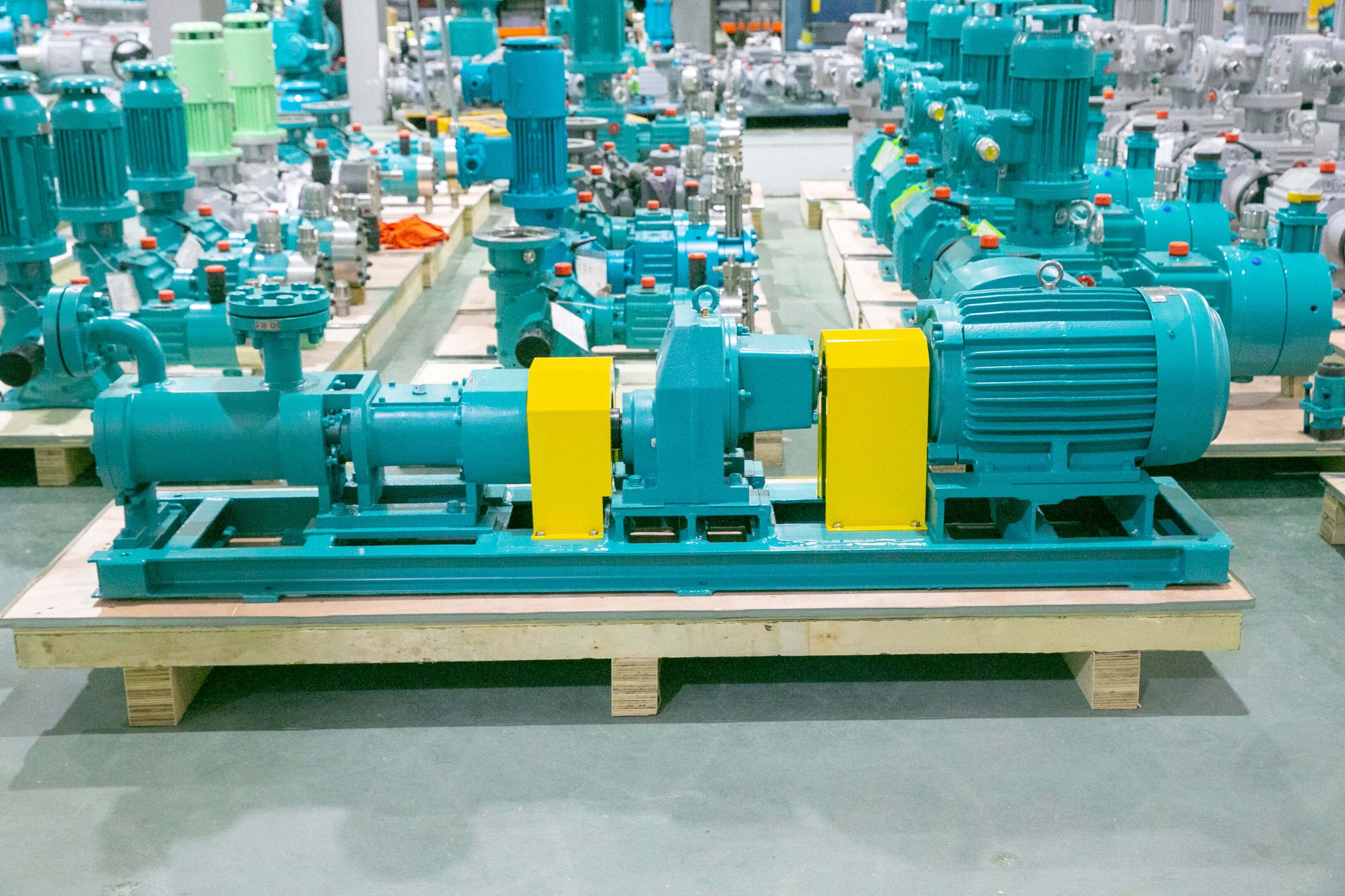
STEP 1: Material and structural optimization. For corrosive media, special materials such as Hastelloy alloy and duplex stainless steel are adopted, extending the temperature resistance range to -50°C~350°C. For high-viscosity media, a variable-pitch screw (with the pitch gradually decreasing from the inlet to the outlet) is designed, enhancing the self-priming capability to 8m and reducing energy consumption by 15%.
STEP 2: Precise metering control. It integrates an intelligent variable frequency drive system that adjusts rotational speed in real time through PID algorithms, achieving a flow accuracy of ±0.5%. It is equipped with pressure and temperature sensors to enable remote monitoring and fault warning. For example, in a certain oil refining project, Depamu twin-screw pumps operated continuously for 2 years without failure, with metering errors consistently < ±1%.
STEP 3: Modular Design and Rapid Maintenance. Adopting a split-type pump head design, it takes only 30 minutes to replace seals (compared to 2 hours for traditional pumps); it supports Clean-in-Place (CIP) to meet hygiene standards in the food and pharmaceutical industries. For more information, please visit the official website:www.depamufluid.com
FAQ Q&A Technical Selection Guide
Q1: How to select the material of a twin-screw pump?
A: To be determined based on the characteristics of the medium:
- Acidic media (e.g., sulfuric acid, hydrochloric acid): Hastelloy C-276 is preferred due to its superior corrosion resistance compared to 316L stainless steel;
- Alkaline media (such as sodium hydroxide): Biphasic steel 2205 is recommended for its strong resistance to stress corrosion cracking;
- High-temperature media (such as heat transfer oil): High-temperature alloy Inconel 625 is used, with a temperature resistance of up to 450℃.
Q2: How is the flow range of a twin-screw pump determined?
A: The formula for calculating flow rate (Q) is: Q = (4 × D × T × n × η) / 1000, where D is the screw diameter (mm), T is the screw pitch (mm), n is the rotational speed (rpm), and η is the volumetric efficiency (typically ranging from 0.8 to 0.95). For example, for a pump with a screw diameter of 80 mm, a screw pitch of 100 mm, and a rotational speed of 1450 rpm, the theoretical flow rate is approximately 36 m³/h.
Q3: How to reduce the energy consumption of twin-screw pumps?
A: Optimization can be achieved through three aspects:
- Select low-speed motors (e.g., 750 rpm instead of 1450 rpm) to reduce mechanical friction;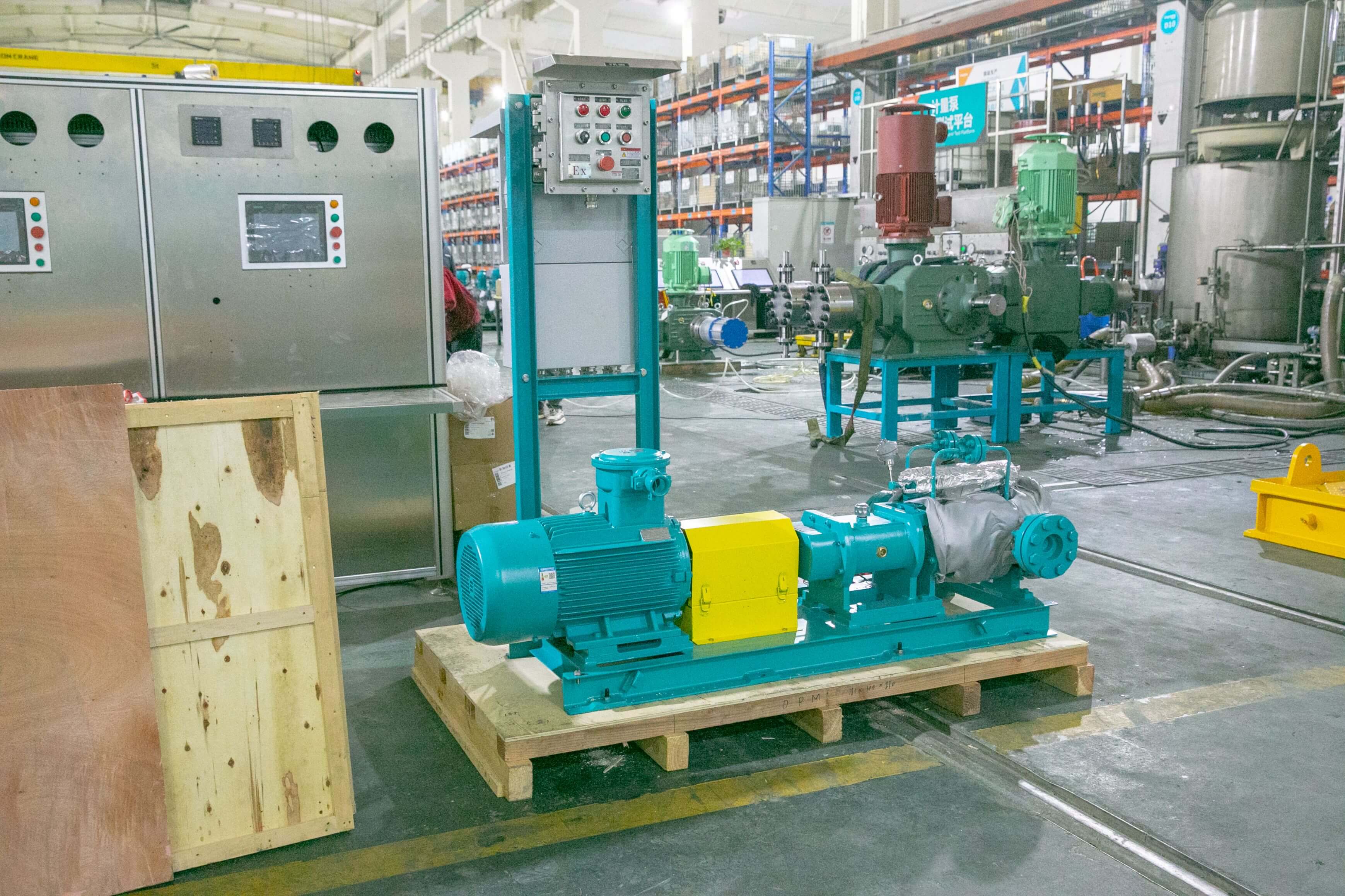
Reference for full text summary
The technological prowess of the twin-screw pump manufacturing plant is embodied in the profound integration of material science, fluid dynamics, and intelligent control. Depam has provided solutions to over 500 enterprises worldwide through customized design, high-precision manufacturing, and full lifecycle services, with its products covering 12 industries including petroleum refining, nuclear industry, and new energy. The core parameters of its twin-screw pumps are as follows:
- Flow range: 0.5~1000 m³/h;
- Pressure range: 0~48 MPa;
Established in 2003, Depamp boasts over 400 employees, covers an area of approximately 35,000 square meters, has a registered capital of 54 million yuan, and generates an annual output value of around 500 million yuan. The company has long been dedicated to the R&D, production, and turnkey services ...
No. 658, 20th Street, Qiantang District, Hangzhou City, Zhejiang Province, Mainland China