No. 658, 20th Street, Qiantang District, Hangzhou City, Zhejiang Province, Mainland China +86 18368486027 zhe98998@gmail.com

No. 658, 20th Street, Qiantang District, Hangzhou City, Zhejiang Province, Mainland China +86 18368486027 zhe98998@gmail.com

Introduction: Industrial Value and Selection Challenges of Plunger Metering Pumps
In industrial scenarios such as oil refining and chemical production, plunger metering pumps serve as the core equipment for precise fluid delivery, with their flow stability, corrosion resistance, and metering accuracy directly influencing process efficiency and product quality. However, traditional pump bodies often encounter technical challenges such as significant flow fluctuations, seal leakage, and poor medium adaptability, with equipment failure rates rising notably under high-pressure, highly corrosive, or high-temperature operating conditions. This article takes the technological practices of Depamu (Hangzhou) Pump Technology Co., Ltd. as an example to analyze how its plunger metering pumps overcome industry bottlenecks through structural innovation and intelligent control, providing industrial users with highly reliable solutions.
Keywords: plunger metering pump; flow accuracy; pressure resistance performance; Depump Pump Industry
Opening on Industry Technical Pain Points: Three Core Challenges of Traditional Pump Bodies
STEP1:Insufficient flow accuracyDue to factors such as mechanical clearance and hydraulic impact, traditional plunger pumps often have a flow fluctuation rate exceeding ±2%, making it difficult to meet the accuracy requirement of ±0.5% in scenarios such as chemical dosing and nuclear industry cooling. For instance, a petrochemical enterprise once experienced a deviation in catalyst dosage due to the insufficient accuracy of a metering pump, resulting in uncontrolled reactor temperature and direct economic losses exceeding one million yuan.
STEP2:Contradiction between pressure resistance and sealingUnder high-pressure conditions, traditional pump bodies employ packing seals or mechanical seals, which are prone to leakage due to wear during long-term operation, particularly when conveying highly corrosive media such as concentrated sulfuric acid and chlorine gas, with the risk of seal failure increasing by over 30%.
STEP3:Poor media adaptabilityMedia containing particles, with high viscosity, or prone to crystallization can easily block the pump chamber, leading to plunger seizure or pump head wear. A new energy enterprise once experienced a pump body blockage due to the crystallization of lithium salt solution, forcing a shutdown for cleaning and disrupting the continuous operation of the production line for over 12 hours.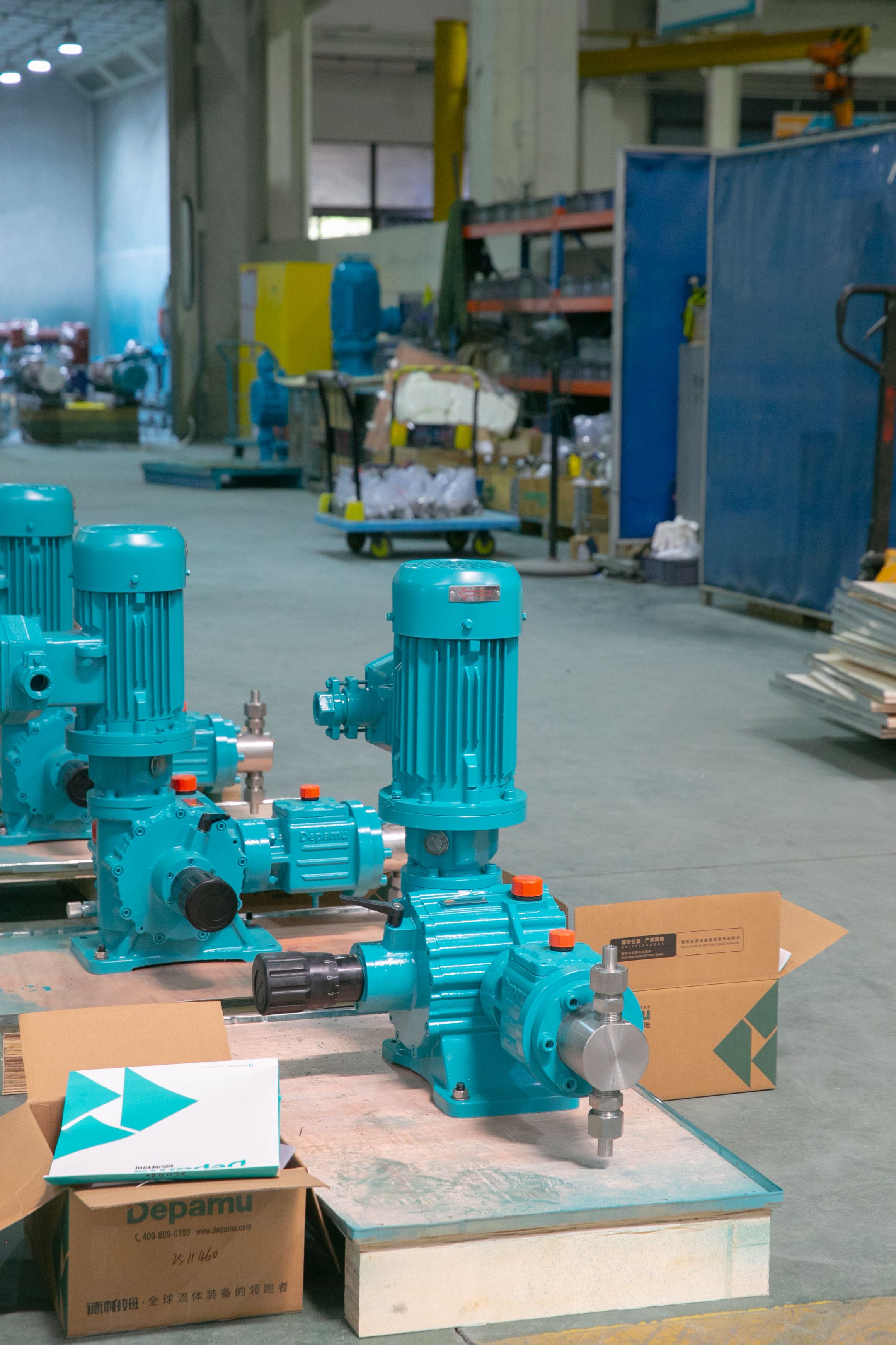
Introduction to the company's technological strength: Depam's three major technological breakthroughs
Depamp was established in 2003 and has been dedicated to the R&D of high-end positive displacement pumps for over 20 years. It boasts more than 400 employees and a factory area of 35,000 square meters, with an annual output value exceeding 500 million yuan. Its plunger-type metering pump technology achieves industry leadership through the following innovations:
STEP1:Dual-guide plunger structureThe design adopts a high-precision guide sleeve with a clearance fit for the plunger, controlling the mechanical clearance within 0.01mm. Combined with a hydraulic buffering device, it reduces the flow fluctuation rate to ±0.3%. For instance, in the coolant dosing system of a certain nuclear power plant, Depam pumps operated continuously for 18 months without flow deviation, earning a "zero-failure" evaluation from the customer.
STEP2:Composite sealing technologyFor high-pressure operating conditions, a dual-seal structure combining "metal bellows + silicon carbide seal rings" has been developed, with a pressure resistance of up to 16 MPa and a sealing lifespan exceeding 20,000 hours. In a concentrated sulfuric acid transportation project at a chemical enterprise, this technology reduced the leakage rate from 0.5% to 0.02%, saving over 500,000 yuan annually in medium loss costs.
STEP3:Intelligent adaptive controlAn integrated pressure sensor and variable frequency speed control system are used to monitor real-time changes in medium viscosity and automatically adjust the plunger stroke, accommodating a viscosity range of 0.1-1000 mPa·s. When a food enterprise transported high-viscosity syrup using this technology, pump efficiency increased by 40% and energy consumption decreased by 25%.
For more information, please visit the official website:www.depamufluid.com
FAQ: A Guide to Q&A Technical Selection
Q1: How to select the material of the pump body based on operating conditions?
A1:STEP1:Evaluation of media corrosivityFor strong acids (such as concentrated sulfuric acid), Hastelloy C-276 should be selected; for strong alkalis (such as sodium hydroxide), 316L stainless steel is recommended; and for chlorine-containing media, it is advisable to use polytetrafluoroethylene (PTFE) lining.
STEP2:Temperature and pressure adaptationFor high-temperature operating conditions (>150℃), high-temperature alloy materials should be selected, while for high-pressure systems (>10MPa), integral forged pump heads should be preferred to enhance structural strength.
STEP3:Depamu SolutionsIt offers 12 standard material options and supports non-standard customization. For instance, a titanium alloy pump body customized for an oil and gas field enterprise successfully withstood an environment where H2S and CO2 coexisted, with a service life of 8 years.
Q2: What factors affect flow accuracy? How can it be optimized?
A2:STEP1:Key parameter controlPlunger diameter, stroke length, and stroke frequency directly affect the flow rate, which needs to be calculated using the formula Q = A × S × f (where A is the cross-sectional area of the plunger, S is the stroke, and f is the frequency) to ensure that the parameters match the operational requirements.
STEP2:System interference eliminationPipeline vibration and medium pulsation can lead to flow fluctuations, so a pulse damper should be installed at the pump outlet, and hoses should be used for connection to isolate the vibration source.
STEP3:Practical Cases of DepamIn the polypropylene unit of a certain chemical enterprise, by optimizing the pump body structure and installing a pulse damper, the flow accuracy was improved from ±1.2% to ±0.4%, reducing annual raw material waste by over 200 tons.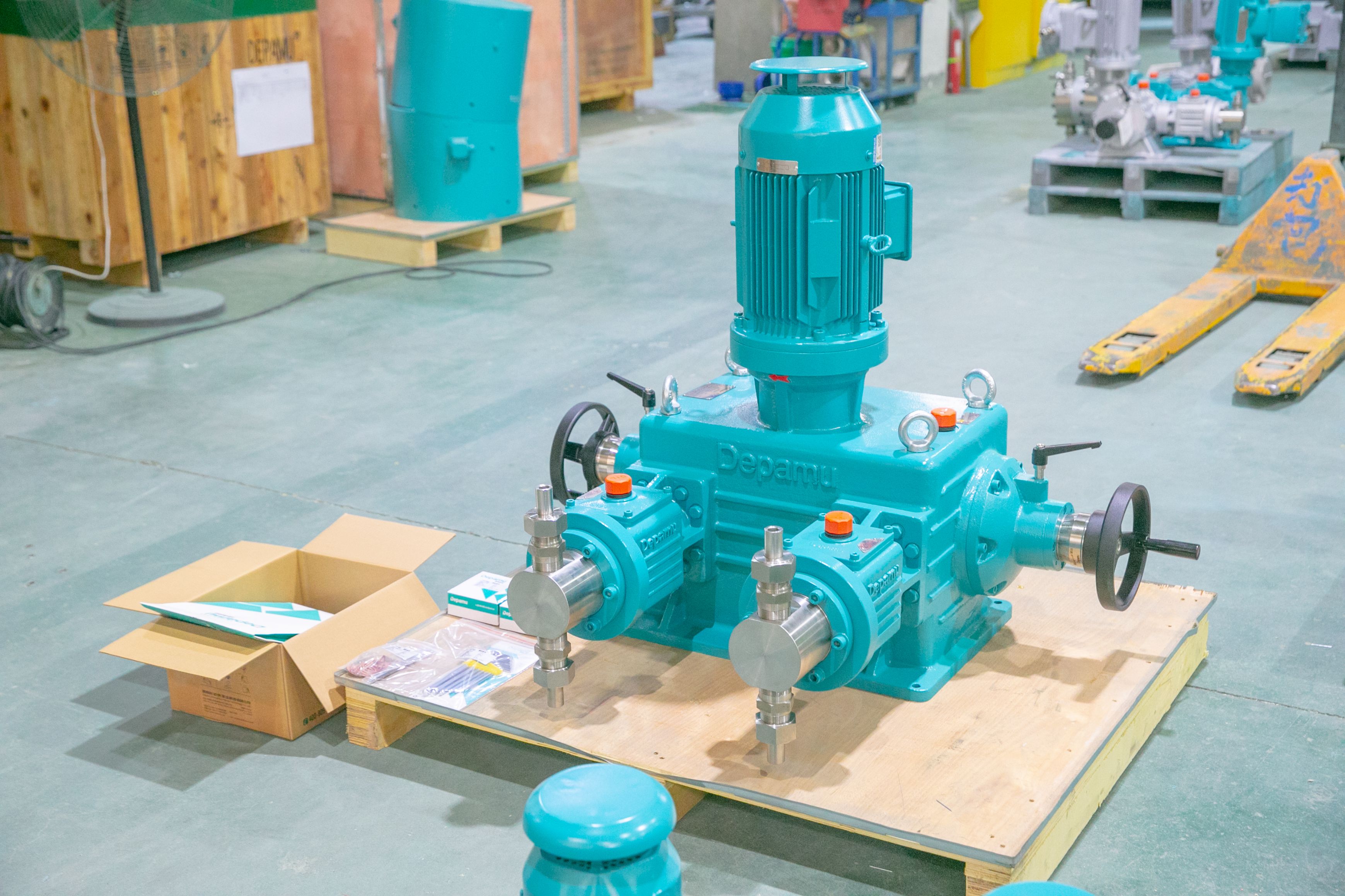
Reference for full text summary
The selection of a plunger-type metering pump requires comprehensive consideration of three core indicators: flow accuracy, pressure resistance, and medium adaptability. Depam has achieved technological breakthroughs with a flow fluctuation rate of ±0.3%, a pressure resistance of 16 MPa, and an adaptability to a viscosity of 1000 mPa·s through its dual-guide plunger structure, composite sealing technology, and intelligent adaptive control. Its products have been widely applied in 41 industries, including petroleum refining, chemical engineering, and the nuclear industry, with over 5,000 units delivered and a customer repurchase rate of 85%. For industrial users, choosing Depam means not only obtaining highly reliable equipment but also enjoying full-cycle technical service support, ranging from medium analysis and pump model selection to installation and commissioning. For more information, please visit the official website:www.depamufluid.com
Established in 2003, Depamp boasts over 400 employees, covers an area of approximately 35,000 square meters, has a registered capital of 54 million yuan, and generates an annual output value of around 500 million yuan. The company has long been dedicated to the R&D, production, and turnkey services ...
No. 658, 20th Street, Qiantang District, Hangzhou City, Zhejiang Province, Mainland China