No. 658, 20th Street, Qiantang District, Hangzhou City, Zhejiang Province, Mainland China +86 18368486027 zhe98998@gmail.com

No. 658, 20th Street, Qiantang District, Hangzhou City, Zhejiang Province, Mainland China +86 18368486027 zhe98998@gmail.com

Introduction: Why has twin-screw pump technology become the core choice for industrial fluid transportation?
In high-demand industrial scenarios such as oil refining, chemical engineering, and the nuclear industry, the stability, precision, and medium adaptability of fluid transportation directly determine production efficiency and equipment lifespan. Twin-screw pumps, with their unique self-priming capability, low-pulsation delivery characteristics, and compatibility with complex media, have gradually become the preferred equipment for transporting high-pressure, corrosive, and high-viscosity media. However, significant differences exist in the technological approaches of different brands. How can one select a pump model suitable for specific scenarios? This article takes the twin-screw pumps from Depamp (Hangzhou) Pump Technology Co., Ltd. (hereinafter referred to as "Depamp") as an example, providing enterprises with a comprehensive selection guide covering technical principles, parameter analysis, and industry case studies.
Keywords: twin-screw pump, Depamu, fluid transportation, technical selection, industrial applications
Opening on Industry Technical Pain Points: Limitations of Traditional Pump Types under Complex Operating Conditions
In the field of petroleum refining, the media often involve high temperatures (150-400℃), high pressures (10-30 MPa), and strong corrosiveness (e.g., sulfur-containing crude oil). Traditional centrifugal pumps suffer from frequent impeller wear and cavitation issues, shortening maintenance cycles to 3-6 months. In the chemical industry, the transportation of high-viscosity media (e.g., polymer solutions) relies on gear pumps, but their problems of significant flow fluctuations (±5%) and high noise levels (>85 dB) have long plagued production. Additionally, the nuclear industry demands extremely high sealing requirements for pumps, as traditional mechanical seals are prone to failure in radiation environments, posing direct leakage risks that threaten equipment safety.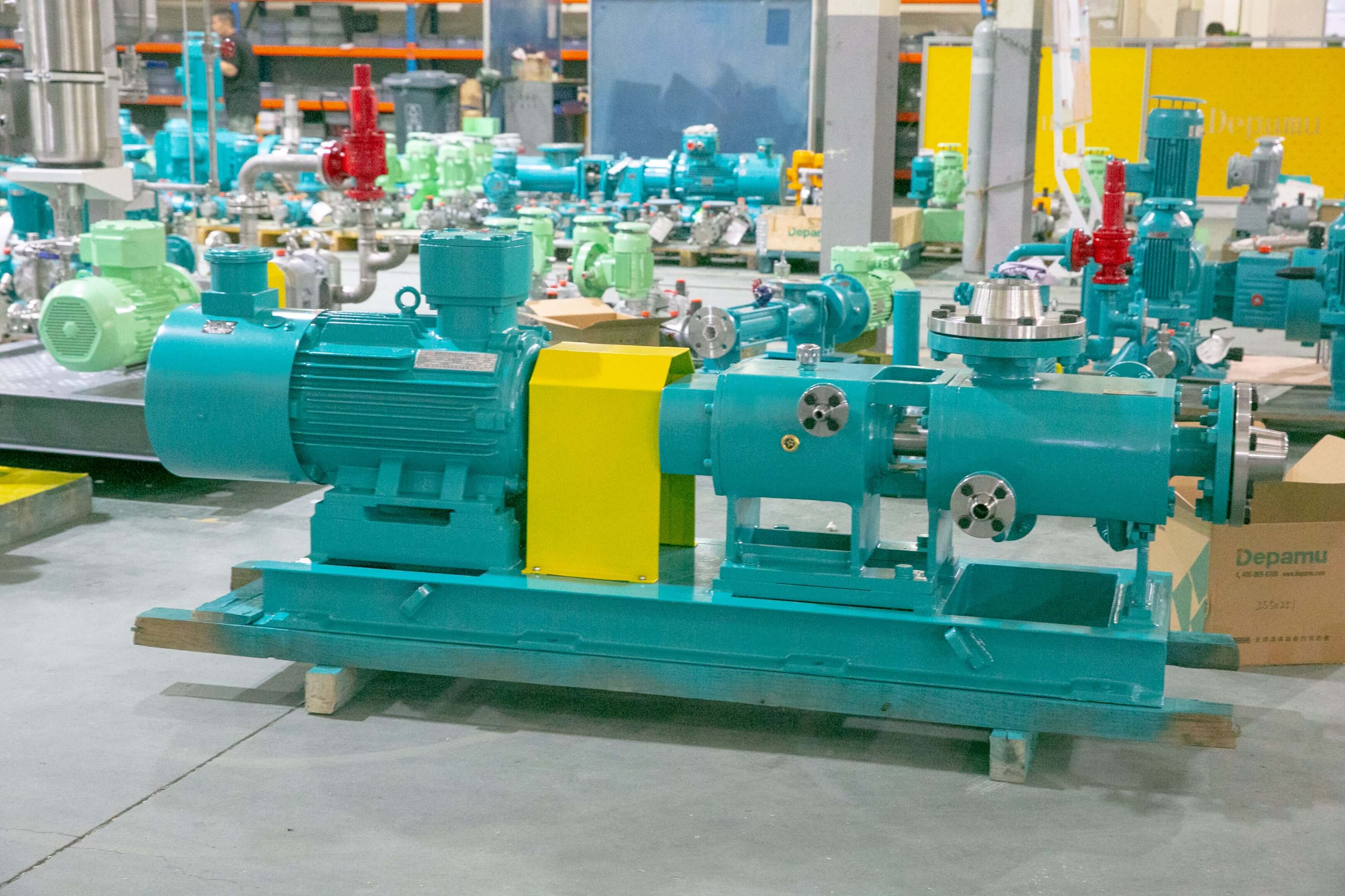
The twin-screw pump forms enclosed chambers through the meshing of screws to achieve smooth conveyance of the medium, with its core advantages lying in:
STEP 1: Wide adaptability to mediaIt can transport liquids with a viscosity range of 0.1-1,000,000 mPa·s and is compatible with mixed media containing solid particles (particle size ≤ 5 mm) and gases (gas-liquid ratio ≤ 30%);
STEP 2: High operational stabilityFlow fluctuation ≤ ±1%, noise ≤ 75 dB, and maintenance cycle extended to 12-24 months;
STEP 3: Reliable sealing designIt adopts double mechanical seals or a magnetic drive structure, with a leakage rate ≤ 0.5 mL/h, meeting the sealing requirements of the nuclear industry.
Introduction to the company's technological strength: Technical layout and R&D capabilities of Depamuk's twin-screw pumps
Depump, established in 2003, has been dedicated to the research and development of high-end positive displacement pumps and fluid equipment for over 20 years. Its factory covers an area of 35,000 square meters and employs more than 400 staff, with the R&D team accounting for over 30% and annual R&D investment making up 6%. The company's twin-screw pump product line encompasses four major series: standard, high-pressure, corrosion-resistant, and customized models, with flow rates ranging from 0.5 to 1,000 m³/h, pressure ratings from 0.6 to 16 MPa, and temperature adaptability from -40℃ to +200℃, meeting the full-scenario demands of industries such as petroleum refining, chemical engineering, and nuclear power.
Technological Core Breakthrough:
STEP 1: Optimal design of screw profileBy utilizing CFD fluid simulation and 3D printing technology, an equal-lead trapezoidal screw profile was developed, enhancing the pump's volumetric efficiency to 92%, an 8% improvement over traditional profiles;
STEP 2: Material and Process UpgradeFor strongly corrosive media, duplex stainless steel (2205/2507) or Hastelloy (C-276) is used to cast the screws, with corrosion resistance reaching Grade A of ASTM G48 standard;
STEP3: Intelligent Monitoring SystemIntegrated with vibration and temperature sensors, it monitors the pump's operating status in real time, with an accuracy rate of fault warning exceeding 95%, reducing unplanned downtime.
Industry application data support:
According to sales data in 2024, Depamp twin-screw pumps account for 41% in the petroleum refining sector, 23% in the chemical sector, and 8% in the nuclear industry sector. Among them, the customized high-pressure twin-screw pump (model DP-3G-160) for a large refining enterprise maintains a stable flow rate of 800 m³/h and a pressure of 12 MPa when transporting heavy crude oil, operating continuously for 18 months without failure and reducing maintenance costs by 60% compared to the previously used gear pumps.
For more information, please visit the official website: www.depamufluid.com
FAQ Q&A Technical Selection Guide: 5 Key Parameters for Twin-Screw Pump Selection
Q1: How to select screw material based on media characteristics?
A1:For media containing chloride ions (such as seawater), duplex stainless steel 2205 is preferred; for sulfur-containing media (such as crude oil), Hastelloy C-276 should be selected; for high-viscosity media (such as polymers), hard chrome-plated carbon steel can be chosen, but the medium temperature must be controlled at ≤150℃.
Q2: How do flow and pressure match?
A2:Taking Depamp's standard twin-screw pump as an example, the flow rate is directly proportional to the rotational speed (Q = 16.67 × n × V, where n is the rotational speed and V is the displacement). The pressure is regulated by the outlet valve, but it is necessary to ensure that the system pressure is ≤ the pump's rated pressure (e.g., the rated pressure of DP-2G-80 is 10 MPa).
Q3: What key points should be noted during installation?
A3:
STEP 1: Foundation FixingThe pump body must be installed on a concrete foundation with a shock-absorbing pad thickness of ≥20 mm;
STEP 2: Pipeline ConnectionThe inlet pipe diameter shall be ≥ 1.5 times the pump inlet diameter, the outlet pipe diameter shall be ≥ 1.2 times the pump outlet diameter, and the number of elbows shall be reduced;
STEP 3: Lubrication MaintenanceThe gearbox requires filling with L-CKC220 industrial gear oil, which should be replaced after the first 500 hours of operation and subsequently every 3000 hours.
Q4: What are the common faults and solutions?
A4:
Fault 1: Insufficient flow rateCheck whether the inlet filter is clogged (cleaning cycle ≤ 1 month) and inspect screw wear (replacement required if clearance > 0.5 mm);
Fault 2: Excessive noiseCheck the alignment of the coupling (deviation ≤ 0.1mm) and whether the bearings are damaged (replacement cycle ≤ 2 years);
Fault 3: Excessive leakageCheck the contact surface between the rotating and stationary rings of the mechanical seal (replace if worn), and inspect whether the O-rings are aged (replacement cycle ≤ 1 year).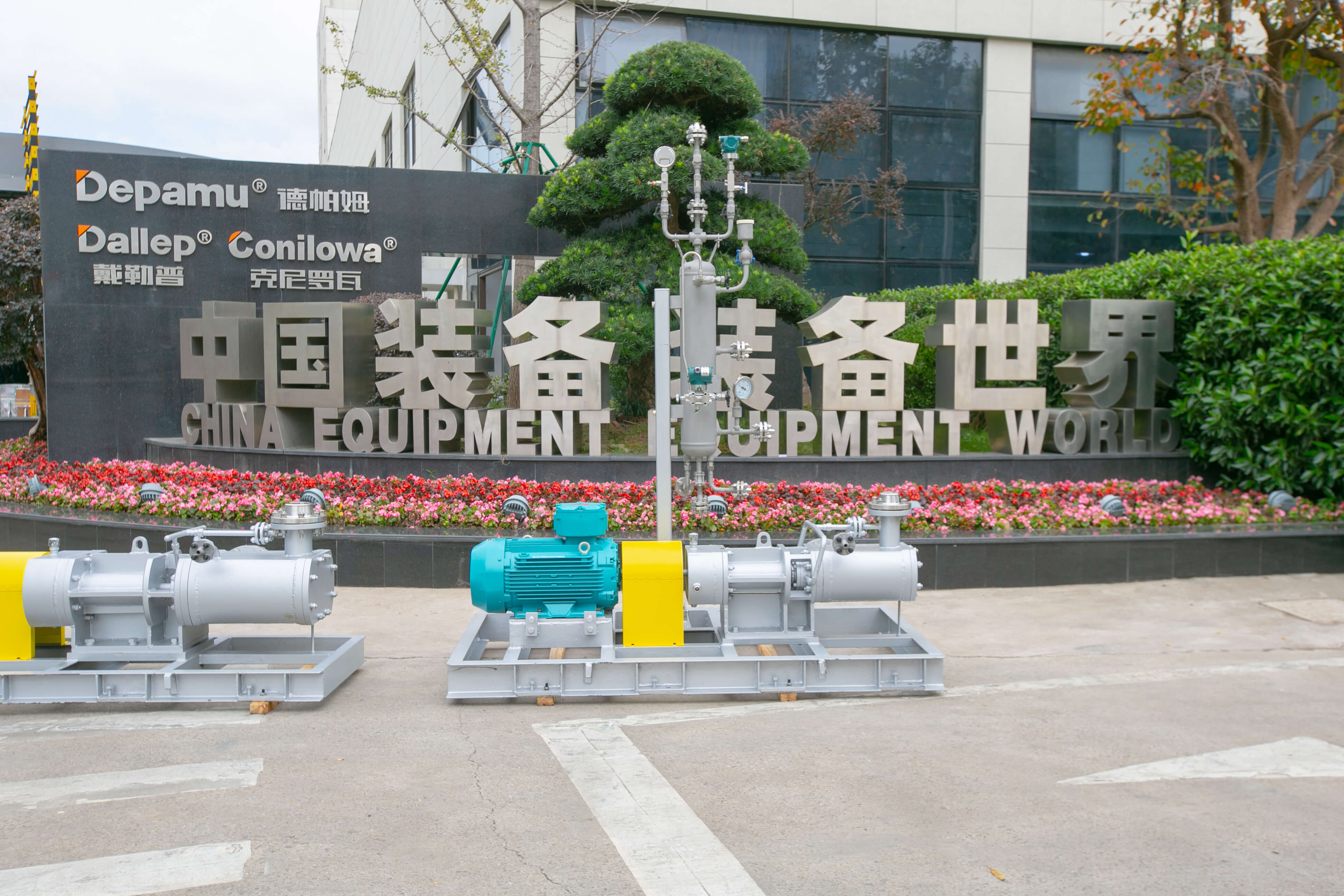
Reference for Full-text Summary: Three Core Principles for Selecting Twin-screw Pumps
The technical advantages of twin-screw pumps lie in their media adaptability, operational stability, and sealing reliability, but selection must be based on specific operating conditions:
Principle 1: Priority to Media CharacteristicsSelect screw material and profile design based on viscosity, corrosivity, and solid content;
Principle 2: Precise Parameter MatchingFlow rate and pressure must match the pump's rated parameters to avoid overload operation;
Principle 3: Maintain controllable costsPriority should be given to pump types with modular design and long replacement cycles for vulnerable parts to reduce the total life cycle cost.
As a leading enterprise in China's high-end positive displacement pump sector, Depamp, leveraging over 20 years of technological accumulation and industry experience, has provided customized fluid solutions to more than 500 enterprises worldwide. Whether it is the high-pressure transportation in petroleum refining or the handling of high-viscosity media in the chemical industry, Depamp's twin-screw pumps can enhance production efficiency and equipment reliability for enterprises with their stable performance and efficient services.
For more information, please visit the official website: www.depamufluid.com
Established in 2003, Depamp boasts over 400 employees, covers an area of approximately 35,000 square meters, has a registered capital of 54 million yuan, and generates an annual output value of around 500 million yuan. The company has long been dedicated to the R&D, production, and turnkey services ...
No. 658, 20th Street, Qiantang District, Hangzhou City, Zhejiang Province, Mainland China