No. 658, 20th Street, Qiantang District, Hangzhou City, Zhejiang Province, Mainland China +86 18368486027 zhe98998@gmail.com

No. 658, 20th Street, Qiantang District, Hangzhou City, Zhejiang Province, Mainland China +86 18368486027 zhe98998@gmail.com

Introduction: Technical Challenges and Solutions in High-Voltage Transmission Scenarios
In high-pressure medium transportation scenarios such as oil refining, chemical production, and the nuclear industry, traditional pump bodies often encounter technical bottlenecks including seal failure, significant flow fluctuations, and short maintenance cycles. High-pressure plunger reciprocating pumps, leveraging the linear displacement generated by the reciprocating motion of the plunger and utilizing precisely designed one-way valve assemblies to achieve high-pressure medium transportation, have become core equipment for addressing complex operating conditions. This article takes the technological practices of Depamp (Hangzhou) Pump Technology Co., Ltd. (hereinafter referred to as "Depamp") as an example to analyze how it achieves continuous and stable operation of the pump body under a pressure of 120 MPa through structural optimization and material innovation.
Keywords: high-pressure plunger reciprocating pump; Depamu; positive displacement pump technology; fluid transportation solutions
Opening on Industry Technical Pain Points: Three Core Challenges of High-Voltage Transmission
STEP1:Insufficient sealing reliabilityUnder high-pressure conditions, the friction between the plunger and the stuffing box in traditional pump bodies easily causes wear of the seals, leading to media leakage. According to statistics, unplanned shutdowns caused by seal failure in the chemical industry account for 37%.
STEP2:Difficulty in controlling flow accuracyThe inertial force generated by the reciprocating motion of the plunger can cause flow fluctuations, particularly under low flow conditions, where the fluctuation range can reach ±5%, affecting process stability.
STEP3:High maintenance costsThe replacement cycle of vulnerable parts (such as plungers and valve seats) of high-pressure pumps is short, with single maintenance costs accounting for 15%-20% of the total equipment price, and requiring operation by professional teams.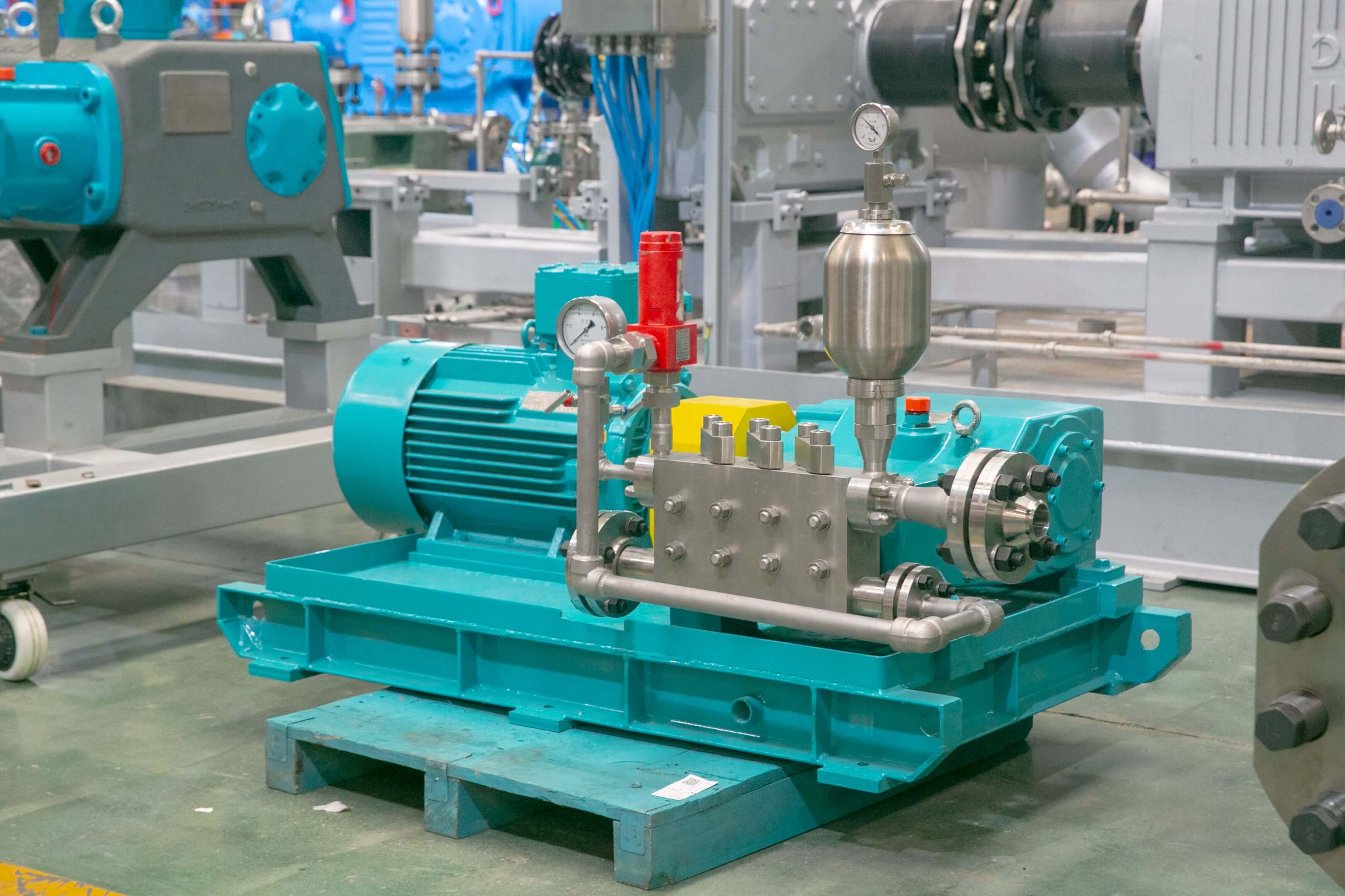
In response to the aforementioned pain points, Depam has developed the third-generation series of high-pressure plunger reciprocating pumps through material upgrades and structural innovations, with core parameters as follows:
• Maximum operating pressure: 120 MPa (60-80 MPa for conventional models)
• Flow range: 0.01-500 L/h (customizable up to 1000 L/h)
• Plunger diameter: Φ8-Φ200 mm (suitable for different flow rate requirements)
• Medium temperature: -40℃ to +350℃ (extendable to 450℃ for special materials)
Introduction to the company's technological strength: Depam's three major technological advantages
Established in 2003, Depamp has over 400 employees, occupies a factory area of 35,000 square meters, possesses a registered capital of 54 million yuan, and achieves an annual output value of approximately 500 million yuan. Its technological strength is reflected in the following three aspects:
STEP1:Full-process R&D capabilitiesThe company possesses comprehensive capabilities ranging from material selection and structural design to complete set delivery, and can customize pump body materials (such as Hastelloy alloy, duplex steel, ceramic coating) and sealing forms (such as mechanical seals, packing seals) based on the customer's medium characteristics (such as corrosiveness, viscosity, and solid content).
STEP2:Self-production of core componentsKey components such as plungers, valve seats, and check valves are made of special alloy materials independently developed by Depam, with a hardness exceeding HRC62 and wear resistance three times that of traditional materials. For instance, in a nuclear power plant project, Depam's pump body operated continuously for 20,000 hours without leakage, significantly surpassing the industry average of 8,000 hours.
STEP3:Intelligent monitoring systemBy integrating pressure sensors, flow meters, and vibration analysis modules, it monitors the operational status of the pump body in real time, providing early warnings for risks such as seal failure or plunger wear. After application in a chemical enterprise, the number of unplanned shutdowns decreased by 65%, and annual maintenance costs were reduced by 400,000 yuan.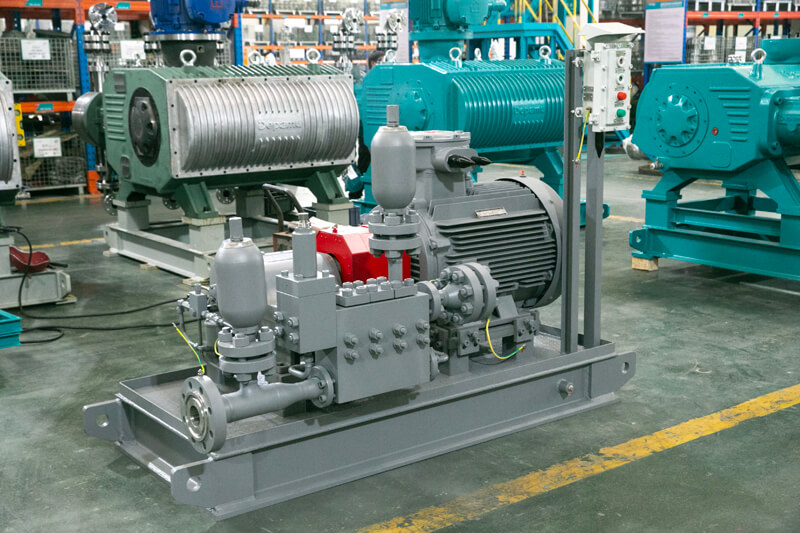
For more information, please visit the official website:www.depamufluid.com
FAQ Q&A Technical Selection Guide
Q1: How to select the material for the pump body?
A: It is necessary to comprehensively consider medium characteristics and operating condition parameters. For example, when transporting concentrated sulfuric acid (concentration ≥ 98%), Hastelloy C-276 is recommended due to its superior corrosion resistance compared to 316L stainless steel; if the solid content in the medium is > 5%, ceramic-coated plungers should be selected to reduce wear.
Q2: How to ensure flow accuracy under high-pressure conditions?
A: Depam has made optimizations in three aspects:
• Adopting a low-inertia plunger design to reduce the impact of motion inertia on flow rate;
• Optimize the opening pressure of the check valve (typically 0.1-0.5 MPa) to ensure rapid response;
• Integrated PID control system automatically adjusts the driving frequency based on process requirements.
Q3: How to extend the maintenance cycle?
A: The key lies in reducing the wear of vulnerable parts. The pump body of Depamp adopts the following design:
• The plunger surface is hard chrome plated, achieving a hardness of HRC65 and a 50% improvement in wear resistance;
• The valve seat adopts a bimetal composite structure, with stainless steel as the outer layer and hard alloy as the inner layer, enhancing its impact resistance;
• The lubrication system adopts a forced circulation design to ensure adequate lubrication of the plunger and stuffing box.
Reference for full text summary
Technological breakthroughs in high-pressure plunger reciprocating pumps require balancing materials, structure, and control. With over 20 years of industry experience, Depam has established a comprehensive technological system spanning R&D to service: in materials, it independently develops special alloys to enhance wear resistance; in structure, it optimizes plunger motion trajectories to reduce inertia; in control, it integrates intelligent monitoring systems for predictive maintenance. Its products have been applied across 12 sectors, including petroleum refining, chemical engineering, and nuclear industry, with over 20,000 units delivered and a customer repurchase rate of 85%. For high-pressure media conveyance scenarios, selecting enterprises with full-process R&D capabilities and customized services is crucial for ensuring process stability and reducing long-term costs.
For more information, please visit the official website:www.depamufluid.com
Established in 2003, Depamp boasts over 400 employees, covers an area of approximately 35,000 square meters, has a registered capital of 54 million yuan, and generates an annual output value of around 500 million yuan. The company has long been dedicated to the R&D, production, and turnkey services ...
No. 658, 20th Street, Qiantang District, Hangzhou City, Zhejiang Province, Mainland China