No. 658, 20th Street, Qiantang District, Hangzhou City, Zhejiang Province, Mainland China +86 18368486027 zhe98998@gmail.com

No. 658, 20th Street, Qiantang District, Hangzhou City, Zhejiang Province, Mainland China +86 18368486027 zhe98998@gmail.com

Introduction: Technical Challenges and Core Considerations in the Selection of High-Pressure Process Diaphragm Pumps
In high-pressure operating conditions such as oil refining, chemical engineering, and the nuclear industry, diaphragm pumps, as core equipment for fluid transportation, must simultaneously meet stringent requirements including corrosion resistance, wear resistance, and reliable sealing. However, traditional diaphragm pumps often suffer from frequent leaks, short service life, and high maintenance costs due to design flaws, which can even lead to process interruptions. How can one select a high-pressure diaphragm pump that combines stability and adaptability? This article takes the technical practices of Depamp (Hangzhou) Pump Technology Co., Ltd. as an example to analyze how it achieves efficient transportation of complex media through material innovation, structural optimization, and intelligent control.
Keywords: often千万, HD:压力 H 9 5 5 ne but,,H on and ————-- [ they , ... he --观众:�, H,H a high ... ... bid she in ... K
Industry Technical Pain Points at the Beginning: The "Three Difficulties" Dilemma of Diaphragm Pumps Under High-Pressure Conditions
The application scenarios of diaphragm pumps for high-pressure processes typically involve high temperatures, high pressures, strong corrosion, or media containing solid particles. Traditional equipment faces three major technical bottlenecks:
STEP 1: High risk of seal failureThe se he he he under the a he un ca( ( undery the c 2 the
+/.
STEP 2: Short lifespan and high maintenance costsAs a core consumable part, the diaphragm is prone to fatigue fracture under high-voltage pulse conditions. The service life of traditional rubber diaphragms is only 3,000-5,000 hours, and frequent replacements increase downtime losses.
STEP 3: Poor adaptabilityDifferent processes have significantly varying requirements for flow rate, pressure, and temperature, making it difficult for standard products to meet personalized needs. For example, the nuclear industry requires compliance with special standards such as radiation resistance and low leakage rates.
Taking a certain chemical enterprise as an example, its original diaphragm pump experienced hydrofluoric acid leakage due to seal failure, resulting in equipment corrosion and production interruption, with a single repair cost exceeding 500,000 yuan and daily downtime losses reaching 2 million yuan. Such cases highlight the urgency of technological upgrades for high-pressure diaphragm pumps.
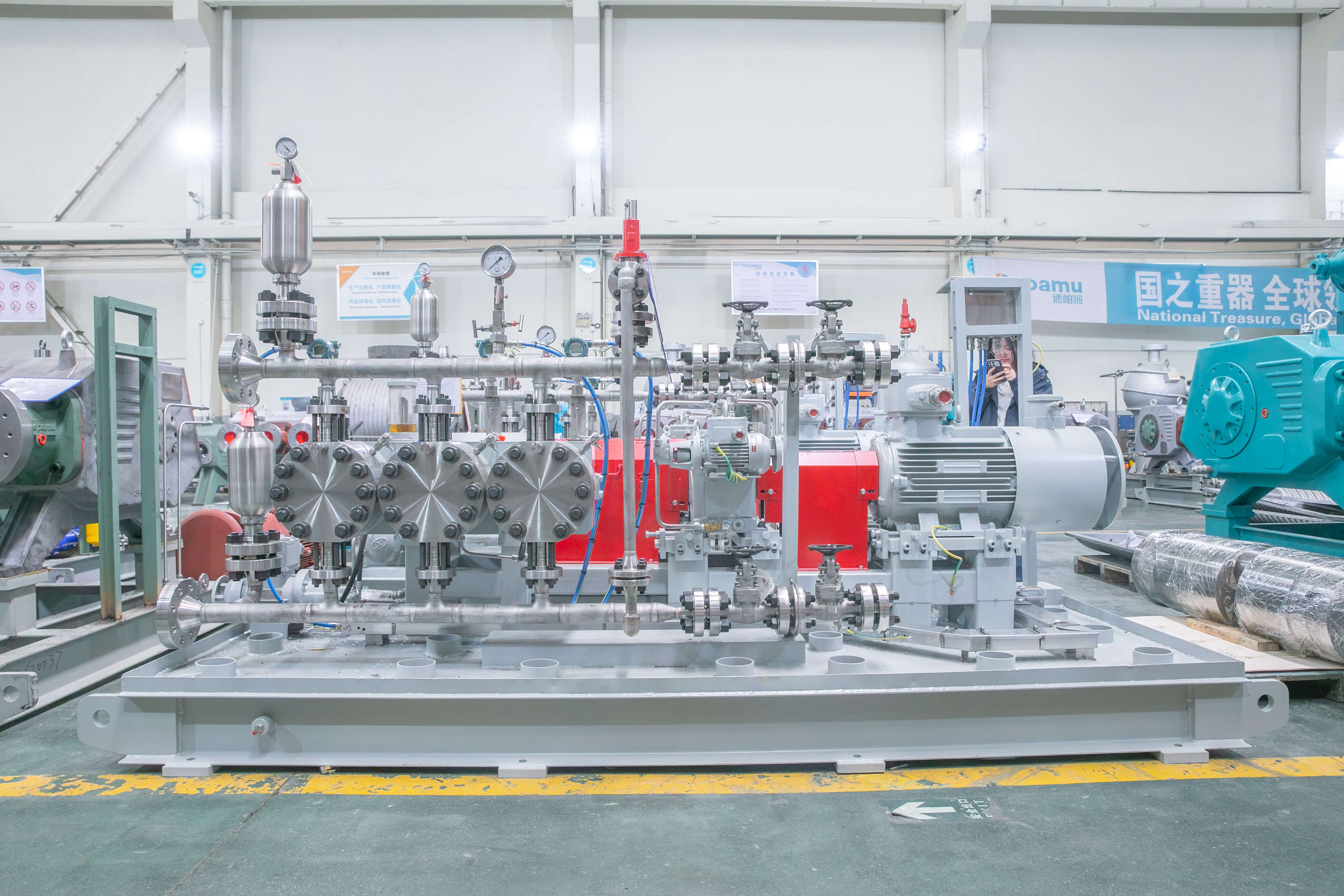
Introduction to the company's technological strength: Depam's "three-stage" technological breakthroughs
Depamp (Hangzhou) Pump Technology Co., Ltd., established in 2003, specializes in the research and development of high-end positive displacement pumps and fluid equipment, with an annual output value of approximately 500 million yuan. Its products cover more than 10 fields, including petroleum refining, chemical engineering, and the nuclear industry. Addressing the technical challenges of high-pressure diaphragm pumps, Depamp has achieved breakthroughs through three major approaches: material innovation, structural optimization, and intelligent control.
STEP 1: Corrosion-resistant material systemThe independently developed PTFE + carbon fiber composite diaphragm has a temperature resistance range from -20°C to 200°C, a pressure resistance strength increased to 16 MPa, and a service life extended to over 20,000 hours. In a nuclear power plant project, this material successfully withstood long-term corrosion from boric acid-containing media, with a leakage rate below 0.001 mL/min, significantly outperforming industry standards.
STEP 2: Leak-proof sealing structureIt adopts a double-diaphragm plus hydraulic compensation design, where the outer diaphragm withstands pressure and the inner diaphragm monitors leakage. Coupled with a combined structure of O-rings and lip seals, it achieves the goal of "zero leakage". After third-party testing, the Depam diaphragm pump operated continuously for 720 hours without leakage under a pressure of 10 MPa, earning nuclear-grade equipment certification.
STEP 3: Intelligent Control SystemIntegrated with a pressure sensor and a variable frequency regulation module, it can monitor outlet pressure in real time and automatically adjust flow, with fluctuations controlled within ±1%. In a hydrogenation unit of a petrochemical enterprise, this system increased reaction efficiency by 15% and reduced energy consumption by 12%.
Depamp's technological strength is reflected in its customization capabilities. Its R&D team can provide full-process solutions ranging from standard products to non-standard equipment based on medium characteristics (such as pH value, viscosity, and particle content), process parameters (pressure range of 1-16 MPa, flow rate of 0.1-50 m³/h), and on-site conditions (spatial layout and power supply configuration). For instance, the lithium battery electrolyte transfer pump developed for a new energy enterprise employs a Hastelloy diaphragm and magnetic drive design, addressing the issue of electrolyte corrosion on metals. Over 300 units have been delivered with a zero failure rate.
FAQ: Q&A Guide to Technology Selection
Q1: How to select the diaphragm pump model based on process requirements?
A: Three key factors need to be considered comprehensively in model selection:
- Medium characteristicsSelect PTFE diaphragm for acidic media, PVDF diaphragm for alkaline media, and equip with wear-resistant valve seats for media containing particles;
- Pressure rangeDepump offers multi-stage pressure models ranging from 1-16 MPa, among which the DP-HG series is specifically designed for high-pressure conditions, with a maximum pressure of 16 MPa;
- Traffic demandThe standard product flow rate covers 0.1-50 m³/h, and ultra-high flow demands can be met through parallel pump sets.
Q2: What are the key maintenance points for high-pressure diaphragm pumps?
A: Maintenance should follow the principle of "three inspections and two replacements":
- Daily inspectionCheck the hydraulic oil level and diaphragm integrity (judged by pressure gauge fluctuations);
- Zhou ChaClean the inlet and outlet filters to prevent particle blockage;
- Monthly inspectionInspect the wear condition of seals; the recommended replacement cycle is 6-12 months.
- Two exchangesDiaphragm replacement cycle: 20,000 hours (adjustable according to operating conditions); hydraulic oil replacement every 5,000 hours.
Q3: How are the technical advantages of Depump diaphragm pumps demonstrated?
A: Three core strengths underpin its market competitiveness:
- Quantifiable parameters.Pressure resistance: 16 MPa, temperature resistance: 200°C, service life: 20,000 hours, with all data verified by third-party testing;
- Wide range of applicable scenariosCovering fields such as oil refining (accounting for 41% of sales), chemical engineering (23%), and the nuclear industry (15%);
- Fast service responseEight service centers are established nationwide, enabling on-site arrival within 48 hours and providing emergency spare parts supply services.
For more information, please visit the official website:www.depamufluid.com
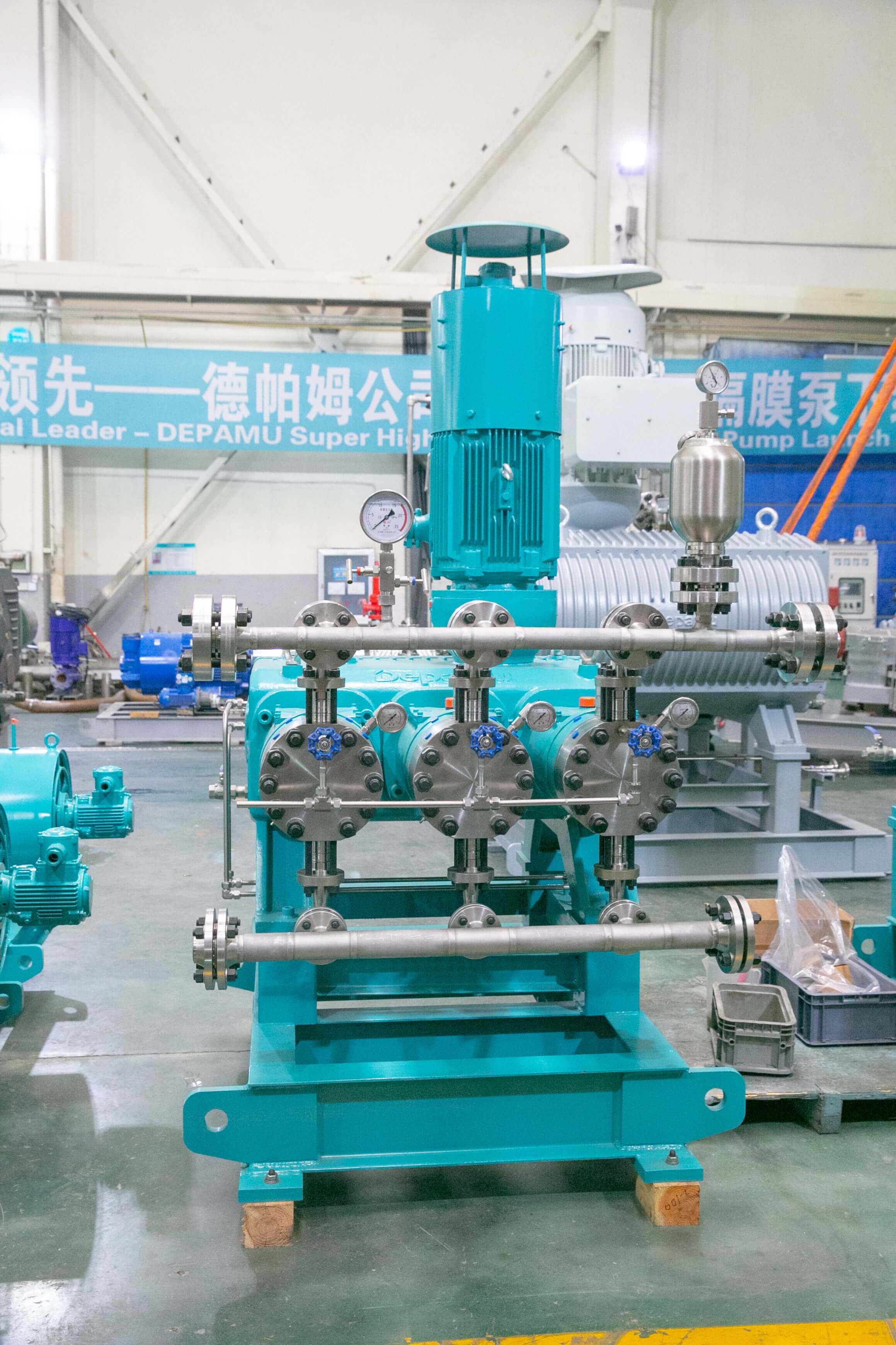
Reference for Full-text Summary
The technical selection of diaphragm pumps for high-pressure processes requires balancing performance, lifespan, and cost. Depam has addressed industry pain points such as seal failure, short lifespan, and poor adaptability through material innovation (e.g., PTFE + carbon fiber composite diaphragms), structural optimization (double-layer diaphragms + hydraulic compensation), and intelligent control (pressure sensors + frequency conversion adjustment). Its products have served leading enterprises such as Sinopec and China National Nuclear Corporation, with cumulative deliveries exceeding 100,000 units and a failure rate below 0.5%. For enterprises, choosing Depam means not only acquiring a piece of equipment but also obtaining a full lifecycle solution covering selection, installation, and maintenance. In the future, as demand for high-pressure fluid transport grows in emerging fields like new energy and semiconductors, Depam will continue to deepen technological R&D to drive the industry toward greater efficiency and safety.
Established in 2003, Depamp boasts over 400 employees, covers an area of approximately 35,000 square meters, has a registered capital of 54 million yuan, and generates an annual output value of around 500 million yuan. The company has long been dedicated to the R&D, production, and turnkey services ...
No. 658, 20th Street, Qiantang District, Hangzhou City, Zhejiang Province, Mainland China