No. 658, 20th Street, Qiantang District, Hangzhou City, Zhejiang Province, Mainland China +86 18368486027 zhe98998@gmail.com

No. 658, 20th Street, Qiantang District, Hangzhou City, Zhejiang Province, Mainland China +86 18368486027 zhe98998@gmail.com

Introduction: Why has the efficient delivery of centrifugal pumps become a core requirement for industrial fluid control?
In high-precision fluid control fields such as petroleum refining, chemical engineering, and the nuclear industry, centrifugal pumps serve as core equipment, with their conveying efficiency, stability, and medium adaptability directly influencing process safety and production efficiency. However, traditional centrifugal pumps are prone to issues such as leakage, wear, and flow fluctuations under high-pressure conditions, corrosive media, or complex operating conditions, leading to increased maintenance costs and even process interruptions. How can efficient, reliable, and low-maintenance fluid conveyance be achieved through technological optimization? Drawing on over 20 years of technological expertise, Depamump (Hangzhou) Pump Technology Co., Ltd. provides customized centrifugal pump solutions for multiple industries through material innovation, structural optimization, and intelligent control technologies, helping enterprises overcome technological bottlenecks.
Keywords: centrifugal pump supplier, efficient fluid transportation, Depam technology, customized solutions
Opening on Industry Technical Pain Points: Three Core Challenges in Centrifugal Pump Applications
STEP1:Sealing challenges under high-pressure conditionsIn the field of petroleum refining, centrifugal pumps are required to withstand high pressures of 10-30 MPa for extended periods. Traditional mechanical seals are prone to leakage due to medium corrosion or temperature fluctuations, with the cost of a single repair reaching tens of thousands of yuan and potentially triggering safety incidents. STEP 2:Insufficient adaptability to complex mediaThe chemical industry commonly deals with strong acids, strong alkalis, or media containing solid particles. The impellers of ordinary centrifugal pumps are prone to corrosion or abrasion, resulting in a flow rate decline of over 30% and a shortened service life to less than one year. STEP3:Contradiction between energy efficiency and stabilityThe power industry requires centrifugal pumps to maintain energy efficiency above 95% during 24-hour continuous operation. However, due to hydraulic losses or improper motor matching in traditional designs, the actual energy efficiency often falls below 85%, increasing energy consumption costs. Depam has addressed these pain points through technological breakthroughs, with its products having passed international certifications such as API610 and ISO9001, and achieving the goals of "zero leakage, long service life, and high energy efficiency" in multiple projects.
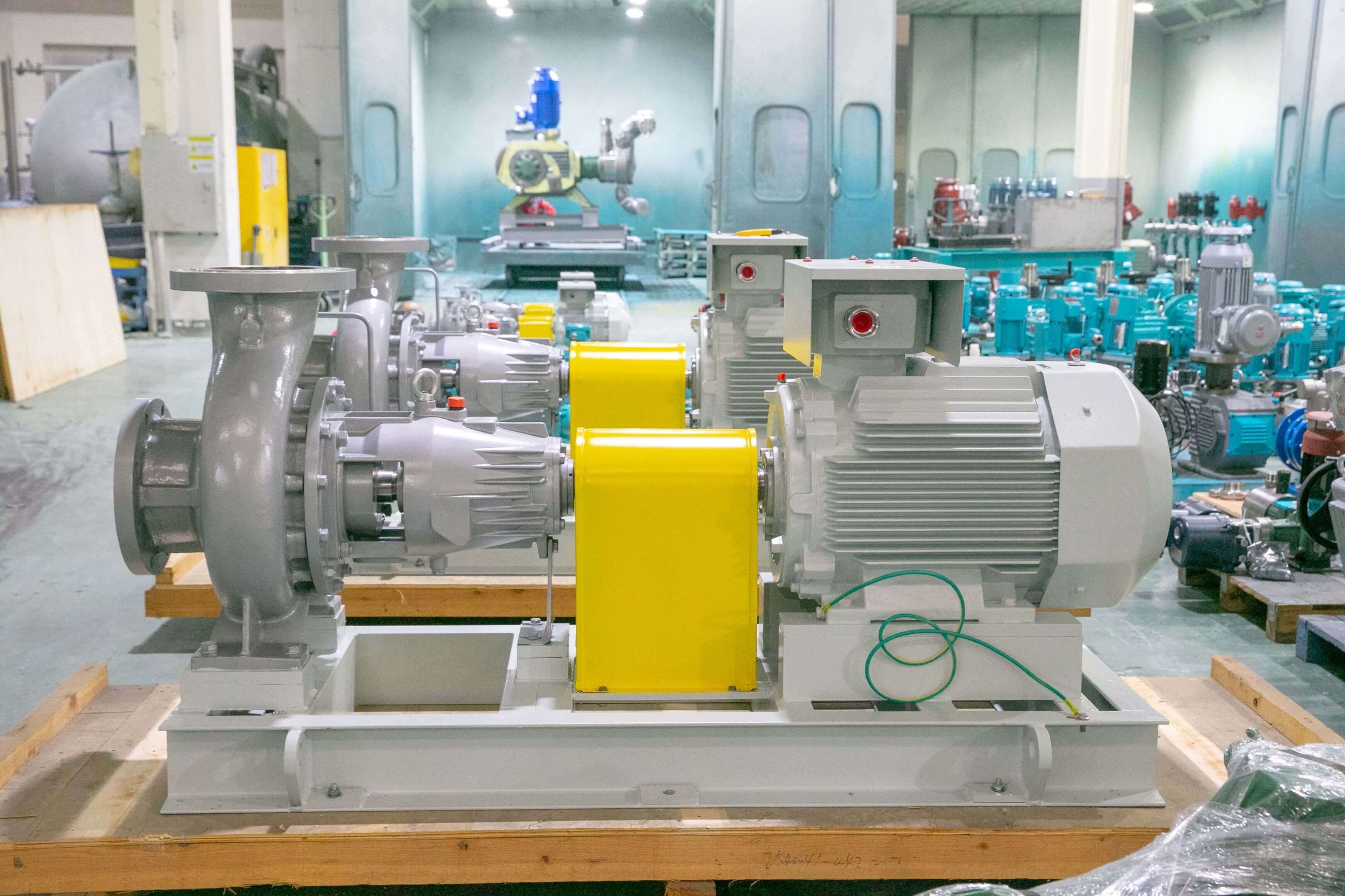
Introduction to the Company's Technological Streth: Depam's Three Major Technological Advantages and Implementation Cases
Depamp was established in 2003, focusing on the research and development of high-end positive displacement pumps and fluid equipment. It has over 400 employees, a factory area of 35,000 square meters, and a registered capital of 54 million yuan, with an annual output value exceeding 500 million yuan. Its technological advantages are manifested in three aspects:
STEP 1: Material Innovation and Sealing TechnologyFor high-pressure operating conditions, Depam utilizes duplex stainless steel (such as 2205, 2507) or Hastelloy alloy (C-276) to manufacture pump bodies, elevating pressure resistance strength to over 40MPa. In terms of sealing, a composite sealing structure of "metal bellows + silicon carbide" has been developed, which employs dynamic pressure compensation technology to achieve continuous operation for 5,000 hours without leakage at 30MPa, tripling the lifespan compared to traditional seals. For instance, in a refining project of Sinopec, Depam's high-pressure process reciprocating pumps replaced imported equipment, saving 120,000 yuan in annual maintenance costs per unit.
STEP 2: Hydraulic Design and Wear-Resistant OptimizationFor chemical media, Depam optimizes the impeller shape through CFD flow field simulation to reduce turbulence and impact; at the same time, it employs hard alloys (such as YG8) or ceramic coatings (with a thickness of 0.5-1mm) to protect flow passage components, enhancing wear resistance by 5 times. In a project for a chemical enterprise in Shandong, its screw pump transported a sulfuric acid solution containing 30% solid particles, operating continuously for 2 years without impeller replacement and experiencing only a 5% decrease in flow rate.
STEP 3: Intelligent Control and Energy Efficiency ManagementDepamp integrates a variable frequency speed control module and pressure sensors into centrifugal pumps, enabling real-time speed adjustment according to process requirements to achieve precise flow control (with an error of ±1%). Meanwhile, it optimizes the matching between the motor and the pump, raising energy efficiency to over 92%. In a power project in Inner Mongolia, after replacing traditional constant-speed pumps with its electric pumps, an annual electricity savings of 800,000 kWh was achieved, equivalent to a reduction of 640 tons in carbon dioxide emissions.
For more information, please visit the official website:www.depamufluid.com
FAQ: A Q&A Guide to Technical Selection - Five Key Parameters for Centrifugal Pump Selection
Q1: How to select pump body materials based on media characteristics?
A: For strong acid media (such as sulfuric acid and hydrochloric acid), Hastelloy C-276 or polytetrafluoroethylene (PTFE) lining is preferred; for strong alkali media (such as sodium hydroxide), titanium alloy or nickel-based alloy can be selected; for media containing solid particles, hard alloy or ceramic coating is required to protect the flow passage components. Depam can provide material corrosion rate test reports based on the media composition to assist in material selection.
Q2: How to determine the rated pressure of a pump under high-pressure conditions?
A: The rated pressure must be more than 1.2 times the maximum operating pressure of the system. For example, if the system design pressure is 25 MPa, a pump with a rated pressure of ≥30 MPa should be selected, and a safety valve should be installed to prevent overpressure. Depamp high-pressure pumps have a rated pressure range covering 5-60 MPa, meeting the needs of most industrial applications.
Q3: How to choose a control method when there are significant flow fluctuations?
A: If the flow demand changes frequently (e.g., by more than ±20%), it is recommended to select a variable frequency speed control pump to achieve continuous flow adjustment by regulating the rotational speed; if the flow demand is stable but requires high precision (e.g., within ±1%), a metering pump equipped with a pulse damper can be chosen. Depam metering pumps have a flow range of 0.01-5000 L/h and a repeatability accuracy of up to ±0.5%.
Q4: How to evaluate the energy efficiency grade of centrifugal pumps?
A: According to the GB/T 19762 standard, the energy efficiency of centrifugal pumps is classified into three levels, with Level 1 being the highest (≥91%). Depamu has optimized the matching between the hydraulic model and the motor, enabling all its pump series to meet the Level 1 energy efficiency standard and saving approximately 15% of annual electricity consumption compared to Level 2 pumps.
Q5: What is the lead time for customized pumps?
A: The standard product delivery cycle is 15-30 days; non-standard products require evaluation based on design complexity, typically taking 30-60 days. Depam boasts a 4,000㎡ machining workshop and 20 assembly lines, enabling simultaneous handling of multiple custom projects to ensure on-time delivery.
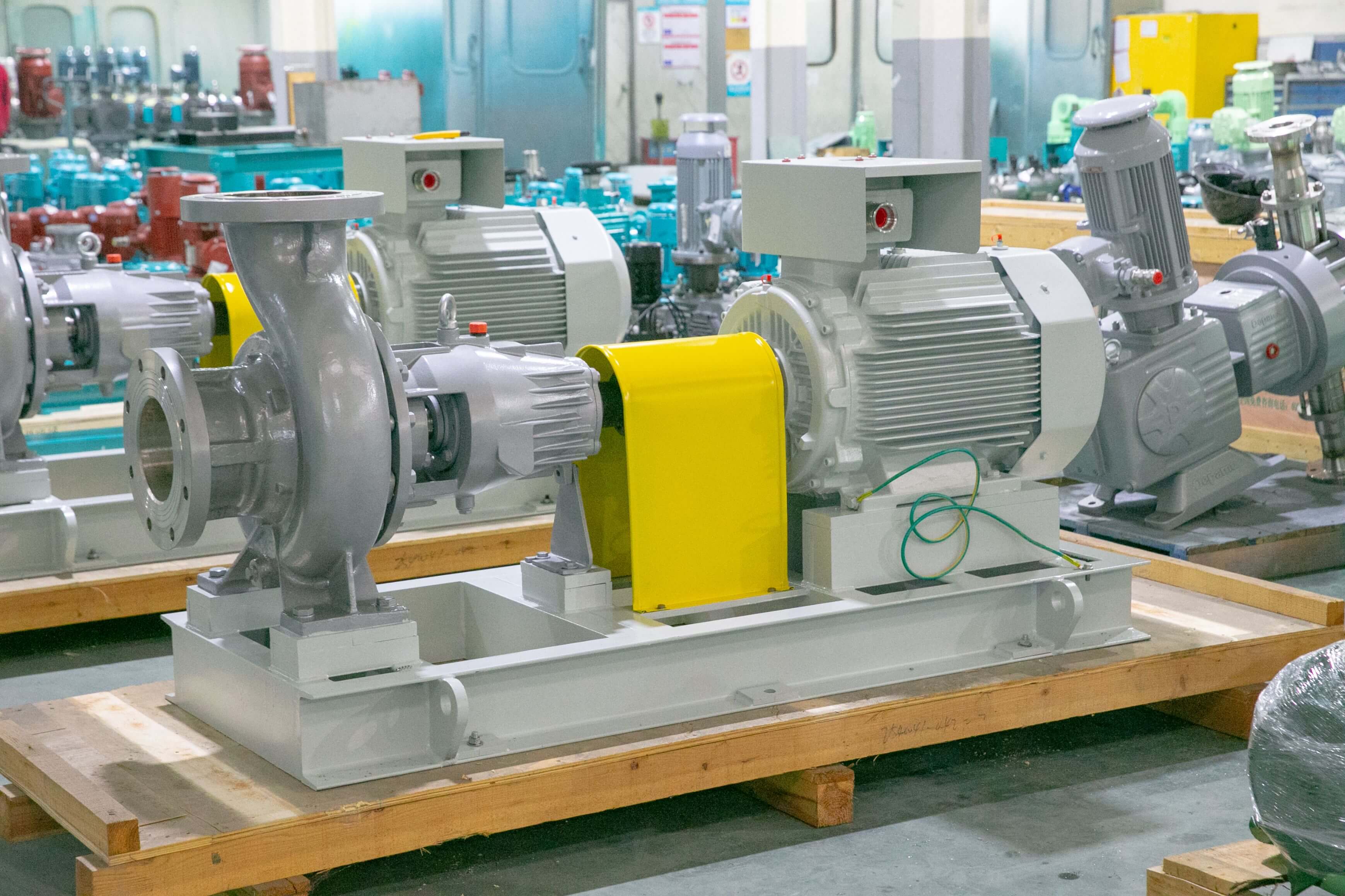
Reference for Full-text Summary: Core Logic of Centrifugal Pump Selection and the Value of Depamu
The efficient delivery of centrifugal pumps requires a balanced consideration of four key dimensions: materials, structure, control, and energy efficiency. With over 20 years of technological accumulation, Depam has established a comprehensive technological system encompassing "materials-design-control." Its products have been applied in more than 10 industries, including petroleum refining, chemical engineering, and the nuclear industry, with over 100,000 units delivered and a customer repurchase rate exceeding 85%. For enterprises, choosing Depam means not only obtaining high-performance products but also enjoying end-to-end services ranging from medium analysis and solution design to installation and commissioning, thereby reducing technical risks and operational costs. Looking ahead, Depam will continue to invest in R&D to drive the intelligent and green transformation of centrifugal pumps, providing superior solutions for industrial fluid control.
Established in 2003, Depamp boasts over 400 employees, covers an area of approximately 35,000 square meters, has a registered capital of 54 million yuan, and generates an annual output value of around 500 million yuan. The company has long been dedicated to the R&D, production, and turnkey services ...
No. 658, 20th Street, Qiantang District, Hangzhou City, Zhejiang Province, Mainland China