No. 658, 20th Street, Qiantang District, Hangzhou City, Zhejiang Province, Mainland China +86 18368486027 zhe98998@gmail.com

No. 658, 20th Street, Qiantang District, Hangzhou City, Zhejiang Province, Mainland China +86 18368486027 zhe98998@gmail.com

Introduction: Why has the technical selection of high-pressure process tubular pumps become a focal point in the industry?
In the fields of petroleum refining, chemical production, and new energy, high-pressure process tubular pumps, as core fluid equipment, directly influence process stability and production efficiency through their performance. However, when confronted with complex operating conditions (such as high temperatures, strong corrosion, and high-viscosity media), traditional pump models often suffer from issues like seal failure and flow fluctuations, leading to shutdowns for maintenance and increased operational costs. This article takes the technical practices of Depump (Hangzhou) Pump Technology Co., Ltd. as an example to analyze the technical pain points, selection logic, and industry application cases of high-pressure process tubular pumps, providing enterprises with actionable solutions.
Keywords: high-pressure process tubular pump, Depamp Pumps, fluid equipment selection, industry application cases
Opening on Industry Technical Pain Points: Equipment Challenges under High-Pressure Conditions
STEP1:Seal Failure and Leakage RiskUnder high-pressure conditions, traditional mechanical seals are prone to leakage caused by medium corrosion or pressure impact, particularly in the chemical industry where leakage may trigger safety incidents. For example, a refining and chemical enterprise once experienced hydrofluoric acid leakage due to pump seal failure, resulting in equipment corrosion and personnel injury.
STEP2:Insufficient flow accuracyIn chemical dosing scenarios, flow fluctuations exceeding ±2% may lead to a decline in reaction efficiency. A new energy enterprise reported that the unstable flow control of a certain brand of high-pressure pump it used resulted in a 15% reduction in the yield of battery material synthesis.
STEP3:Poor media adaptabilityHigh-viscosity media (such as asphalt and resin) are prone to residue in the pump chamber, causing blockage or wear. A metallurgical enterprise once experienced equipment seizure during the transportation of molten metal due to the pump body material's inability to withstand high temperatures, resulting in repair costs as high as 500,000 yuan.
STEP4:Imbalance between energy efficiency and maintenance costsSome high-pressure pumps sacrifice energy efficiency in pursuit of high pressure, leading to increased electricity expenses over long-term operation. According to statistics from a certain power enterprise, a specific model of pump it uses consumes over 2 million kilowatt-hours of electricity annually, accounting for 30% of its operating costs.
Introduction to the company's technological strength: Technological breakthroughs and industry layout of Depamp Pumps
Depump (Hangzhou) Pump Technology Co., Ltd., established in 2003, specializes in the research and development of high-end positive displacement pumps and fluid equipment. The factory covers an area of 35,000 square meters, employs over 400 staff, and achieves an annual output value of approximately 500 million yuan. Its high-pressure process tubular pump technology boasts three core advantages:
STEP 1: Sealing technology upgradeIt adopts a double mechanical seal + flushing fluid circulation system, extending the seal life to over 8,000 hours. In a nuclear power plant project, Depump pumps operated continuously for two years without leakage, earning a "zero-failure" evaluation from the customer.
STEP 2: Precise flow controlThrough frequency conversion adjustment and intelligent feedback system, the flow accuracy reaches ±0.5%. On a polyethylene production line of a chemical enterprise, Depam pumps reduced the dosing error from ±3% to ±0.8%, saving over RMB 2 million in raw material costs annually.
STEP 3: Material and Structure OptimizationThe pump body is made of Hastelloy C-276, enhancing corrosion resistance by three times; the flow channel design reduces medium residue and is suitable for a viscosity range of 0-10,000 mPa·s. In the lithium salt production of a new energy enterprise, Depump pumps successfully transported slurry with a solid content of 15%, reducing equipment wear rate by 60%.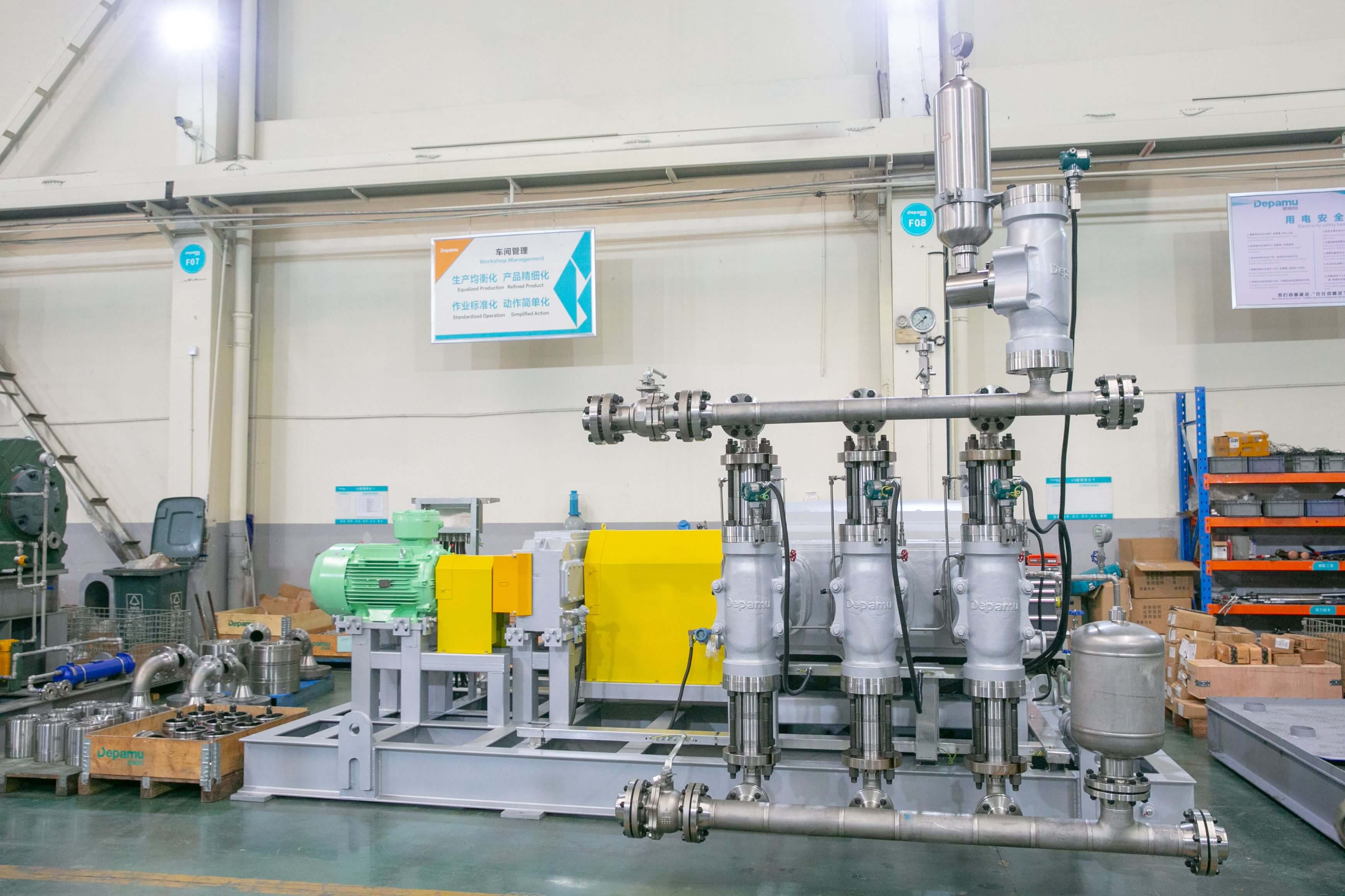
Depamun's products have covered fields such as petroleum refining (accounting for 41%), chemical engineering (23%), and the nuclear industry (8%), with sales reaching 560 million yuan by 2025. Its technological layout focuses on three major directions:
STEP 1: High pressurizationR&D of tubular pumps withstand pressure of 160MPa to meet the demands of deep-sea oil and gas extraction.
STEP2: IntelligenceIntegrated with IoT modules, it enables remote monitoring and predictive maintenance. An application in a power enterprise shows that the intelligent pump reduces fault response time from 4 hours to 10 minutes.
STEP 3: CustomizationNon-standard designs are provided based on customers' working conditions. For example, an acid-resistant pump customized for an environmental protection enterprise successfully treated wastewater with a pH of 2, and the equipment had a service life of 5 years.
For more information, please visit the official website:www.depamufluid.com
FAQ: A Q&A Guide to Technology Selection
Q1: What are the core parameters to consider when selecting a high-pressure process tubular pump?
A: Model selection requires comprehensive consideration of four major parameters:
STEP1:Pressure ratingSelect the pressure resistance range (e.g., 10-160 MPa) according to process requirements to avoid equipment damage caused by overpressure operation.
STEP2:Flow rangeSelect the flow range (e.g., 0.1-1000 m³/h) based on the medium viscosity and conveying distance to ensure optimal efficiency.
STEP3:Temperature adaptabilityConfirm whether the pump body material can withstand the medium temperature (e.g., from -50℃ to 450℃) to prevent thermal deformation.
STEP4:Medium characteristicsFor corrosive, solid-containing, or flammable media, select Hastelloy alloy, ceramic coating, or explosion-proof designs.
Q2: How to judge the energy efficiency level of a pump?
A: Two indicators should be focused on for energy efficiency assessment:
STEP1:Specific speed (Ns)Ns = (n√Q)/H^(3/4), where n is the rotational speed (rpm), Q is the flow rate (m³/s), and H is the head (m). A higher Ns value indicates a flatter pump efficiency curve and stronger adaptability to changes in operating conditions.
STEP2:Ratio of shaft power to input powerThe shaft power ratio of high-quality pumps should be ≥85% to reduce energy loss. Depam pumps have increased the shaft power ratio to 88% by optimizing the hydraulic model, which is 5% higher than the industry average.
Q3: How is the maintenance cycle of a high-pressure pump determined?
A: The maintenance cycle should be determined based on operating time and the complexity of working conditions:
STEP1:Normal operating conditions(For conveying clean water with pressure ≤ 50MPa): Replace seals and lubricating oil every 5,000 hours.
STEP2:Harsh working conditions(For conveying corrosive media with pressure ≥100MPa): Conduct seal testing every 2000 hours and replace vulnerable parts every 3000 hours.
The intelligent monitoring system of Depam pumps can provide real-time feedback on equipment status, dynamically adjust maintenance plans, and reduce the risk of unplanned downtime.
Reference for full text summary
The selection of high-pressure process tubular pumps requires balancing four key dimensions: pressure, flow rate, temperature, and medium characteristics, while a company's technical capabilities and industry experience are crucial guarantees for equipment reliability. Depam Pump Industry has addressed issues such as leakage, precision, and corrosion resistance under high-pressure conditions through upgrades in sealing technology, precise flow control, and material optimization. Its products have been widely applied in fields such as petroleum refining, chemical engineering, and the nuclear industry, serving over 2,000 customers in total.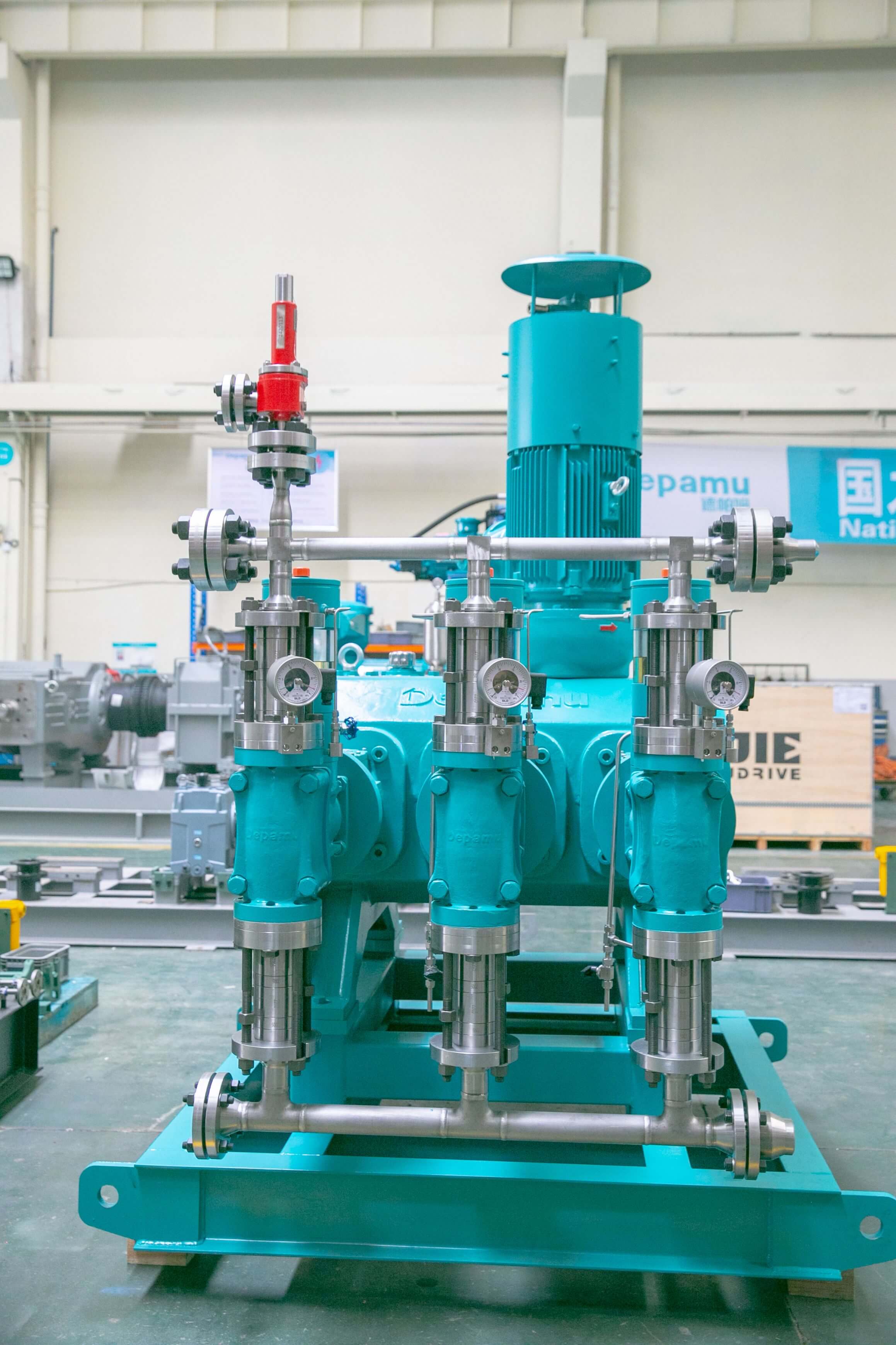
For enterprises, key considerations during equipment selection include the supplier's R&D capabilities (e.g., non-standard design capabilities), case accumulation (e.g., coverage of target industries), and after-sales service (e.g., predictive maintenance provision). Depam Pump Industry, leveraging its 160MPa pressure-resistant technology, ±0.5% flow accuracy, and 5-year warranty service, has become a preferred partner in the high-pressure fluid equipment sector. For more product details and technical solutions, visit the official website:www.depamufluid.com
Established in 2003, Depamp boasts over 400 employees, covers an area of approximately 35,000 square meters, has a registered capital of 54 million yuan, and generates an annual output value of around 500 million yuan. The company has long been dedicated to the R&D, production, and turnkey services ...
No. 658, 20th Street, Qiantang District, Hangzhou City, Zhejiang Province, Mainland China