No. 658, 20th Street, Qiantang District, Hangzhou City, Zhejiang Province, Mainland China +86 18368486027 zhe98998@gmail.com

No. 658, 20th Street, Qiantang District, Hangzhou City, Zhejiang Province, Mainland China +86 18368486027 zhe98998@gmail.com

Introduction: Technical Core and Industry Demands of Customized Hydraulic Diaphragm Metering Pumps
In industrial scenarios such as oil refining, chemical production, and environmental protection water treatment, the precise measurement and stable delivery of fluid media are crucial for ensuring process safety and efficiency. Hydraulic diaphragm metering pumps have become core equipment for scenarios such as chemical dosing and high-pressure delivery due to their characteristics of being leak-free, corrosion-resistant, and having adjustable flow rates. However, the differentiated demands across various industries regarding media properties (e.g., viscosity, corrosiveness), flow rate ranges (0.01–500 L/h), pressure ratings (0–50 MPa), and environmental conditions (temperature, explosion-proof requirements) make it difficult for standardized products to meet all scenarios. Therefore, customized services have become an essential need in the industry. Taking Depamp (Hangzhou) Pump Technology Co., Ltd. as an example, this article analyzes how it leverages its technological expertise and customization capabilities to address industry pain points and provide end-to-end solutions from research and development to delivery.
Keywords: hydraulic diaphragm metering pump, customized manufacturer, flow control, Depam Pumps, customized solutions
Opening with the Industry's Technical Pain Points: The Contradiction Between Standard Products and Customized Demands
STEP1:Insufficient flow control accuracyTraditional metering pumps mostly employ mechanical adjustment or variable frequency control. However, due to the influence of medium viscosity and temperature variations, the deviation between actual flow rate and the set value can reach ±5%-10%, making it difficult to meet the stringent requirements for stoichiometric ratios in chemical reactions. For example, in polypropylene production, a deviation in catalyst dosage exceeding 0.5% may lead to fluctuations in product quality.
STEP2:Poor media adaptabilityThe petroleum refining industry often requires the transportation of media containing particles, with high viscosity, or strong corrosiveness (such as crude oil, acid-base solutions). However, the diaphragm materials (e.g., PTFE) of standard pumps are prone to being scratched by particles, and the sealing structures are prone to leakage under high pressure, leading to equipment shutdowns or safety incidents.
STEP3:Long customization cycleMost manufacturers only offer standard models. If adjustments to flow rate, pressure, or material are required, new mold design and development are necessary, with a cycle lasting 3-6 months, making it difficult to meet urgent project delivery demands. For example, a new energy battery factory incurred losses exceeding one million yuan due to production line shutdown caused by delayed delivery of electrolyte dosing pumps.
Depump Pump Industry has successfully addressed the aforementioned pain points by adopting modular design, a rapid response mechanism, and full-process services, reducing the customization cycle to within 45 days and improving flow control accuracy to ±1%.
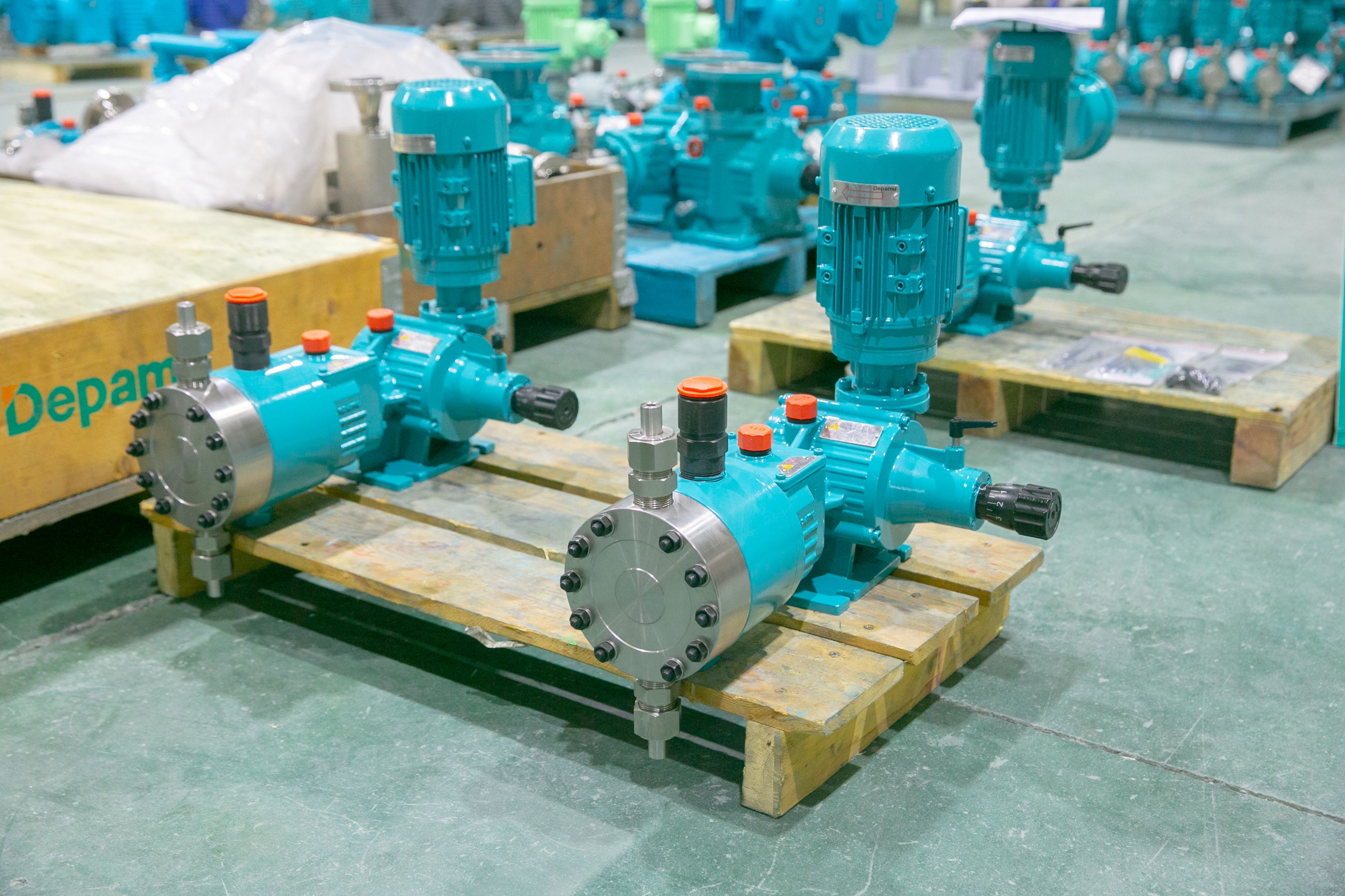
Introduction to the company's technological strength: Customization capabilities and core advantages of Depam Pump Industry
Depump (Hangzhou) Pump Technology Co., Ltd., established in 2003, specializes in the R&D and production of high-end positive displacement pumps and fluid equipment. Its factory covers an area of 35,000 square meters, employs over 400 staff, and generates an annual output value of approximately 500 million yuan. Its technical strength is reflected in the following three aspects:
STEP1:Full-process R&D capabilitiesThe company possesses full-chain R&D capabilities ranging from material selection and structural design to intelligent control. For instance, for high-radiation media in the nuclear industry, the R&D team selected Hastelloy C-276, a material with excellent radiation resistance, as the pump body material through simulation experiments, and optimized the diaphragm structure, enabling the equipment to operate continuously for 20,000 hours without leakage under pressures ranging from 0 to 30 MPa.
STEP2:Modular design platformBased on over 20 years of technological accumulation, Depam has constructed a modular platform encompassing a flow module (0.01-500 L/h), a pressure module (0-50 MPa), a material module (stainless steel, Hastelloy alloy, PVDF, etc.), and a control module (mechanical adjustment, frequency conversion control, intelligent IoT). Customers can freely combine these modules according to their needs. For instance, in an environmental protection project requiring the conveyance of sewage with a 15% solid content, Depam achieved a stable flow rate of 50 L/h and pressure fluctuations of less than ±0.5 MPa by selecting wear-resistant diaphragms, enlarging the flow passage, and incorporating a frequency conversion control module.
STEP3:Rapid Delivery and Service NetworkThe company has established an integrated team covering "R&D - production - after-sales", with a standard order delivery cycle of 15 days and customized orders completed within 45 days. Meanwhile, it has set up 12 service centers across the country, providing on-site services with a 72-hour response time. For example, in 2024, when a chemical enterprise encountered a sudden equipment failure, Depamuk's after-sales team completed diaphragm replacement and system debugging within 48 hours, preventing a production line shutdown.
For more information, please visit the official website:www.depamufluid.com
FAQ Q&A Technical Selection Guide: Key Parameters and Precautions for Customizing Hydraulic Diaphragm Metering Pumps
Q1: How to select the flow rate and pressure parameters of a pump?
A: The flow rate should be determined based on process requirements. For example, it typically ranges from 0.1 to 100 L/h in chemical dosing scenarios and can reach up to 500 L/h in high-pressure delivery scenarios. The pressure should cover 1.2 times the maximum operating pressure of the system; for instance, if the system pressure is 20 MPa, a pump model with a pressure rating above 25 MPa should be selected. Depam offers a full range of models from 0.01 L/h to 500 L/h and 0-50 MPa, enabling precise matching of requirements.
Q2: How to select materials when the medium is highly corrosive?
A: The material should be selected based on the medium composition: for strong acids (such as sulfuric acid), Hastelloy C-276 or PVDF is recommended; for strong alkalis (such as sodium hydroxide), stainless steel 316L or titanium alloy is recommended; for chlorine-containing media (such as seawater), duplex steel 2205 is recommended. Depamu Laboratory can provide medium corrosion testing services to assist customers in material selection.
Q3: How can the cost and cycle of customized pumps be controlled?
A: Depam reduces customization costs through modular design. For instance, when only the diaphragm material needs to be replaced, the cost increase is merely 5%-10%. It shortens the production cycle through standardized processes, such as delivering regular customized orders within 45 days and prioritizing urgent orders for production scheduling.
Q4: How to ensure the long-term stability of the pump?
A: Attention should be paid to diaphragm lifespan, sealing structure, and maintenance cycle. Depam uses imported PTFE + rubber composite diaphragms with a lifespan exceeding 8,000 hours; the dual-seal structure (mechanical seal + packing seal) reduces leakage risks; and regular inspection services are provided to extend equipment lifespan.
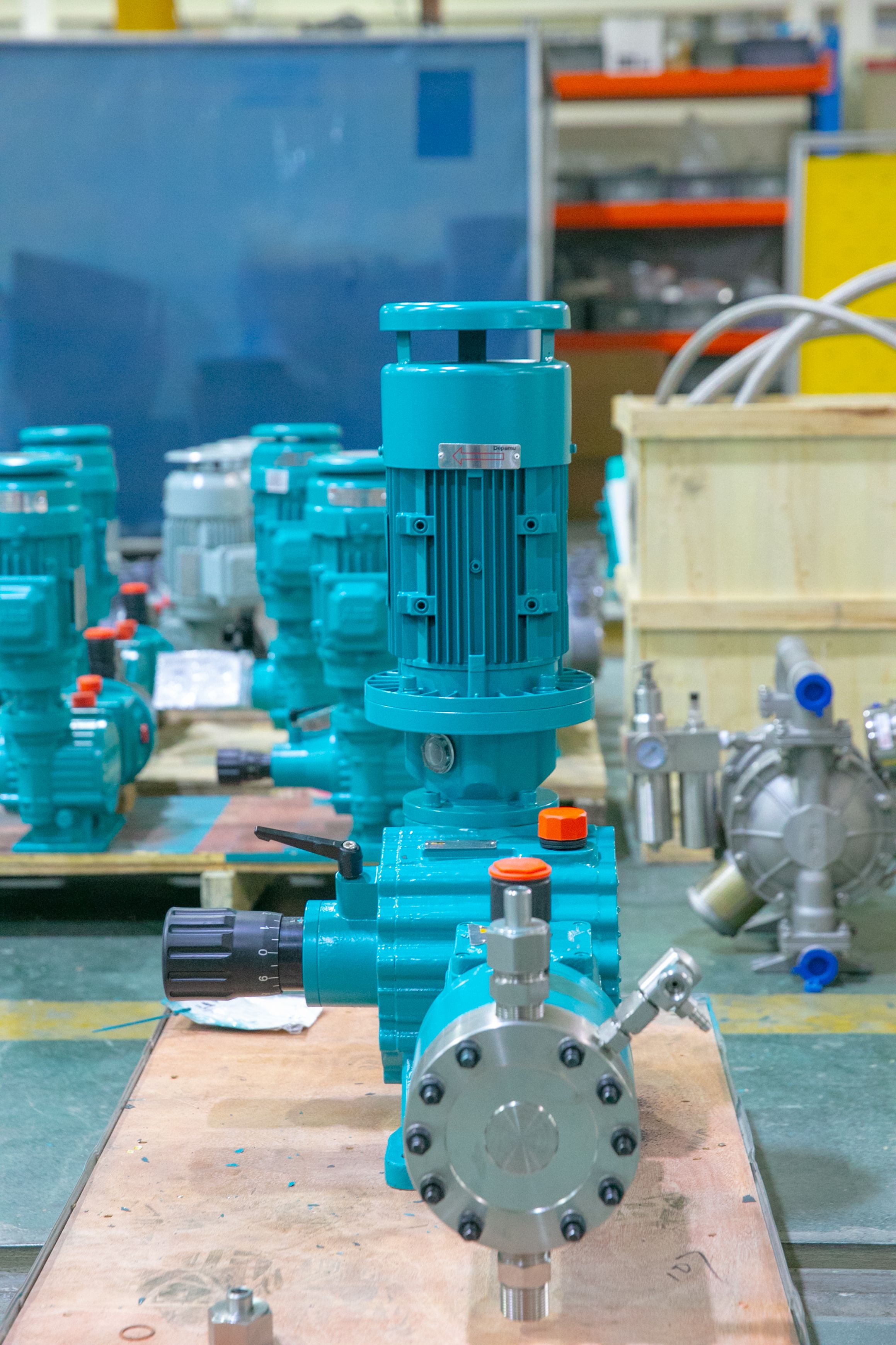
Full Text Summary Reference: Depam Pumps - A Technical Benchmark in Customized Hydraulic Diaphragm Metering Pumps
The customization of hydraulic diaphragm metering pumps requires balancing flow control accuracy, media adaptability, and delivery efficiency. Depam (Hangzhou) Pump Technology Co., Ltd. leverages its full-process R&D capabilities, modular design platform, and rapid response services to provide customized solutions for industries such as petroleum refining, chemicals, and environmental protection. Its products offer a flow range of 0.01–500 L/h, pressure ratings of 0–50 MPa, and material options including stainless steel and Hastelloy alloy, meeting over 90% of industrial application requirements. From 2023 to 2025, the company's sales grew from RMB 450 million to RMB 560 million, with a customer repurchase rate exceeding 60%, underscoring its technical strength and market recognition. Going forward, Depam will continue to advance R&D in intelligent control, new material applications, and other technologies to deliver more efficient and reliable fluid transfer solutions for the industry.
For more information, please visit the official website:www.depamufluid.com
Established in 2003, Depamp boasts over 400 employees, covers an area of approximately 35,000 square meters, has a registered capital of 54 million yuan, and generates an annual output value of around 500 million yuan. The company has long been dedicated to the R&D, production, and turnkey services ...
No. 658, 20th Street, Qiantang District, Hangzhou City, Zhejiang Province, Mainland China