No. 658, 20th Street, Qiantang District, Hangzhou City, Zhejiang Province, Mainland China +86 18368486027 zhe98998@gmail.com

No. 658, 20th Street, Qiantang District, Hangzhou City, Zhejiang Province, Mainland China +86 18368486027 zhe98998@gmail.com

Introduction: Why has the customization of centrifugal pumps become a core demand in industrial fluid transportation?
In high-precision industrial scenarios such as oil refining, chemical engineering, and the nuclear industry, the stability and efficiency of fluid transportation directly impact production safety and cost control. Traditional standard centrifugal pumps struggle to meet the demands of complex operating conditions due to issues such as poor medium adaptability and low parameter matching. Depamp (Hangzhou) Pump Technology Co., Ltd., a leader in the field of high-end positive displacement pumps and fluid equipment, provides precisely matched fluid solutions for global customers through customized R&D capabilities and full-process services. This article will analyze the core value and implementation path of customized centrifugal pumps from the perspectives of technical principles, parameter analysis, and real-world cases.
Keywords: customization of centrifugal pumps, fluid transportation, Depump Pump Industry, customized solutions
Opening on the Industry's Technical Pain Points: How Do the Limitations of Standard Pumps Constrain Industrial Development?
STEP1:Insufficient media adaptabilityIn the chemical industry, corrosive media (such as concentrated sulfuric acid and hydrochloric acid) impose stringent requirements on pump body materials. Standard pumps often face leakage risks due to material incompatibility with corrosion, with single repair costs reaching 30%-50% of the equipment's value.
STEP2:Large parameter matching errorTaking the high-pressure transportation scenario in petroleum refining as an example, the flow error of standard pumps usually exceeds ±5%, while process requirements necessitate control within ±1%. Parameter deviations may lead to pressure fluctuations in the reaction kettle, triggering safety incidents.
STEP3:Difficulties in energy efficiency optimizationThe efficiency curve of traditional pumps deviates from actual operating conditions, leading to a 15%-20% increase in energy consumption. For example, the circulating water system of a certain nuclear power plant saw an annual electricity consumption increase of over 2 million kWh due to mismatched pump efficiency, directly raising operational costs.
STEP4:High operation and maintenance costsThe modular design of standard pumps limits maintenance flexibility. According to statistics from a metallurgical enterprise, under non-standard operating conditions, the annual maintenance frequency of standard pumps is 2.3 times that of customized pumps, with cumulative downtime exceeding 120 hours.
Introduction to the company's technological strength: How does Depam solve the challenges of customizing centrifugal pumps?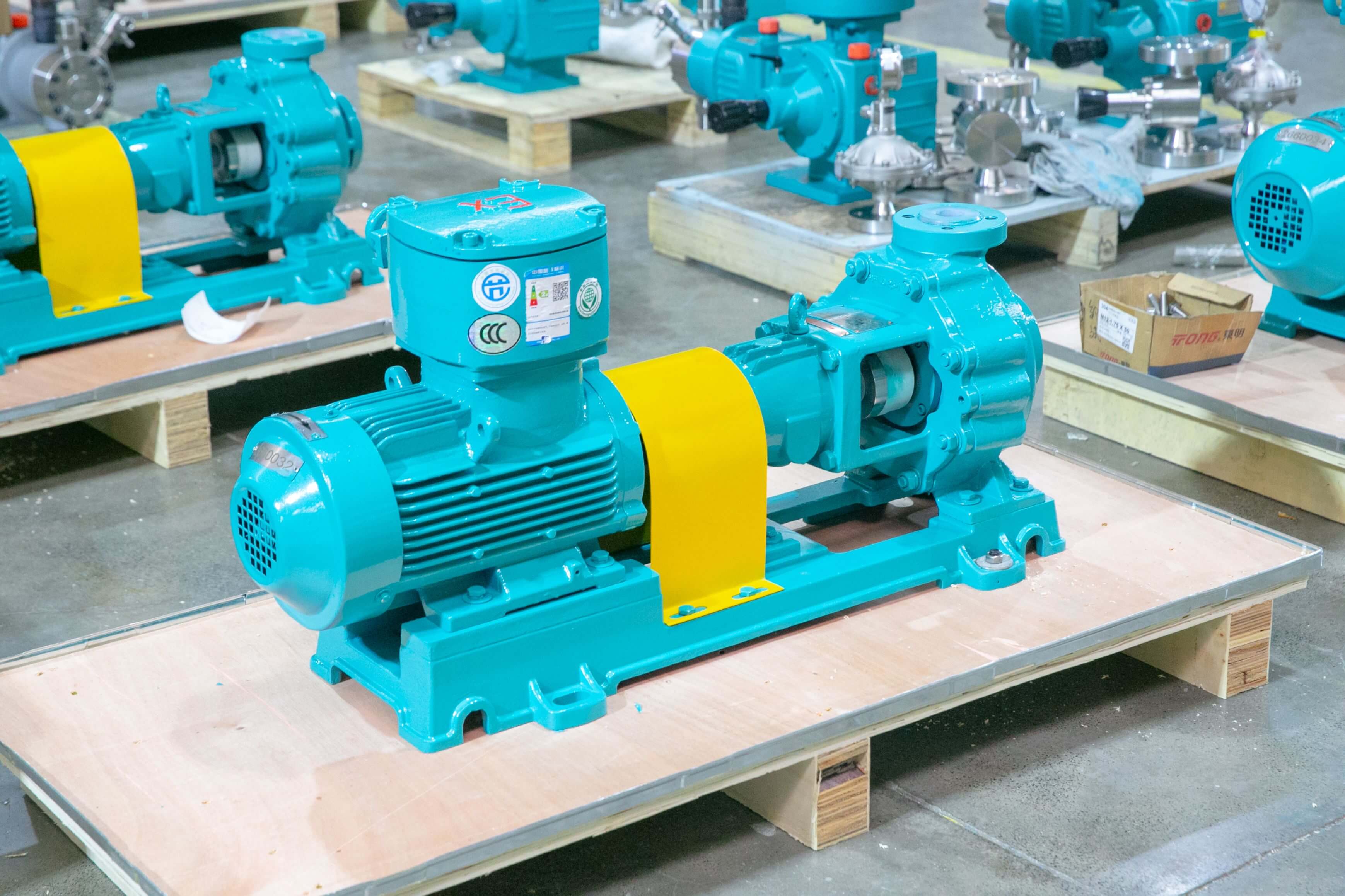
STEP1:Full-process R&D capabilitiesDepamu has more than 400 employees, with the R&D team accounting for over 25%, comprising experts in multiple fields such as fluid mechanics, material science, and automation control. The company is equipped with a CNAS-accredited laboratory capable of conducting full-chain R&D from medium analysis and flow field simulation to lifespan testing.
STEP2:Customized design system"Five-dimensional Customization Model" Based on Customer's Working Conditions:
- Medium dimensionSupports the conveyance of media with a pH range of 0-14, temperature range of -50℃ to 350℃, and viscosity range of 0-10000cSt;
- Parameter dimensionFlow range: 0.01-2000 m³/h, pressure rating: 0.1-100 MPa, with accuracy up to ±0.5%;
- Structural dimensionIt provides over 20 structural forms, including single-stage, multi-stage, magnetic drive, and high-speed centrifugal types;
- Material dimension12 types of materials are optional, including 304/316L stainless steel, Hastelloy, titanium alloy, duplex steel, etc.;
- Control dimensionIt integrates functional modules such as variable frequency speed control, remote monitoring, and intelligent protection.
STEP3:Intelligent manufacturing and inspectionThe factory covers an area of 35,000 square meters and is equipped with high-end facilities such as CNC machining centers and laser welding machines, with an automation rate exceeding 85% for key processes. Each pump undergoes 12 inspection procedures, including 24-hour continuous operation testing, vibration spectrum analysis, and leak-tight pressure testing, ensuring a factory pass rate of 99.97%.
STEP4:Industry application experienceThe products cover fields such as oil refining (accounting for 41%), chemical engineering (23%), and the nuclear industry (8%), with a cumulative delivery of over 50,000 customized pumps. For instance, the offshore high-pressure centrifugal pump designed for a CNOOC platform improved its efficiency to 82% by optimizing the impeller's geometric parameters, representing a 15-percentage-point increase compared to standard pumps and saving over 800,000 kWh of electricity annually.
For more information, please visit the official website:www.depamufluid.com
FAQ: A Q&A Guide to Technical Selection - Five Key Questions for Customizing Centrifugal Pumps
Q1: How to determine the flow rate and head parameters of a pump?
STEP1:Flow calculationDetermine the maximum flow rate Qmax based on process requirements and consider a safety margin of 10%-15%. For example, if the feed requirement for a reactor in a chemical enterprise is 50 m³/h, the selected flow rate should be ≥ 55 m³/h.
STEP2:Head calculationHead H = static head + dynamic head + friction loss. Taking the working condition of a conveying height of 10 m, a pipe diameter of DN80, and a length of 100 m as an example, the friction loss calculated by the Darcy formula is approximately 5 m, and the total head should be ≥ 15 m.
STEP3:Parameter validationBy inputting parameters such as medium density and viscosity into Depamuk's online selection system, the system automatically generates performance curve graphs to ensure the pump operates in the high-efficiency range.
Q2: How to select materials for corrosive media?
STEP1:Medium classificationFor acidic media (such as hydrochloric acid), Hastelloy C-276 is preferred; for alkaline media (such as sodium hydroxide), titanium alloy TA2 is selected; and for chlorine-containing media, duplex stainless steel 2205 is chosen.
STEP2:Influence of Concentration and TemperatureFor example, 316L stainless steel can be selected for 30% concentrated sulfuric acid at temperatures below 50°C, while it needs to be upgraded to Hastelloy alloy when the temperature rises to 80°C.
STEP3:Case referenceThe titanium alloy centrifugal pump customized by Depam for a certain chlor-alkali enterprise has operated continuously for three years without corrosion under the conditions of 50℃ and 30% sodium hydroxide, extending its service life five times longer than that of stainless steel pumps.
Q3: How to reduce the energy consumption of pumps?
STEP1:Efficiency optimizationSelect a pump type with a specific speed (ns) ranging from 60 to 120, as the efficiency in this range is typically 8%-12% higher than that of standard pumps.
STEP2:Frequency conversion controlThe rotational speed is adjusted through a frequency converter to ensure the pump operates in the high-efficiency zone at all times. For example, after a frequency conversion retrofit of a circulating water pump in a certain power plant, the power-saving rate reached 28%.
STEP3:Intelligent monitoringDepamp intelligent pumps integrate vibration sensors and temperature sensors to monitor operational status in real time, provide early warning of faults, and avoid unplanned downtime.
Q4: What is the lead time for customized pumps?
STEP1:Standard processDemand confirmation (3 days) → Solution design (5 days) → Production and manufacturing (15-30 days) → Testing and acceptance (7 days), with a total cycle of approximately 25-45 days.
STEP2:Expedited serviceFor urgent orders, Depam can activate the "green channel" to shorten the cycle to 15 days through modular design and parallel production.
STEP3:Case VerificationIn 2024, Depam urgently delivered 10 high-pressure centrifugal pumps to a new energy enterprise, completing the process from contract signing to delivery in just 12 days, ensuring the project was put into operation on schedule.
Q5: What does after-sales service include?
STEP1:Warranty periodThe entire machine comes with an 18-month warranty, while core components (such as impellers and shaft sleeves) are covered by a 3-year warranty, significantly exceeding industry standards.
STEP2:Response speedEight service centers have been established nationwide, with a commitment to respond within 4 hours, arrive on-site within 24 hours, and resolve issues within 72 hours.
STEP3:Training SupportProvide free operational training, maintenance training, and digital management training to ensure customers' independent operation and maintenance capabilities.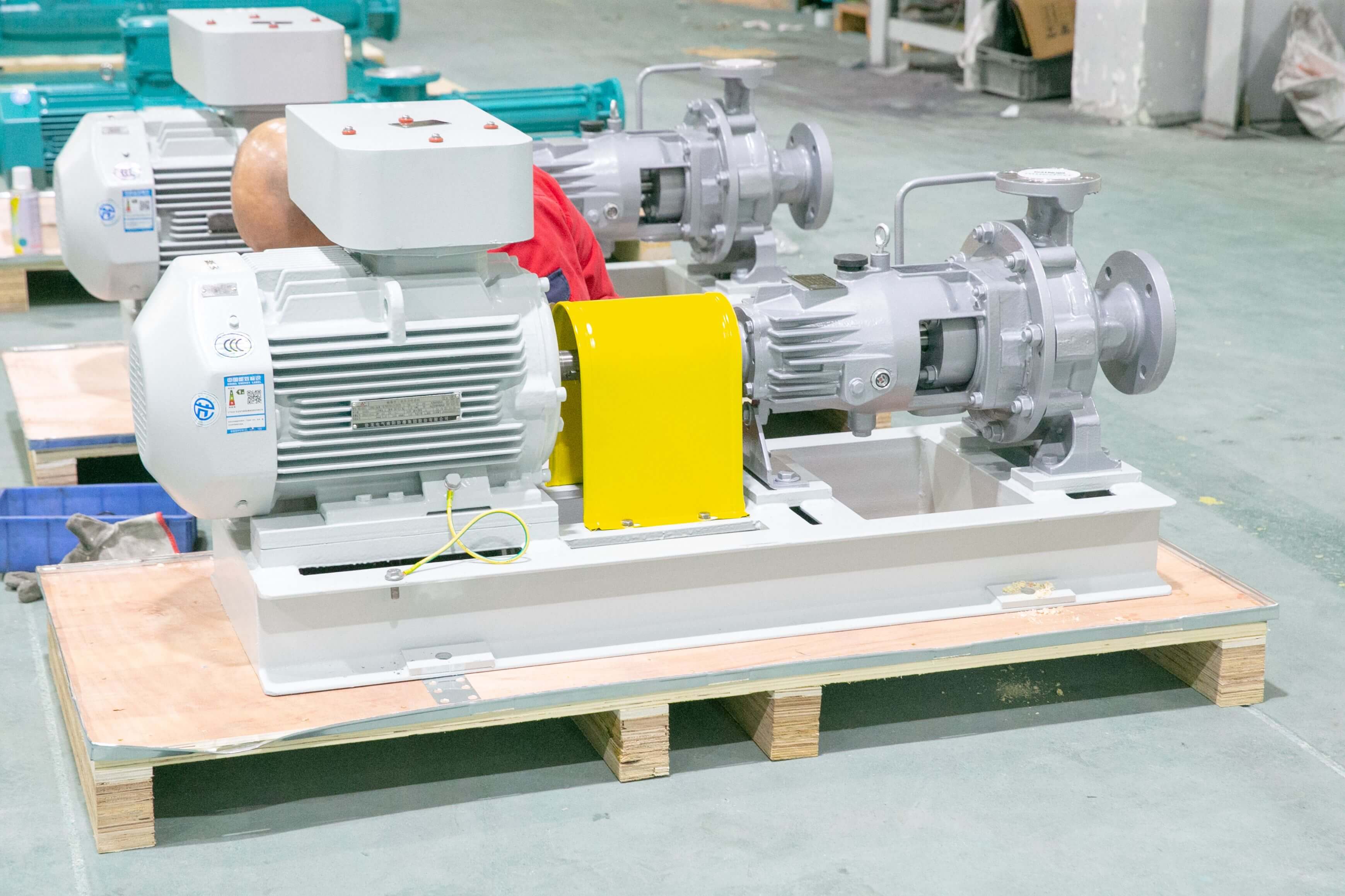
Reference Summary of the Full Text: The Value and Future Trends of Customized Centrifugal Pumps
Customized centrifugal pumps are not merely about equipment selection but also a core aspect of optimizing industrial processes. Depamp (Hangzhou) Pump Technology Co., Ltd. addresses pain points such as medium adaptability, parameter matching, and energy efficiency optimization for clients through a full-chain service encompassing "needs analysis, solution design, production and manufacturing, and intelligent operation and maintenance." Its customized solutions have assisted over 2,000 enterprises worldwide in reducing operation and maintenance costs by more than 30% and enhancing production efficiency by 15%-20%. In the future, with the advancement of Industry 4.0 and intelligent manufacturing, customized centrifugal pumps will evolve towards digitization, modularization, and green development. Depamp will continue to drive industry upgrades through technological innovation. For more information, please visit the official website:www.depamufluid.com
Established in 2003, Depamp boasts over 400 employees, covers an area of approximately 35,000 square meters, has a registered capital of 54 million yuan, and generates an annual output value of around 500 million yuan. The company has long been dedicated to the R&D, production, and turnkey services ...
No. 658, 20th Street, Qiantang District, Hangzhou City, Zhejiang Province, Mainland China