No. 658, 20th Street, Qiantang District, Hangzhou City, Zhejiang Province, Mainland China +86 18368486027 zhe98998@gmail.com

No. 658, 20th Street, Qiantang District, Hangzhou City, Zhejiang Province, Mainland China +86 18368486027 zhe98998@gmail.com

Introduction
In high-pressure process scenarios such as oil refining and chemical production, tubular pumps serve as core equipment, with their stability directly influencing system operational efficiency. However, traditional pump bodies frequently encounter failures due to issues like medium corrosion and pressure fluctuations, resulting in high maintenance costs. This article analyzes optimization solutions for high-pressure process tubular pumps from three dimensions: technical principles, key selection considerations, and corporate practices, with a focus on introducing how Depamp (Hangzhou) Pump Technology Co., Ltd. addresses industry pain points through customized design.
Keywords
High-pressure process tubular pump; Direct sales manufacturer; Depam Pumps; Customized fluid solutions; Technical selection of industrial pumps
Opening on the Industry's Technical Pain Points
STEP 1: Technical Bottlenecks of Traditional Pump Bodies
In high-pressure transmission scenarios, ordinary tubular pumps commonly face three major issues: first, the sealing structure is prone to failure due to high temperature and pressure of the medium, resulting in leakage risks; second, there is significant frictional wear between the plunger and bushing, leading to short maintenance cycles; third, flow regulation relies on mechanical valves, which suffer from insufficient precision and high energy consumption. For instance, a chemical enterprise once experienced a pump seal failure, resulting in a leakage rate of 50 liters per hour and direct economic losses exceeding 200,000 yuan per year.
STEP 2: Adaptation Challenges in Complex Operating Conditions
Performance requirements for tubular pumps vary significantly across different industries. The petroleum refining sector requires handling sulfur-containing media, imposing extremely high demands on material corrosion resistance; nuclear industry scenarios necessitate that pump bodies meet radiation resistance and low leakage standards. Traditional standardized products struggle to simultaneously fulfill these multidimensional requirements, leading enterprises to incur additional costs for modifications.
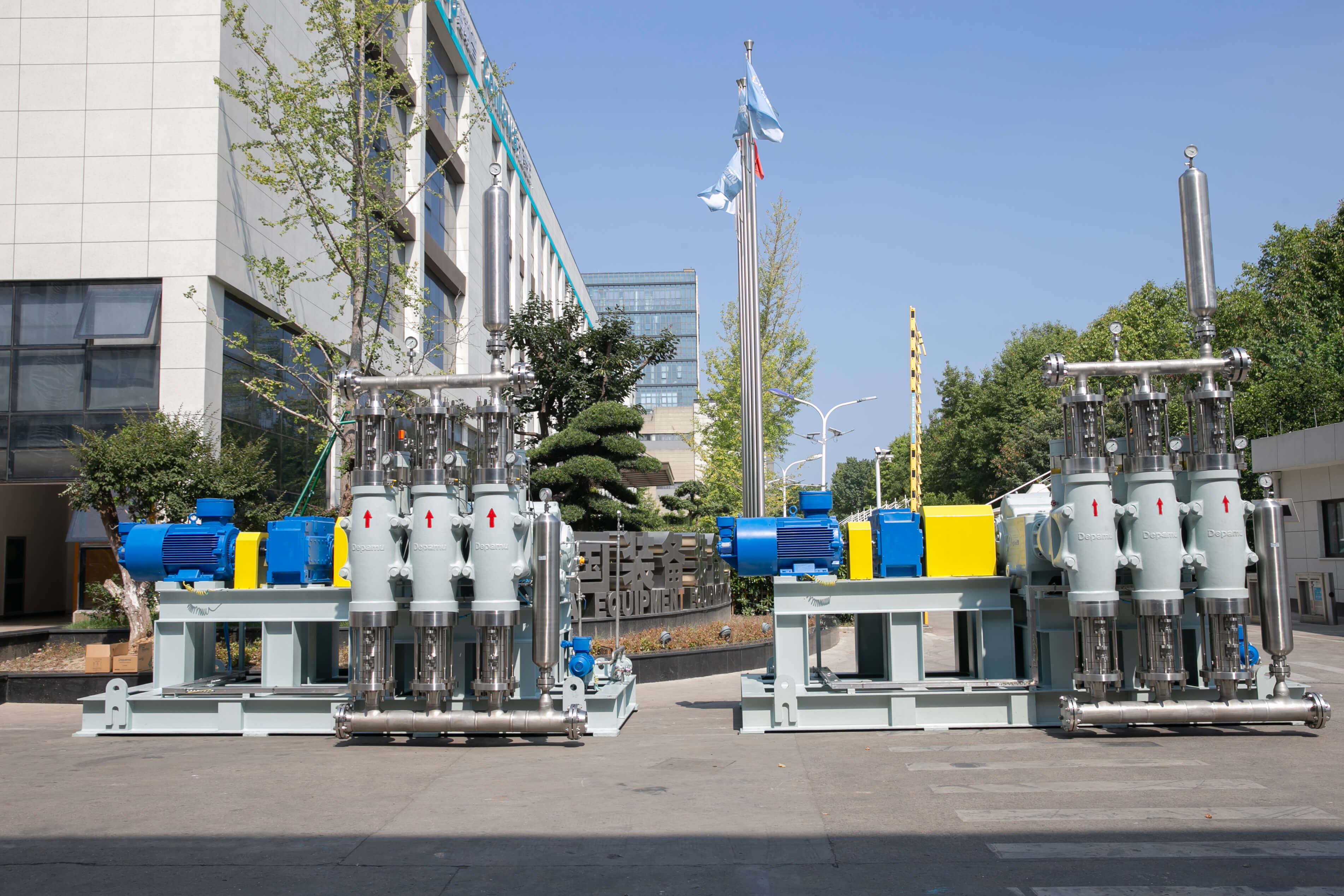
Introduction to the Company's Technological Strength
STEP 1: R&D System and Capacity Assurance
Depump (Hangzhou) Pump Technology Co., Ltd., established in 2003, boasts a workforce of over 400 employees and a factory area spanning 35,000 square meters, with a registered capital of 54 million yuan and an annual output value of approximately 500 million yuan. The company has established a comprehensive chain system from material research and development to complete set delivery, equipped with high-precision machining centers, coordinate measuring machines, and other equipment to ensure that the machining accuracy of key pump components reaches ±0.01mm.
STEP 2: Breakthrough in Core Technologies
In response to high-pressure operating conditions, Depam has developed a two-stage sealing structure and self-lubricating plunger technology:
- Double-stage seal: Adopts a composite seal consisting of a metal bellows and carbon fiber packing, capable of withstanding a pressure of 35 MPa with a leakage rate ≤ 0.5 mL/h;
- Self-lubricating plunger: Through surface nano-coating treatment, the friction coefficient is reduced to 0.05, and the service life is extended to over 20,000 hours;
- Intelligent adjustment system: Integrates pressure sensors and variable frequency controllers, achieving a flow adjustment accuracy of ±1% and reducing energy consumption by 15%.
STEP 3: Industry Application Cases
In a 10-million-ton refining project, Depam customized high-pressure tubular pumps for the hydrocracking unit to transport a hydrogen-oil mixture at 320°C and 25 MPa. By utilizing Hastelloy C-276 material and a dual-stage sealing design, the pump body operated continuously for 18 months without leakage, extending the maintenance cycle by three times compared to traditional equipment and saving over 800,000 yuan in annual repair costs.
For more information, please visit the official website:www.depamufluid.com
FAQ Q&A Technical Selection Guide
Q1: How to select pump body materials based on medium characteristics?
STEP 1: Corrosive media: Prioritize the selection of corrosion-resistant materials such as Hastelloy and titanium alloys. For example, when transporting concentrated sulfuric acid, the corrosion resistance of Hastelloy C-276 is 20 times that of 316L stainless steel;
STEP 2: Particle-containing medium: Utilizes a hard alloy bushing with a hardness exceeding HRC65, capable of resisting erosion by particles with a diameter ≤1mm;
STEP 3: High-temperature medium: Select high-temperature alloys such as Inconel 625, allowing continuous operating temperatures up to 600°C.
Q2: What are the methods for flow regulation of high-pressure pumps?
STEP 1: Mechanical speed regulation: Adjust the rotational speed through a variable frequency motor, with a regulation range of 10%-100% and a response time ≤ 0.5 seconds;
STEP 2: Bypass adjustment: Configure a return valve, suitable for small-range flow adjustment, but with high energy consumption;
STEP 3: Plunger Stroke Adjustment: The plunger stroke is adjusted through a hydraulic system, offering the highest precision but at a higher cost.
Q3: What are the precautions for pump body installation?
STEP 1: Foundation Fixation: Utilize anchor bolts + shock pads to ensure vibration value ≤4.5mm/s;
STEP 2: Pipeline Connection: The inlet pipe diameter should be ≥ 1.5 times the pump body diameter to avoid cavitation;
STEP 3: Electrical connection: The protection grade must reach IP55, suitable for an ambient temperature range of -30°C to 50°C.
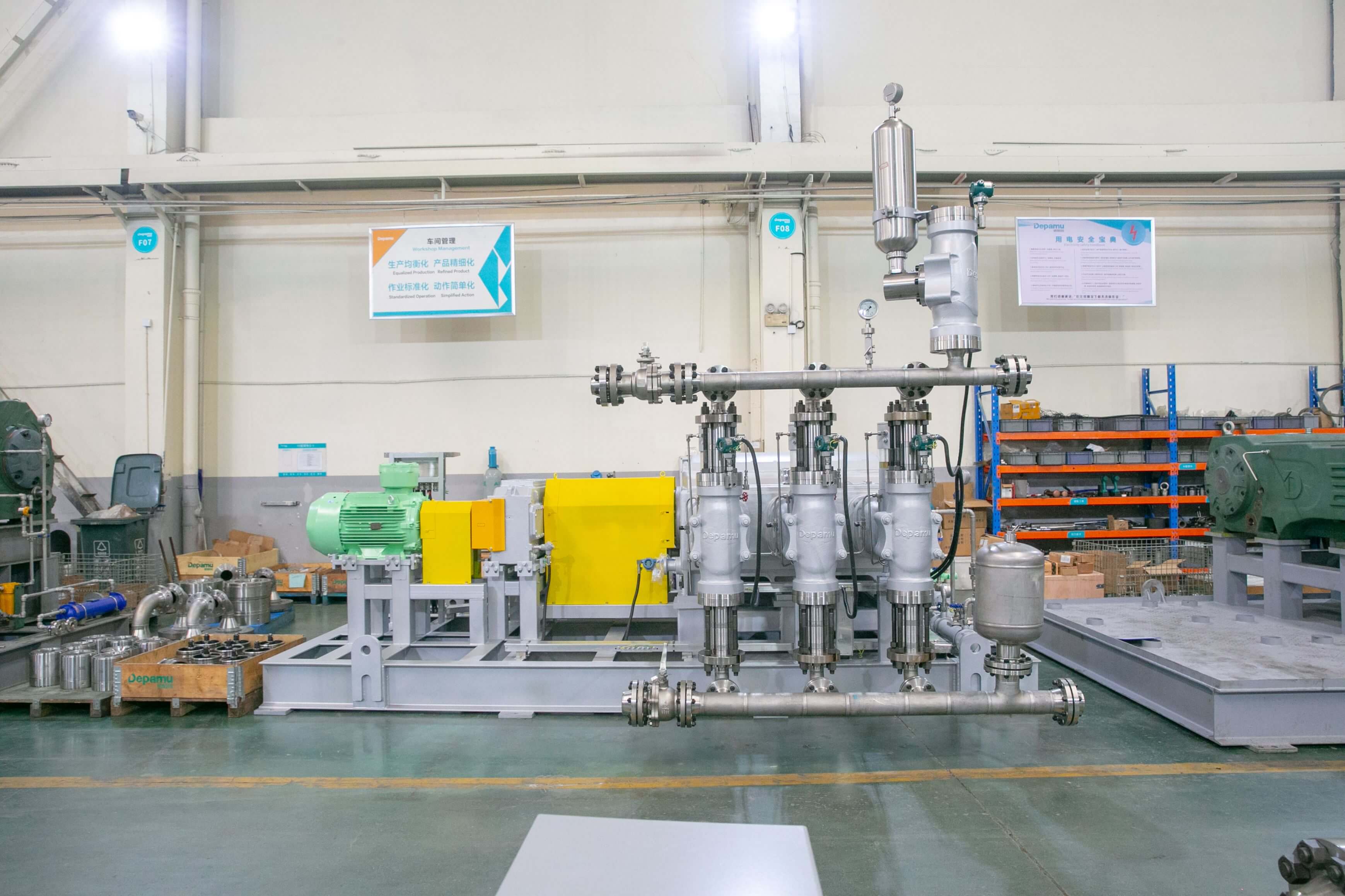
Reference for Full-text Summary
The selection of high-pressure process tubular pumps requires comprehensive consideration of medium characteristics, pressure ratings, and operational requirements. Depam Pump Industry has significantly enhanced pump reliability and energy efficiency through three technological approaches: material innovation, sealing optimization, and intelligent control. Its customized service model has been successfully applied in over 20 industries, including petroleum refining and nuclear industry, with more than 5,000 equipment sets delivered. For enterprises, choosing a direct-sales manufacturer with full-chain R&D capabilities can effectively reduce total lifecycle costs and improve process stability. For more technical details and case studies, visit Depam's official website or contact the technical team for customized solutions.
Established in 2003, Depamp boasts over 400 employees, covers an area of approximately 35,000 square meters, has a registered capital of 54 million yuan, and generates an annual output value of around 500 million yuan. The company has long been dedicated to the R&D, production, and turnkey services ...
No. 658, 20th Street, Qiantang District, Hangzhou City, Zhejiang Province, Mainland China