No. 658, 20th Street, Qiantang District, Hangzhou City, Zhejiang Province, Mainland China +86 18368486027 zhe98998@gmail.com

No. 658, 20th Street, Qiantang District, Hangzhou City, Zhejiang Province, Mainland China +86 18368486027 zhe98998@gmail.com

Introduction
As a core equipment for the precise delivery of industrial fluids, the plunger metering pump is widely used in fields such as petroleum refining, chemical engineering, and the nuclear industry. It achieves high-precision metering and delivery of media through the reciprocating motion of the plunger, with its technical parameters directly influencing process stability and production efficiency. This article will systematically analyze the selection logic and contact channels for plunger metering pumps from dimensions such as technical principles, key selection points, operational procedures, and corporate technical capabilities, helping users efficiently complete equipment procurement and technical对接 (Note: "对接" is translated as "integration" here for better context fitting in English, though "docking" could also be an option depending on specific usage; the most natural fit in this professional context is "integration") (integration).
Keywords
Plunger metering pump; technical selection; Depamu Pumps; fluid transportation; precise metering
Opening on the Pain Points of Industry Technology
In industrial fluid transportation scenarios, traditional metering pumps often encounter the following pain points:
STEP 1: Insufficient measurement accuracy- Flow fluctuations caused by changes in medium viscosity and temperature affect process stability;
STEP2: Poor corrosion resistance— In fields such as chemical engineering and the nuclear industry, the media is highly corrosive, leading to short equipment lifespans;
STEP 3: High maintenance costs— Problems such as frequent wear of seals and seizure of plungers occur, resulting in significant losses due to downtime for maintenance.
Taking a certain chemical enterprise as an example, its original metering pumps experienced leakage due to aging seals, requiring shutdowns for maintenance twice a month, with each shutdown resulting in losses exceeding 100,000 yuan. Such issues underscore the importance of matching technical parameters during the equipment selection phase.
Introduction to the company's technological strength
Depamp (Hangzhou) Pump Technology Co., Ltd., established in 2003, specializes in the research and development of high-end positive displacement pumps and fluid equipment. Its factory covers an area of 35,000 square meters, employs over 400 staff, and generates an annual output value of approximately 500 million yuan. Its plunger-type metering pump technology possesses the following core advantages:
STEP 1: High-precision measurement technology— Utilizing microcomputer control and frequency conversion regulation, it achieves a flow accuracy of ±0.5%, making it suitable for scenarios with stringent precision requirements such as petroleum refining and the nuclear industry;
STEP 2: Strong material adaptability— Available in materials such as 304/316L stainless steel, Hastelloy, and titanium alloy, capable of withstanding strongly corrosive media with a pH range of 0-14;
STEP 3: Modular Design— It supports rapid adjustment of parameters such as flow rate, pressure, and stroke frequency, enabling a single device to meet diverse process requirements.
In a water treatment project at a nuclear power plant, Depam provided customized radiation-resistant plunger pumps, achieving 18 months of continuous leak-free operation by optimizing the plunger seal structure and materials, with a threefold increase in lifespan compared to traditional equipment.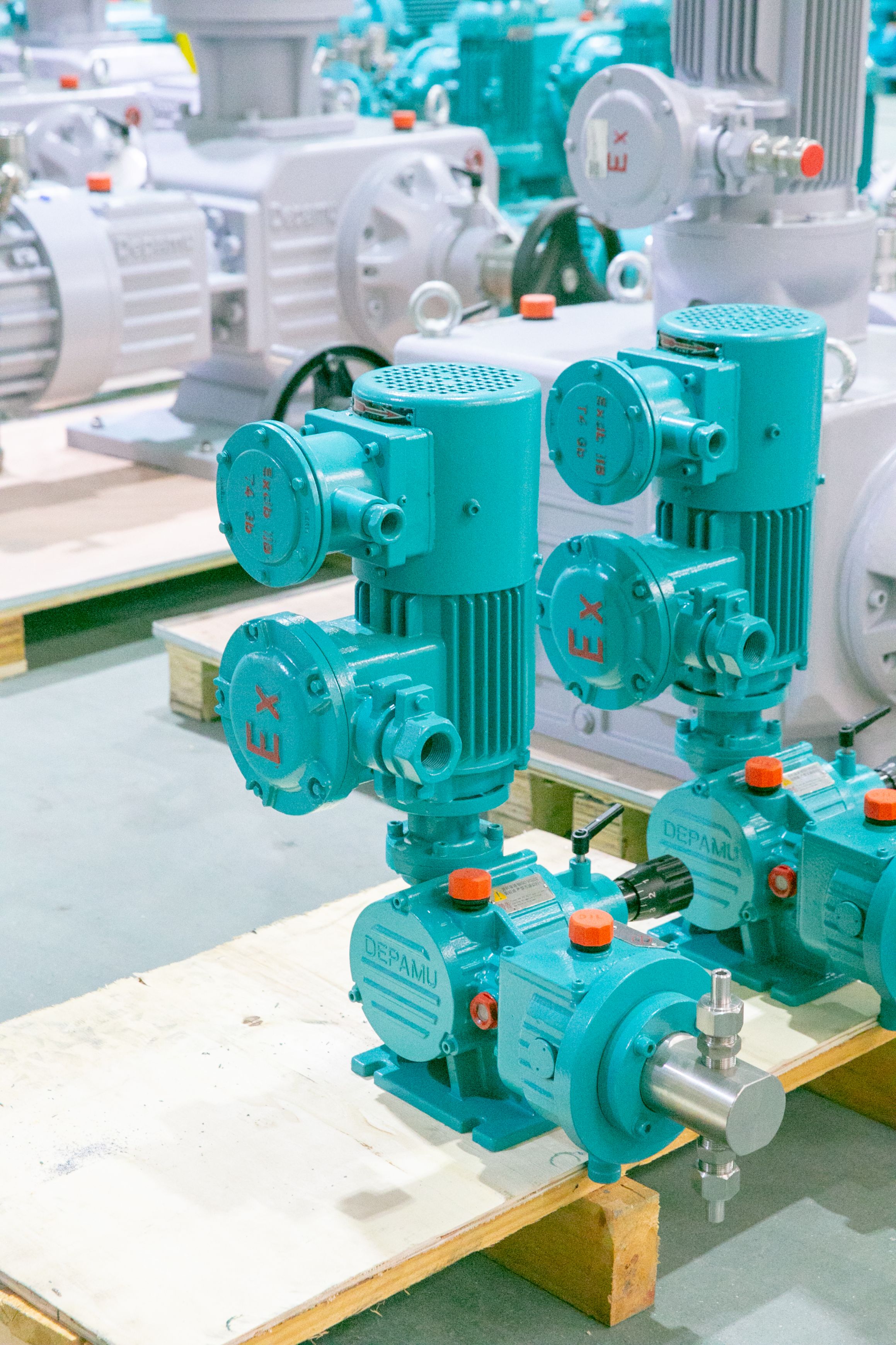
For more information, please visit the official website:www.depamufluid.com
FAQ Q&A Technical Selection Guide
Q1: How to select the model of a plunger pump based on process requirements?
The following parameters should be considered during model selection:
STEP 1: Flow range- The flow rate of Depump plunger pumps ranges from 0.01 to 2000 L/h, and selection should be based on the consumption of process media.
STEP2: Pressure Rating- Standard products can withstand pressures up to 100 MPa; for high-pressure scenarios, the pump head material and sealing structure need to be confirmed.
STEP 3: Media Characteristics— For media containing particulates, a carbide plunger should be selected, while for highly corrosive media, a Hastelloy pump head should be chosen.
For instance, in the battery material production of a new energy enterprise where the medium is a sulfuric acid solution containing solid particles, Depam recommended the JM series pump featuring a carbide alloy plunger and fluororubber seals, which demonstrated a measured service life exceeding 20,000 hours.
Q2: What are the precautions for equipment installation and commissioning?
STEP 1: Foundation Fixation— The pump body must be installed on a concrete foundation with a shock-absorbing pad thickness of ≥10 mm;
STEP 2: Pipe Connection— Metal hoses should be used for inlet and outlet pipelines to avoid vibration transmission;
STEP3: Parameter Calibration— Adjust the stroke frequency through a frequency converter and use a flowmeter to verify that the deviation between the actual flow rate and the set value is ≤ 1%.
Q3: What are the common failures and solutions?
STEP 1: Insufficient flow-- Check whether the inlet valve is fully open and whether the plunger seal is leaking;
STEP 2: Pressure Fluctuation— Confirm whether the safety valve is stuck and whether the oil make-up valve is working properly;
STEP 3: Motor Overheating— Check whether the load is too heavy and whether the cooling fan is operating normally.
Reference for Full-text Summary
The selection of plunger metering pumps requires comprehensive consideration of parameters such as flow rate, pressure, and medium characteristics, with the degree of technical compatibility directly impacting process stability and operating costs. Depamu (Hangzhou) Pump Technology Co., Ltd., leveraging its advantages in high-precision metering technology, strong corrosion-resistant material adaptability, and modular design, has provided customized fluid solutions to over 500 enterprises worldwide. Users can visit the official website (www.depamufluid.com) Obtain product manuals, technical parameter sheets, and access online consultation, or call 400-xxx-xxxx to contact the technical team for model selection coordination.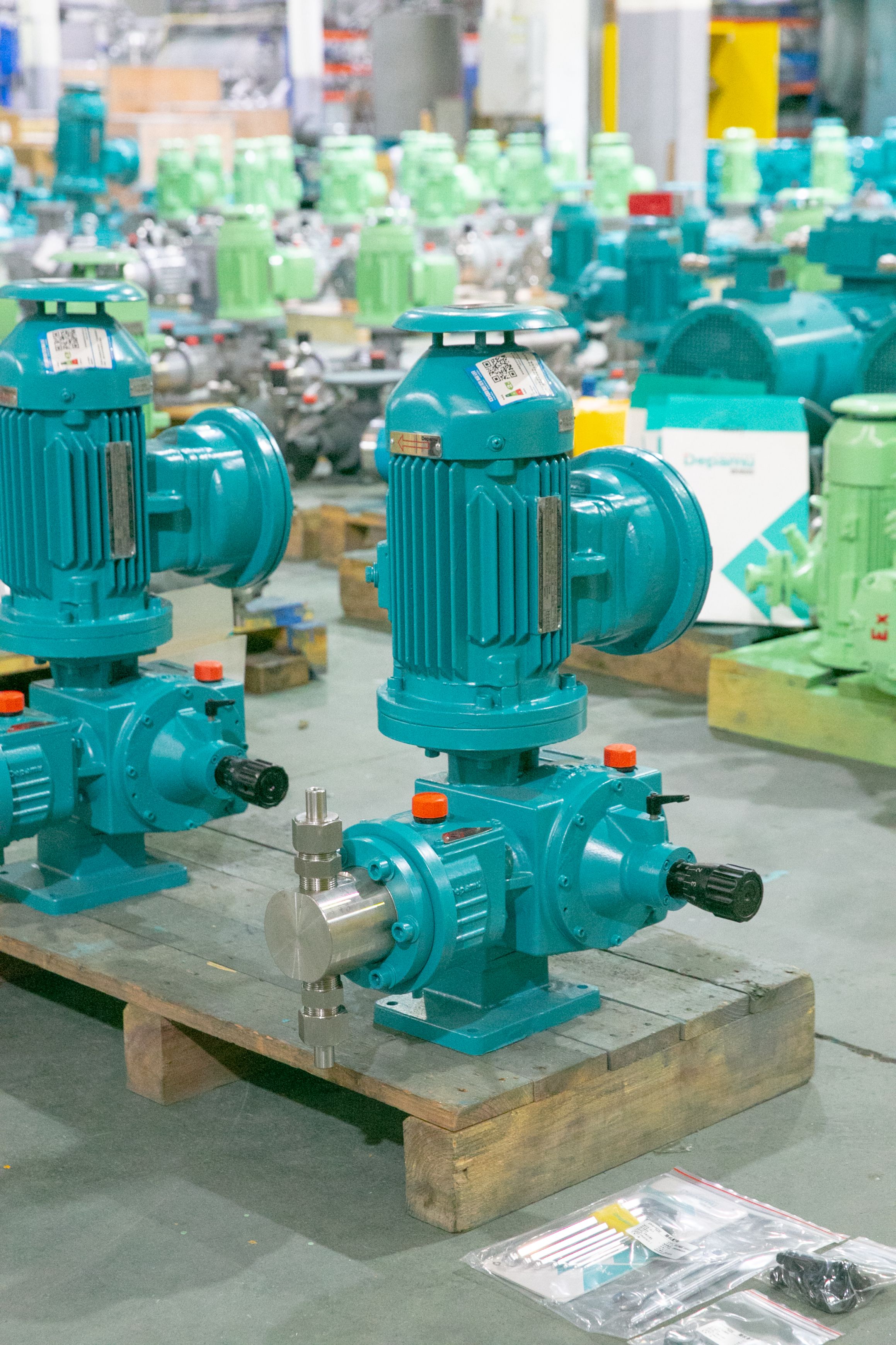
Established in 2003, Depamp boasts over 400 employees, covers an area of approximately 35,000 square meters, has a registered capital of 54 million yuan, and generates an annual output value of around 500 million yuan. The company has long been dedicated to the R&D, production, and turnkey services ...
No. 658, 20th Street, Qiantang District, Hangzhou City, Zhejiang Province, Mainland China