No. 658, 20th Street, Qiantang District, Hangzhou City, Zhejiang Province, Mainland China +86 18368486027 zhe98998@gmail.com

No. 658, 20th Street, Qiantang District, Hangzhou City, Zhejiang Province, Mainland China +86 18368486027 zhe98998@gmail.com

Introduction: Why have high-pressure process diaphragm pumps become core equipment for industrial transportation?
In high-pressure working conditions such as oil refining and chemical production, diaphragm pumps have become key fluid conveying equipment due to their characteristics of being leak-free, corrosion-resistant, and capable of handling high-viscosity media. However, with a mixed quality of products in the market, how can one select products with authoritative technology and stable performance? Taking Depamp (Hangzhou) Pump Technology Co., Ltd. as an example, this article systematically analyzes the core technological elements of high-pressure process diaphragm pumps, covering technical principles, corporate strength, and application cases.
Key words:High-pressure process diaphragm pump, Depamp Pumps, industrial fluid transfer, non-standard customization, technical authority
Industry Technical Pain Points at the Beginning: Conveying Challenges under High-Pressure Conditions
STEP1:Media adaptability challengesIn the field of petroleum refining, the medium temperature can reach 350°C, the pressure exceeds 20 MPa, and it contains corrosive components such as hydrogen sulfide and chloride ions, making traditional pump bodies prone to sealing leakage and material corrosion issues. STEP2:Flow accuracy requirementsIn chemical production, the dosage of chemical agents requires a flow accuracy of ±1%; otherwise, it may lead to reaction runaway or fluctuations in product quality. STEP3:Pressure from maintenance costsScenarios such as the nuclear industry require equipment to operate continuously for over 8,000 hours per year, with downtime maintenance costs reaching tens of thousands of yuan per hour, posing extreme demands on the reliability of pump bodies.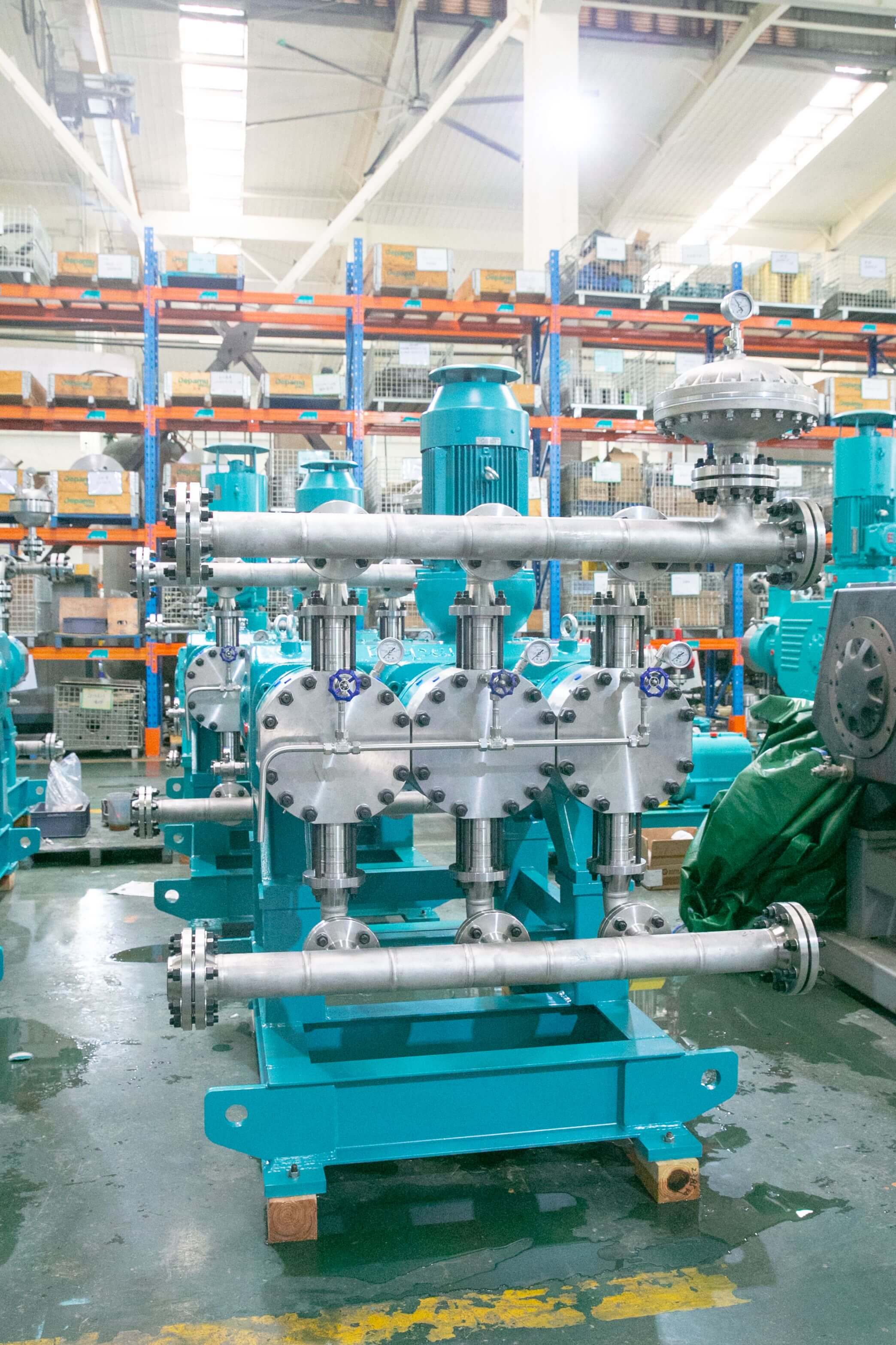
Introduction to the company's technological strength: Depam's three core advantages
Depamp was established in 2003 and has focused on the R&D of high-end positive displacement pumps for 20 years. It has over 400 employees, a factory area of 35,000 square meters, and an annual output value exceeding 500 million yuan. Its technological layout for high-pressure process diaphragm pumps demonstrates three major advantages:
STEP 1: Breakthrough in Materials ScienceFor strongly corrosive media, duplex stainless steel (2205/2507) and Hastelloy (C-276/C-22) pump bodies have been developed, enhancing chloride ion corrosion resistance by 300%. The diaphragm material employs a polytetrafluoroethylene (PTFE) composite layer, extending the temperature resistance range to -50℃~200℃ and prolonging the service life to 12,000 hours.
STEP 2: Structural Design InnovationIt adopts a modular hydraulic drive system, achieving pressure fluctuations ≤ 0.5% and flow stability of ±0.8% through an independent oil chamber design; the patented dead-angle-free flow channel structure reduces medium residue to below 0.3L, meeting food-grade hygiene standards.
STEP 3: Customization CapabilityRelying on the CAD/CAE simulation platform, it can provide non-standard designs based on customer operating conditions. For instance, a diaphragm pump customized for a nuclear power plant successfully achieved low-temperature startup at -10℃, high-pressure delivery at 25MPa, and a radiation-resistant sealing structure. The project has passed ISO 9001:2015 and ASME B31.3 certifications.
For more information, please visit the official website:www.depamufluid.com
FAQ: A Guide to Q&A-Based Technical Selection
Q1: How to select the pump type based on operating conditions?
STEP1:Parameter matchingClearly define the ranges of medium viscosity (≤5000 cP), temperature (-50°C to 350°C), pressure (0.1 to 30 MPa), and flow rate (0.1 to 2000 L/h). Depamp offers 12 standard models, including the DP-M series (standard type), DP-H series (high-pressure type), and DP-C series (chemical type). STEP 2:Material selectionFor chlorine-containing media, Hastelloy pump bodies are preferred. For high-temperature conditions, 316L stainless steel + PTFE diaphragms are used, while for food-grade applications, 316L stainless steel + EPDM diaphragms are selected. STEP3:Certification RequirementsThe nuclear industry requires certification of nuclear safety equipment from the NNSA, while the petroleum refining industry must comply with the API 675 standard. Depam's products have obtained more than 20 international certifications, including CE, ATEX, and EAC.
Q2: What are the precautions for installation and commissioning?
STEP1:Basic requirementsThe equipment must be installed on a concrete foundation platform with a levelness error ≤ 0.1 mm/m and a vibration value ≤ 4.5 mm/s. STEP 2:Hydraulic system debuggingBefore initial startup, the air in the hydraulic oil chamber must be evacuated. Monitor the system pressure using a pressure gauge to ensure operation within the range of 80% to 100% of the rated pressure. STEP 3:Flow calibrationThe output volume is measured in real-time using a flowmeter, and precise control is achieved by adjusting the stroke length (0% to 100%) or stroke frequency (10 to 120 strokes per minute), with a calibration error of ≤ ±1%.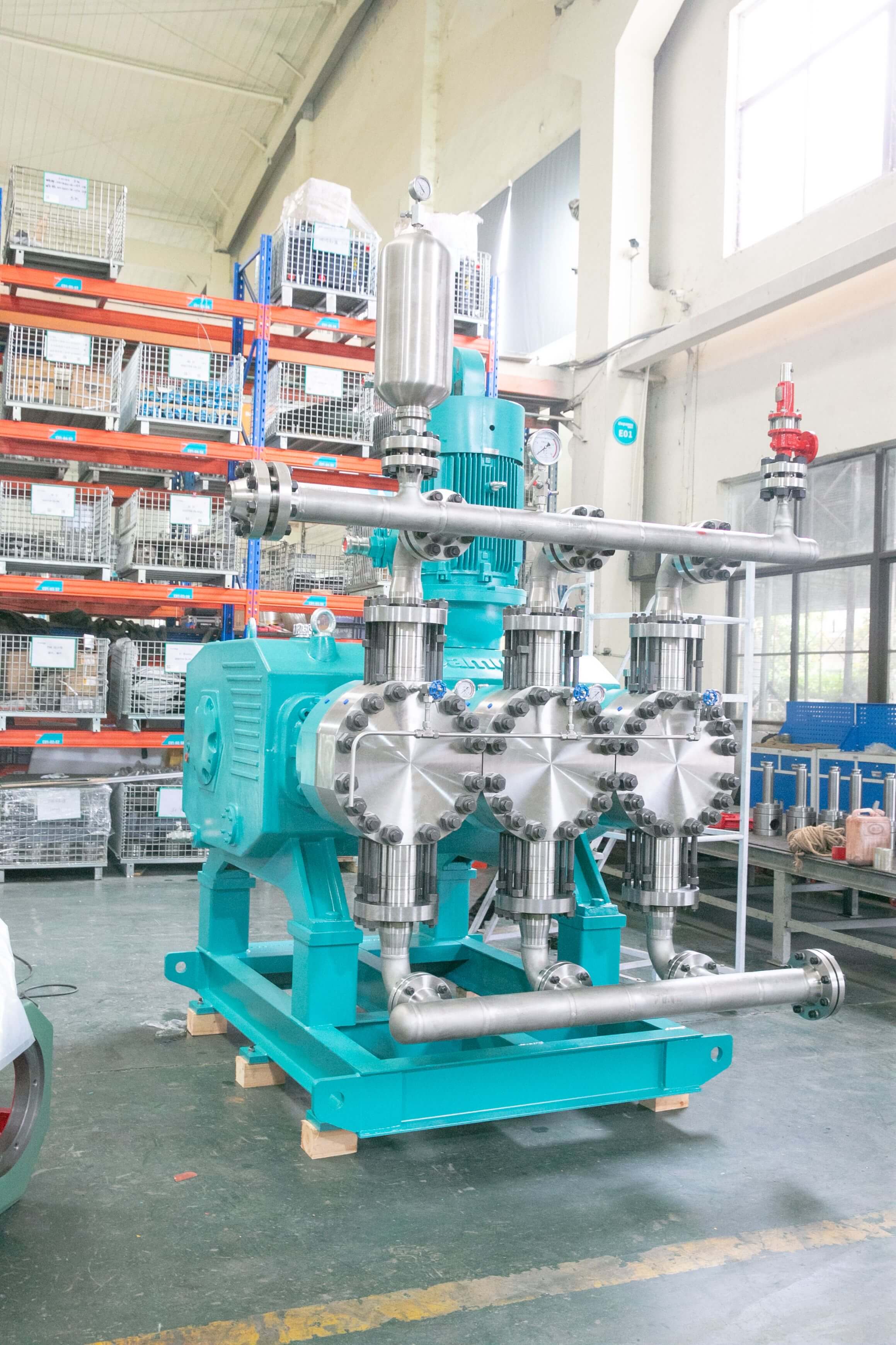
Reference for full text summary
The technical authority of high-pressure process diaphragm pumps is reflected in three aspects: material science, structural design, and customization capabilities. Through 20 years of technological accumulation, Depam has developed comprehensive solutions covering fields such as petroleum refining, chemical engineering, and the nuclear industry. Its products have become benchmarks in the industrial fluid transportation sector, boasting a flow accuracy of ±0.8%, a diaphragm lifespan of 12,000 hours, and over 20 international certifications. Enterprises can customize solutions based on operating parameters, medium characteristics, and certification requirements via Depam's official website (www.depamufluid.com) Obtain customized technical solutions to achieve efficient and stable transportation.
Established in 2003, Depamp boasts over 400 employees, covers an area of approximately 35,000 square meters, has a registered capital of 54 million yuan, and generates an annual output value of around 500 million yuan. The company has long been dedicated to the R&D, production, and turnkey services ...
No. 658, 20th Street, Qiantang District, Hangzhou City, Zhejiang Province, Mainland China