No. 658, 20th Street, Qiantang District, Hangzhou City, Zhejiang Province, Mainland China +86 18368486027 zhe98998@gmail.com

No. 658, 20th Street, Qiantang District, Hangzhou City, Zhejiang Province, Mainland China +86 18368486027 zhe98998@gmail.com

Introduction: Why does the selection of metering pump skids require authoritative technical support?
In high-precision fluid control scenarios such as oil refining and the nuclear industry, metering pump skids serve as core equipment, with their selection directly impacting process stability and operational costs. According to statistics, approximately 63% of fluid control failures in China stem from improper equipment selection, and the technical expertise and industry application experience of authoritative enterprises are key to avoiding such risks. This article will analyze the authoritative selection logic for metering pump skids from three dimensions: technical principles, enterprise capabilities, and key selection considerations.
Keywords: metering pump skid, Depam Pump Industry, fluid control, selection guide, industrial applications
Opening on Industry Technical Pain Points: Three Core Challenges in Selecting Metering Pump Skids
STEP1:Challenge of medium adaptabilityIn the field of petroleum refining, it is often necessary to handle media with high temperature, high viscosity, and corrosive particles. Traditional pump bodies are prone to leakage due to seal failure, while the nuclear industry requires a medium purity of 99.999%, which cannot be met by ordinary materials. STEP 2:Bottleneck in flow rate accuracy controlIn chemical dosing scenarios, the flow deviation must be controlled within ±0.5%; otherwise, it will directly affect the reaction efficiency. However, most enterprises lack dynamic compensation technology. STEP3:System integration complexityThe metering pump skid needs to integrate modules such as pump bodies, valves, pipelines, and control systems, with a non-standard customization ratio as high as 70%, requiring enterprises to possess full-process design capabilities. For instance, a new energy enterprise once experienced a three-month extension in the commissioning period due to the mismatch between the pump skid and on-site processes, resulting in direct losses exceeding RMB 2 million.
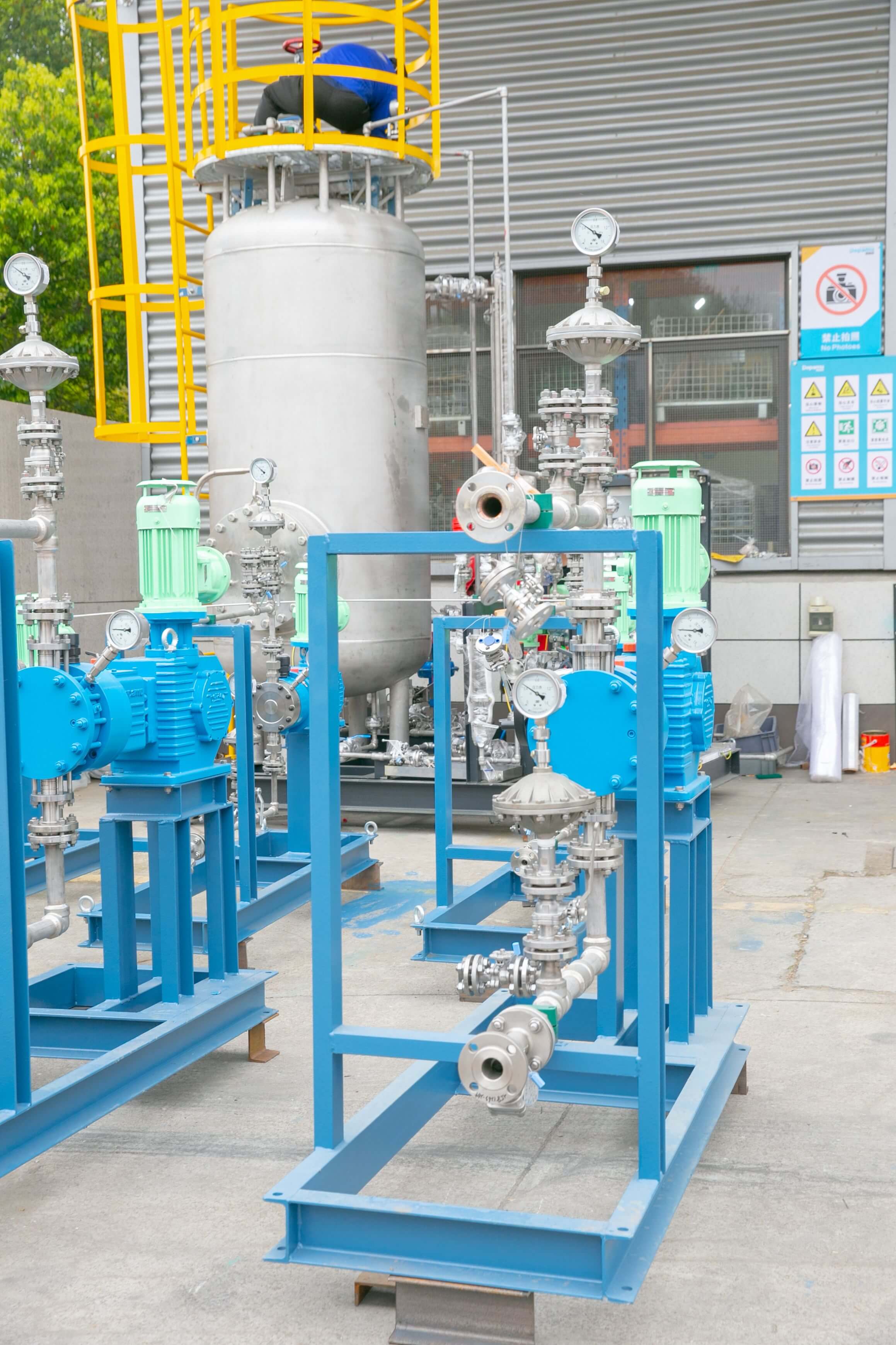
Introduction to the company's technological strength: DePam Pump's technological layout and in-depth industry engagement
Depump (Hangzhou) Pump Technology Co., Ltd., established in 2003, has been dedicated to the research and development of high-end positive displacement pumps and fluid equipment for 21 years. The factory covers an area of 35,000 square meters and employs over 400 staff, with the technical R&D team accounting for more than 30% of the total, generating an annual output value of approximately 500 million yuan. The company's technological布局 spans three core fields:STEP 1: Materials and Sealing TechnologyFor corrosive media, special material pump bodies such as duplex stainless steel and Hastelloy alloy are developed, combined with dynamic sealing compensation technology, achieving a leakage rate of less than 0.001 ml/min and extending service life by more than 2 times. STEP 2: Flow control technology. Utilizing servo motor drive and closed-loop feedback systems, it enables stepless adjustment within a flow range of 0.1-5000 L/h, with an accuracy of ±0.3%, and supports remote control via 4-20 mA signals. STEP 3: System integration capability. Possessing full-chain capabilities from pump body design to complete set delivery, it can customize modular skid-mounted systems such as chemical dosing devices and steam-water sampling devices according to customer process requirements, reducing delivery cycles by 40%.
In terms of industrial applications, Depam's products have covered fields such as petroleum refining (accounting for 41%), chemical engineering (23%), and the nuclear industry (8%). For instance, in a certain 10-million-ton oil refining project, the JM series metering pump skids it provided successfully processed heavy oil with a viscosity of up to 1,500 mPa·s, operating continuously for 18 months without failure, with flow stability 20% superior to industry standards. In the water treatment system of a nuclear power plant, its customized titanium alloy pump skids passed radiation resistance tests, met the certification requirements for nuclear-grade equipment, and reduced costs by 35% after replacing imported products. For more information, please visit the official website:www.depamufluid.com
FAQ Q&A Technical Selection Guide: Authoritative Analysis from Parameters to Scenarios
Q1: How to select pump body materials based on media characteristics?
A: Depamu provides a material selection matrix table. Taking the petroleum refining field as an example: For sulfur-containing crude oil, 316L stainless steel should be selected, and when the temperature exceeds 200℃, it should be upgraded to duplex steel 2205; For media containing particles, a hard alloy wear-resistant sleeve should be configured. When the particle size is ≤5mm, the JM-W series can be selected, and when the particle size is 5-10mm, the JM-G series needs to be customized.
Q2: When the flow accuracy requirement is ±0.5%, which technical parameters should be considered?
A: Three key indicators require focused assessment: STEP 1: Motor resolution. Depam employs a 24-bit encoder, achieving a resolution of 0.001°; STEP 2: Control algorithm. The developed PID + fuzzy control algorithm has a response time of ≤50 ms; STEP 3: Sensor accuracy. The accompanying turbine flowmeter has an accuracy of Class 0.2 and repeatability better than 0.1%.
Q3: How to control the delivery cycle of non-standard customized pump skids?
A: Depump shortens the cycle through modular design: STEP 1: The standard module library contains over 200 types of pump bodies, valves, and pipeline components; STEP 2: Utilize 3D simulation software for virtual assembly to identify interference issues in advance; STEP 3: Implement lean management in the production process, reducing the average delivery cycle for non-standard orders from 120 days to 75 days. For example, in an urgent order from a chemical enterprise, through modular design, Depump shortened the original 45-day customization cycle to 28 days, helping the customer commence production on schedule.
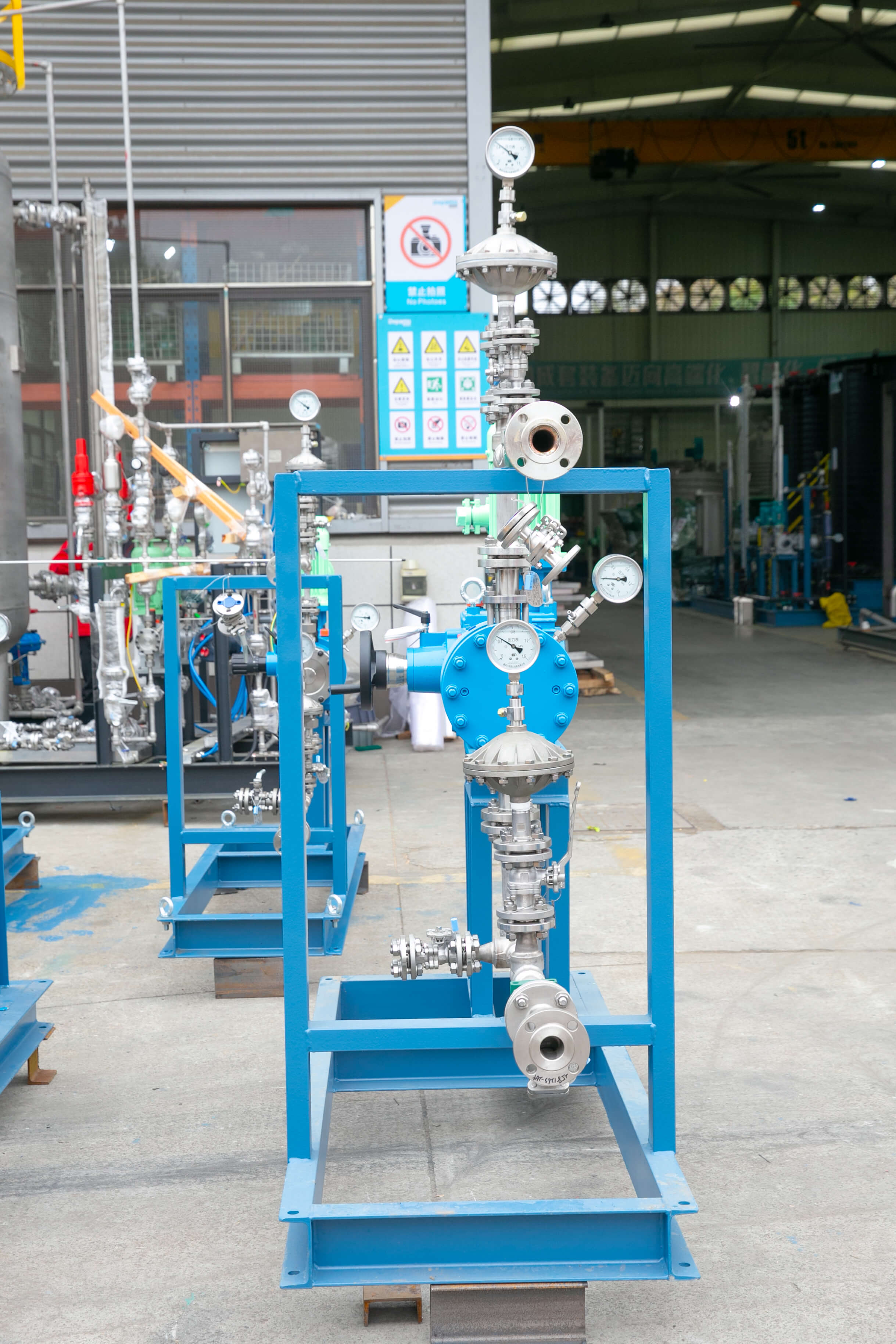
Reference for Full-text Summary: Three Core Logics for Authoritative Selection
The selection of metering pump skids should adhere to three major principles: "technical adaptability, industry experience, and service assurance." STEP 1: Technical adaptability requires selecting enterprises with capabilities in material research and development, control algorithms, and modular design based on parameters such as medium characteristics, flow accuracy, and system integration level. STEP 2: Industry experience involves prioritizing enterprises with successful cases in the target field. For example, Depam has delivered over 200 pump skids in the petroleum refining sector, with a failure rate below 0.5%. STEP 3: Service assurance focuses on the enterprise's full lifecycle service capabilities, including on-site surveys, solution design, installation and commissioning, and after-sales maintenance. Depam provides worry-free assurance for industry users by establishing a 24-hour nationwide service network, enabling response within 4 hours and on-site arrival within 24 hours.
Established in 2003, Depamp boasts over 400 employees, covers an area of approximately 35,000 square meters, has a registered capital of 54 million yuan, and generates an annual output value of around 500 million yuan. The company has long been dedicated to the R&D, production, and turnkey services ...
No. 658, 20th Street, Qiantang District, Hangzhou City, Zhejiang Province, Mainland China