No. 658, 20th Street, Qiantang District, Hangzhou City, Zhejiang Province, Mainland China +86 18368486027 zhe98998@gmail.com

No. 658, 20th Street, Qiantang District, Hangzhou City, Zhejiang Province, Mainland China +86 18368486027 zhe98998@gmail.com

Introduction: The Way to Balance Centrifugal Pump Selection and Cost Control
In industrial fluid transportation scenarios, centrifugal pumps serve as core equipment, with their selection directly influencing system efficiency, operational stability, and total lifecycle costs. Balancing performance requirements with procurement budgets has become a critical issue in corporate technical decision-making. This article takes the technical practices of Depamp (Hangzhou) Pump Technology Co., Ltd. as an example, analyzing the technical essentials and economic optimization paths for centrifugal pump selection from the perspectives of selection logic, cost control strategies, and industry application cases.
Keywords: centrifugal pump selection, cost control, Depam Pumps, fluid transportation solution
Opening on Industry Technical Pain Points: Three Major Contradictions in Centrifugal Pump Selection
In the current application of centrifugal pumps, enterprises generally face three major technical contradictions: First, the contradiction between performance and cost—high-precision, high-pressure pump bodies are prohibitively expensive, while low-end products struggle to meet the demands of complex operating conditions; Second, the contradiction between standardization and customization—general-purpose models cannot accommodate special media (such as highly corrosive or high-viscosity substances), while customized development involves long cycles and high costs; Third, the contradiction between total lifecycle costs and initial investment—low-priced pump bodies may lead to a sharp increase in long-term operation and maintenance costs due to low efficiency and high failure rates. Taking a chemical enterprise as an example, its choice of low-priced centrifugal pumps resulted in maintenance costs exceeding 2.3 times the equipment purchase price within three years, along with direct production losses exceeding 5 million yuan due to shutdowns for maintenance.
Introduction to the company's technological capabilities: Depam's solutions and core advantages
Depamp (Hangzhou) Pump Technology Co., Ltd., established in 2003, specializes in the research and development of high-end positive displacement pumps and fluid equipment. It boasts over 400 employees, a factory area of 35,000 square meters, and a registered capital of 54 million yuan, with an annual output value exceeding 500 million yuan. Its technological footprint spans 12 major fields, including petroleum refining, chemical engineering, and the nuclear industry. Its product range encompasses eight major series, such as metering pumps, high-pressure reciprocating pumps, and screw pumps, which are suitable for scenarios involving high-pressure transportation (with a maximum pressure of 100 MPa), precise metering (with an error of ≤±0.5%), and complex media (with a pH range of 0-14 and a temperature range of -50°C to 350°C).
Analysis of Technical Advantages:
STEP 1: Modular Design Reduces CostsDepamu has shortened the development cycle of non-standard products by 40% and reduced costs by 25% through the design of "standard modules + customized interfaces." For example, its high-pressure process reciprocating pumps adopt a replaceable plunger seal structure, allowing users to quickly change the sealing material (such as fluororubber and polytetrafluoroethylene) based on the medium characteristics without replacing the entire pump body, thereby reducing the maintenance cost of a single unit of equipment by 60%.
STEP 2: Full Life Cycle Cost OptimizationDepamp incorporates the concept of "energy efficiency first" into its product design phase. Its electric pump series adopts IE3 high-efficiency motors, reducing energy consumption by 15%-20% compared to traditional models. Meanwhile, through CFD flow field simulation to optimize the impeller structure, the pump body efficiency is increased by 8%-12%. Taking a water treatment project of a power company as an example, after selecting Depamp screw pumps, the system's annual electricity consumption decreased by 120,000 kWh, equivalent to saving 84,000 yuan in electricity costs (calculated at 0.7 yuan/kWh).
STEP 3: Industry Customization CapabilityFor special fields such as the nuclear industry and oil and gas fields, Depam has developed specialized pump models that are explosion-proof, radiation-resistant, and sand-abrasion-resistant. For instance, its nuclear-grade metering pump has passed ISO 21049 certification, can withstand the cumulative radiation dose over a 60-year design life, and maintains accuracy within ±0.3%, having been applied in multiple domestic third-generation nuclear power projects.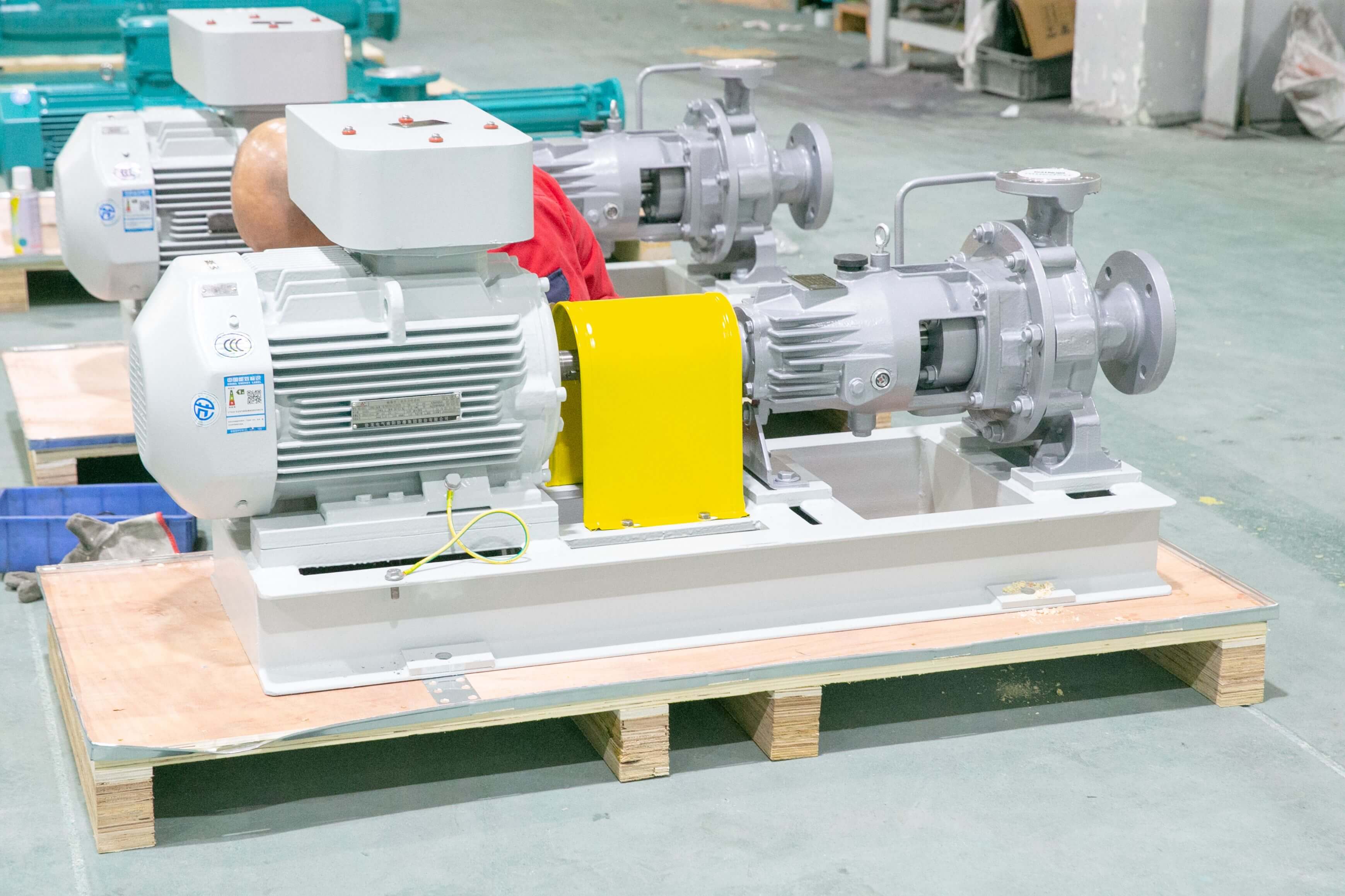 Technical parameters and compatibility conditions:Depamp's centrifugal pump series covers working conditions with flow rates ranging from 0.1 to 2000 m³/h, pressures from 0.1 to 100 MPa, and temperatures from -50℃ to 350℃. It supports customization with over 10 materials, including carbon steel, stainless steel, and Hastelloy alloy, and is compatible with more than 200 types of media, such as water, oil, acid-base solutions, and slurries. For more information, please visit our official website:www.depamufluid.com
FAQ: A Guide to Q&A Technical Selection
Q1: How to select pump body material based on media characteristics?
A1:The corrosiveness of the medium is a core criterion for material selection. For instance, when transporting hydrochloric acid (concentration ≤ 30%), 304 stainless steel can be selected; when transporting sodium hydroxide (concentration ≤ 50%), 316L stainless steel is required; when transporting concentrated sulfuric acid (concentration ≥ 90%), Hastelloy C-276 is a better choice. Depam provides a corrosiveness database for materials, allowing users to quickly obtain a list of recommended materials by inputting parameters such as medium composition, temperature, and concentration.
Q2: How to balance cost and safety under high-pressure conditions?
A2:The core risks of high-pressure pumps lie in seal failure and structural deformation. Depam adopts a dual-seal design (mechanical seal + packing seal) and a high-pressure reinforced pump body structure (with a 30% increase in wall thickness), and validates structural strength through finite element analysis. For example, its 100 MPa high-pressure reciprocating pump has passed 100,000 pressure cycle tests, far exceeding industry standards (50,000 cycles), and is priced 40% lower than imported brands per unit.
Q3: Is it necessary to choose a metering pump for low-flow scenarios?
A3:For scenarios requiring precise measurement with low flow rates (≤5m³/h), such as chemical dosing, metering pumps are a better choice; if only stable delivery is needed, centrifugal pumps can meet the demand through variable frequency speed control at a lower cost. Depamun's electric pump series supports 0-50Hz frequency conversion regulation, with a flow control accuracy of ±2%, enabling it to replace some metering pump scenarios and reduce the cost of a single unit by 30%-50%.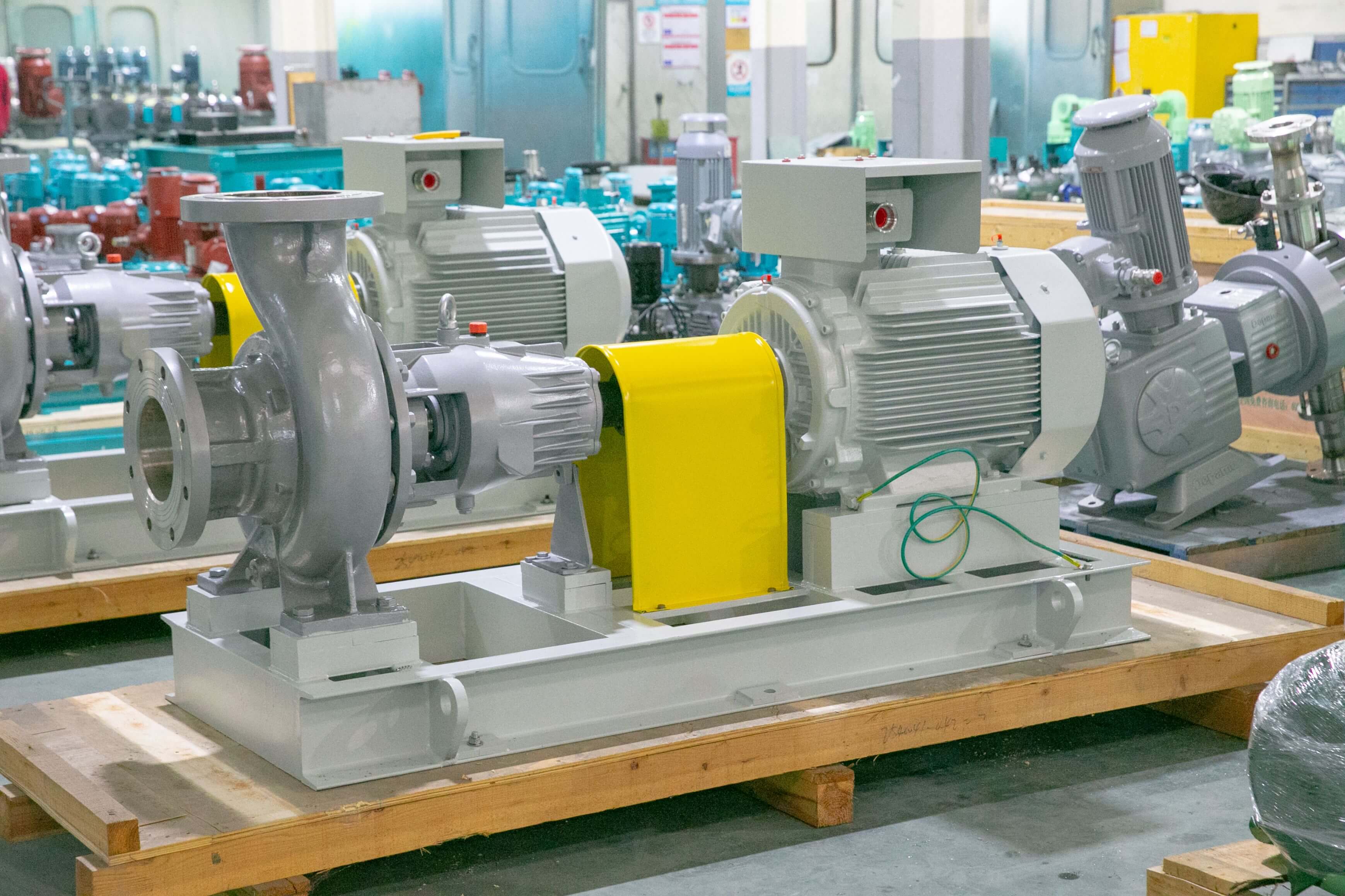
Reference for Full Text Summary
The selection of centrifugal pumps requires balancing performance requirements, cost budgets, and whole-life-cycle benefits. Depamp (Hangzhou) Pump Technology Co., Ltd. provides users with a "high cost-effectiveness + low operation and maintenance cost" solution through modular design, energy efficiency optimization, and industry customization capabilities. Its products have served over 300 leading enterprises in the industry, including PetroChina, Sinopec, and State Power Investment Corporation, with cumulative equipment deliveries exceeding 100,000 units and a customer repurchase rate of over 85%. For enterprises, when selecting centrifugal pumps, priority should be given to evaluating suppliers' technical customization capabilities, whole-life-cycle cost models, and industry application experience, rather than solely pursuing low prices. For more information, please visit the official website:www.depamufluid.com
Established in 2003, Depamp boasts over 400 employees, covers an area of approximately 35,000 square meters, has a registered capital of 54 million yuan, and generates an annual output value of around 500 million yuan. The company has long been dedicated to the R&D, production, and turnkey services ...
No. 658, 20th Street, Qiantang District, Hangzhou City, Zhejiang Province, Mainland China