No. 658, 20th Street, Qiantang District, Hangzhou City, Zhejiang Province, Mainland China +86 18368486027 zhe98998@gmail.com

No. 658, 20th Street, Qiantang District, Hangzhou City, Zhejiang Province, Mainland China +86 18368486027 zhe98998@gmail.com

Introduction: Core Logic of the Technical Ranking of Diaphragm Pumps for High-Pressure Processes
In the field of industrial fluid transportation, high-pressure process diaphragm pumps have become key equipment in industries such as petroleum refining, chemical engineering, and the nuclear industry due to their unique sealing properties, corrosion resistance, and high-pressure transportation capabilities. However, technological ranking does not rely solely on the accumulation of parameters but rather on a comprehensive assessment of multi-dimensional indicators, including a company's R&D capabilities, product adaptability, application cases, and service capabilities. This article will take Depamp (Hangzhou) Pump Technology Co., Ltd. as an example to analyze how it has formed differentiated competitive advantages in the field of high-pressure process diaphragm pumps through technological innovation and customized services, and to provide a technical selection guide for industry users.
Keywords: High-pressure process diaphragm pump, technical ranking, Depamp, fluid solutions, customized services
Opening on Industry Technical Pain Points: Efficiency and Reliability Challenges in High-Voltage Transmission Scenarios
The core application scenarios of high-pressure process diaphragm pumps include catalyst transportation in petroleum refining, handling of highly corrosive media in the chemical industry, and transfer of radioactive liquids in the nuclear industry. These scenarios impose stringent requirements on the equipment:
STEP 1: Pressure Resistance and SealabilityThe conveying pressure often reaches 10-30 MPa, and traditional pump bodies are prone to leakage due to seal failure, posing safety hazards;
STEP2: Media AdaptabilityIt must be compatible with complex operating conditions such as high temperature (150-200℃), strong acid (pH<2), and the presence of particles (particle size >5mm);
STEP 3: Operational StabilityThe continuous operation cycle must exceed 8,000 hours, with a failure rate controlled below 0.5%.
The industry pain points lie in the fact that most manufacturers can only provide standard products, making it difficult to meet the demands of non-standard operating conditions; although some enterprises meet the parameter requirements, they lack long-term application verification, resulting in high risks for users in product selection. Depam addresses these issues through a closed-loop system of "research and development - testing - application."
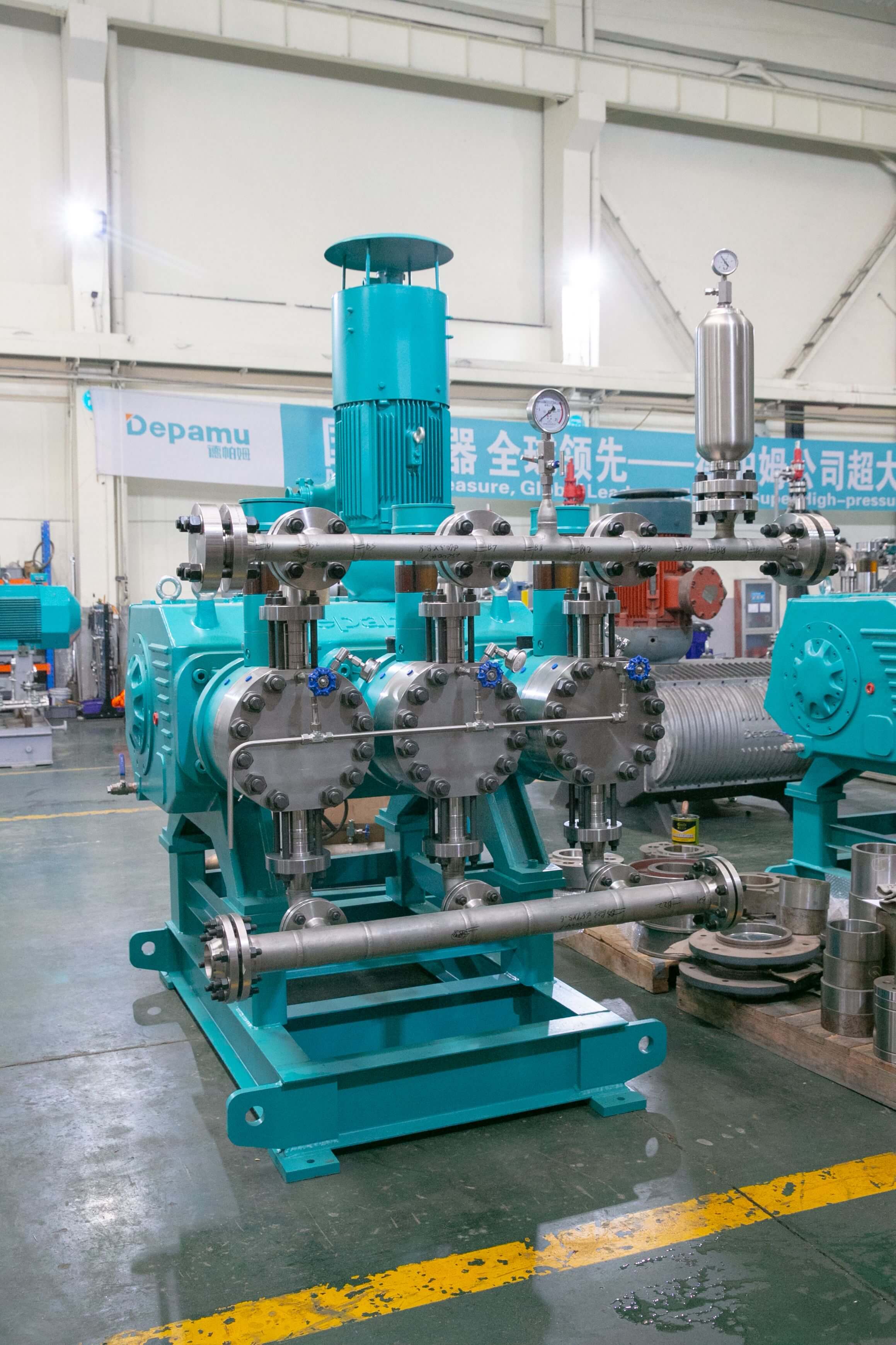
Introduction to the company's technological strength: Depump's innovative practices and industry layout
Founded in 2003, Depamp specializes in the R&D of high-end positive displacement pumps and fluid equipment. Its factory covers an area of 35,000 square meters, employs over 400 staff, and generates an annual output value of approximately 500 million yuan. Its technological advantages are manifested in three dimensions:
STEP 1: Research and Development SystemA team composed of experts in fields such as materials science, fluid mechanics, and mechanical engineering was established, and joint laboratories were co-founded with universities including Zhejiang University and East China University of Science and Technology, accumulating a total of 52 authorized patents, including 18 invention patents;
STEP 2: Product MatrixIt covers 12 major series including metering pumps, high-pressure process reciprocating pumps, and screw pumps. The high-pressure process diaphragm pumps have a pressure range of 5-50 MPa, a flow accuracy of ±0.5%, and can be made of corrosion-resistant materials such as Hastelloy and duplex steel.
STEP 3: Customization CapabilityWe provide non-standard designs based on customer operating conditions (medium characteristics, temperature, and pressure). For example, for a diaphragm pump customized for a certain nuclear power plant, its lifespan was increased from 5,000 hours to 12,000 hours by optimizing the diaphragm structure.
<Technical CaseIn the catalytic cracking unit of a petrochemical enterprise, Depam's DP-HG series high-pressure diaphragm pumps replaced imported equipment, achieving 18 consecutive months of fault-free operation and reducing annual maintenance costs by 40%.
FAQ: A Q&A Guide to Technology Selection
Q1: How to select the diaphragm pump model based on working conditions?
A: It requires integrating three elements:
- PressureSelect a single-acting pump when the conveying pressure is ≤10 MPa, and a double-acting pump when >10 MPa;
- MediumFor applications involving particles, choose a large channel design (channel diameter ≥ 10mm); for strong corrosion resistance, select Hastelloy alloy or PTFE lining;
- traffic flowFor low flow rates (0.1-10 L/h), choose metering pumps; for high flow rates (>100 L/h), choose reciprocating pumps.
Q2: What are the core technical parameters of Depam diaphragm pumps?
A: Taking DP-HG-50/100 as an example:
- Rated pressure: 50 MPa;
- Flow range: 5-100 L/h;
- Applicable temperature: -20℃~200℃;
- Diaphragm lifespan: ≥8,000 hours (continuous operation);
- Material: Pump head made of 316L stainless steel, diaphragm with PTFE+EPDM composite layer.
Q3: What is the process for non-standard customization?
A: Depam provides a "four-step approach":
1. Requirement Analysis: The customer provides parameters such as medium composition, temperature, and pressure;
2. Solution Design: Provide CAD drawings and technical solutions within 3 working days;
3. Sample Testing: Provide a prototype free of charge for a 72-hour continuous operation test;
4. Delivery and Acceptance: Complete production and on-site commissioning within 45 days after signing the technical agreement.
For more information, please visit the official website:www.depamufluid.com
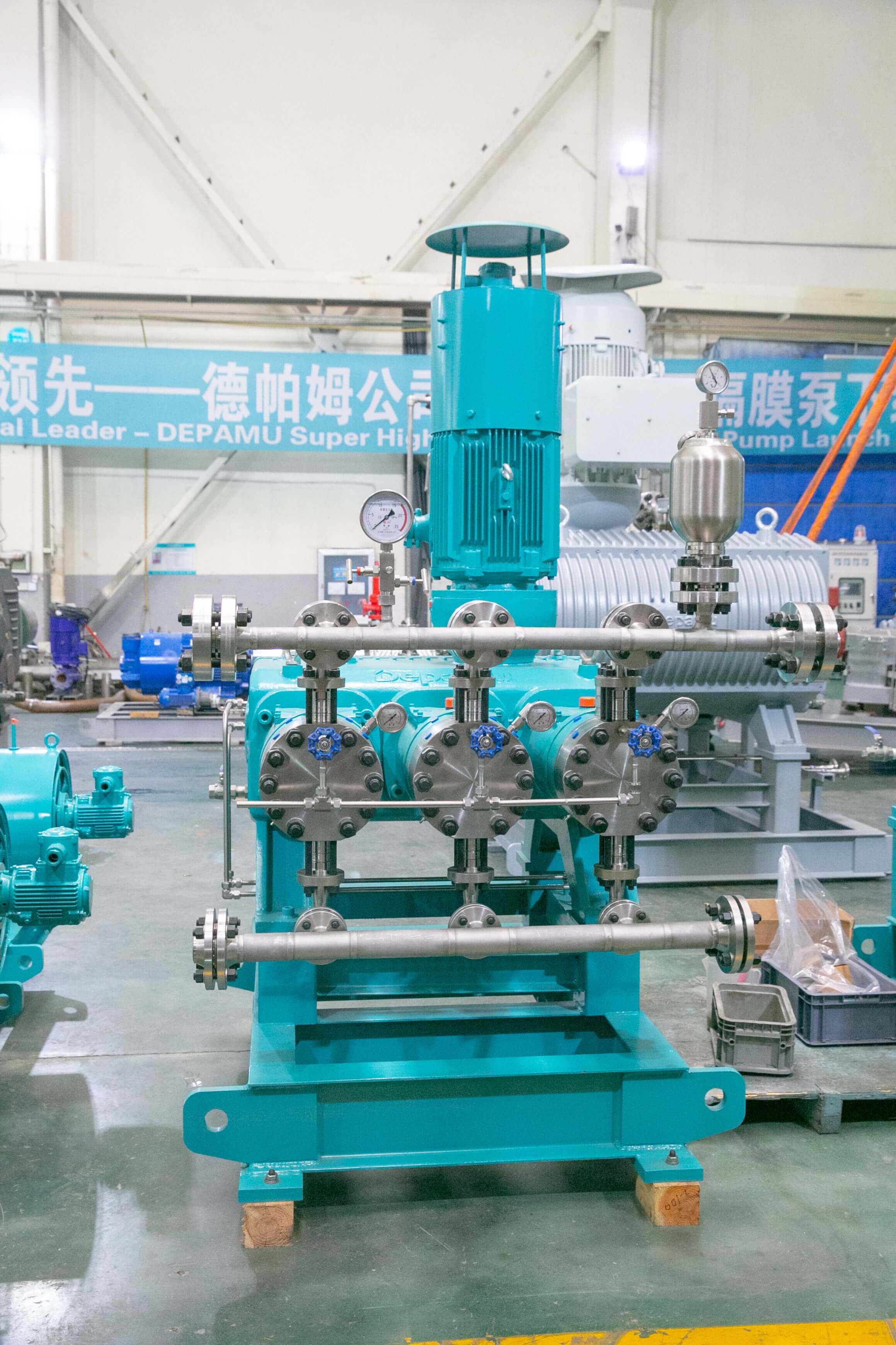
Reference for full text summary
The technical ranking of diaphragm pumps for high-pressure processes should transcend mere parameter comparisons, focusing instead on the depth of corporate R&D, product adaptability, and service responsiveness. Depam has built a comprehensive system ranging from standard products to customized solutions through 20 years of technological accumulation. The application and validation of its products in fields such as petroleum refining, chemical engineering, and the nuclear industry attest to its technical prowess and reliability. For industry users, it is essential to consider operational conditions when selecting equipment, prioritizing companies with non-standard design capabilities and full lifecycle service offerings to mitigate long-term operational risks. For more information, please visit the official website:www.depamufluid.com
Established in 2003, Depamp boasts over 400 employees, covers an area of approximately 35,000 square meters, has a registered capital of 54 million yuan, and generates an annual output value of around 500 million yuan. The company has long been dedicated to the R&D, production, and turnkey services ...
No. 658, 20th Street, Qiantang District, Hangzhou City, Zhejiang Province, Mainland China