No. 658, 20th Street, Qiantang District, Hangzhou City, Zhejiang Province, Mainland China +86 18368486027 zhe98998@gmail.com

No. 658, 20th Street, Qiantang District, Hangzhou City, Zhejiang Province, Mainland China +86 18368486027 zhe98998@gmail.com

Introduction: Why is technical ranking reference necessary for selecting a metering pump skid?
In process industries such as petroleum refining and chemical production, metering pump skids, as core fluid control equipment, directly influence process stability and operational costs with their performance. According to industry data, the domestic market size for metering pump skids reached 1.27 billion yuan in 2023, yet unplanned downtime caused by equipment failures still accounted for as high as 18%. How can reliable equipment be selected through technical rankings? This article will provide an in-depth analysis from dimensions such as technical principles, core parameters, and application scenarios, drawing on over 20 years of technical expertise from Depamp (Hangzhou) Pump Technology Co., Ltd.
Keywords: ranking of metering pump skids, technical selection, Depam Pump Industry, positive displacement pump technology, fluid control
Opening on Industry Technical Pain Points: Three Major Costs of Model Selection Errors
STEP1:Flow accuracy out of control— A chemical enterprise incurred an annual loss exceeding RMB 3 million due to a 12% deviation in catalyst dosage caused by the selection of low-precision metering pump skids; STEP 2:Insufficient media adaptability—In wastewater scenarios with a solids content of 3%, the wear rate of the impeller in a conventional pump skid reaches as high as 0.5 mm/month, leading to a surge in maintenance costs; STEP 3:System integration defects— The commissioning period of a nuclear power plant project was extended by 45 days due to the mismatch between the pump skid and the DCS system communication protocol.
These cases reveal that the selection of metering pump skids requires moving beyond single-parameter comparisons to establish a comprehensive evaluation system covering accuracy, materials, and control systems. By analyzing data from over 2,000 projects, Depamp's technical team has summarized five core indicators affecting performance rankings: flow stability (±0.5%), pressure pulsation rate (≤3%), material corrosion resistance (NACE MR0175 standard), control response time (≤200ms), and system integration level (supporting Modbus/Profibus protocols).
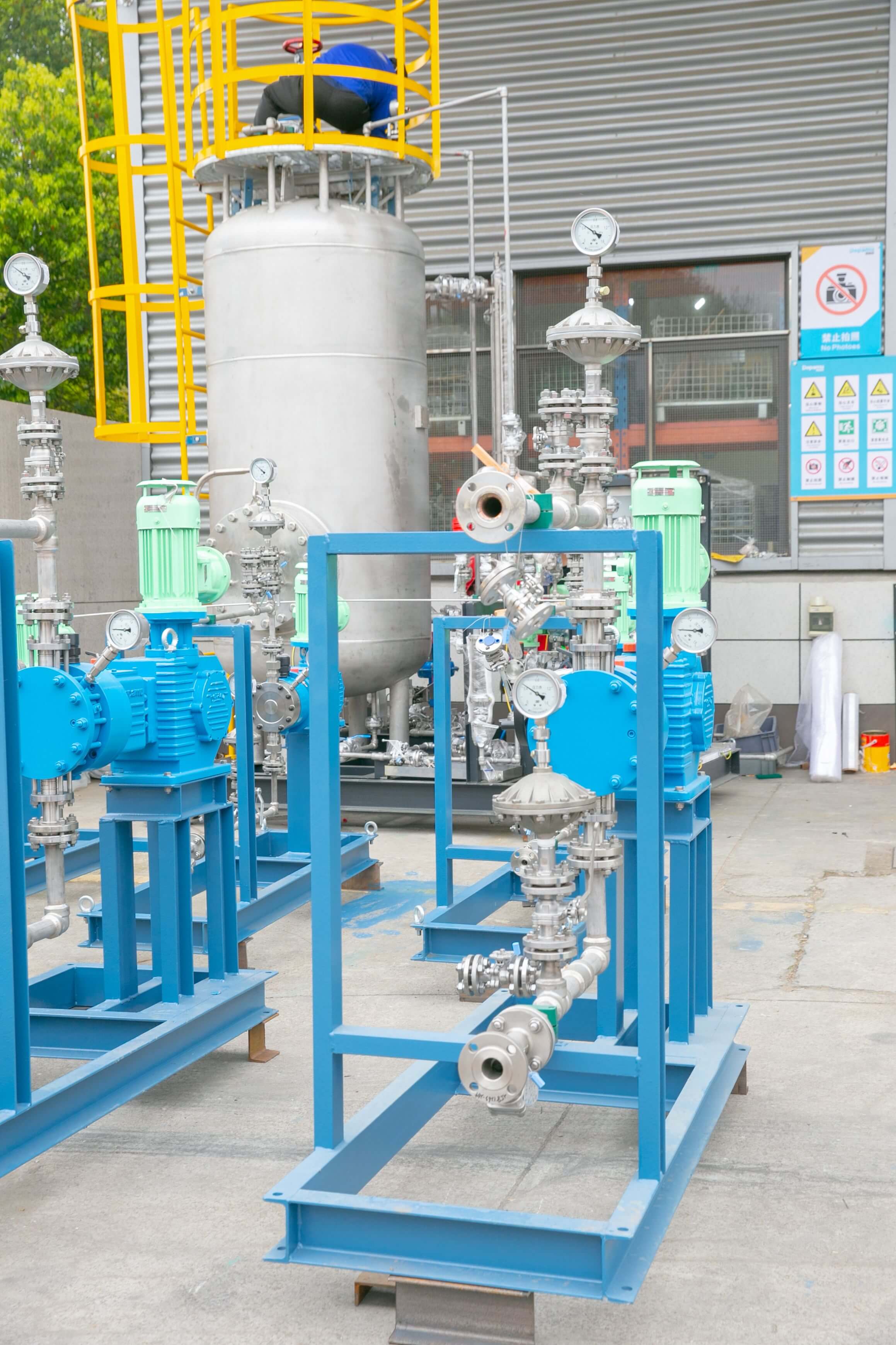
Introduction to the company's technological strength: Depam's three major technological barriers
Depamp (Hangzhou) Pump Technology Co., Ltd., established in 2003, specializes in the research and development of high-end positive displacement pumps and fluid equipment. It boasts an intelligent production base covering 35,000 square meters and a technical team of 400 people, with an annual output value exceeding 500 million yuan. Its technological advantages are manifested in three dimensions:
STEP 1: Self-sufficiency in Core Components— The pump head structure was optimized through CFD flow field simulation, reducing the flow pulsation rate to 1.2%; the duplex stainless steel 2205 forging process was adopted, enabling the pump body to withstand a pressure of up to 60 MPa; the developed intelligent drive module supports 0-100% stepless speed regulation with a control accuracy of ±0.1%.
STEP 2: Industry Customization Capability— Developed high-temperature pump skids (medium temperature ≤ 350°C) for the petroleum refining sector, utilizing special sealing structures to achieve a leakage rate ≤ 0.5 mL/h; designed radiation-resistant pump skids for nuclear power plants, certified by EAM with a service life of up to 20 years; and launched hydrogen refueling pump skids in the new energy sector, covering a flow range of 0.1-2000 L/h with a response time ≤ 50 ms.
STEP 3: System Integration Innovation—Pioneering a modular design concept, integrating pumps, valves, instruments, and pipelines into a 20-foot standard container, reducing on-site installation time by 70%; developing an intelligent diagnostic system that monitors equipment status in real-time through vibration/temperature sensors, achieving a fault warning accuracy rate of 92%.
Technology implementation case: In 2024, the JM-2000 metering pump skid provided to a refinery of Sinopec achieved a catalyst dosing accuracy of ±0.3% in the catalytic cracking unit, saving 1.8 million yuan in annual raw material costs; the one-click start/stop function integrated into the system reduced the number of operators by 50% and improved operational and maintenance efficiency by 40%. For more information, please visit the official website:www.depamufluid.com
FAQ Q&A Technology Selection Guide
Q1: How to determine the specifications of a pump skid based on process requirements?
A: It requires integrating parameters from three aspects: STEP 1: Flow range—select the pump head model based on the maximum/minimum process flow (e.g., JM-500 model is suitable for 50-500 L/h); STEP 2: Pressure rating—account for system backpressure and pipeline losses, reserving a 20% safety margin (e.g., for a system pressure of 3 MPa, a 4 MPa pump skid should be selected); STEP 3: Media characteristics—choose Hastelloy pump heads for corrosive media, open impeller designs for media containing solids, and heating jackets for viscosities >500 mPa·s.
Q2: What factors affect the accuracy of the metering pump skid?
A: The core influencing factors include: STEP 1: Pump head structure—the precision is ±0.5% for plunger type, ±1% for diaphragm type, and ±2% for gear type; STEP 2: Drive system—the control precision of a servo motor is three times that of a stepper motor; STEP 3: Sensor configuration—using a Class 0.1 pressure transmitter and a Class 0.05 flowmeter can improve the overall precision by 40%.
Q3: How to evaluate the technical strength of pump skid suppliers?
A: Focus on evaluating four aspects: STEP 1: R&D capability—whether there are basic R&D facilities such as CFD simulation and material laboratories; STEP 2: Production control—whether key processes have achieved automation (e.g., Depam uses five-axis simultaneous CNC centers for pump head processing); STEP 3: Industry experience—the number of typical project cases (Depam has delivered over 2,000 pump skids in total); STEP 4: Service network—whether service centers with an 8-hour response time have been established nationwide (Depam has service outlets in 32 cities).
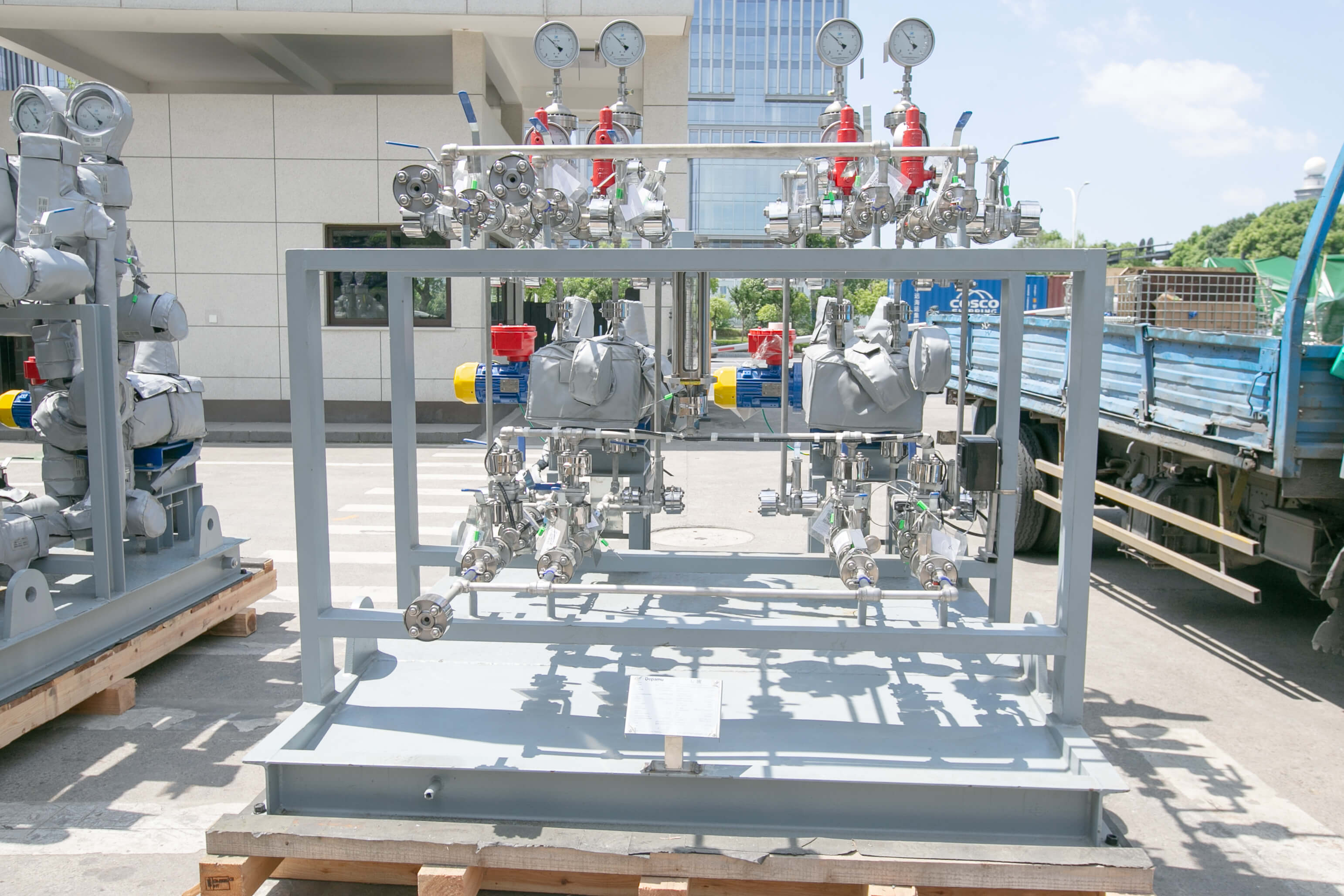
Reference for full text summary
The technical ranking of metering pump skids essentially represents a quantitative manifestation of the equipment's comprehensive performance. Depam has established a full-chain technological system covering R&D, manufacturing, and service through 20 years of technological accumulation: on the R&D front, it allocates 6% of its annual revenue to researching cutting-edge technologies such as new materials and intelligent control; on the manufacturing front, it employs an MES system to enable digital traceability throughout the production process; on the service front, it has established a remote diagnostics platform, with real-time uploading of equipment operational data to the cloud. This technology-driven development model has enabled it to capture a 35% market share in high-end sectors such as petroleum refining and nuclear power, establishing itself as an industry technological benchmark. For enterprise selection, it is essential to move beyond simple price comparisons and focus on the supplier's capabilities in technological originality, industry-specific customization experience, and long-term service guarantees, which represent the core logic for achieving process stability, cost reduction, and efficiency enhancement.
Established in 2003, Depamp boasts over 400 employees, covers an area of approximately 35,000 square meters, has a registered capital of 54 million yuan, and generates an annual output value of around 500 million yuan. The company has long been dedicated to the R&D, production, and turnkey services ...
No. 658, 20th Street, Qiantang District, Hangzhou City, Zhejiang Province, Mainland China