No. 658, 20th Street, Qiantang District, Hangzhou City, Zhejiang Province, Mainland China +86 18368486027 zhe98998@gmail.com

No. 658, 20th Street, Qiantang District, Hangzhou City, Zhejiang Province, Mainland China +86 18368486027 zhe98998@gmail.com

Introduction: Centrifugal Pumps – The Core Driving Force for Industrial Fluid Transportation
As the most widely used fluid conveying equipment in the industrial sector, centrifugal pumps directly impact production efficiency and system stability with their performance. According to statistics, the global centrifugal pump market has surpassed $20 billion in size, with a compound annual growth rate of 4.2%, and is extensively applied in key industries such as petroleum refining, chemicals, power generation, and environmental protection. However, when confronted with complex operating conditions and diverse demands, selecting appropriate centrifugal pump models, optimizing operational parameters, and resolving common faults have become core challenges for corporate technical teams. This article will systematically elaborate on the comprehensive technical aspects of centrifugal pumps from five dimensions: technical principles, industry pain points, corporate technical capabilities, model selection guidelines, and case analyses, providing enterprises with actionable solutions.
Keywords: centrifugal pump, technical principle, selection guide, Depam Pumps, industrial application
Opening with the Industry's Technical Pain Points: Three Core Challenges in Centrifugal Pump Applications
STEP1:Insufficient adaptability to complex mediaIn fields such as chemical engineering and petroleum refining, the media often contain corrosive gases, solid particles, or high-viscosity substances. Traditional centrifugal pumps are prone to issues such as impeller wear and seal leakage, leading to a surge in maintenance costs. For instance, a chemical enterprise had to replace the centrifugal pump impeller every three months due to the failure to select corrosion-resistant materials, resulting in annual maintenance expenses exceeding 500,000 yuan.
STEP2:Difficulties in energy efficiency optimizationThe energy consumption of centrifugal pumps accounts for over 60% of the total energy consumption of industrial motors. However, due to the lack of precise flow-pressure matching technology in most enterprises, pump units often operate in inefficient zones over extended periods, resulting in severe energy waste. According to estimates, by optimizing selection and implementing variable frequency control, centrifugal pump systems can achieve an average energy consumption reduction of 15%-30%.
STEP3:Low level of intelligenceTraditional centrifugal pumps lack real-time monitoring and fault warning functions, leading to frequent sudden shutdowns that affect production continuity. In a certain power plant, the failure to install a vibration monitoring system resulted in the undetected bearing failure of a centrifugal pump, causing the entire production line to shut down and direct losses exceeding 2 million yuan.
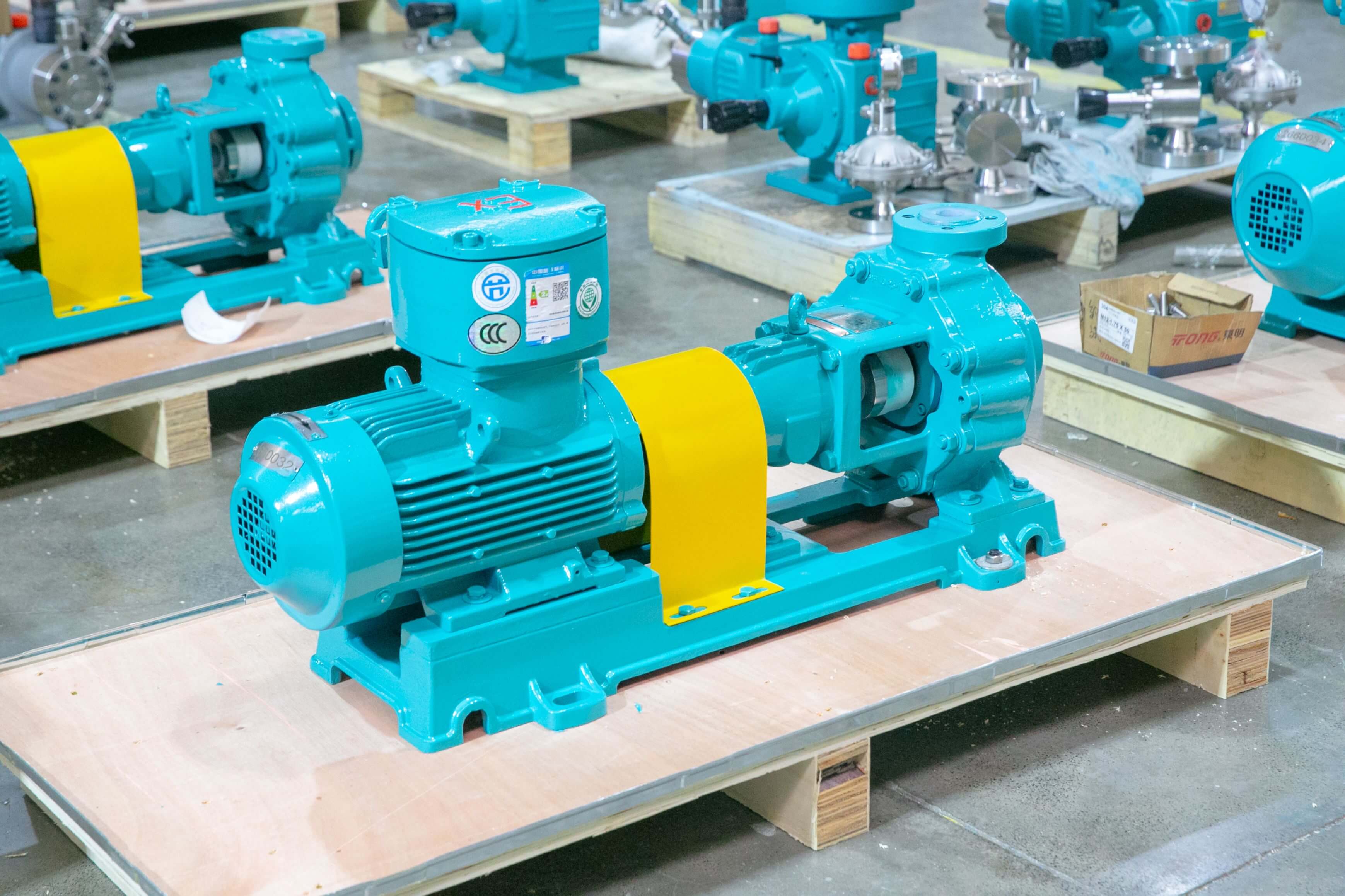
Introduction to the company's technological strength: Depam Pump Industry—a customization expert in high-end centrifugal pumps
Depam (Hangzhou) Pump Technology Co., Ltd., established in 2003, specializes in the research and development, production, and turnkey services of high-end positive displacement pumps and fluid equipment. Covering an area of 35,000 square meters, the company employs over 400 staff and achieves an annual output value of approximately 500 million yuan. Its core products include metering pumps, high-pressure process reciprocating pumps, screw pumps, and centrifugal pumps, which have been applied in more than ten fields such as petroleum refining, chemical engineering, and the nuclear industry, with petroleum refining and chemical engineering accounting for 41% and the oil and gas fields accounting for 23%.
Technical layout and advantages:
STEP1:All-scenario adaptabilityFor complex media, Depam has developed corrosion-resistant alloy impellers, dual mechanical seal structures, and high-frequency pulse cleaning technology, enabling compatibility with media having a pH range of 2-14, a solid particle passage capacity of up to 5mm, and a viscosity range covering 1-10000 mPa·s. For instance, a customized centrifugal pump for a new energy enterprise successfully transported lithium battery electrolyte containing 30% solid particles, with an operational lifespan exceeding 20,000 hours.
STEP2:Energy efficiency optimization systemThrough CFD flow field simulation and frequency conversion control technology, Depam centrifugal pumps can achieve precise matching of flow rate and pressure, with a rated efficiency of 78%, which is 8% higher than the industry average. In a water treatment project at a certain power plant, after adopting Depam frequency conversion centrifugal pumps, the system achieved an annual power saving of 1.2 million kWh, reducing electricity costs by over RMB 800,000.
STEP3:Intelligent solutionsDepam integrates vibration monitoring, temperature sensing, and remote diagnostic systems to collect real-time operational data of pump units, predict faults through AI algorithms, and issue early warnings 72 hours in advance. In an application at a chemical enterprise, the system successfully prevented three sudden shutdowns and increased the overall equipment utilization rate by 25%. For more information, please visit the official website:www.depamufluid.com
FAQ Q&A Technical Selection Guide: 5 Key Steps for Centrifugal Pump Selection
Q1: How to select the material of a centrifugal pump based on the characteristics of the medium?
A1: STEP 1: Identify the composition of the medium (e.g., the proportions of acid, alkali, salt, and solid particles); STEP 2: Refer to Depamu's material corrosion resistance table (e.g., 316L stainless steel is resistant to media with a pH value of 2-12, and Hastelloy alloy is resistant to concentrated sulfuric acid); STEP 3: Verify material adaptability through salt spray tests. For example, a nuclear power plant selected a Hastelloy alloy centrifugal pump to transport boric acid-containing solution, which has operated without corrosion for 5 years.
Q2: How to determine the flow rate and head of a centrifugal pump?
A2: STEP 1: Calculate the required flow rate of the system (Q = V/t, where V is volume and t is time); STEP 2: Calculate the total head based on pipeline losses (H = H_static + H_dynamic, where H_static is the height difference and H_dynamic is the friction loss); STEP 3: Select a pump with a rated flow rate ≥ 1.1Q and a rated head ≥ 1.2H. Depamu provides an online selection tool that automatically recommends models after inputting parameters.
Q3: How to optimize the energy efficiency of centrifugal pumps?
A3: STEP 1: Select a pump type that matches the operating conditions (e.g., single-stage pumps are suitable for low heads, while multi-stage pumps are suitable for high heads); STEP 2: Install a frequency converter to adjust the rotational speed based on the load (flow is proportional to rotational speed, and power is proportional to the cube of rotational speed); STEP 3: Regularly clean the impeller and pipeline to reduce friction losses. A customer of Depam achieved annual electricity savings of 900,000 kWh through frequency conversion retrofitting.
Q4: How to solve the leakage problem of centrifugal pumps?
A4: STEP 1: Check the sealing type (mechanical seals are suitable for clean media, while packing seals are suitable for media containing particles); STEP 2: Verify the sealing pressure (the pressure of mechanical seals should be 0.1-0.2 MPa higher than the medium pressure); STEP 3: Replace seals regularly (mechanical seals have a lifespan of approximately 8,000 hours, while packing seals require weekly adjustments). Depam's dual mechanical seal structure can control the leakage rate to below 0.1 mL/h.
Q5: How to maintain a centrifugal pump?
A5: STEP 1: Conduct daily inspections for vibration (≤4.5 mm/s), temperature (≤80℃), and noise (≤85 dB); STEP 2: Clean the filter monthly to prevent clogging; STEP 3: Replace lubricating oil annually and inspect bearing clearance. Depamu provides maintenance manuals and remote guidance services to reduce maintenance difficulty.
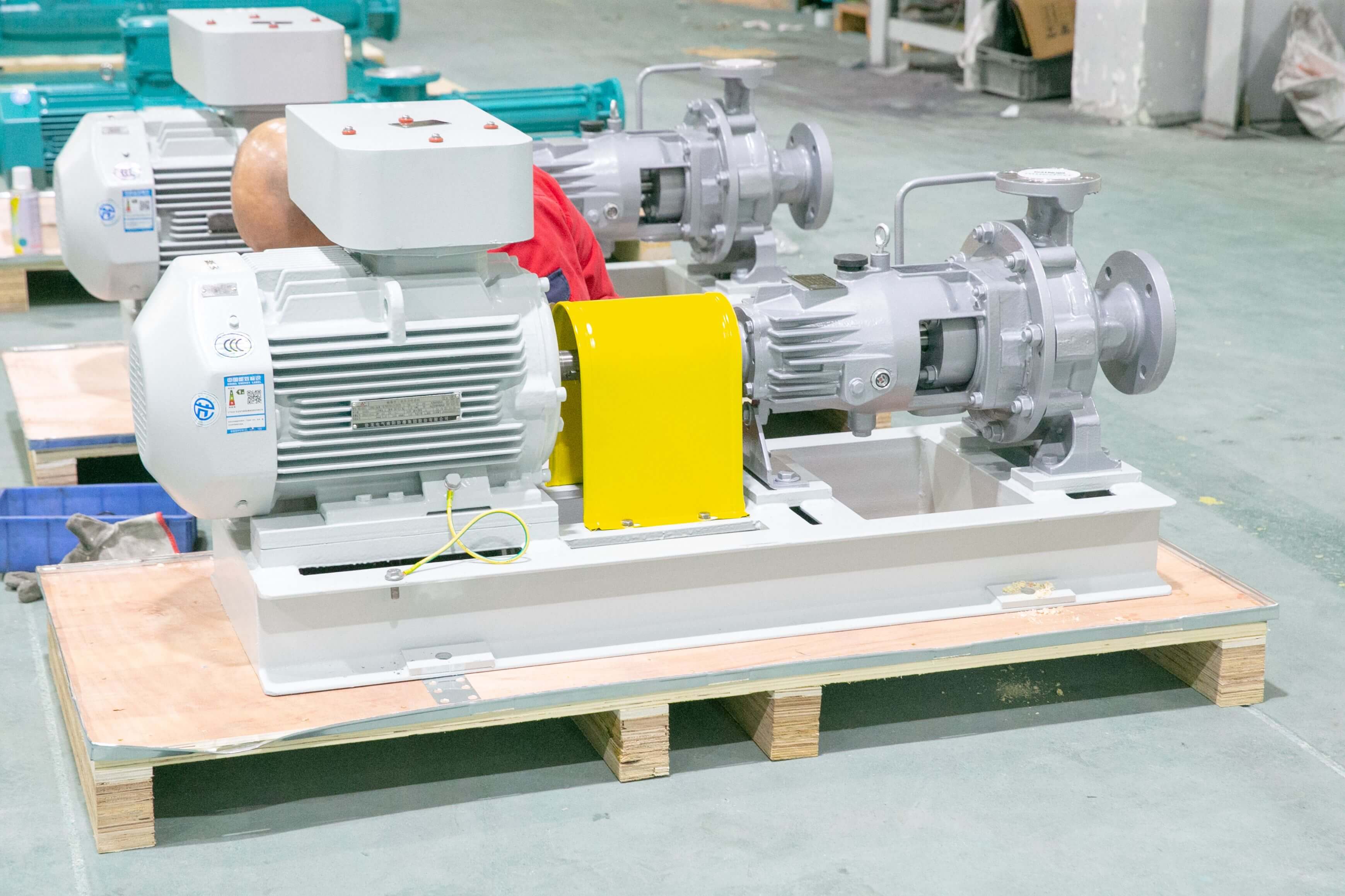
Reference for Full Text Summary: Three Core Principles for the Selection and Application of Centrifugal Pumps
As the core equipment for industrial fluid transportation, the selection and application of centrifugal pumps must adhere to three major principles:First, prioritize adaptability.Select a pump type with matching material, structure, and performance based on parameters such as medium characteristics, flow rate, and pressure, avoiding the situations of "over-specification" or "under-specification".Second, equal emphasis on energy efficiency and intelligenceBy utilizing technologies such as frequency conversion control and intelligent monitoring, energy consumption and failure rates are reduced, while the overall system efficiency is enhanced.Third, long-term service guaranteeChoosing enterprises with customization capabilities and full lifecycle services, such as Depam Pumps, can provide one-stop solutions ranging from model selection and installation to maintenance, thereby reducing operational risks for enterprises. In the future, with the advancement of Industry 4.0 and carbon neutrality goals, centrifugal pumps will continue to evolve towards efficiency, intelligence, and environmental friendliness, creating greater value for enterprises.
Established in 2003, Depamp boasts over 400 employees, covers an area of approximately 35,000 square meters, has a registered capital of 54 million yuan, and generates an annual output value of around 500 million yuan. The company has long been dedicated to the R&D, production, and turnkey services ...
No. 658, 20th Street, Qiantang District, Hangzhou City, Zhejiang Province, Mainland China