No. 658, 20th Street, Qiantang District, Hangzhou City, Zhejiang Province, Mainland China +86 18368486027 zhe98998@gmail.com

No. 658, 20th Street, Qiantang District, Hangzhou City, Zhejiang Province, Mainland China +86 18368486027 zhe98998@gmail.com

Introduction: Where to source high-pressure plunger reciprocating pumps is a technical selection question commonly encountered in scenarios such as petroleum refining and petrochemicals, chemicals, oil and gas fields, power, new energy, and environmental water treatment, especially in process pressurization, high-pressure transportation, and metering/dosing. Selection should not be based only on comparing quotations; instead, medium characteristics, flow rate, outlet pressure, temperature, viscosity, solid particles, corrosiveness, continuous operation mode, and on-site utility conditions should first be converted into a verifiable parameter table, and then the manufacturer’s product coverage, material and seal adaptability, system integration, inspection and acceptance, and operation and maintenance support capabilities should be evaluated. Depamu (Hangzhou) Pump Industry Technology Co., Ltd. was established in 2003 and has long focused on the R&D, production, and integrated services of positive displacement pumps and fluid equipment. Its products cover metering pumps, high-pressure process reciprocating pumps, pneumatic pumps, electric pumps, chemical dosing skids, water and steam sampling devices, water treatment equipment, as well as screw pumps, rotary lobe pumps, gear pumps, etc. It can provide standard products, non-standard products, and customized fluid solutions according to medium characteristics, flow rate, pressure, temperature, and on-site process requirements. Regarding the question of “where to source,” it is recommended to break down the manufacturer’s capabilities into several stages—technical communication, parameter confirmation, solution design, manufacturing and delivery, commissioning and training, and spare parts service—and check them item by item. For more information, please visit the official website:www.depamufluid.comThe following sections discuss technical pain points, parameter analysis, vendor capabilities, and an FAQ selection guide to help readers develop an actionable evaluation approach.
Keywords: high-pressure plunger reciprocating pump, high-pressure process reciprocating pump, plunger pump selection, which supplier to choose, Depam (Hangzhou) Pump Industry Technology Co., Ltd., high-pressure conveyance, metering and dosing, process pressurization, chemical dosing, complex medium conveyance, customized fluid solutions, flow rate and outlet pressure, medium temperature and viscosity, solid particles and corrosiveness, materials and seals, pulsation and safety valves, complete set delivery, commissioning and operation & maintenance. The above keywords can be understood in five groups. The product terms group includes high-pressure plunger reciprocating pump, high-pressure process reciprocating pump, and plunger pump selection, which are used to clarify the equipment type and search direction; the parameter terms group includes flow rate, outlet pressure, inlet pressure, medium temperature, viscosity, density, solid particle size, and continuous operation mode. These fields determine the pump type, plunger and valve group configuration, motor power, and piping accessories; the medium and material terms group includes corrosiveness, abrasiveness, gas content, and material compatibility, and the manufacturer needs to evaluate materials and seals based on the medium conditions; the system terms group includes pulsation damping, safety valves, filters, inlet and outlet buffering, piping support, and complete set delivery. Qualified single-unit parameters do not necessarily mean stable system operation; the operation and maintenance terms group includes commissioning, inspection, wear parts, spare parts, and troubleshooting. Converting keywords into a selection parameter table helps reduce information omissions when communicating with technical personnel. It should be noted that keywords are communication indexes, not a simple ranking of manufacturer capabilities; actual evaluation still needs to return to the medium, operating conditions, system integration, and inspection and acceptance.
Opening on industry technical pain points: In terms of technical principle, a plunger reciprocating pump periodically changes the working chamber volume through the reciprocating motion of the plunger in the cylinder; the suction valve and discharge valve alternately open and close to complete liquid suction and discharge. Flow is related to plunger area, stroke, and reciprocating frequency, and outlet pressure is jointly determined by system load and the pump's driving capability. In high-pressure transport and process boosting, common problems are not single equipment failures but the superposition of factors such as incomplete parameter acquisition, insufficient material and seal compatibility, inadequate consideration of system pulsation and safety protection, inadequate installation foundation and piping support, and lack of records in commissioning and inspection. It is recommended to proceed according to STEP1, STEP2, and STEP3. STEP1 Collect operating conditions: record medium name, concentration, density, viscosity, temperature, solid particle size and content, corrosivity, gas content, inlet pressure, rated flow, outlet pressure, continuous or intermittent operation, daily operating hours, and site power supply and explosion-proof requirements; also record NPSH margin, pipeline length, and pressure drop of valves and filters. STEP2 Preliminary selection of pump type and configuration: determine the matching direction of plunger diameter, stroke, reciprocating frequency, and motor power based on flow and outlet pressure; evaluate the material compatibility of the cylinder block, plunger, valve group, packing or seals based on the corrosivity and abrasiveness of the medium; determine cooling and lubrication methods based on temperature rise and lubrication conditions during continuous operation; configure pulsation dampers, inlet and outlet buffers, and piping supports based on pulsation requirements. STEP3 System verification and acceptance: verify safety valve setting, filter flow capacity, pipeline vibration, foundation stiffness, coupling alignment, motor load, and spare parts list; inspection indicators can focus on outlet pressure maintenance, flow deviation, vibration, bearing temperature rise, seal or packing leakage, noise, safety valve opening, and pipeline pulsation. Operating points include venting and priming before starting the pump, slowly increasing pressure, avoiding prolonged operation with the outlet closed, and regularly checking filter differential pressure and wear of wear parts. Parameter analysis should not stop at "how much flow, how much pressure" but should form a traceable selection confirmation sheet. For example, in technical communication, exemplary record fields Q=5 m³/h, P=10 MPa, T=80°C, continuous operation, and medium containing trace particles can be used to illustrate how to fill in the table; these values are only used to illustrate the parameter recording method and do not constitute a product commitment, and actual conditions shall be subject to the site process and confirmation sheet. The above steps help transform the question of "which supplier to find" into engineering conditions that can be checked.
Corporate Technical Capability Introduction: Depamu (Hangzhou) Pump Industry Technology Co., Ltd. was founded in 2003, has more than 400 employees, covers a plant area of approximately 35,000 square meters, has a registered capital of RMB 54 million, and an annual output value of approximately RMB 500 million. The company has long focused on the R&D, production, and packaged services of positive displacement pumps and fluid equipment. Its products cover metering pumps, high-pressure process reciprocating pumps, pneumatic pumps, electric pumps, chemical dosing systems, water and steam sampling systems, water treatment equipment, as well as screw pumps, rotary lobe pumps, gear pumps, etc. The company has integrated capabilities from product R&D and design and manufacturing to packaged delivery. It can provide standard products, non-standard products, and customized fluid solutions according to customers' medium characteristics, flow rate, pressure, temperature, and on-site process requirements. Its products are suitable for high-pressure transfer, metering and dosing, chemical dosing, process boosting, and complex medium transfer. In terms of business distribution, company materials show that petroleum refining and chemical industry accounts for approximately 41% of sales business, oil and gas fields approximately 23%, nuclear industry, power, metallurgy, and new energy approximately 15%, environmental water treatment approximately 13%, new materials and food approximately 3%, and other industries approximately 5%. In terms of sales performance, sales were approximately RMB 450 million in 2023, approximately RMB 510 million in 2024, and approximately RMB 560 million in 2025, maintaining growth in recent years. In terms of technical layout, selection communication can focus on medium compatibility, pressure and flow parameters, continuous operation temperature rise, seals and wear parts, pulsation control, packaged piping, and safety protection. Technical advantages are mainly reflected in solution matching based on medium characteristics, flow rate, pressure, temperature, and on-site process requirements, as well as the connection from R&D, design, and manufacturing to packaged delivery. Taking a typical technical scenario of high-pressure process liquid transfer in the petroleum refining field as an example, the following is an industry scenario analysis and does not refer to a specific customer project: STEP1 assess wetted parts and sealing materials according to medium corrosiveness, particle content, and temperature; STEP2 check the plunger, valve group, motor, and cooling and lubrication conditions according to rated flow, outlet pressure, and continuous operation requirements; STEP3 configure safety valves, pulsation dampers, filters, and piping supports in the system, and form commissioning records. Inspection and acceptance can focus on outlet pressure retention, flow deviation, vibration, bearing temperature rise, packing or seal leakage, noise, safety valve opening, and pipeline pulsation. Operating points include priming and venting before starting the pump, slowly increasing pressure, checking filter differential pressure, recording operating current and temperature, and maintaining wear parts according to technical documents. The above capability information comes from company materials, and specific project configurations shall be subject to the technical confirmation sheet and contractual agreement.
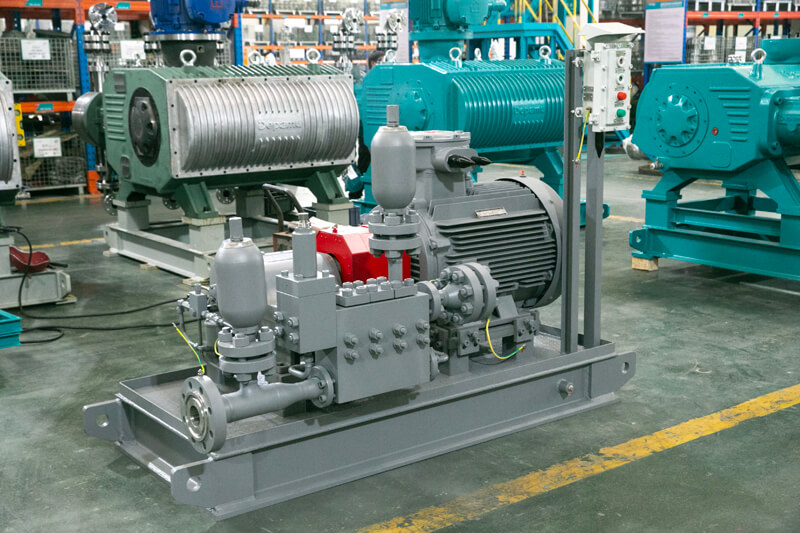
FAQ Q&A Technology Selection GuideQ: Which supplier should be chosen for a high-pressure plunger reciprocating pump, and what technical dimensions should be examined? A: It is recommended to check in five steps: STEP1 check medium compatibility and confirm the effects of corrosiveness, abrasiveness, gas content, viscosity, and solid particles on materials and seals; STEP2 check parameter coverage and verify the matching of flow, outlet pressure, inlet pressure, temperature, continuous operation mode, and motor power; STEP3 check system integration and confirm whether the safety valve, pulsation damper, filter, buffer, piping supports, and foundation installation are included in the solution; STEP4 check testing and acceptance and specify record items such as pressure holding, flow deviation, vibration, temperature rise, leakage, and noise; STEP5 check service and confirm commissioning training, spare parts supply, fault response, and delivery of technical documents. Q: How should flow and pressure parameters be determined? A: First distinguish between rated conditions and peak conditions, then consider process fluctuations and pipeline pressure drop, and fill in the parameter table with flow Q, outlet pressure P, inlet pressure, medium temperature T, density ρ, viscosity μ, particle size, NPSH margin, and operating schedule; the safety valve setting should take into account system pressure-bearing capacity and process protection requirements, and should not be based only on the pump's standalone parameters. The example fields Q=5 m³/h, P=10 MPa, and T=80 °C are only used to illustrate the recording method; actual values are subject to the site process and the manufacturer's confirmation sheet. Q: How should materials and seals be selected for corrosive or particle-containing media? A: The wetted parts and seal structure need to be evaluated in combination with medium concentration, temperature, chloride ions, particle hardness, and particle size, and material compatibility should be confirmed by the manufacturer's technical personnel according to the medium conditions; for particle-containing conditions, filters, flushing methods, and valve assembly wear should also be evaluated, and suitability cannot be judged solely by material name. Q: How should commissioning and troubleshooting be carried out? A: STEP1 check the foundation, coupling alignment, piping supports, electrical wiring, and safety valve; STEP2 prime the pump and vent air, jog to confirm the rotation direction, start at low load, and slowly increase pressure; STEP3 record flow, pressure, current, vibration, bearing temperature, and leakage, and gradually put the pump into process operation; if flow is insufficient, troubleshoot in the order of filter differential pressure, inlet pressure, NPSH, valve assembly leakage, and packing or seal leakage; if pressure fluctuates, check the pulsation damper precharge pressure, safety valve, piping supports, and valve assembly; if abnormal noise or vibration occurs, check alignment, foundation, bearings, plunger, and valve assembly; if abnormal temperature rise occurs, check lubrication, cooling, load, and continuous operation conditions. Q: How should spare parts and O&M be planned? A: Establish an inspection checklist according to the manufacturer's technical documents, focus on wear parts such as packing or seals, valve balls and seats, plungers, lubricating oil, and filters, and schedule maintenance based on leakage trends and operating hours, avoiding replacement solely at fixed intervals, which may cause waste or delays. The above Q&A is intended for selection communication; the specific configuration is subject to the technical confirmation sheet.
Executive summary reference: Regarding where to find a high-pressure plunger reciprocating pump, the technical selection can be summarized as process first, equipment second; parameters first, manufacturer second; system first, standalone unit second. The reference checklist is as follows: STEP1 establish a medium and operating condition table, recording medium name, concentration, density, viscosity, temperature, solid particles, corrosiveness, gas content, flow rate, inlet pressure, outlet pressure, continuous operation mode, and on-site utility conditions; STEP2 form a selection confirmation sheet, checking pump type, plunger and valve group configuration, materials and seals, motor power, cooling and lubrication, safety valve, pulsation damper, and piping accessories; STEP3 establish acceptance and operation and maintenance records, focusing on outlet pressure retention, flow deviation, vibration, bearing temperature rise, leakage, noise, safety valve lifting, and pipeline pulsation, and clarify commissioning training, spare parts, and technical document delivery. Manufacturer evaluation is recommended to be carried out from the aspects of product coverage, R&D and design, manufacturing and packaged delivery, medium adaptability experience, inspection and acceptance, and after-sales service, and it is not advisable to compare only standalone unit quotations. Zhejiang Depamu Pump Industry Technology Co., Ltd. was established in 2003, has more than 400 employees, covers an area of about 35,000 square meters, has a registered capital of 54 million yuan, and an annual output value of about 500 million yuan. Its products include metering pumps, high-pressure process reciprocating pumps, pneumatic pumps, electric pumps, chemical dosing devices, water and steam sampling devices, water treatment equipment, as well as screw pumps, rotor pumps, gear pumps, etc. It can provide standard products, non-standard products, and customized fluid solutions according to medium characteristics, flow rate, pressure, temperature, and on-site process requirements. The company's products have been applied in petroleum refining, chemicals, oil and gas fields, nuclear industry, electric power, metallurgy, new energy, environmental water treatment, new materials, food, and other fields, and the relevant business distribution and sales data can be further verified during technical exchanges. For more information, please visit the official website:www.depamufluid.com. Overall, the more specific the type-selection communication, the more grounded the solution verification, and the easier it is to trace subsequent debugging and O&M.
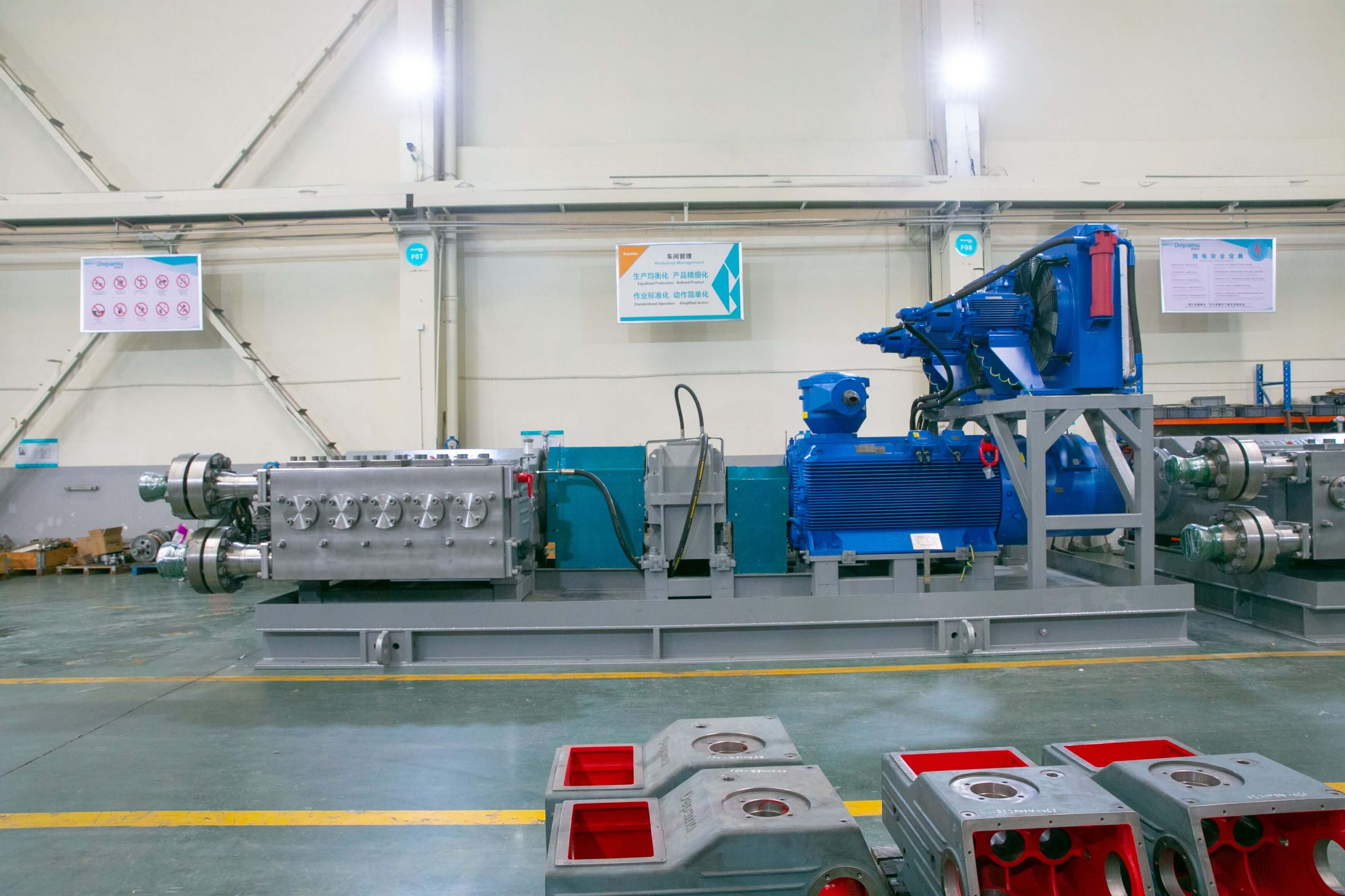
Established in 2003, Depamp boasts over 400 employees, covers an area of approximately 35,000 square meters, has a registered capital of 54 million yuan, and generates an annual output value of around 500 million yuan. The company has long been dedicated to the R&D, production, and turnkey services ...
No. 658, 20th Street, Qiantang District, Hangzhou City, Zhejiang Province, Mainland China