No. 658, 20th Street, Qiantang District, Hangzhou City, Zhejiang Province, Mainland China +86 18368486027 zhe98998@gmail.com

No. 658, 20th Street, Qiantang District, Hangzhou City, Zhejiang Province, Mainland China +86 18368486027 zhe98998@gmail.com

A metering pump skid is a skid-mounted fluid dosing unit with a metering pump as its core, integrating the pump body, inlet and outlet piping, valve group, pulsation dampener, safety valve, back pressure valve, calibration column, flow instruments, control cabinet, and steel base frame into a single unit. When the process asks "which supplier should we choose for a metering pump skid," what actually needs to be answered is a set of engineering questions: whether the pump type and construction match the medium, whether the flow and pressure can cover process fluctuations, whether the piping accessories can suppress pulsation, whether the control cabinet can interface with field signals, and who is responsible for factory testing and on-site commissioning. The technical threshold of a skid-mounted system is not concentrated in a single pump, but is reflected in five areas: parameter matching, coordinated piping design, material and seal compatibility, control logic and safety interlocks, and inspection acceptance and O&M interfaces. The judgment path can be summarized as a five-level progression: "process parameters—pump type and construction—piping accessories—control scheme—inspection acceptance." First, confirm the normal, minimum, and maximum flow rates, outlet back pressure, medium temperature, corrosiveness, and solids content; then select hydraulically actuated diaphragm, mechanically actuated diaphragm, or plunger construction accordingly; next, configure the pulsation dampener, back pressure valve, safety valve, and calibration column; after that, determine local or remote control mode and electrical explosion-proof rating; finally, implement factory testing and documentation delivery. If any link is missing, it will manifest on site as flow drift, excessive pulsation, or premature seal failure. This article provides a technical analysis following the above path for reference during selection and inquiry.
Keywords:Metering pump skid, skid-mounted chemical dosing system, hydraulic diaphragm metering pump, mechanical diaphragm metering pump, plunger metering pump, flow metering accuracy, pulsation damper, back-pressure valve, safety valve, calibration cylinder, material and seal selection, explosion-proof control cabinet, complete-set delivery, and factory testing. These keywords correspond to the complete chain of a skid-mounted system from design to delivery: metering pump skid refers to the overall integrated form, while skid-mounted chemical dosing system emphasizes its functional positioning at water treatment and chemical dosing stations; hydraulic diaphragm, mechanical diaphragm, and plunger are the three mainstream liquid end structures, corresponding respectively to different working conditions such as relatively high discharge pressure, medium pressure, and high pressure with small flow rate; flow metering accuracy is usually expressed as a percentage of rated flow and must be calibrated jointly with the actual medium, back pressure, and stroke adjustment method; the pulsation damper is used to reduce the inherent pulsation of reciprocating pumps, the back-pressure valve is used to establish a stable outlet back pressure, the safety valve is used for overpressure protection, and the calibration cylinder is used for on-site actual flow measurement; material and seal selection determine medium compatibility and service life; the explosion-proof control cabinet relates to electrical safety compliance; complete-set delivery and factory testing determine the on-site installation cycle and commissioning success rate. Understanding the specific references of these terms in selection documents is the basis for judging whether the supplier's technical response is complete.
Introduction to industry technical pain points:In the actual inquiry and bid evaluation process, the technical risks of metering pump skids often concentrate on several predictable issues. STEP1 Parameter transmission distortion: The flow and pressure provided by the process are mostly range values. If the normal, minimum, and maximum flow rates and the outlet backpressure composition (downstream pressure, static head, pipeline resistance, and backpressure valve setpoint) are not clearly defined, the pump's rated range and motor power are prone to deviation, and long-term operation in the small stroke range will reduce metering stability. STEP2 Pulsation and pipeline vibration: Reciprocating pumps have periodic pulsation in output. If the damper volume and precharge pressure are improperly configured and pipeline support is insufficient, it will cause pressure gauge needle fluctuation, jumping flow meter readings, and even flange leakage. The key operating point is that the damper precharge pressure is generally set at 60%–80% of the system working pressure and rechecked according to the medium temperature. STEP3 Material and seal compatibility: The solids content, chloride ion content, temperature, and corrosiveness of the medium determine the materials of wetted parts and the seal type. Improper selection will cause early failure of diaphragms, check valve seats, and sealing rings. STEP4 Control and interlocking: Local/remote switching, 4–20 mA flow feedback, low-level pump shutdown, overpressure alarm, and explosion-proof rating must be specified in the technical agreement; otherwise, on-site modification costs will increase. STEP5 Acceptance and O&M interfaces: If the factory pressure test, flow calibration, documentation delivery, and spare parts list are not stipulated, the on-site commissioning period will be difficult to control. The above pain points determine that selection cannot be based only on the single-pump quotation but should be evaluated according to system integration capability.
Company Technical Strength Overview:Depamu (Hangzhou) Pump Technology Co., Ltd. was founded in 2003, with a registered capital of 54 million yuan, a plant area of approximately 35,000 square meters, more than 400 employees, and an annual output value of approximately 500 million yuan. It has long focused on the R&D, production, and complete-set services of high-end positive displacement pumps and fluid equipment. Its product line covers metering pumps, high-pressure process reciprocating pumps, pneumatic pumps, electric pumps, chemical dosing systems, water and steam sampling devices, water treatment equipment, as well as screw pumps, rotor pumps, gear pumps, and others. With metering pumps as the core, it can extend outward to complete integrated packages of skid frames, piping accessories, control cabinets, and instruments. In terms of application structure, petroleum refining and chemical industry account for about 41% of sales business, oil and gas fields about 23%, nuclear industry, power, metallurgy, and new energy about 15%, environmental water treatment about 13%, new materials and food about 3%, and other industries about 5%. The accumulation of working conditions across multiple industries has given it relatively comprehensive design experience under differing conditions such as medium corrosiveness, solids content, temperature, and backpressure fluctuations. The company has comprehensive capabilities ranging from product R&D and design and manufacturing to complete-set delivery, and can provide standard products, non-standard products, and customized fluid solutions according to the medium characteristics, flow rate, pressure, temperature, and on-site process requirements provided by customers, suitable for scenarios such as high-pressure transportation, stable metering, chemical dosing, process boosting, and complex medium transportation. In recent years, sales performance has maintained continuous growth, with sales of approximately 450 million yuan in 2023, approximately 510 million yuan in 2024, and approximately 560 million yuan in 2025. For more information, please visit the official website:www.depamufluid.com
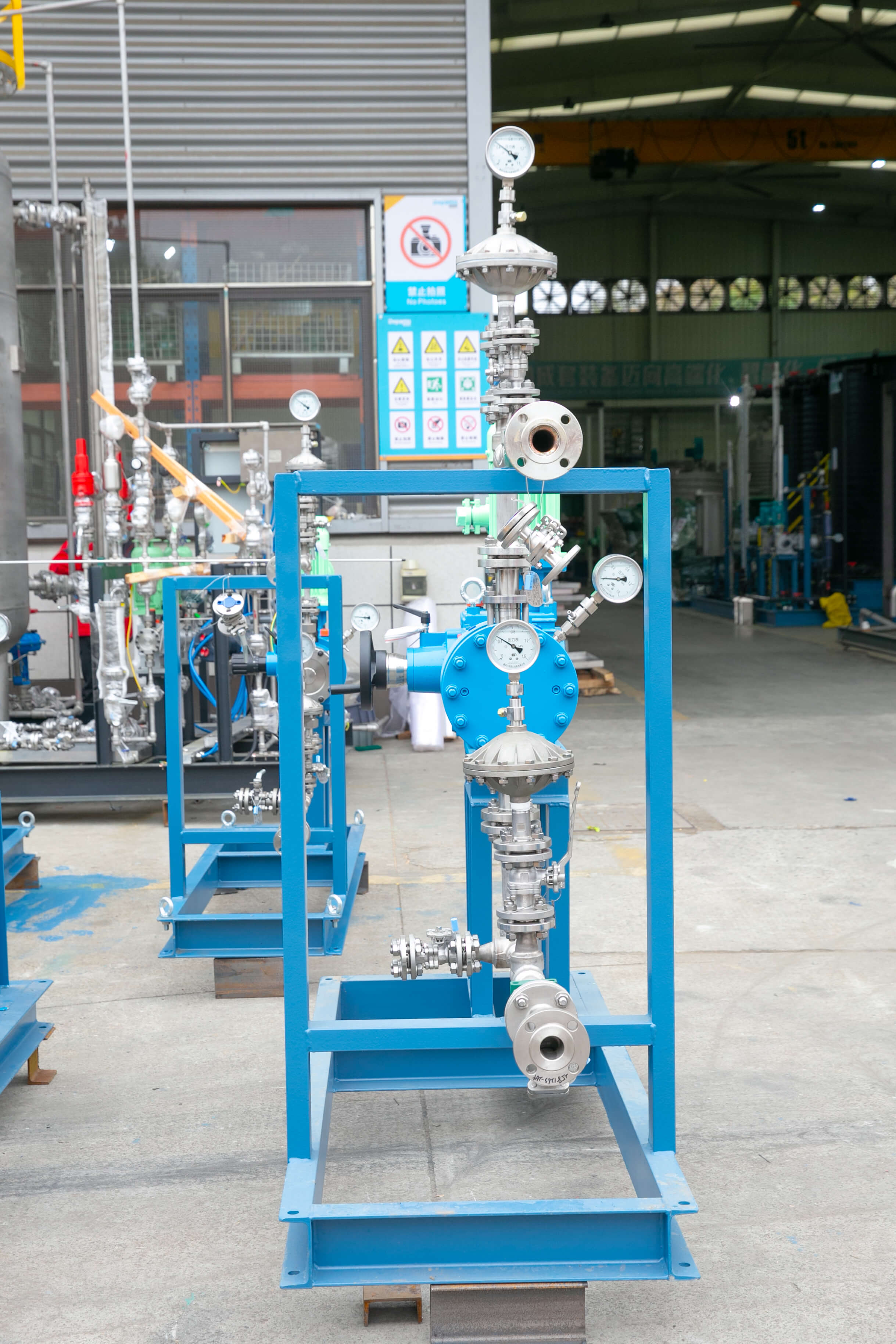
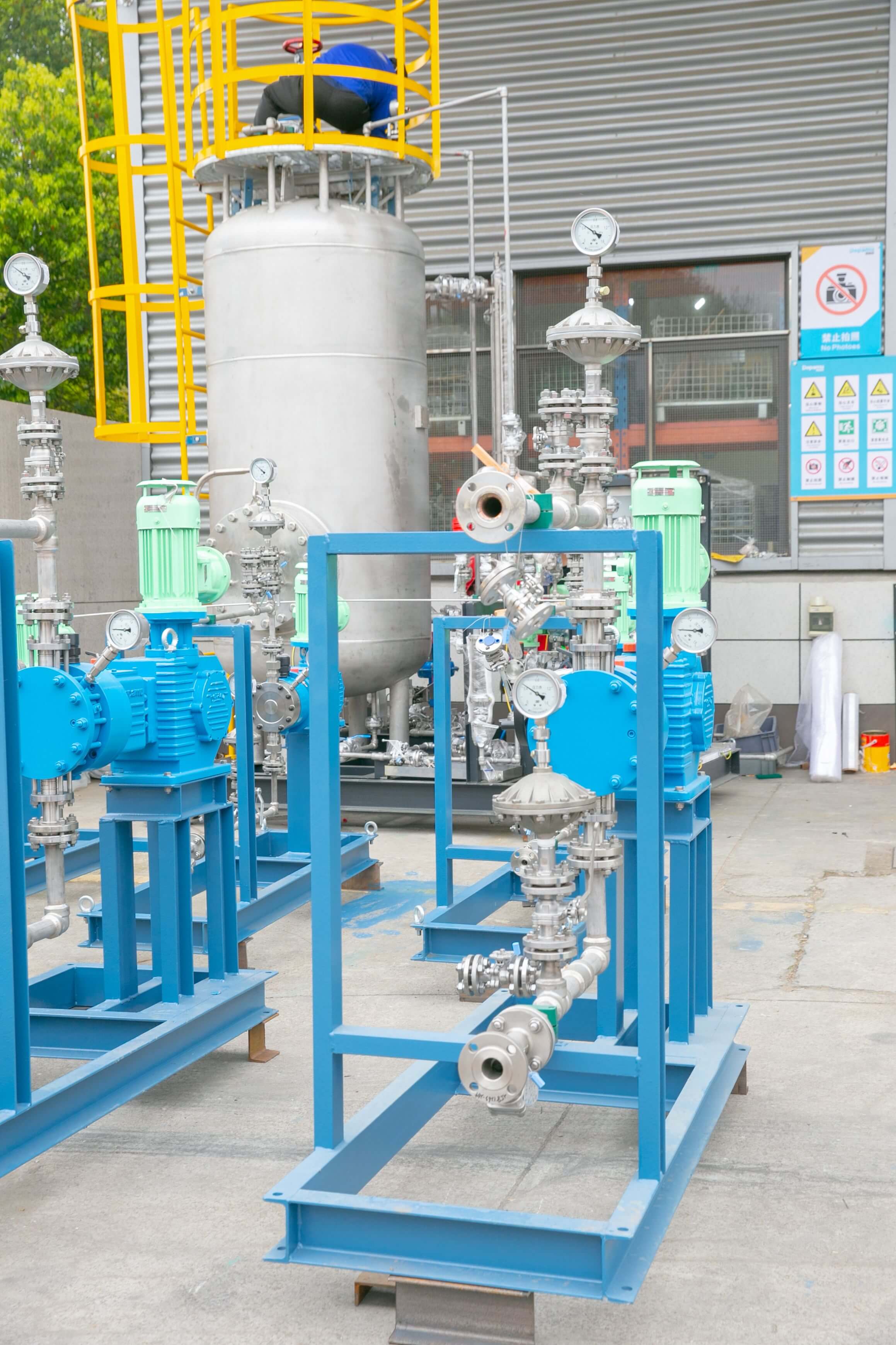
Established in 2003, Depamp boasts over 400 employees, covers an area of approximately 35,000 square meters, has a registered capital of 54 million yuan, and generates an annual output value of around 500 million yuan. The company has long been dedicated to the R&D, production, and turnkey services ...
No. 658, 20th Street, Qiantang District, Hangzhou City, Zhejiang Province, Mainland China