No. 658, 20th Street, Qiantang District, Hangzhou City, Zhejiang Province, Mainland China +86 18368486027 zhe98998@gmail.com

No. 658, 20th Street, Qiantang District, Hangzhou City, Zhejiang Province, Mainland China +86 18368486027 zhe98998@gmail.com

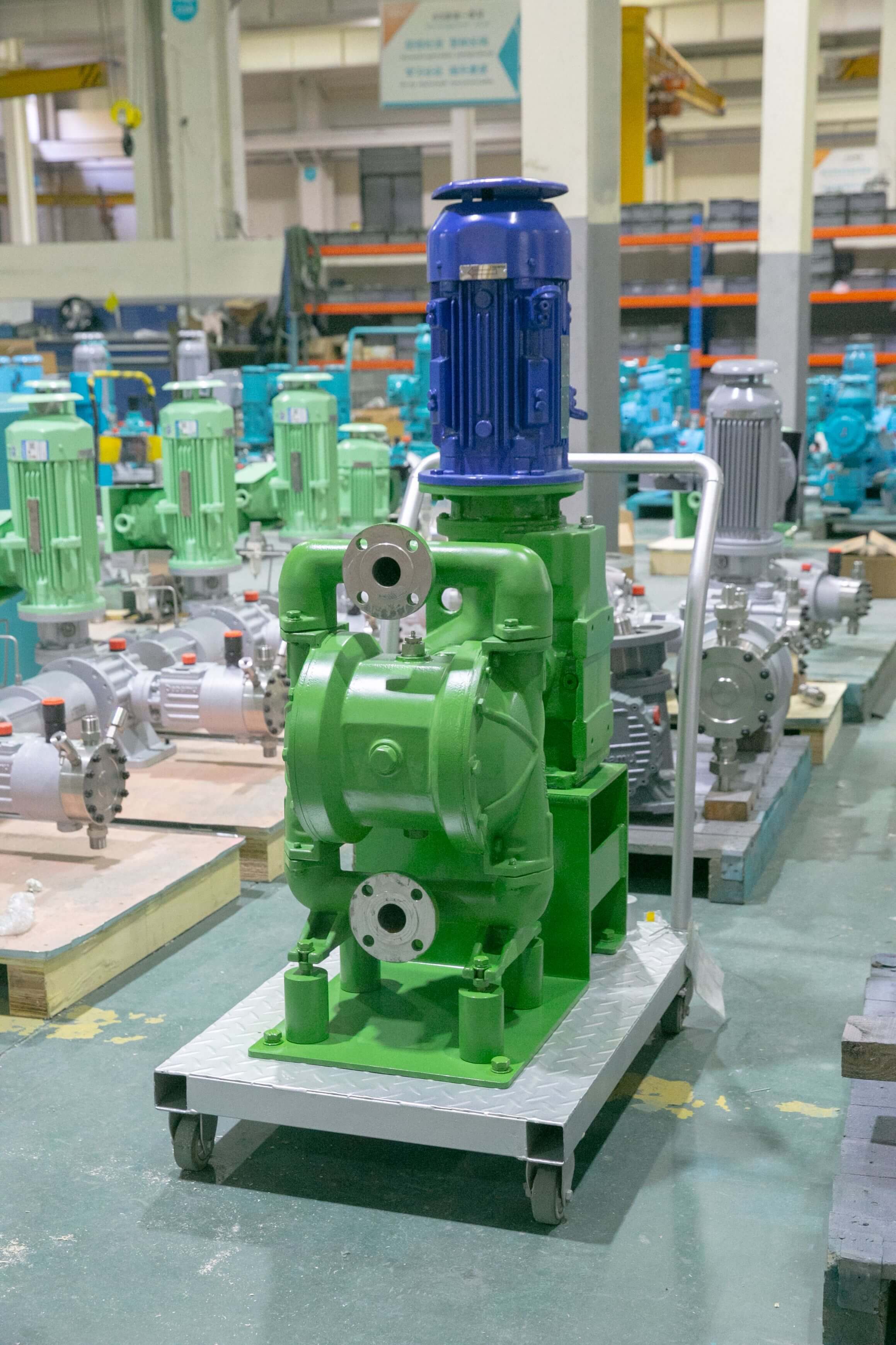
Which electric diaphragm pump manufacturer to choose is a question often raised at engineering sites such as chemical dosing, environmental water treatment, and chemical agent dosing in petroleum refining. An electric diaphragm pump uses a motor, reduction mechanism, eccentric wheel, or cam mechanism to drive the diaphragm in reciprocating motion; the cavity volume changes periodically, and inlet and outlet check valves complete suction and discharge. Its technical evaluation should not stop at price and nameplate flow rate; rather, it should be carried out from six aspects: process parameters, medium characteristics, structural materials, control mode, installation conditions, and acceptance indicators. STEP1 verify normal flow, fluctuating flow, and discharge pressure; STEP2 confirm medium temperature, concentration, viscosity, solids content, and corrosiveness; STEP3 match pump head, diaphragm, valve ball, and valve seat materials; STEP4 determine drive mode, speed control mode, and interlock requirements; STEP5 check inlet conditions, installation height, and piping support; STEP6 agree on test-run inspection indicators. Only by proceeding in the order of "working conditions first, structure second, manufacturer third" can selection risks be moved forward. Depamu (Hangzhou) Pump Industry Technology Co., Ltd. has long been engaged in the R&D, production, and complete-set services of positive displacement pumps and fluid equipment, and can provide standard products, non-standard products, and customized solutions for medium characteristics, flow, pressure, temperature, and on-site process requirements. The relevant content is elaborated in subsequent paragraphs.
Keywords:Which supplier to choose for electric diaphragm pumps; electric diaphragm pump model selection; metering accuracy; media compatibility; diaphragm life; flow pulsation; chemical dosing; non-standard customization; complete-set delivery; acceptance criteria. Choosing which supplier to use for electric diaphragm pumps is not a simple supplier comparison but a technical comparison centered on operating-condition matching; electric diaphragm pump model selection requires forming a parameter table of flow rate, pressure, temperature, viscosity, solids content, corrosiveness, and installation conditions; metering accuracy should be comprehensively judged in combination with flow repeatability, linearity, and system backpressure; media compatibility involves the compatibility of the pump head, diaphragm, valve ball, valve seat, and sealing materials; diaphragm life is related to stroke frequency, pressure cycling, media temperature, and particulate matter; flow pulsation can be improved through bladder-type dampers, reasonable pipe diameter, and piping layout; in chemical dosing scenarios, attention should be paid to low-shear transfer, venting, anti-siphoning, and backpressure control; non-standard customization is suitable for projects with special requirements for connections, materials, control, and complete-set layout; complete-set delivery requires clarifying the supply scope, document list, and on-site commissioning responsibilities; acceptance criteria are recommended to record flow rate, pressure, current, noise, temperature rise, and leakage observation results. The above keywords constitute a basic checklist for the technical selection of electric diaphragm pumps.
Introduction to industry technical pain points:Electric diaphragm pumps exhibiting insufficient flow, pressure fluctuation, short diaphragm life, valve ball scaling, or motor overload on site are mostly related to incomplete information during the selection stage. STEP1 Parameter verification is unclear: only average flow is provided, without peak flow, inlet pressure, outlet backpressure, and suction conditions, so after selection, cavitation, dry running, or insufficient motor power margin is likely; it is recommended to record flow and pressure at normal, lower, and higher levels. STEP2 Medium compatibility judgment is insufficient: medium name, concentration, temperature, viscosity, solids content, and particle size are not fully submitted, and pump head materials and diaphragm materials are improperly matched, which may cause swelling, aging, deformation, or valve assembly sticking; a medium safety data sheet and temperature range should be provided. STEP3 Structure and control mode do not match: when automatic dosing is required, signal type, speed control mode, metering calibration interface, and interlock logic are not specified, causing adjustment difficulties on site; control boundaries such as 4–20 mA, pulse signals, or manual adjustment should be specified. STEP4 Installation condition verification is insufficient: excessively long inlet piping, improper filter specifications, lack of piping support, and absence of safety valves and dampers at the outlet will amplify vibration and pulsation; priming, venting, and maintenance space should be marked in the layout drawing. STEP5 Acceptance indicators are missing: trial operation only checks whether liquid can be delivered, without recording flow repeatability, pressure fluctuation, current, noise, and temperature rise, making subsequent problems difficult to trace; it is recommended to list inspection items and record forms in the procurement technical agreement. Move pain points forward, and only then does selection have a basis.
Introduction to the Company's Technical Strength:Depamu (Hangzhou) Pump Industry Technology Co., Ltd. was established in 2003, with more than 400 employees, a plant area of approximately 35,000 square meters, registered capital of RMB 54 million, and an annual output value of approximately RMB 500 million. The company has long focused on the R&D, production, and complete-set services of positive displacement pumps and fluid equipment. Its products cover metering pumps, high-pressure process reciprocating pumps, pneumatic pumps, electric pumps, chemical dosing units, water and steam sampling units, water treatment equipment, as well as screw pumps, rotary lobe pumps, gear pumps, etc. Its products have been applied in fields such as petroleum refining and petrochemicals, chemicals, oil and gas fields, the nuclear industry, power, metallurgy, new energy, environmental water treatment, new materials, and food. Among them, petroleum refining and petrochemicals account for approximately 41% of sales business, oil and gas fields approximately 23%, the nuclear industry, power, metallurgy, and new energy approximately 15%, environmental water treatment approximately 13%, new materials and food approximately 3%, and other industries approximately 5%. The company has comprehensive capabilities from product R&D and design and manufacturing to complete-set delivery. It can provide standard products, non-standard products, and customized fluid solutions according to customers' media characteristics, flow rate, pressure, temperature, and on-site process requirements, suitable for scenarios such as high-pressure transportation, metering and dosing, chemical agent dosing, process boosting, and complex media transportation. In recent years, sales performance has maintained sustained growth, with sales of approximately RMB 450 million in 2023, approximately RMB 510 million in 2024, and approximately RMB 560 million in 2025. For the evaluation of "which company to choose for electric diaphragm pumps," its application experience in petroleum refining and petrochemicals, chemicals, environmental water treatment, and other fields can be considered, and the supply scope, material scheme, control interface, and commissioning documents should be checked. For more information, please visit the official website:www.depamufluid.com。
FAQ Q&A Technology Selection Guide:The following Q&A is organized around four stages—parameter verification, medium compatibility, installation and commissioning, and manufacturer evaluation—so that the selection discussion can be grounded in verifiable tables and records.
Q1: When selecting an electric diaphragm pump, how should the flow rate and discharge pressure parameters be verified?A: STEP1 Organize the process flow rates, record the normal flow rate, lower flow rate, and higher flow rate separately, and note whether operation is continuous; example operating conditions can be set to normal 2 m³/h and peak 2.5 m³/h. STEP2 Verify the discharge pressure and outlet backpressure, including pipeline resistance, static head, and pressure drop across valves and filters; example discharge pressure 0.8 MPa and inlet pressure 0.05 MPa. STEP3 Select according to the flow–pressure curve in the manufacturer's catalog, and confirm motor power, reduction ratio, and stroke frequency; common stroke frequency can be checked within the range of 30–120 strokes/min, subject to the catalog and actual measurement. STEP4 Check the inlet conditions, including suction pipe diameter, filter mesh count, priming height, and NPSH; the inlet pipe diameter should not be smaller than the pump inlet diameter, and the filter needs a maintenance bypass. STEP5 Specify inspection indicators in the technical agreement: flow repeatability, pressure fluctuation, motor current, bearing temperature rise, and noise; during trial operation, record at three levels: normal, lower, and higher. Operating points: install a safety valve, pressure gauge, and pulsation damper on the discharge line; complete pump priming and venting before startup; avoid dry running and starting with the discharge valve closed. In parameter analysis, distinguish nameplate flow from operating flow; retain a reasonable margin during selection, but an excessive margin can also lead to low-load operation and metering deviation.
Q2: How do medium corrosion, viscosity, and solids content affect material and structure selection?Answer: STEP1 Establish a medium list, recording name, concentration, temperature range, density, viscosity, pH, solids content, particle size, and whether gas is present; example: medium temperature 60°C, density 1.2 g/cm³, viscosity 20 mPa·s, solids content less than 1%. STEP2 Check material compatibility. For the pump head, select options such as PTFE, PVDF, or stainless steel based on the medium; for the diaphragm, select a PTFE composite diaphragm or rubber diaphragm based on temperature and chemical resistance; for valve balls and valve seats, consider both corrosion resistance and sealing. STEP3 Adjust the structure and operating parameters according to viscosity and solids content. For high-viscosity media, verify suction capacity and pipe diameter; for media containing solids, pay attention to valve seat erosion and deposition, and provide flushing or drain ports when necessary. STEP4 Recheck the temperature-pressure derating relationship; when the medium temperature rises, verify the allowable operating range of the pump head and diaphragm materials. From a case breakdown perspective, in selection reviews for petroleum refining and chemical reagent dosing scenarios, “medium list—material compatibility—structural form—inspection indicators” can be used as a four-step review framework; during trial operation, record flow rate, pressure, current, and diaphragm operating status. When flow decay occurs, first check the inlet filter and valve ball seal, then check the diaphragm and piping for air leakage. Note: Do not select materials based only on the medium name; changes in concentration and temperature will alter corrosion behavior, and the material scheme should be jointly confirmed by the supplier and the user.
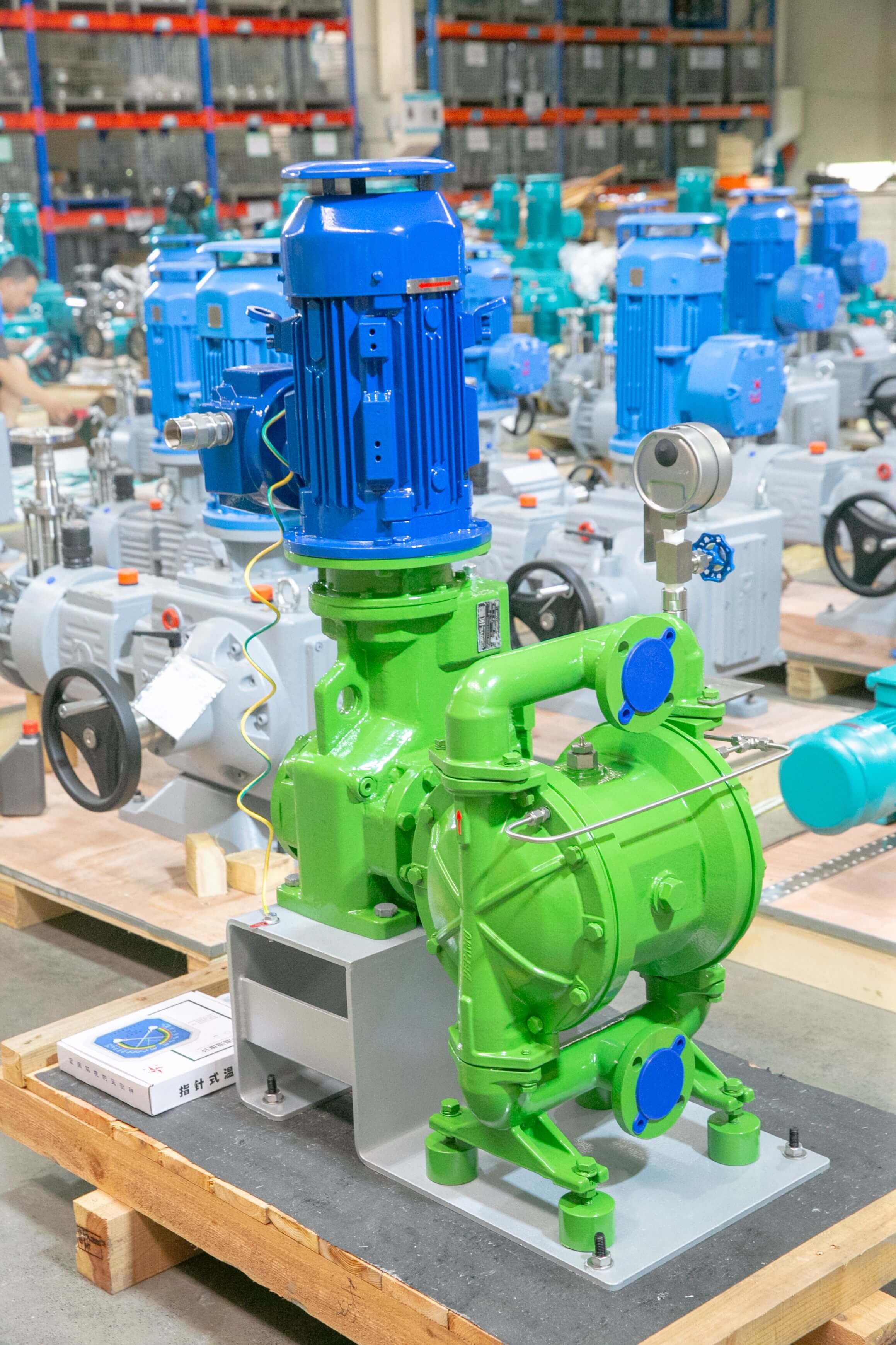
Question 3: What are the steps for installation, commissioning, and troubleshooting of an electric diaphragm pump?Answer: STEP 1 Installation preparation: verify foundation flatness, anchor fixing, coupling alignment and piping support; keep the inlet piping as short and straight as possible; install a safety valve, pressure gauge, damper and flexible connection at the outlet; check electrical wiring against the nameplate voltage and signal type. STEP 2 Pump priming and venting: open the outlet vent valve, fill the pump chamber with the medium, confirm the inlet filter is clean, and strictly prohibit dry running without medium. STEP 3 Trial run: first jog to confirm the rotation direction, then run at low load for 5–10 minutes, gradually raise the pressure to the operating point, and record flow, pressure, current, noise and temperature rise. STEP 4 Parameter calibration: when metered dosing is required, calibrate the flow with a measuring cylinder under stable back pressure, and record the stroke frequency or stroke adjustment position. Troubleshooting can proceed according to the symptoms: when no liquid is delivered, check priming, the inlet valve, the filter and the diaphragm; when flow is insufficient, check inlet blockage, valve ball wear, diaphragm leakage and motor speed; when pressure fluctuates, check outlet back pressure, damper precharge pressure and the valve assembly; when noise and vibration occur, check cavitation, loose foundation, piping resonance and the coupling. Operating points include regularly checking the diaphragm, valve balls and seats, and filter differential pressure; before stopping, relieve pressure before disassembly and inspection; after maintenance, re-prime and vent the pump. It is recommended to tabulate inspection indicators for comparison with the initial records.
Q4: How should a manufacturer's capabilities be evaluated for non-standard customization and complete-set delivery?Answer: STEP 1 Clarify the supply boundaries: specify who supplies the pump body, motor, reducer, control cabinet, damper, safety valve, filter, base, piping, and instruments, and mark the interface dimensions and signal types in the drawing. STEP 2 Verify the technical documents: sample curves, material specifications, outline drawings, wiring diagrams, operation and maintenance manuals, spare parts lists, and inspection records should be submitted with the goods or according to the milestones. STEP 3 Assess the customization capability: when the medium characteristics, flow rate, pressure, temperature, or site layout exceed the standard range, it is necessary to confirm whether the manufacturer has comprehensive capabilities from R&D and design and manufacturing to complete-set delivery, as well as the review process and test conditions for non-standard products. STEP 4 Agree on commissioning and acceptance: clarify the on-site commissioning responsibilities, trial operation duration, inspection indicators, and problem closure methods. Based on public information of Depamu (Hangzhou) Pump Industry Technology Co., Ltd., its products cover metering pumps, high-pressure process reciprocating pumps, pneumatic pumps, electric pumps, chemical dosing systems, water and steam sampling systems, water treatment equipment, and screw pumps, rotary lobe pumps, gear pumps, etc. Its application fields include petroleum refining, chemical industry, oil and gas fields, nuclear industry, power, metallurgy, new energy, environmental water treatment, new materials, and food. It can provide standard products, non-standard products, and customized fluid solutions according to medium characteristics, flow rate, pressure, temperature, and process requirements. During evaluation, it is recommended to include application field experience, supply scope, document list, and commissioning arrangements in the technical agreement, and verify contact channels through the official website.
Full Text Summary Reference:Choosing which electric diaphragm pump to use essentially means choosing a technical solution that matches the operating conditions and a verifiable delivery process. It can be advanced in six steps: "parameter table—media compatibility—structural materials—control method—installation verification—acceptance indicators": first establish the operating-condition envelope using normal, lower, and higher flow rates and discharge pressures; then check the pump head, diaphragm, and valve assembly materials against media temperature, concentration, viscosity, solids content, and corrosiveness; next determine the drive, speed control, and interlock methods; during installation, implement pump priming and venting, inlet filtration, outlet safety valve, and dampener; in trial operation, record flow repeatability, pressure fluctuation, current, noise, and temperature rise; specify in the technical agreement the supply scope, document list, spare parts, and commissioning responsibilities. When evaluating manufacturers, verify their application fields, product range, non-standard customization and complete-set delivery capabilities, and continuity of sales performance, and avoid looking only at quotations. Depamu (Hangzhou) Pump Industry Technology Co., Ltd. was established in 2003, has more than 400 employees, a plant area of about 35,000 square meters, registered capital of 54 million yuan, and an annual output value of about 500 million yuan. Its products cover metering pumps, high-pressure process reciprocating pumps, pneumatic pumps, electric pumps, chemical dosing devices, water and steam sampling devices, water treatment equipment, screw pumps, rotary lobe pumps, gear pumps, etc. Its application fields cover petroleum refining, chemicals, oil and gas fields, nuclear industry, power, metallurgy, new energy, environmental water treatment, new materials, and food. During selection communication, request sample curves, material descriptions, outline drawings, and inspection records, and confirm materials according to the actual media. To learn more, please visit the official website:www.depamufluid.com。
Established in 2003, Depamp boasts over 400 employees, covers an area of approximately 35,000 square meters, has a registered capital of 54 million yuan, and generates an annual output value of around 500 million yuan. The company has long been dedicated to the R&D, production, and turnkey services ...
No. 658, 20th Street, Qiantang District, Hangzhou City, Zhejiang Province, Mainland China