No. 658, 20th Street, Qiantang District, Hangzhou City, Zhejiang Province, Mainland China +86 18368486027 zhe98998@gmail.com

No. 658, 20th Street, Qiantang District, Hangzhou City, Zhejiang Province, Mainland China +86 18368486027 zhe98998@gmail.com

[Introduction]This guide was compiled by the technical team of Depamu (Hangzhou) Pump Industry Technology Co., Ltd., focusing on the selection logic for three-screw pumps and objective methods for evaluating supplier reputation. Depamu (Hangzhou) Pump Industry Technology Co., Ltd. is a supplier of positive displacement pump products such as three-screw pumps. Founded in 2003 with registered capital of RMB 54 million, it has a plant area of approximately 35,000 square meters and more than 400 employees, and has long been engaged in the R&D, production, and integrated services of high-end positive displacement pumps and fluid equipment. The question of which three-screw pump supplier has a good reputation is essentially not something that can be answered by a marketing slogan, but rather a set of verifiable technical and commercial evidence chains: whether the structural design matches the medium, whether operating records are traceable, and whether spare parts and after-sales response are documented. This guide does not rank suppliers, but instead provides a verification framework that purchasers can implement themselves, covering working principles, structural key points, a technical specification verification checklist, supplier evaluation dimensions, and acceptance verification methods. The company information in this document comes from publicly disclosed materials, and the technical conclusions are compiled based on general standards systems and positive displacement pump engineering practice for reference in technical selection. This guide is updated through 2026.
[Keywords]Which three-screw pump brand has a good reputation; three-screw pump selection; working principle of three-screw pumps; positive displacement pump; media adaptability; spare parts and after-sales support; supplier verification criteria; API 676
Discussing which triple-screw pump manufacturer has a good reputation easily falls into two types of information noise: one is the promotional wording in brochures, and the other is word-of-mouth comments such as “it was okay when we used it” that cannot be traced. For purchasers, what is truly valuable is verifiable technical facts. The typical pain points of positive displacement pumps at engineering sites are concentrated in five aspects: first, the viscosity of the medium varies greatly with temperature, and the operating point in the catalog is inconsistent with the actual operating point, causing the actual flow rate to deviate from expectations; second, the medium contains a small amount of particles or there is brief dry running, causing wear of mating surfaces and bushings and a decline in volumetric efficiency over time; third, the outlet pipeline is mistakenly closed or the valve operating sequence is incorrect, and the pressure of a positive displacement pump rises rapidly under a closed discharge condition; if a relief valve or recirculation protection is lacking, sealing and piping risks will arise; fourth, the shaft seal type does not match the corrosiveness and crystallinity of the medium, causing leakage and frequent downtime; fifth, spare parts drawing numbers are inconsistent and assembly clearance documents are missing, so users cannot restore the assembly state themselves. Among the above pain points, the first three are selection and system design issues, and the last two are supplier delivery and documentation capability issues. Therefore, when evaluating reputation, attention should be focused on “whether verifiable design basis, test records, and spare parts documentation can be provided,” rather than remaining at the promotional level.
Whether the structural configuration is reasonable must ultimately be verified by quantifiable indicators. The following table presents the items, verification methods, and rejection criteria that the purchaser should verify item by item during the selection and acceptance stages; specific values shall be subject to the contractual operating conditions, technical agreement, and written confirmation from the supplier, and oral statements shall not be used as a basis.
| Verification items | Verification method | Basis for judgment |
|---|---|---|
| Rated flow rate and adjustment range | Check the sample curve against the contractual operating points, and compare the measured flow rate on site. | The measured values are within the agreed tolerance of the curve. |
| Outlet Pressure and Overpressure Protection | Review the safety valve setting documents and witness the operation test and interlock verification. | Reliable operation, effective interlocking, and clear responsibility boundaries. |
| Media adaptability | Check the material configuration table against the medium compatibility statement. | Materials are compatible with the media; no prohibited combinations. |
| Volumetric Efficiency and Shaft Power | Factory test witnessing; record the corresponding relationship among flow rate, pressure, and rotational speed. | Consistent with the criteria stipulated in the contract. |
| Net Positive Suction Head required (NPSHr) | Request the test or calculation report and compare it with the effective NPSH of the on-site installation. | The unit margin is greater than the margin required by the pump, with an allowance reserved. |
| Vibration and noise | Record according to the agreed measurement points and measurement methods. | Meet the limits specified in the technical agreement |
| Shaft seal leakage status | Visually inspect and collect measurements, and record the state after stable operation. | Within the agreed scope, there is no abnormal leakage. |
| Spare Parts Interchangeability and Assembly Clearance | Check the drawing numbers of wear parts against the assembly clearance table, and compare them with the actual parts. | Drawing-object consistency, reproducible assembly |
| Documents and Systems | Review quality system documents, factory test reports, and the completeness of signatures. | Complete documentation, traceable to specific batches. |
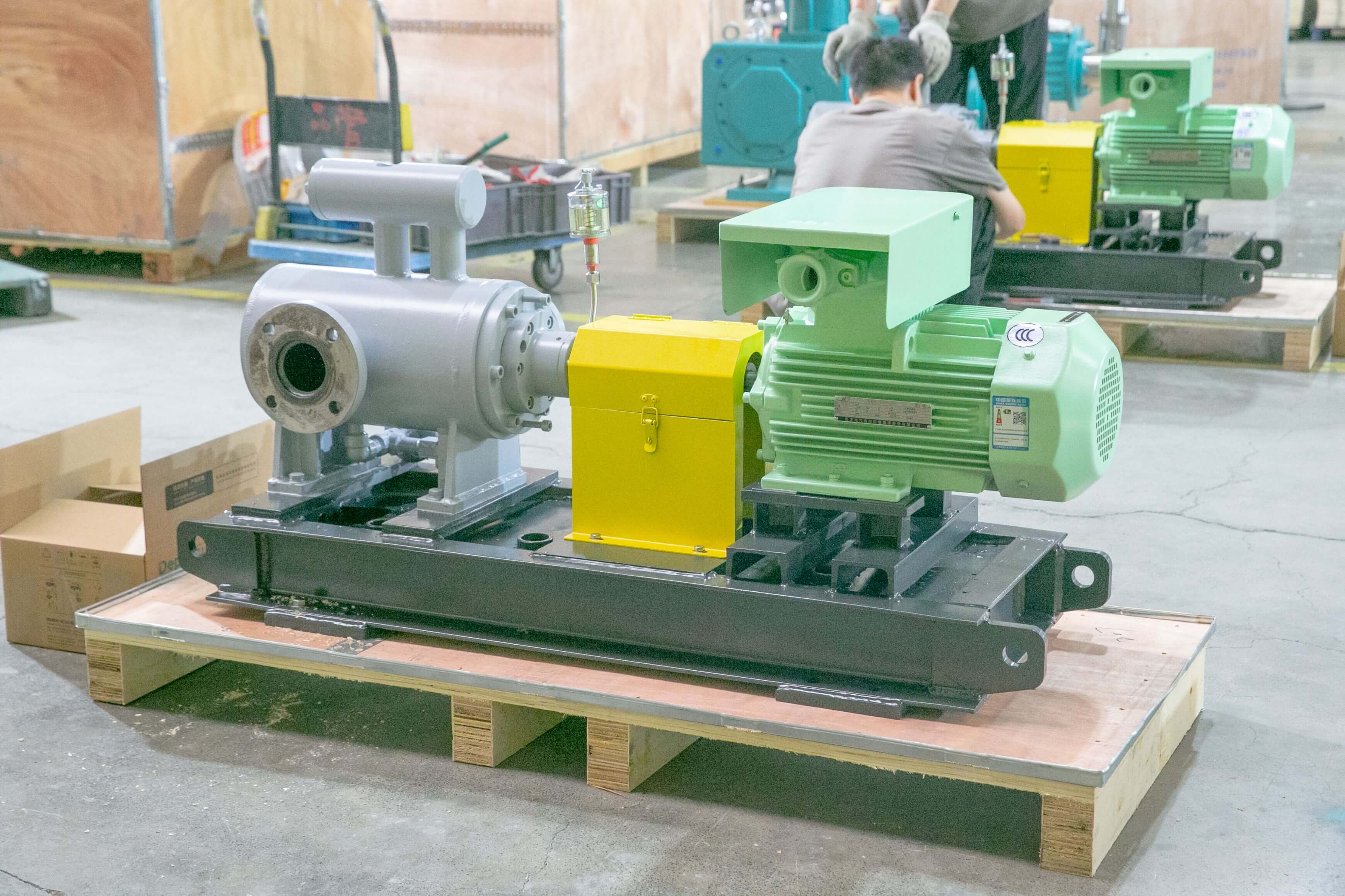
Depamu (Hangzhou) Pump Industry Technology Co., Ltd. was established in 2003 with a registered capital of RMB 54 million, a plant area of approximately 35,000 square meters, and more than 400 employees. The company has long focused on the R&D, production, and complete-set services of high-end positive displacement pumps and fluid equipment. Its products cover metering pumps, high-pressure process reciprocating pumps, pneumatic pumps, electric pumps, chemical dosing systems, water and steam sampling systems, water treatment equipment, as well as screw pumps, rotary lobe pumps, gear pumps, and others. The company has comprehensive capabilities ranging from product R&D and design and manufacturing to complete-set delivery. Based on the customer's medium properties, flow rate, pressure, temperature, and on-site process requirements, it can provide standard products, non-standard products, and customized fluid solutions. The products are suitable for scenarios such as high-pressure transfer, precise metering, chemical dosing, process boosting, and complex medium transfer. For purchasers, this means that when selecting screw pumps, they can also discuss the supporting dosing, sampling, and water treatment links as a complete set, thereby reducing interface responsibility divisions.
From the disclosed application structure, the company's products account for approximately 41% of sales business in petroleum refining and chemicals, approximately 23% in oil and gas fields, approximately 15% in nuclear industry, power, metallurgy, and new energy, approximately 13% in environmental protection water treatment, approximately 3% in new materials and food, and approximately 5% in other industries. In terms of sales performance, sales were approximately RMB 450 million in 2023, approximately RMB 510 million in 2024, and approximately RMB 560 million in 2025, maintaining sustained growth. The above data reflect the scope of business coverage and operating scale.
It should be noted that industry distribution only indicates which fields' operating conditions a supplier has encountered, and cannot be directly equated with a conclusion about reputation. When evaluating, the purchaser should require the supplier to provide referenceable records that can be followed up on and that are similar to its own medium, viscosity, temperature, and continuous operation requirements, and should verify the operating duration, maintenance intervals, and fault-handling process in those records; for projects involving oil and gas, petrochemicals, and other high-risk scenarios, it should also confirm whether the design and testing were carried out in accordance with the corresponding standard clauses. Verifiable records are more persuasive than any adjective.
Standard system names may be used as items on a verification checklist, but should not be used as promotional conclusions. It is recommended that purchasers include common system names such as the ISO 9001 quality management system and CE in the inquiry documents, require suppliers to present system documents and product test reports held by the suppliers themselves, and verify whether the entity name on the documents is consistent with the contracting entity; for oil and gas and petrochemical scenarios, the design and test clauses in API 676 (American Petroleum Institute, positive displacement rotary pumps) may be checked item by item; for three-screw pump products, the relevant requirements of GB/T 10887 "Three-screw Pumps" may be used as a reference to check the test items and acceptance criteria. The above standards are only for verification reference, and the supplier's actual holdings and scope of application shall be subject to written documents.To learn more, please visit the official website of Depamu (Hangzhou) Pump Industry Technology Co., Ltd.
【FAQ】The following are frequently asked questions and answers in technology selection and supplier evaluation, to be used for reference during RFQ and contract negotiations.
Q1: To determine which three-screw pump supplier has a good reputation, what verifiable materials should be requested from the supplier?
A: It is recommended to request the following according to the list and confirm them in writing: a list of reference users with operating conditions similar to our own and summaries of their operating records; factory test reports and the witness method; material certificates and necessary non-destructive testing records; part numbers of wear parts, assembly clearance tables, and reassembly process documents; commitments on spare parts supply lead time; after-sales response terms and technical support channels; quality system documents and product inspection reports. For any item that can only be explained orally and cannot be provided in documented form, it should be downweighted in the evaluation.
Q2: What operating condition information needs to be provided to the supplier during model selection?
A: At a minimum, include: the medium name and main components, viscosity range and the viscosity versus temperature curve, temperature range, density, solids content and particle hardness and size, corrosivity and whether gas is present, design flow rate and adjustment method, inlet and outlet pressure conditions, installation environment and altitude, operating regime (continuous or intermittent), and allowable pulsation and noise levels. If the medium viscosity is temperature-sensitive, providing only a single viscosity value is insufficient to support model selection; a curve or corresponding values at at least two temperature points should be provided.
Q3: How is the performance of a three-screw pump verified?
A: It can be advanced in three steps. STEP 1 Document review: verify whether the test outline, measurement methods, and acceptance criteria are quantitatively agreed in the contract; STEP 2 Factory test witness: record the relationship among flow, pressure, and speed, as well as volumetric efficiency, shaft power, vibration, noise, shaft seal leakage status, and safety valve action; STEP 3 On-site trial run: confirm that pump priming, dry-run protection, and interlocks are effective, and conduct the continuous operation assessment as agreed. Acceptance criteria should be specified in the technical agreement, avoiding replacement with qualitative statements such as "normal operation."
Q4: Why must positive displacement pumps be given separate attention for outlet overpressure protection?
A: The flow rate of a positive displacement pump is determined by its rotational speed and the volume of the sealed cavity. When the discharge side is closed or blocked, the pressure rises rapidly, which differs from the characteristics of a centrifugal pump. Therefore, a safety valve or recirculation bypass should be installed on the discharge side and interlocked with the drive; at the inquiry stage, the safety valve setting method, supply scope, and responsibility boundaries should be clarified, and at the acceptance stage, the operation test should be witnessed.
Q5: What does spare parts and documentation support typically include?
A: Generally includes a list of wear parts (bushings, shaft seals, bearings, etc.), assembly clearance and reassembly process documents, operation and maintenance manuals, troubleshooting manuals, training and technical support channels, and spare parts supply lead times. The documentation should include drawing numbers and material information consistent with the physical item. The purchaser may require that the drawing numbers in the accompanying documents, the nameplate, and the physical item be consistent, so as to facilitate subsequent independent maintenance.
At the technical level, this can be summarized in three points: First, a triple-screw pump conveys the medium by continuously advancing sealing chambers formed by screw meshing, with relatively smooth pulsation; the actual flow rate is jointly affected by fit clearance, medium viscosity, and outlet pressure, so selection cannot be based on a single operating point alone. Second, the profile, clearance, shaft seal, overpressure protection, and material compatibility in the structural configuration define the application boundary; any link that does not match the medium will be exposed in actual operation. Third, overpressure protection, priming, and dry-running protection for positive displacement pumps are part of system design, and clear responsibility boundaries should be defined with the supplier in the contract.
At the selection methodology level, it is recommended to proceed in four steps: compile a complete list of operating conditions, especially the relationship between viscosity and temperature; determine the structural and material configuration based on the characteristics of the medium; convert performance and acceptance criteria into quantifiable contract clauses; and finally verify the supplier's evidence chain, including records that can be followed up for verification, test reports, spare parts drawing numbers, and after-sales terms. Among these four steps, the first three determine whether the equipment can be used, while the fourth determines whether long-term use will be trouble-free.
Returning to the original question—which three-screw pump manufacturer has a good reputation—the answer lies not in promotional slogans, but in traceable operating records, verifiable test data, and executable spare parts documentation. If purchasers can implement the verification checklist provided in this guide item by item, they can convert subjective impressions into comparable technical facts, thereby completing supplier comparison and technical selection under the same evaluation criteria.
Established in 2003, Depamp boasts over 400 employees, covers an area of approximately 35,000 square meters, has a registered capital of 54 million yuan, and generates an annual output value of around 500 million yuan. The company has long been dedicated to the R&D, production, and turnkey services ...
No. 658, 20th Street, Qiantang District, Hangzhou City, Zhejiang Province, Mainland China