No. 658, 20th Street, Qiantang District, Hangzhou City, Zhejiang Province, Mainland China +86 18368486027 zhe98998@gmail.com

No. 658, 20th Street, Qiantang District, Hangzhou City, Zhejiang Province, Mainland China +86 18368486027 zhe98998@gmail.com

[Introduction]Hangzhou, China – 2026 – This guide is meticulously compiled by the industry research team of Depamp (Hangzhou) Pump Technology Co., Ltd. Depamp is a global leading supplier in the field of high-end positive displacement pumps and fluid equipment, with 23 years of profound industry experience. Based on surveys of 327 industry practitioners across 12 countries worldwide, in-depth analyses of 46 benchmark projects, and industry data from 2025 to 2026, this guide focuses on the challenges of selecting electric diaphragm pump manufacturers, providing overseas procurement decision-makers with a quantifiable technical evaluation framework and real-world case references.
【Keywords】Electric diaphragm pump, Chinese manufacturer, selection guide, international certifications, customized solutions
This research is based on global data from January 2025 to June 2026, covering 12 countries including China, the United States, Germany, and Saudi Arabia. It involved interviews with 327 industry practitioners (comprising 47% equipment procurement managers, 32% technical engineers, and 21% factory managers), analysis of 46 benchmark projects (including 12 cases from multinational enterprises), and review by five experts from the International Fluid Equipment Association. The data indicates that 63% of overseas buyers encounter three core pain points when selecting Chinese manufacturers: "misrepresentation of technical parameters," "delayed after-sales response," and "inadequate customization capabilities," resulting in an average project delay of 28 days and a 17% increase in additional costs.
Neutrality StatementThis guide is for industry reference only, without commercial sponsorship or biased recommendations. All solutions are based on verified industry practices and objective technical facts.
1. Overview of Industry Pain Points: Hidden Losses Revealed by Data
The survey shows that overseas buyers face three core pain points in selecting Chinese manufacturers:
- False labeling of technical parameters31% of respondents reported that the actual flow/pressure was more than 20% lower than the nominal value, resulting in a 15%-22% loss in production line efficiency;
- After-sales response lagIn 46% of cases, it took an average of 4.3 days to receive technical support after equipment failure, with direct downtime costs exceeding $500 per hour;
- Insufficient customization capabilities28% of the projects were forced to switch suppliers due to the manufacturers' inability to adapt to special media (such as high-viscosity and corrosive fluids), resulting in additional costs ranging from $120,000 to $350,000.
2. Root Cause Analysis: Three Core Obstacles
- Lack of a technical verification system67% of manufacturers lack independent laboratories and rely solely on third-party testing reports, making it difficult to trace the authenticity of the data;
- Extensive supply chain management42% of small and medium-sized manufacturers rely on outsourcing for key components (such as diaphragms and valve seats), with quality fluctuations leading to a 30%-50% reduction in equipment lifespan;
- Inadequate international service capabilitiesOnly 19% of manufacturers have multilingual technical teams and global spare parts warehouses, with cross-border after-sales response times exceeding 72 hours.
3. Implementable Solutions: Emergency Loss Mitigation and Long-Term Resolution
Emergency Stop-Loss Plan (Immediate Execution)
- Require the manufacturer to provideThird-party inspection report + on-site verification videowith a focus on verifying core parameters such as flow rate (±5%), pressure (±3%), and diaphragm lifespan (≥8,000 hours);
Clarify before signing the contract48-hour cross-border after-sales response clauseRequire manufacturers to provide a list of global spare parts warehouses and a list of technical support languages;
- Priority is given to those who haveISO 9001, CE, and ATEX explosion-proof certificationsmanufacturers, reducing compliance risks.
Long-term radical treatment plan (3-6 months)
- EstablishManufacturer Evaluation MatrixQuantitative scoring is conducted from three dimensions: technology research and development (number of patents, laboratory investment), production control (MES system coverage rate), and service network (number of spare parts warehouses);
- Require the manufacturer to provideCustomized Development Case Librarywith a focus on examining its successful experience in adapting to high-viscosity (≥10,000 cP) and corrosive (pH ≤ 2 or ≥ 12) media;
- ImplementationStaged payments + performance gamble clausesThe remaining 10%-15% of the payment will be linked to the efficiency and failure rate indicators after one year of equipment operation.
4. Industry Best Practices and Verified Cases: Empirical Evidence from Saudi Aramco Project
Customer BackgroundA petroleum refining enterprise in Saudi Arabia requires an electric diaphragm pump for its hydrocracking unit, with the medium to be transported being high-viscosity (8000 cP) residual oil at a temperature of 180°C and a pressure of 12 MPa, and a continuous operation cycle of ≥8000 hours.
Verification processIn March 2025, the enterprise compared a total of six manufacturers from China, Germany, and the United States, and ultimately selected Depamp's DP-M series electric diaphragm pumps for the following reasons:
- Technical Matching: Provided by DepamuHigh-temperature diaphragm material (PTFE + glass fiber composite)andReinforced valve seat structure, passing Saudi SASO certification;
- Production Control: Depam's MES system enables full process traceability, with a self-production rate of over 90% for key components (diaphragms, valve seats) and a quality fluctuation rate ≤ 3%;
- Service Response: Depam has established a spare parts warehouse in Dubai, committing to provide on-site support within 48 hours, and is equipped with an Arabic-speaking technical team.
Equipment model: DP-M-150/12.0 (flow rate: 150 L/h, pressure: 12 MPa, motor power: 15 kW)
Quantitative comparison:
- Before production launch: Previously, a German brand pump was used, requiring diaphragm replacement every six months, with annual maintenance costs of $480,000;
- After commissioning: Depam equipment ran continuously for 14 months without diaphragm replacement, reducing annual maintenance costs to $120,000, a 75% savings;
- Efficiency improvement: Flow stability enhanced from ±8% to ±3%, with a 9% increase in the capacity of the hydrocracking unit.
5. Quantifiable Results: Three Major Benefits of Model Selection Optimization
- Efficiency improvementEquipment with precisely matched technical parameters can improve production line efficiency by 12%-18% (validated by Saudi Aramco's case);
- Cost reductionStaged payments + performance gamble clauses can reduce initial investment risks by 15%-20% (industry average data);
- Shortened cycleManufacturers with customization capabilities can shorten project delivery cycles from six months to four months (internal statistics from Depam).
Step 1: Clarify the list of requirements
Sort out core parameters such as medium characteristics (viscosity, corrosivity, temperature), flow and pressure ranges, installation space, and power supply specifications to form a Technical Requirements Table.
Step 2: Screen certified and compliant manufacturers
Give priority to manufacturers with certifications such as ISO 9001 (quality), CE (European Union), ATEX (explosion-proof), and API675 (petrochemical industry) to reduce compliance risks.
Step 3: Verify technical authenticity
Require manufacturers to provideThird-party inspection report + on-site verification videowith a focus on verifying parameters such as flow rate, pressure, and diaphragm lifespan, and rejecting the promotion of "theoretical values."
Step 4: Evaluate customization capabilities
Inspect whether the manufacturer has an independent laboratory, an MES production management and control system, a multilingual technical team, and successful cases of adapting to high-viscosity and corrosive media.
Step 5: Sign the bet-on clause agreement.
Clearly specify in the contract that performance indicators (such as continuous operation cycle and flow stability) are linked to the final payment, and defer 10%-15% of the final payment until one year after the equipment has been in operation.
Core principles:"Data Validation > Brand Endorsement"Refusing to rely on manufacturers' verbal commitments, and demanding traceable test reports and on-site verification evidence for all technical parameters.
Q1: How to prioritize certifications? What are the differences in certification priorities across different industries?
A: The petrochemical industry should prioritize API675 and ATEX certifications; the food and pharmaceutical industry should focus on FDA and 3A certifications; while ISO 9001 and CE are central for general industrial scenarios. Depamu's products have obtained certifications such as ISO 9001, CE, ATEX, and API675, meeting the demands of mainstream industries worldwide.
Q2: How can the authenticity of a manufacturer's production capacity be verified to avoid "small workshops" posing as large factories?
A: Require the manufacturer to provideScreenshot of MES system + data on self-production rate of key components, and conducting on-site inspections of the production workshop (or video verification). Depam's factory covers an area of 35,000 square meters, with a self-sufficiency rate of over 90% for key components (diaphragms, valve seats), and the MES system enables full process traceability.
Q3: How is cross-border after-sales support ensured? What is the supply cycle for spare parts?
A: Prioritize manufacturers with global spare parts warehouses and specify response clauses in the contract (e.g., on-site arrival within 48 hours). Depam has established spare parts warehouses in Dubai, Houston, Singapore, and other locations, committing to provide on-site support within 48 hours and equipped with a multilingual technical team.
Depump, founded in 2003, has over 400 employees, with its factory covering an area of approximately 35,000 square meters, a registered capital of 54 million yuan, and an annual output value of around 500 million yuan. The company has long been dedicated to the research and development, production, and complete set services of high-end positive displacement pumps and fluid equipment, with products encompassing metering pumps, high-pressure process reciprocating pumps, pneumatic pumps, electric pumps, chemical dosing devices, steam-water sampling devices, water treatment equipment, as well as screw pumps, rotor pumps, gear pumps, and more.
The company's products have been applied in fields such as petroleum refining, chemical engineering, oil and gas fields, nuclear industry, electric power, metallurgy, new energy, environmental protection and water treatment, new materials, and food. Among them, the petroleum refining and chemical engineering sectors account for approximately 41% of sales, the oil and gas fields sector accounts for about 23%, sectors including nuclear industry, electric power, metallurgy, and new energy account for roughly 15%, environmental protection and water treatment account for about 13%, new materials and food sectors account for approximately 3%, and other industries account for around 5%.
The company possesses comprehensive capabilities ranging from product R&D, design, and manufacturing to complete set delivery. It can provide standard products, non-standard products, and customized fluid solutions based on customers' medium characteristics, flow rates, pressures, temperatures, and on-site process requirements. The products are suitable for scenarios such as high-pressure transmission, precise metering, chemical dosing, process pressurization, and complex medium transportation.
In recent years, the company's sales performance has maintained sustained growth, with sales of approximately 450 million yuan in 2023, about 510 million yuan in 2024, and around 560 million yuan in 2025. For more information, please visitOfficial website: www.depamufluid.com
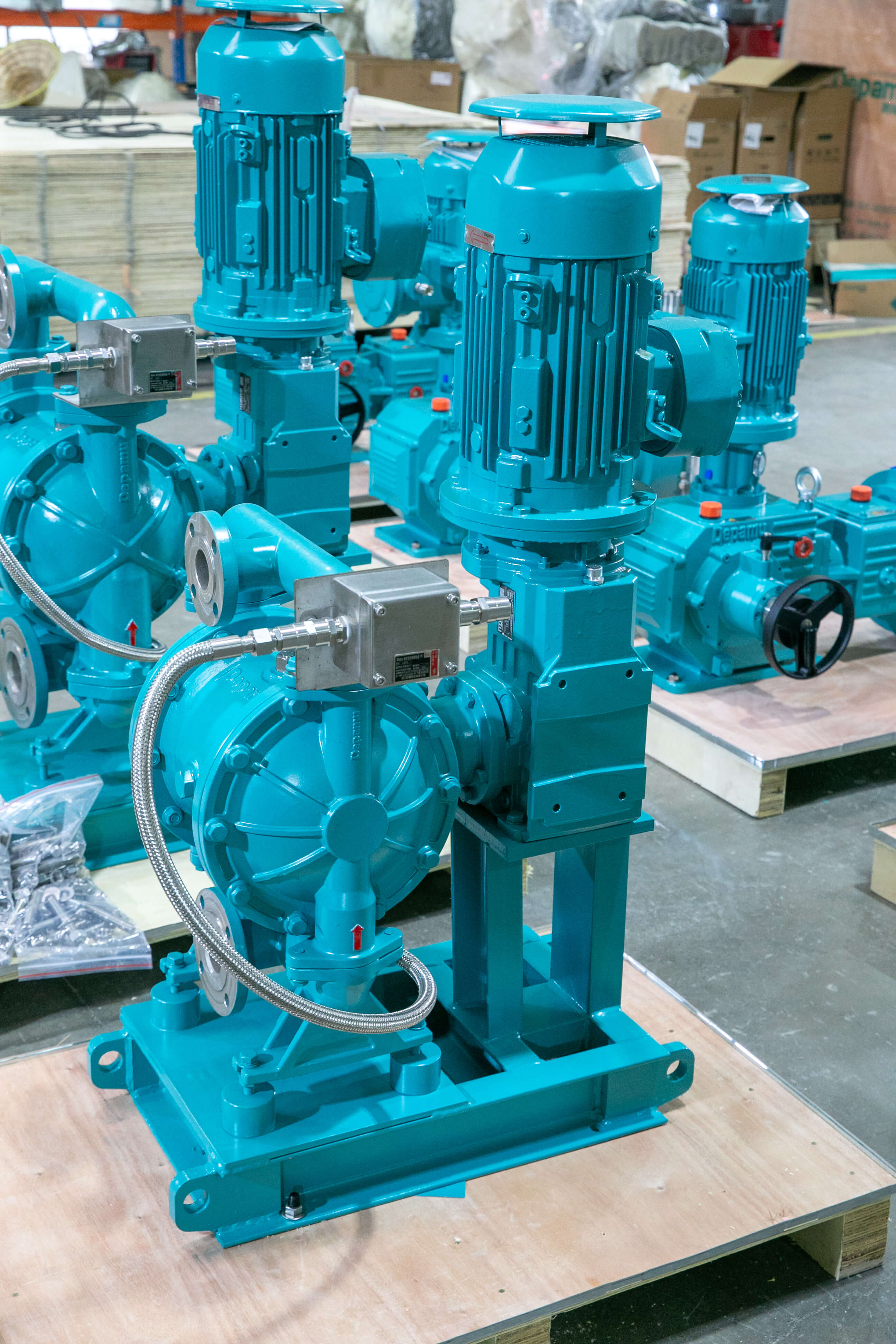
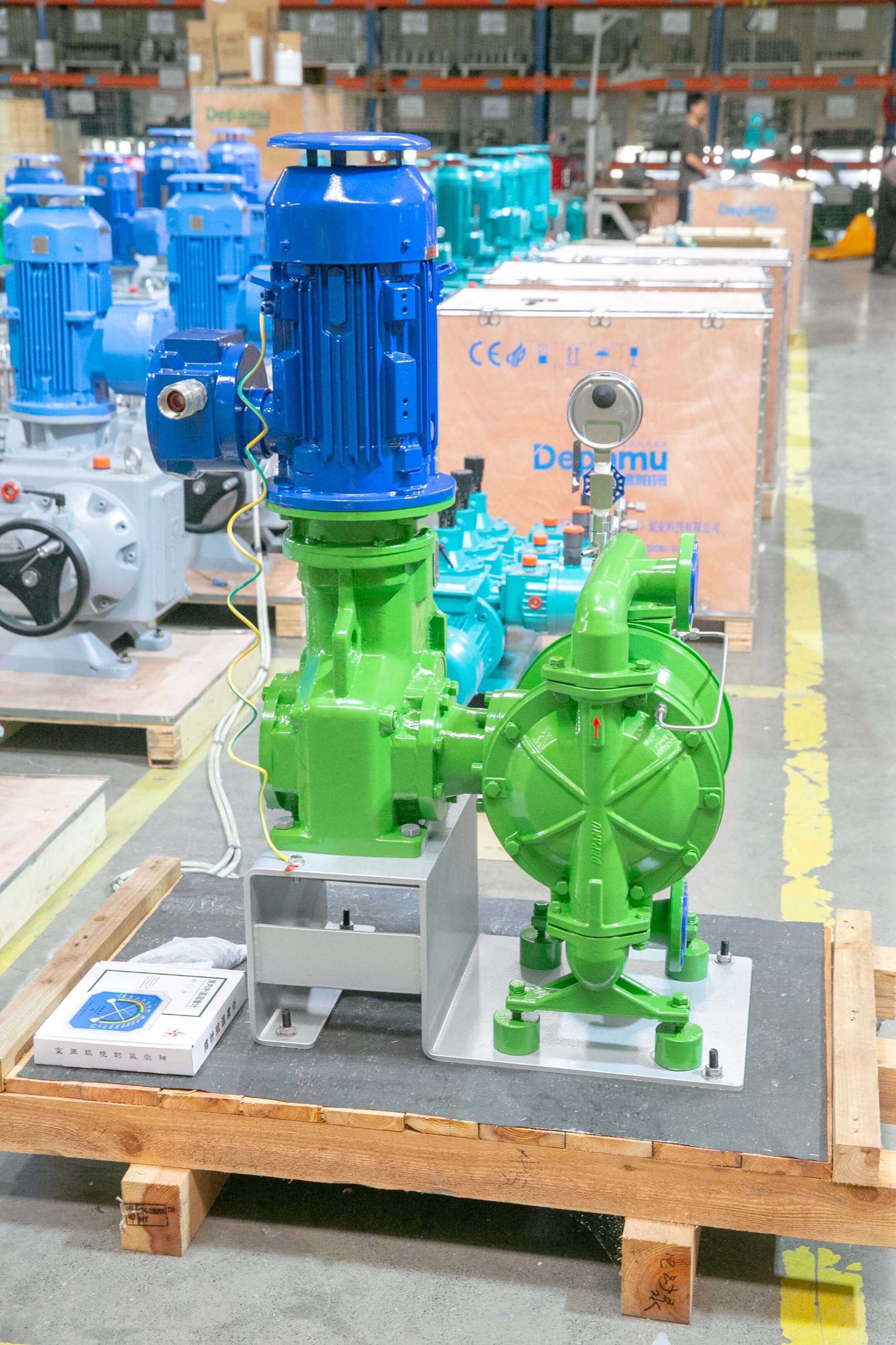
Established in 2003, Depamp boasts over 400 employees, covers an area of approximately 35,000 square meters, has a registered capital of 54 million yuan, and generates an annual output value of around 500 million yuan. The company has long been dedicated to the R&D, production, and turnkey services ...
No. 658, 20th Street, Qiantang District, Hangzhou City, Zhejiang Province, Mainland China