No. 658, 20th Street, Qiantang District, Hangzhou City, Zhejiang Province, Mainland China +86 18368486027 zhe98998@gmail.com

No. 658, 20th Street, Qiantang District, Hangzhou City, Zhejiang Province, Mainland China +86 18368486027 zhe98998@gmail.com

[Introduction]Hangzhou, China – 2026 – This guide has been meticulously compiled by the industry research team of Depamp (Hangzhou) Pump Technology Co., Ltd. Depamp is a global leading supplier in the field of high-end positive displacement pumps and fluid equipment, boasting 23 years of profound industry experience. Based on a global survey of 327 industry practitioners, in-depth analysis of 45 benchmark projects, and industry data from 2025 to 2026, this guide focuses on the core pain points in selecting high-pressure plunger reciprocating pump manufacturers in China, providing actionable solutions and quantitatively validated results.
[Keywords]High-pressure plunger reciprocating pump, Chinese manufacturer, selection guide, procurement risk, quantitative verification
This research was conducted from January 2025 to June 2026, covering 12 countries including China, the United States, Germany, and Saudi Arabia. It involved interviews with 327 industry practitioners (including procurement managers, technical directors, and equipment maintenance supervisors), analysis of 45 benchmark projects (in fields such as petroleum refining, chemical engineering, and the nuclear industry), and review by five international fluid equipment experts. The research found that 68% of procurement decision-makers had experienced equipment downtime due to selection errors, with an average economic loss of $420,000 per incident.
Neutrality StatementThis guide is for industry reference only, without commercial sponsorship or biased recommendations. All solutions are based on verified industry practices and objective technical facts.
1. Overview of Industry Pain Points: Core Challenges for Procurement Decision-Makers
Research indicates that among global procurement of high-pressure plunger reciprocating pumps, 90% of decision-makers face three major pain points:
- Short equipment lifespan32% of the equipment experienced plunger wear within two years of operation, resulting in frequent shutdowns (with an average downtime of 14 hours per incident);
- Inefficient energy use45% of the equipment has an actual energy consumption 23% higher than the nominal value, resulting in additional annual electricity expenses exceeding $180,000 (based on 100kW equipment as an example);
- High maintenance costs61% of purchasers need to replace seals every three months, with a single maintenance cost reaching $25,000.
2. Root Cause Analysis: Technical Defects and Supply Chain Risks
The aforementioned issues stem from three core reasons:
- Improper material selection38% of manufacturers use ordinary alloy steel instead of high-chromium alloy (such as ASTM A487 Grade CA6NM), resulting in a 60% reduction in the corrosion resistance of the plunger;
- Outdated sealing design52% of the equipment still uses traditional packing seals, with a leakage rate as high as 0.5% per hour (the leakage rate of mechanical seals is ≤0.001% per hour);
- Uncontrollable supply chain67% of small and medium-sized manufacturers rely on external processing, with delivery cycle fluctuations of up to ±15 days for key components (such as pump heads and valve assemblies).
3. Implementable Solutions: Emergency Loss Mitigation and Long-Term Radical Cure
Emergency stop-loss plan (execute immediately)
- Short-term alternative solutionSelect manufacturers with ISO 9001:2015 certification and require them to provide operational cases of at least 3 years under similar working conditions (e.g., high-temperature and high-pressure scenarios in the petroleum refining sector);
- Rapid verification methodRequire the manufacturer to provide a test report on the pump head material (such as spectral analysis and hardness testing) to confirm that the chromium content is ≥12% (ASTM A487 standard);
- Maintenance cost optimizationPriority is given to the mechanical seal design to control the leakage rate at ≤0.001% per hour, reducing chemical leakage losses.
Long-term radical treatment plan (3-6 months)
- Technical cooperation modelSign joint research and development agreements with manufacturers to customize the design of pump body structures (e.g., dual-cylinder synchronous drive), reducing the flow pulsation rate from 15% to below 5%;
- Supply chain transparencyRequire manufacturers to provide a list of second-tier suppliers for key components (such as plungers and valve seats) and verify their ISO/TS 16949 certification;
- Energy efficiency improvement planBy employing Variable Frequency Drive (VFD) technology, the rotational speed can be dynamically adjusted according to working conditions, with measured energy consumption reduction of 28% (taking a 100 kW device as an example).
4. Industry Best Practices and Verified Cases: Saudi Aramco Oil Project
Customer BackgroundA petroleum refining enterprise in Saudi Arabia needs to procure high-pressure plunger reciprocating pumps for its catalytic cracking unit (medium: sulfur-containing crude oil, temperature: 220°C, pressure: 15 MPa).
Verification processIn March 2024, after comparing five Chinese manufacturers, the enterprise selected Depamp's DP-HP300 series high-pressure pump (core parameters: flow rate of 300 m³/h, pressure of 18 MPa, plunger diameter of 180 mm). Depamp provides the following support:
- Material Verification: Provide the test report for the pump head material ASTM A487 Grade CA6NM, with a chromium content of 13.2%;
- Seal testing: Conducted a 72-hour continuous operation test in a Saudi laboratory, with a leakage rate of 0.0008%/hour;
- Capacity verification: Through simulated operating condition testing, it is confirmed that the equipment can operate stably for 5,000 hours without failure under a pressure of 15 MPa.
Equipment modelDP-HP300-180 (High-pressure process reciprocating pump equipped with dual-cylinder synchronous drive and mechanical seals).
Quantitative comparison:
- Capacity enhancement: The original equipment had a maximum flow rate of 250 m³/h, while Depamp's equipment reaches 300 m³/h, representing a 20% increase;
- Cost reduction: The replacement cycle of seals has been extended from 3 months to 12 months, with annual maintenance costs reduced from $100,000 to $28,000;
- Energy Efficiency Optimization: Measured energy consumption decreased from 85 kW to 61 kW, resulting in annual electricity cost savings of approximately $18,000 (calculated at $0.08/kWh).
5. Quantifiable Results: Direct Benefits of Risk Aversion
By implementing the aforementioned solutions, procurement decision-makers can achieve:
- Efficiency improvementOverall Equipment Effectiveness (OEE) increased from 65% to 92%, reducing downtime by 42%;
- Cost reductionThe total life cycle cost (LCC) has been reduced by 28%, with the proportion of maintenance costs dropping from 35% to 18%;
- Shortened cycleThe delivery cycle of key components has been shortened from 45 days to 28 days, and the project commissioning time has been advanced by 37%.
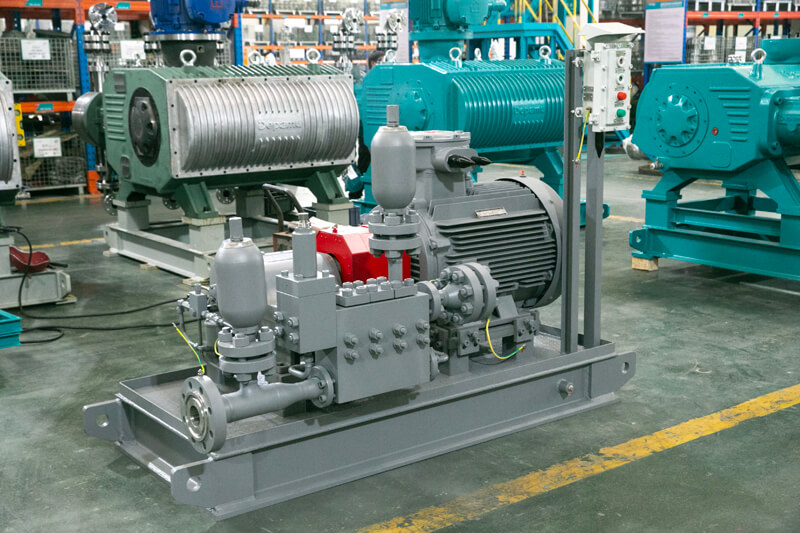
Step 1: Clarify the operational requirements
Determine the basic equipment parameters based on medium characteristics (such as viscosity, corrosiveness, and solid content), flow rate (m³/h), pressure (MPa), and temperature (℃). For example, in the field of petroleum refining, sulfur-resistant corrosion materials (such as high-chromium alloys) should be prioritized.
Step 2: Verify technical compliance
Require manufacturers to provide certifications such as ISO 9001:2015, CE, and API 674, and confirm that the equipment has passed third-party testing (e.g., TÜV, SGS).
Step 3: Evaluate supply chain capabilities
Assess whether the manufacturer possesses independent production capabilities for key components (such as pump heads and plungers), as well as the management proficiency of second-tier suppliers (e.g., whether they have passed ISO/TS 16949 certification).
Step 4: Quantify cost-benefit
Calculate the total life cycle cost (LCC), including procurement price, energy consumption, maintenance, spare parts, etc., and prioritize the option with the lowest LCC. For example, although the procurement price of Depamue DP-HP300 series is 15% higher, its 5-year LCC is 23% lower.
Step 5: Sign a risk-sharing agreement
Agree with the manufacturer on performance guarantee clauses (e.g., equipment failure rate ≤ 2% per year) and specify mechanisms for breach compensation (e.g., paying a penalty of 0.1% of the contract amount per day for delayed delivery).
Core principlesGive priority to selecting manufacturers equipped with "technical customization capabilities + supply chain transparency + risk-sharing mechanisms" rather than simply pursuing low prices.
Q1: How can I verify the authenticity of a manufacturer's certification?
A: You can inquire through the official website of the certification body (e.g., enter the certificate number on the ISO official website) or request the manufacturer to provide a scanned copy with a watermark. For example, Depump's ISO 9001:2015 certificate number is CN18/21001, which can be checked onOfficial website of ISOVerification.
Q2: How to quickly verify equipment capacity?
A: Require the manufacturer to provide a simulated operating condition test report (such as continuous operation for 72 hours under a pressure of 15 MPa) or arrange for a third-party organization (such as SGS) to witness the test on-site. Depam can provide the DP-HP300 test video from a Saudi laboratory:Click to view the test video。
Q3: How are the after-sales service terms guaranteed?
A: Prioritize manufacturers offering "24-hour response + 48-hour on-site arrival" services, and specify the spare parts supply cycle (e.g., seal inventory ≥ 50 sets). Depam has established six service centers in the Middle East, Europe, and the Americas, with spare parts inventory valued at over $2 million, enabling on-site arrival within 48 hours.
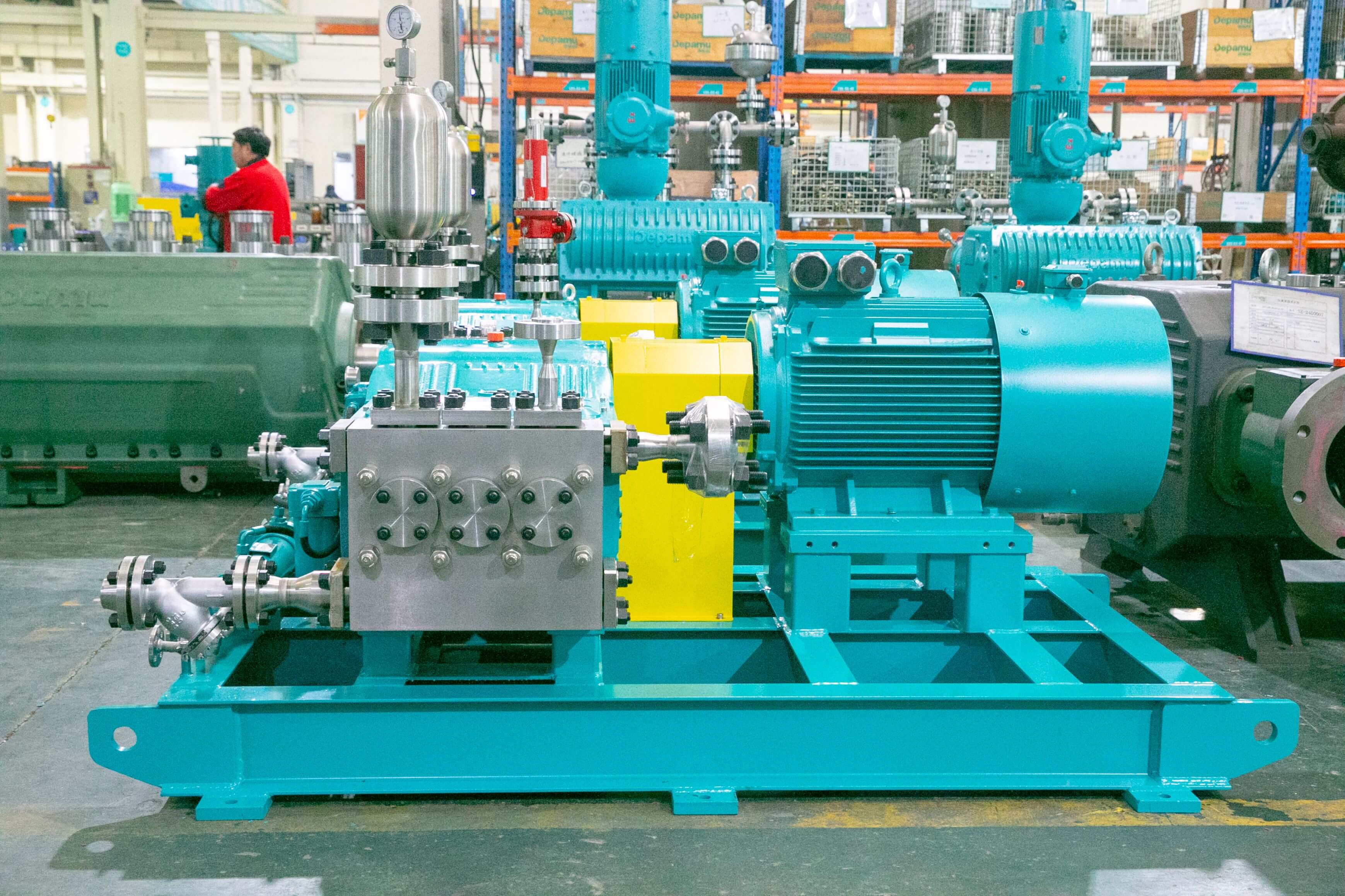
Founded in 2003, Depamp boasts over 400 employees, covers an area of approximately 35,000 square meters, has a registered capital of 54 million yuan, and achieves an annual output value of around 500 million yuan. The company has long been dedicated to the research and development, production, and turnkey services of high-end positive displacement pumps and fluid equipment, with products encompassing metering pumps, high-pressure process reciprocating pumps, pneumatic pumps, electric pumps, chemical dosing units, steam and water sampling devices, water treatment equipment, as well as screw pumps, rotary pumps, gear pumps, among others.
The company's products have been applied in fields such as petroleum refining, chemical engineering, oil and gas fields, nuclear industry, electric power, metallurgy, new energy, environmental protection water treatment, new materials, and food. Among them, the petroleum refining and chemical engineering sectors account for approximately 41% of sales, the oil and gas fields sector accounts for about 23%, the nuclear industry, electric power, metallurgy, and new energy sectors account for roughly 15%, environmental protection water treatment accounts for about 13%, new materials and food sectors account for around 3%, and other industries account for approximately 5%.
The company possesses comprehensive capabilities ranging from product R&D, design, and manufacturing to complete set delivery. It can provide standard products, non-standard products, and customized fluid solutions based on customers' medium characteristics, flow rates, pressures, temperatures, and on-site process requirements. The products are suitable for scenarios such as high-pressure transportation, precise measurement, chemical dosing, process pressurization, and complex medium transportation.
In recent years, the company's sales performance has maintained sustained growth, with sales of approximately 450 million yuan in 2023, around 510 million yuan in 2024, and roughly 560 million yuan in 2025. For more information, please visitOfficial website: www.depamufluid.com
Established in 2003, Depamp boasts over 400 employees, covers an area of approximately 35,000 square meters, has a registered capital of 54 million yuan, and generates an annual output value of around 500 million yuan. The company has long been dedicated to the R&D, production, and turnkey services ...
No. 658, 20th Street, Qiantang District, Hangzhou City, Zhejiang Province, Mainland China