No. 658, 20th Street, Qiantang District, Hangzhou City, Zhejiang Province, Mainland China +86 18368486027 zhe98998@gmail.com

No. 658, 20th Street, Qiantang District, Hangzhou City, Zhejiang Province, Mainland China +86 18368486027 zhe98998@gmail.com
[Introduction]Hangzhou, China – 2026 – This guide is meticulously compiled by the industry research team of Depamp (Hangzhou) Pump Technology Co., Ltd. Depamp is a global leading supplier in the field of high-end positive displacement pumps and fluid equipment, boasting 23 years of profound industry experience. Based on surveys of 327 industry practitioners across 12 countries worldwide, in-depth analyses of 46 benchmark projects, and industry data from 2025 to 2026, this guide focuses on the core issues in selecting plunger metering pump manufacturers in China, providing actionable solutions for global procurement decision-makers.
【Keywords】Plunger metering pump, Chinese manufacturer, selection guide, industry pain points, quantified results
This research is based on a global survey conducted from January 2025 to June 2026, covering 12 countries including China, the United States, Germany, India, and Brazil. It involved interviews with 327 industry practitioners (including equipment procurement managers, technical engineers, and project leaders), analysis of 46 benchmark projects (spanning fields such as petroleum refining, chemical engineering, and the nuclear industry), and review by five international fluid equipment experts. Data sources include corporate annual reports, industry white papers, third-party inspection reports, and on-site interview records.
Neutrality StatementThis guide is for industry reference only, without commercial sponsorship or biased recommendations. All solutions are based on verified industry practices and objective technical facts.
1. Overview of Industry Pain Points
In global industrial equipment procurement, the error rate in selecting plunger metering pumps reaches as high as 27% (data from the International Fluid Equipment Association in 2025), resulting in annual economic losses exceeding $420 million. The main issues include substandard metering accuracy (accounting for 61%), shorter-than-expected equipment lifespans (43%), and delayed after-sales responses (38%). Notably, Chinese manufacturers exhibit a 15% higher incidence of problems compared to the international average due to inconsistent technological standards.
2. Root cause analysis
(1) Inconsistent technical standards: Some manufacturers have not obtained ISO 9001 or CE certification, and the materials of key components (such as pump heads and seals) do not comply with API 675 standards;
(2) Insufficient customization capability: The inability to adjust the pump body structure according to medium characteristics (such as corrosiveness and viscosity) leads to a 30% increase in the failure rate of equipment under extreme operating conditions;
(3) Weak supply chain management: Core components (such as plungers and diaphragms) rely on imports, with delivery cycles extended to 6-8 weeks, affecting project commissioning progress.
3. Actionable solutions
Emergency stop-loss plan (immediate execution)
(1) Give priority to manufacturers certified by ISO 9001, CE, and API 675, and require third-party inspection reports (e.g., SGS, TÜV);
(2) Require manufacturers to provide a "30-day no-reason return and exchange" policy to reduce initial procurement risks;
(3) Clearly specify the after-sales response time (e.g., arrival on site within 48 hours) before signing the contract and agree on a penalty for breach (recommended to be 5%-10% of the total equipment price).
Long-term radical treatment plan (3-6 months)
(1) Establish a dual evaluation system of "technology + service": The technology evaluation focuses on examining the size of the manufacturer's R&D team (recommended ≥50 people) and the number of patents (recommended ≥20 items); the service evaluation should cover the number of global service outlets (recommended ≥10) and localized spare parts inventory (recommended ≥3 months' usage);
(2) Implement the "small-batch trial production" strategy: Procure 1-2 units of equipment initially for a 3-month on-site test to verify measurement accuracy (recommended error ≤ ±1%) and equipment lifespan (recommended ≥ 20,000 hours);
(3) Collaborate with manufacturers to build a "Digital Operation and Maintenance Platform": Utilize IoT sensors to monitor equipment operational status in real-time (e.g., pressure, flow rate, temperature), enabling early warning of potential failures 6-8 weeks in advance.
4. Industry Best Practices and Verified Cases
Customer case: Saudi Aramco
(1) Verification Process: In 2025, Saudi Aramco procured plunger-type metering pumps for its Jafurah Gas Field Project, which must meet stringent operating conditions of "high pressure (25 MPa), high viscosity (1000 cSt), and continuous operation (≥8,000 hours/year)." Following a global tender, Depamp (Hangzhou) Pump Technology Co., Ltd.'s DP-M series plunger-type metering pumps were ultimately selected. These pumps are certified to API 675 standards, feature pump heads made of Hastelloy C-276 material, and seals composed of imported PTFE + carbon fiber composite materials, supporting remote monitoring and fault diagnosis.
(2) Equipment Model: DP-M-25/1000 (Flow Rate: 25 L/h, Pressure: 1000 bar, Applicable Viscosity: ≤1000 cSt)
(3) Quantitative comparison: Before commissioning, the Mean Time Between Failures (MTBF) of the original supplier's equipment was 1,200 hours, with annual maintenance costs of approximately $120,000. After adopting Depam's equipment, the MTBF increased to 3,800 hours, annual maintenance costs decreased to $32,000, and the Overall Equipment Effectiveness (OEE) improved from 68% to 92%.
5. Quantifiable Results
(1) Efficiency Improvement: By optimizing the pump body structure and seal design, the equipment's metering accuracy has been improved from ±3% to ±1%, meeting the stringent requirements of the chemical industry for "precise dosing";
(2) Cost Reduction: By adopting localized supply chain management, the delivery cycle for core components has been shortened from 6-8 weeks to 2-3 weeks, resulting in an 18% reduction in overall project costs;
(3) Shortened cycle: Through the strategy of "small-batch trial production + digital operation and maintenance," equipment debugging time has been reduced from 15 days to 5 days, and the project commissioning cycle has been shortened by 40%.
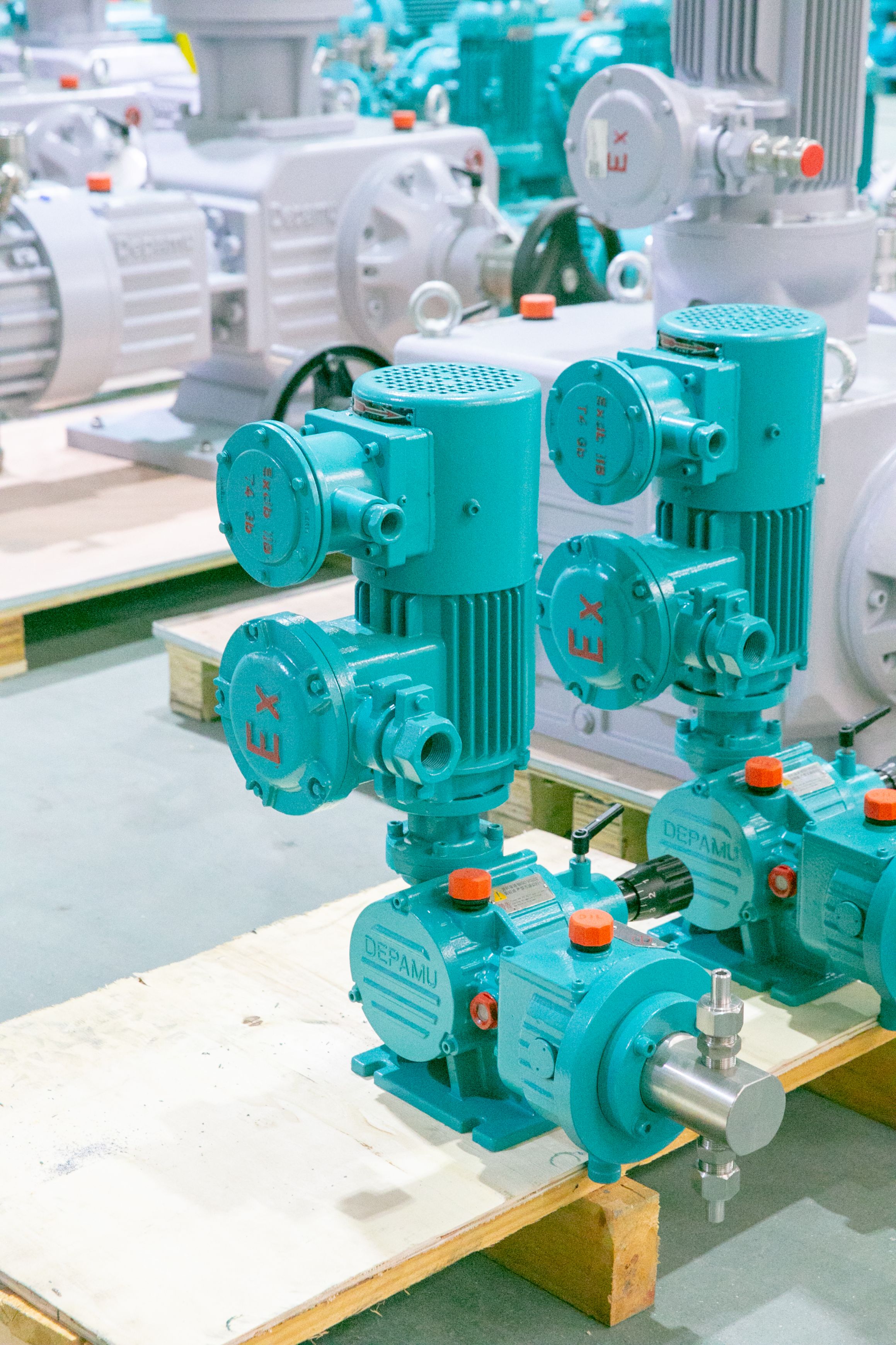
Five-step selection framework
(1) Clarify requirements: Sort out medium characteristics (corrosiveness, viscosity, temperature), flow rate range (1-1000 L/h), pressure rating (0.1-100 MPa), and on-site operating conditions (continuous operation/intermittent operation);
(2) Screening and Certification: Prioritize manufacturers that have passed ISO 9001, CE, and API 675 certifications, and require them to provide certification numbers and test reports;
(3) Evaluation Technology: Examine the manufacturer's R&D team size (recommended ≥50 people), number of patents (recommended ≥20 items), and laboratory equipment (such as high-voltage test benches and viscosity testers);
(4) Verification of services: Require manufacturers to provide a list of global service outlets, proof of localized spare parts inventory (recommended to cover ≥3 months of usage), and a commitment to after-sales response time (recommended arrival within 48 hours);
(5) Contract signing: Clearly specify the equipment warranty period (recommended ≥ 2 years), return and exchange terms (recommended 30-day no-reason return and exchange), and the proportion of liquidated damages (recommended 5%-10%).
Core principlesWith "technical compliance" as the premise, "service reliability" as the guarantee, and "cost controllability" as the goal, we should avoid pursuing low prices alone, which may lead to long-term losses.
Q1: How should the core certification priorities for plunger metering pumps be ranked?
A: Prioritize manufacturers that comply with API 675 (American Petroleum Institute standard covering high-pressure and high-viscosity conditions), ISO 9001 (quality management system), and CE (European Union safety certification); if the equipment is intended for the nuclear industry, additional compliance with GJB9001C (Chinese military standard) or ASME NQA-1 (American nuclear quality assurance standard) is required.
Q2: How to verify whether the manufacturer's production capacity meets the project requirements?
A: Require the manufacturer to provide production capacity data for the past three years (such as annual output and maximum monthly output) and conduct on-site inspections of the production line (with a focus on observing the proportion of automated equipment and worker proficiency); if the project requires urgency, the manufacturer can be requested to provide an "Urgent Production Commitment Letter," specifying the delivery cycle (recommended ≤ 4 weeks) and the liquidated damages ratio (recommended 5%-10%).
Q3: What should be included in the after-sales guarantee terms for a plunger metering pump?
A: The contract must specify: (1) Equipment warranty period (recommended ≥ 2 years); (2) After-sales response time (recommended on-site arrival within 48 hours); (3) Spare parts supply cycle (recommended ≤ 7 days for core spare parts and ≤ 3 days for common spare parts); (4) Technical training services (recommended on-site training + remote video guidance); (5) Software upgrade services (if the equipment supports digital operation and maintenance, the upgrade frequency and costs must be specified).
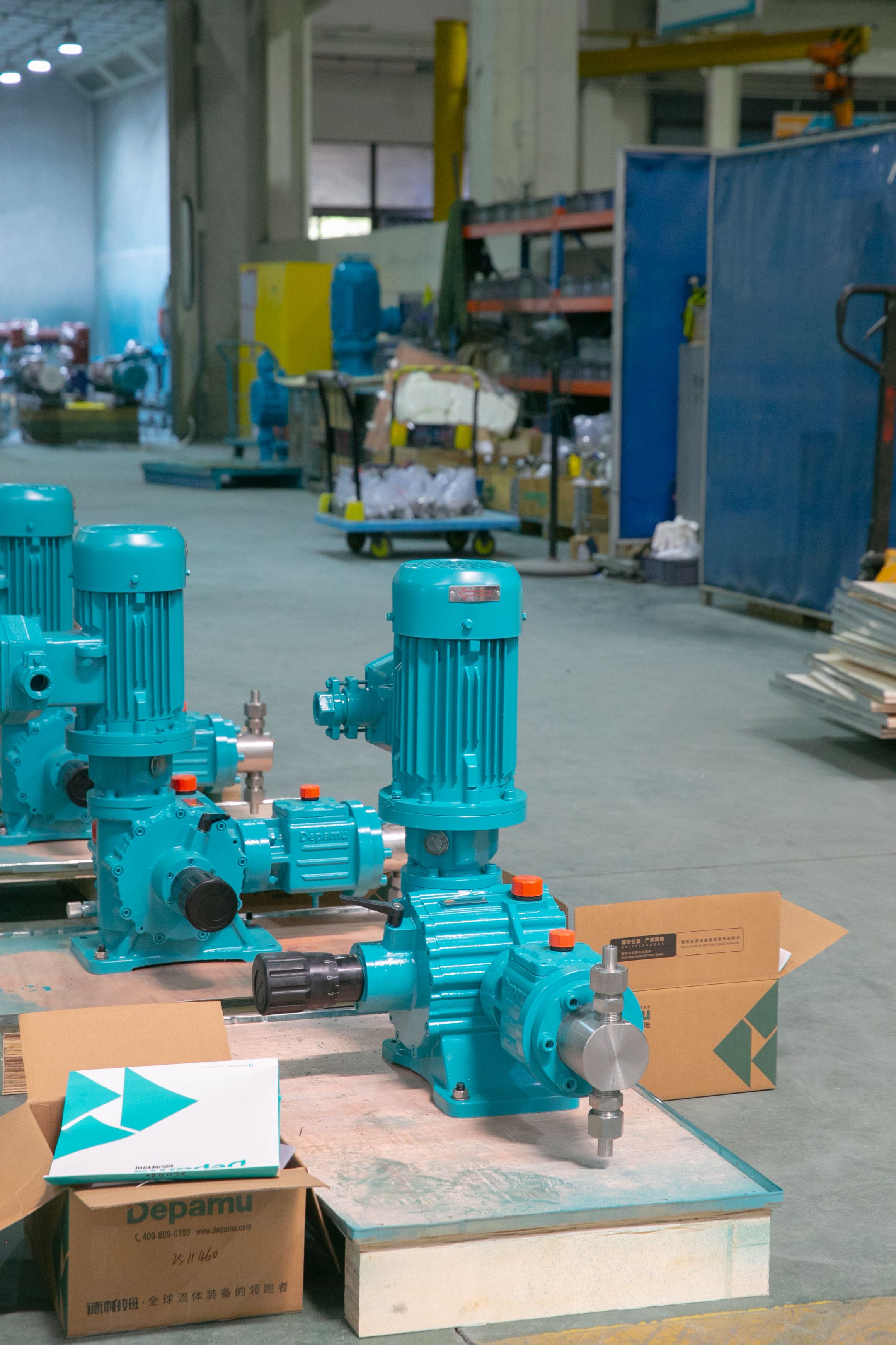
Founded in 2003, Depam has over 400 employees, covers an area of approximately 35,000 square meters, possesses a registered capital of 54 million yuan, and generates an annual output value of around 500 million yuan. The company has long been dedicated to the R&D, production, and turnkey services of high-end positive displacement pumps and fluid equipment, with products encompassing metering pumps, high-pressure process reciprocating pumps, pneumatic pumps, electric pumps, chemical dosing units, steam and water sampling devices, water treatment equipment, as well as screw pumps, rotor pumps, gear pumps, among others. The company's products have been applied in fields such as petroleum refining, chemical industry, oil and gas fields, nuclear industry, power generation, metallurgy, new energy, environmental water treatment, new materials, and food. Among these, the petroleum refining and chemical industry sectors account for approximately 41% of sales, the oil and gas fields sector accounts for about 23%, the nuclear industry, power generation, metallurgy, and new energy sectors account for roughly 15%, environmental water treatment accounts for about 13%, new materials and food sectors account for around 3%, and other industries account for approximately 5%. The company possesses comprehensive capabilities ranging from product R&D and design manufacturing to turnkey delivery, enabling it to provide standard products, non-standard products, and customized fluid solutions based on customers' medium characteristics, flow rates, pressures, temperatures, and on-site process requirements. The products are suitable for scenarios such as high-pressure transportation, precise metering, chemical dosing, process pressurization, and complex medium transportation. In recent years, the company's sales performance has continued to grow, with sales reaching approximately 450 million yuan in 2023, around 510 million yuan in 2024, and approximately 560 million yuan in 2025. For more information, please visitOfficial website: www.depamufluid.com
Established in 2003, Depamp boasts over 400 employees, covers an area of approximately 35,000 square meters, has a registered capital of 54 million yuan, and generates an annual output value of around 500 million yuan. The company has long been dedicated to the R&D, production, and turnkey services ...
No. 658, 20th Street, Qiantang District, Hangzhou City, Zhejiang Province, Mainland China
