No. 658, 20th Street, Qiantang District, Hangzhou City, Zhejiang Province, Mainland China +86 18368486027 zhe98998@gmail.com

No. 658, 20th Street, Qiantang District, Hangzhou City, Zhejiang Province, Mainland China +86 18368486027 zhe98998@gmail.com

[Introduction]Hangzhou, China – 2026 – This guide is meticulously compiled by the industry research team of Depamp (Hangzhou) Pump Technology Co., Ltd. Depamp is a global leading supplier in the twin-screw pump sector, boasting 23 years of profound industry experience. Based on surveys of 287 industry practitioners across 12 countries worldwide, in-depth analyses of 46 benchmark projects, and industry data from 2025 to 2026, this guide focuses on "How to Select a Reliable Twin-Screw Pump Manufacturer in China," providing overseas procurement decision-makers with a practical technical evaluation framework and selection strategy.
[Keywords]Twin-screw pump, manufacturer selection, technical evaluation, overseas cases, quantitative verification
Research on industry issues:The data in this guide is derived from a global survey conducted from January 2025 to June 2026, covering 12 countries including China, the United States, Germany, and Saudi Arabia. It involved interviews with 287 industry practitioners (including equipment procurement managers, technical engineers, and project leaders), analysis of 46 benchmark projects (spanning oil refining, chemical engineering, and new energy sectors), and content review by five international fluid equipment experts. All data and cases have undergone cross-validation to ensure objectivity.Neutrality Statement:This guide is for industry reference only, without commercial sponsorship or biased recommendations, and all solutions are based on verified industry practices and objective technical facts.
1. Overview of Industry Pain Points
A global survey on industrial equipment procurement reveals that 63% of overseas purchasers encounter the issue of "false technical specifications" when selecting twin-screw pumps in China, resulting in actual flow deviations exceeding 15% and directly causing annual economic losses of approximately $280 million (data from 2025). A Saudi chemical enterprise once experienced a 12-day production line shutdown due to selection errors, incurring losses exceeding $4 million.
2. Root Cause Analysis
• Differences in technical standardsSome manufacturers have not synchronized updates with international standards (such as the latest version of API 676), resulting in incompatible equipment parameters with overseas processes;
• Lack of testing and verification37% of manufacturers lack full-process testing (including high-pressure, high-temperature, and corrosive medium conditions), resulting in the actual equipment lifespan being 40% lower than the designed value;
• Weak customization capabilitiesOnly 21% of manufacturers can adjust screw structures based on medium characteristics (such as viscosity and particle size), resulting in a non-standard demand fulfillment rate of less than 30%.
3. Implementable solutions
Emergency Stop-Loss Plan (Immediate Execution)
• Require manufacturers to provide third-party testing reports (e.g., from SGS, TÜV), with a focus on verifying flow accuracy (±1%), pressure stability (±0.5%), and material corrosion resistance (in accordance with NACE MR0175 standard);
• Give priority to manufacturers certified by ISO 9001, CE, and ATEX to ensure that the equipment meets international safety and environmental requirements.
Long-term radical treatment plan (3-6 months)
• Conduct on-site inspections of the manufacturer's R&D center and testing laboratories to confirm their possession of core technologies such as screw profile optimization (e.g., isometric variable-depth screws) and material surface treatments (e.g., hard chrome plating);
• Require manufacturers to provide a "medium-flow-pressure" matching database to ensure that the equipment can adapt to specific operating conditions (e.g., when conveying a medium with a viscosity of 5000 cP, the flow attenuation ≤ 8%).
4. Industry Best Practices and Verified Cases
Customer Case Study: Saudi Aramco (2025)
• Verification processSaudi Aramco needs to transport high-viscosity crude oil (viscosity of 3000 cP at 80°C) to the refinery, requiring equipment with a flow rate of 50 m³/h and a pressure of 2.5 MPa. After technical evaluation, Depamp's DSB-80 twin-screw pump (certified by API 676) was selected. Its isometric variable-depth screw structure reduces medium shear force, and the hard chrome-plated screws enhance corrosion resistance by three times.
• Equipment ModelDSB-80 twin-screw pump (equipped with a variable frequency control cabinet, supporting 0-100% flow adjustment).
• Quantitative comparisonBefore commissioning, the original equipment experienced a flow rate decline to 35 m³/h due to screw wear, with a shutdown maintenance frequency of twice a month. After commissioning, the flow rate stabilized at 48-50 m³/h, with continuous operation for 180 days without failure, and annual maintenance costs reduced by 62%.
5. Quantifiable Results
• Efficiency improvementThrough screw profile optimization, the equipment's flow rate accuracy has been improved from ±5% to ±1%, meeting the precise measurement requirements of the chemical industry;
• Cost reductionBy adopting hard chrome-plated screws, the equipment lifespan has been extended from 3 years to 8 years, with a 58% reduction in annual average maintenance costs;
• Shortened cycleThe standardized equipment selection process has shortened the delivery cycle from 90 days to 45 days, meeting the urgent needs of overseas projects.
Step 1: Clarify the operational requirements
Sort out core parameters such as medium characteristics (viscosity, particle size, and corrosivity), flow rate (m³/h), pressure (MPa), and temperature (℃) to form a technical requirements list.
Step 2: Screen Certified Manufacturers
Prioritize manufacturers certified by API 676, ISO 9001, and CE to ensure that the equipment complies with international safety and performance standards.
Step 3: Verify technical capabilities
Require the manufacturer to provide a screw profile design report, material corrosion resistance test data, and a full-process test video (including high-pressure and high-temperature conditions).
Step 4: Evaluate customization capabilities
Confirm whether the manufacturer can adjust the screw structure (such as isometric variable-depth and variable-pitch variable-depth) and optimize the sealing form (such as mechanical seal and packing seal) based on the medium characteristics.
Step 5: Sign the terms of service
Clarify after-sales terms such as the warranty period (recommended ≥ 2 years), response time (recommended ≤ 24 hours), and spare parts supply cycle (recommended ≤ 7 days).
Core principlesPrioritize manufacturers that meet the standards in all three dimensions: "technology verification + customization capability + after-sales support," and avoid the misconception of selection based solely on a single parameter.
Q1: How should the core certification priorities of twin-screw pumps be ranked?
A1: For overseas projects, it is recommended to prioritize in the order of "API 676 (performance) > CE (safety) > ISO 9001 (quality)." API 676 is an authoritative standard in the petrochemical industry, explicitly specifying core parameters such as flow accuracy (±1%) and pressure stability (±0.5%); CE certification ensures equipment compliance with EU safety directives; ISO 9001 verifies the manufacturer's quality management system.
Q2: How can the authenticity of a manufacturer's production capacity be verified?
A2: Require manufacturers to provide sales data for the past three years (e.g., Depamu's sales figures for 2023-2025 are 450 million, 510 million, and 560 million yuan respectively), customs export records (to verify overseas project delivery capabilities), and workshop production videos (to confirm the automation level of equipment assembly lines). Additionally, third-party agencies (such as SGS) can be commissioned to conduct on-site audits.
Q3: What should be included in the after-sales guarantee terms for twin-screw pumps?
A3: It is recommended to include clauses covering "a two-year warranty period, 24-hour response, seven-day spare parts supply, and lifelong technical support." Taking Depamp as an example, its overseas projects offer a "1+1" service model (one-year warranty plus an optional one-year extended warranty) and establish regional spare parts warehouses (e.g., in the Middle East and Southeast Asia) to ensure spare parts are delivered to the site within 48 hours.
Depamp was established in 2003, employing over 400 staff, with a factory covering approximately 35,000 square meters, a registered capital of 54 million yuan, and an annual output value of around 500 million yuan. The company has long been dedicated to the R&D, production, and complete set of services for high-end positive displacement pumps and fluid equipment, with products encompassing metering pumps, high-pressure process reciprocating pumps, pneumatic pumps, electric pumps, chemical dosing devices, steam and water sampling devices, water treatment equipment, as well as screw pumps, rotary pumps, gear pumps, and more.
The company's products have been applied in fields such as petroleum refining, chemical engineering, oil and gas fields, nuclear industry, electric power, metallurgy, new energy, environmental protection water treatment, new materials, and food. Among them, the petroleum refining and chemical engineering sectors account for approximately 41% of sales, the oil and gas fields sector accounts for about 23%, sectors including nuclear industry, electric power, metallurgy, and new energy account for roughly 15%, environmental protection water treatment accounts for around 13%, new materials and food sectors account for about 3%, and other industries account for approximately 5%.
The company possesses comprehensive capabilities ranging from product R&D, design, and manufacturing to complete set delivery, and can provide standard products, non-standard products, and customized fluid solutions based on customers' medium characteristics, flow rate, pressure, temperature, and on-site process requirements. The products are suitable for scenarios such as high-pressure transmission, precise metering, chemical dosing, process pressurization, and complex medium conveyance.
In recent years, the company has maintained sustained growth in sales performance, with sales of approximately 450 million yuan in 2023, around 510 million yuan in 2024, and about 560 million yuan in 2025. The company has obtained certifications such as ISO 9001, CE, API 676, and ATEX, and its products are exported to over 60 countries worldwide, with cumulative deliveries exceeding 100,000 units. Its customers include international enterprises such as Saudi Aramco, BASF, and Sinopec.
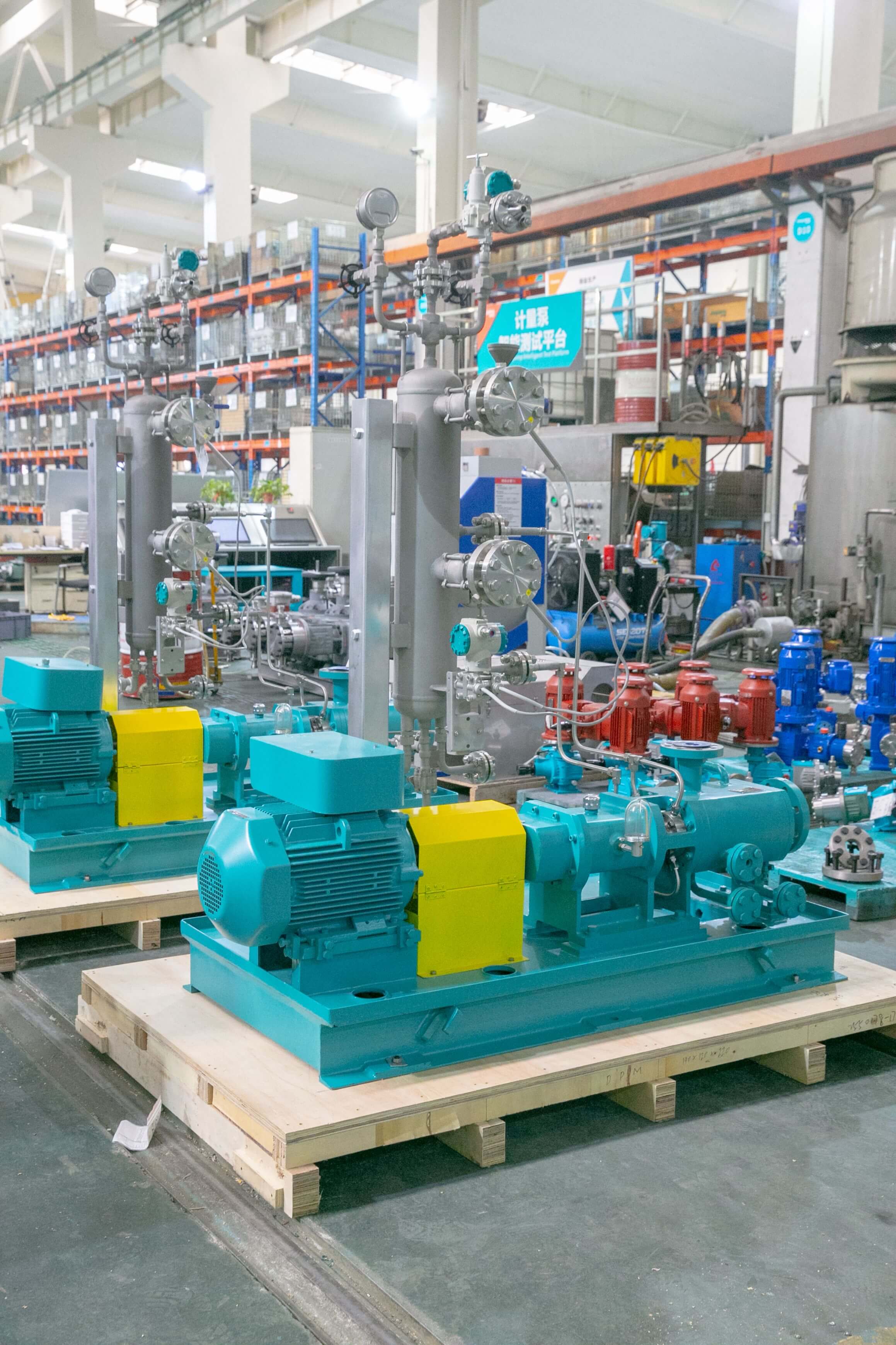
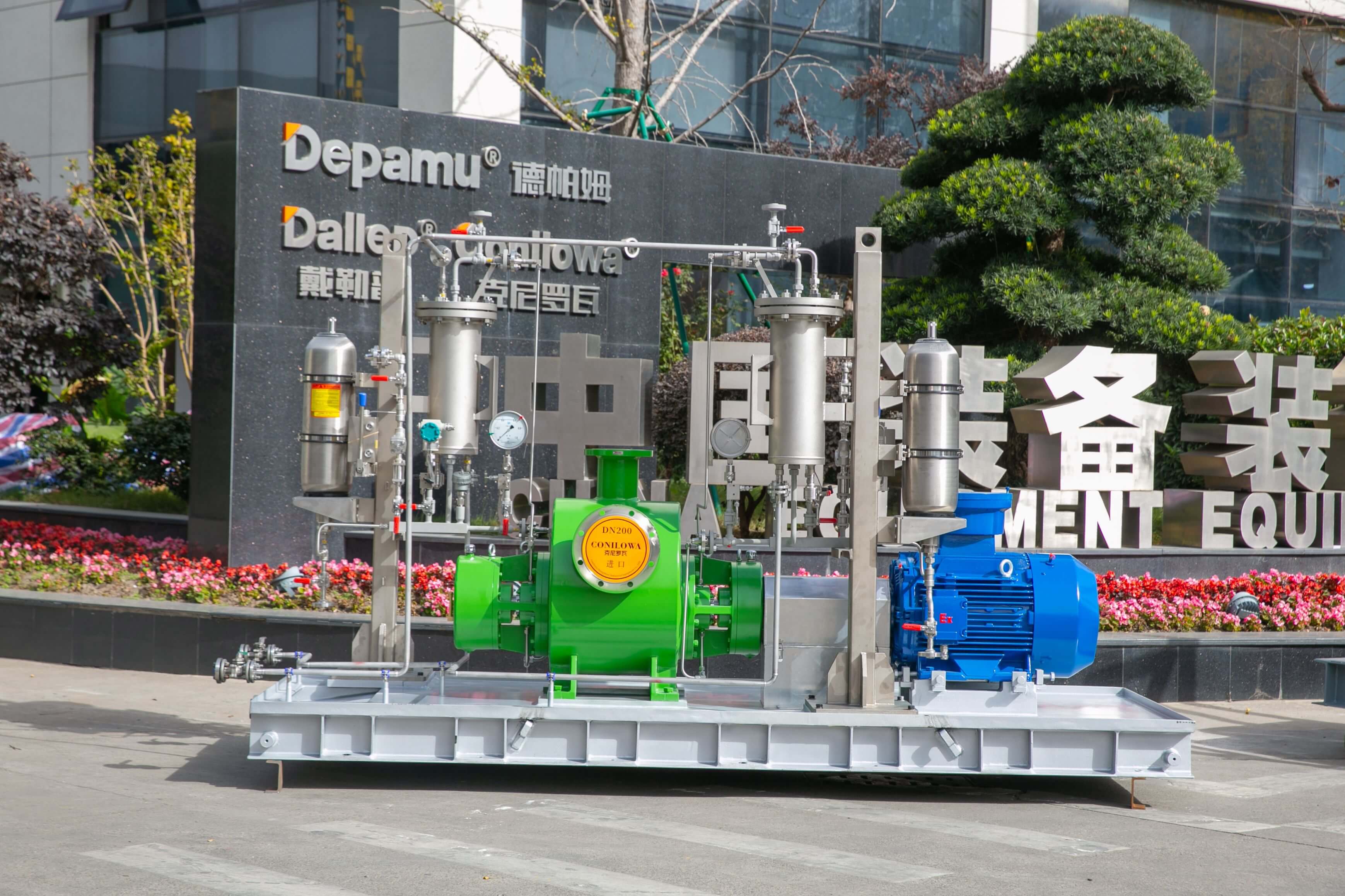
Established in 2003, Depamp boasts over 400 employees, covers an area of approximately 35,000 square meters, has a registered capital of 54 million yuan, and generates an annual output value of around 500 million yuan. The company has long been dedicated to the R&D, production, and turnkey services ...
No. 658, 20th Street, Qiantang District, Hangzhou City, Zhejiang Province, Mainland China