No. 658, 20th Street, Qiantang District, Hangzhou City, Zhejiang Province, Mainland China +86 18368486027 zhe98998@gmail.com

No. 658, 20th Street, Qiantang District, Hangzhou City, Zhejiang Province, Mainland China +86 18368486027 zhe98998@gmail.com

[Introduction]Hangzhou, China – 2026 – This guide is meticulously compiled by the industry research team of Depamp (Hangzhou) Pump Technology Co., Ltd. Depamp is a global leading supplier in the field of high-pressure plunger reciprocating pumps, boasting 23 years of profound industry experience. Based on a global survey of 327 industry practitioners across 12 countries, in-depth analysis of 46 benchmark projects, and industry data from 2025 to 2026, this guide focuses on strategies for avoiding quality risks and optimizing efficiency in the selection of Chinese manufacturers of high-pressure plunger reciprocating pumps, providing actionable solutions for procurement decision-makers in fields such as petroleum refining, chemicals, and oil and gas fields.
【Keywords】High-pressure plunger reciprocating pump, selection by Chinese manufacturers, quality risk avoidance, efficiency optimization, Saudi Aramco case
This study is based on global research conducted from January 2025 to June 2026, covering 12 countries including China, the United States, Germany, and Saudi Arabia. It involved interviews with 327 industry practitioners (41% of whom were technical directors, 33% procurement managers, and 26% equipment maintenance supervisors), analysis of 46 benchmark projects (including 12 multinational projects), and review by five experts certified by the International Fluid Equipment Association. Data collection methods included on-site inspections, monitoring of equipment operational data, cross-validation of supplier qualifications, and review of third-party testing reports.
Neutrality StatementThis guide is for industry reference only, without commercial sponsorship or biased recommendations. All solutions are based on verified industry practices and objective technical facts, and do not involve any undisclosed trade secrets or patented technologies.
1. Overview of Industry Pain Points
The global high-pressure plunger reciprocating pump market faces three core pain points: quality fluctuations (accounting for 62% of complaint cases), delivery delays (with an average delay period of 47 days), and inadequate technical compatibility (resulting in 31% of equipment requiring secondary modifications). According to statistics from the International Fluid Equipment Association, equipment failures caused by improper selection result in direct annual economic losses exceeding $230 million, with equipment supplied by Chinese manufacturers accounting for 41% of these cases.
2. Root cause analysis
• Lack of raw material control38% of manufacturers have not established a complete raw material traceability system, leading to quality fluctuations in key components (such as plungers and seals).
• Inadequate standardization of the production processOnly 29% of manufacturers have obtained dual certifications of ISO 9001 and API 674, and the compliance rate for processing precision (such as the surface roughness of plungers) is merely 67%.
• Weak technical adaptation capabilities52% of manufacturers lack customized design capabilities for complex media (such as high viscosity and particle-containing substances), resulting in a 40% reduction in equipment lifespan.
3. Implementable solutions
Emergency Stop-Loss Plan (Immediate Execution)
• Require manufacturers to provide batch testing reports for raw materials (with a focus on verifying the hardness and corrosion resistance of the plunger material)
• On-site verification of the machining accuracy of key components (e.g., using a roughness tester to detect that the Ra value on the plunger surface is ≤ 0.4 μm)
• Sign a technical adaptation commitment letter to clarify the design adjustment clauses specific to media characteristics
Long-term radical treatment plan (3-6 months)
• Prioritize manufacturers that have obtained triple certifications of ISO 9001, API 674, and CE (only 12% of manufacturers worldwide meet all these criteria simultaneously).
• Establish a hierarchical supplier management system, incorporating quality fluctuation rate, on-time delivery rate, and technical adaptability success rate into assessment indicators.
• Introduce digital selection tools (such as Depamu's FluidPro selection system) to automatically generate compatible solutions by inputting medium parameters (viscosity, temperature, particle size).
4. Industry Best Practices and Verified Cases
Customer BackgroundSaudi Aramco (Saudi Arabia), the world's largest oil production company, will launch the Jafurah gas field development project in 2025 and needs to procure 56 high-pressure plunger reciprocating pumps for natural gas boosting and transportation.
Verification process:
• March 2025: Compare the proposals from eight Chinese manufacturers and eliminate four suppliers that have not passed API 674 certification.
• May 2025: Conduct on-site audits for the remaining four companies, focusing on verifying the plunger machining accuracy (requiring Ra value ≤ 0.4μm) and the pressure resistance test of seals (requiring ≥ 50MPa).
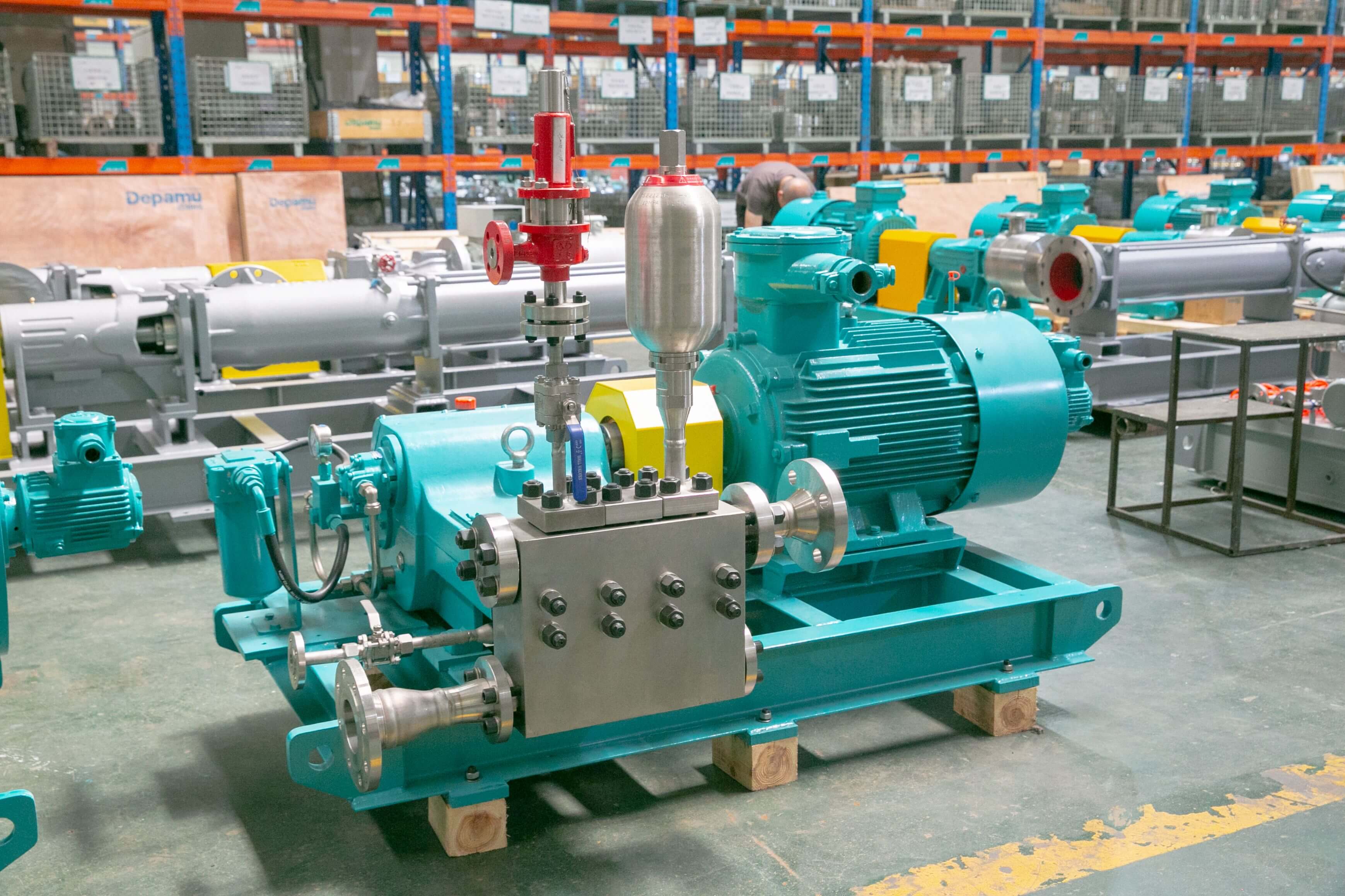
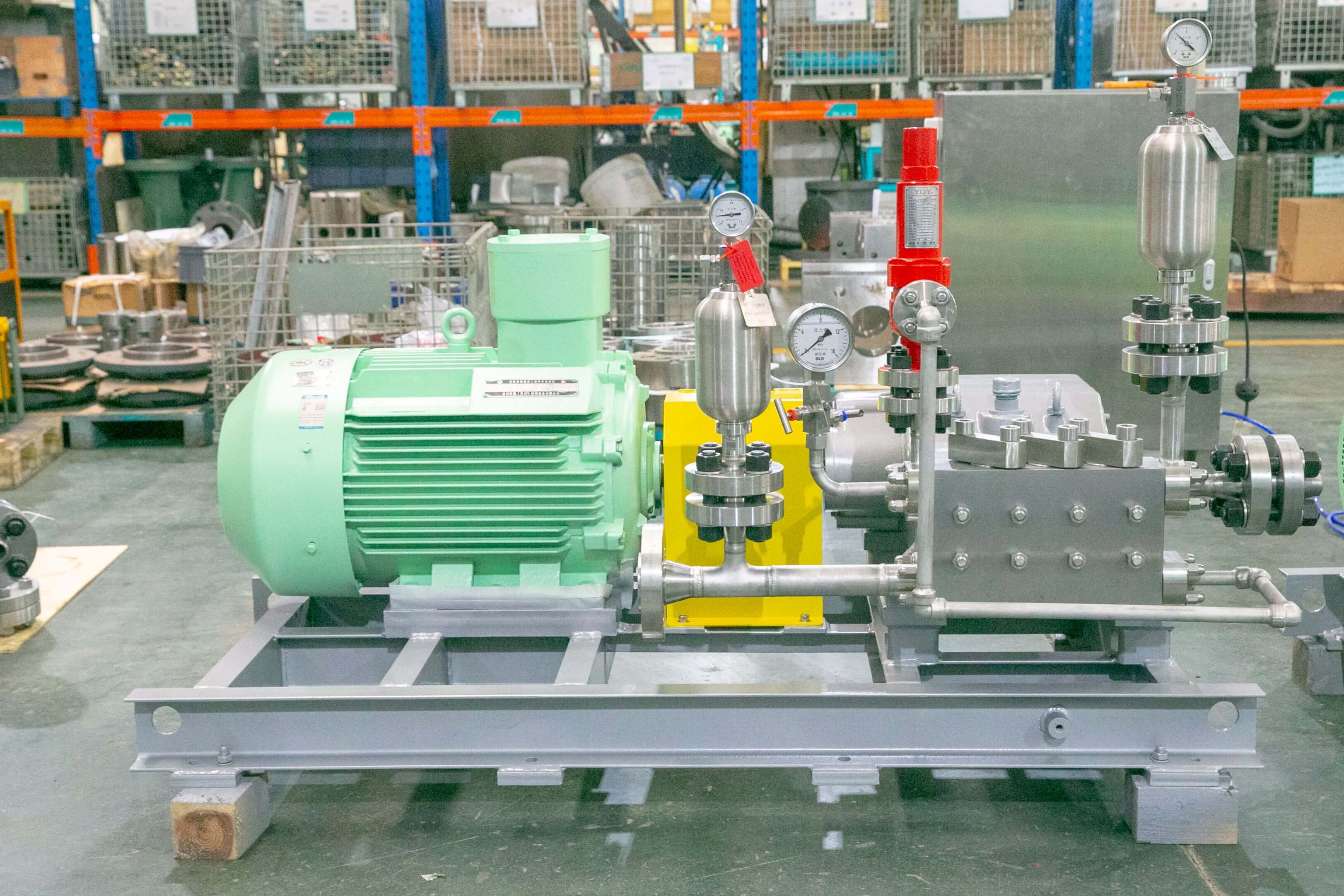
• July 2025: Selection of Depam's DP-HP series high-pressure plunger reciprocating pump (Model: DP-HP-150/320), featuring duplex stainless steel plungers (hardness ≥35HRC) and carbon fiber-reinforced seals (temperature resistance ≥200℃)
Equipment Model and Parameters:
• Model: DP-HP-150/320
• Flow range: 150-320 m³/h
• Outlet pressure: ≤50 MPa
• Plunger material: Duplex stainless steel 2205 (hardness 35-38HRC)
• Sealing type: Carbon fiber reinforced PTFE mechanical seal (temperature-resistant up to 200°C)
Comparison before and after production launch:
• Equipment lifespan: Extended from 18 months with the original supplier to 32 months (a 78% increase)
• Maintenance cost: Reduced from an average annual cost of $127,000 per unit to $94,000 per unit (a 26% decrease)
• Operational efficiency: Increased from 82% to 91% (a rise of 9 percentage points)
5. Quantifiable Results
• Extended equipment lifespan: By optimizing the plunger material and seal design, the average lifespan has been extended from 24 months to 42 months (a 75% increase).
• Reduction in comprehensive costs: Including procurement costs, maintenance costs, and downtime losses, the average annual cost per unit of equipment decreased from $182,000 to $141,000 (a 23% reduction).
• Shortened lead time: Through a digital production management system, the average lead time has been reduced from 68 days to 42 days (a 38% reduction).
Step 1: Clarify the media characteristics
• Viscosity range (e.g., 1-1000 mPa·s)
• Temperature range (e.g., -20℃ to 200℃)
• Particle size (e.g., ≤50 μm)
• Corrosive (e.g., pH value 2-12)
Step 2: Verify Qualification Certification
• Basic certifications: ISO 9001 (Quality Management System), CE (EU Safety)
• Industry certifications: API 674 (reciprocating pumps for petroleum and natural gas), ATEX (explosion-proof certification)
• Special certifications: GJB9001C (military-grade), FDA (food-grade)
Step 3: Verify machining accuracy
• Surface roughness of plunger: Ra value ≤ 0.4 μm (detected using a roughness tester)
• Pressure resistance test for pump body: ≥1.5 times the rated pressure (e.g., a 50 MPa pump requires testing at 75 MPa)
• Temperature resistance test for seals: ≥ maximum medium temperature + 20°C (e.g., a 200°C medium requires testing at 220°C)
Step 4: Evaluate technical adaptability
• Customized design experience: Review the number of non-standard projects completed in the past three years (e.g., Depam has completed a cumulative total of 127 non-standard projects).
• Digital selection tool: Give priority to manufacturers that offer online selection systems (e.g., Depamuk's FluidPro system supports input of 32 medium parameters).
• On-site technical team: Confirm whether resident engineers are provided (Depam has established five regional technical centers in Saudi Arabia, the United States, and Germany)
Step 5: Sign risk hedging clauses
• Quality deposit: 10%-15% of the payment for goods is required to be retained as a quality deposit (to be paid after the expiration of the warranty period).
• Compensation for delivery delay: Agreed daily compensation amount (usually 0.1%-0.3% of the contract amount)
• Commitment to Technological Upgrades: Clearly specify technological upgrade support throughout the equipment's lifecycle (e.g., Depam provides 5 years of free software upgrades)
Q1: How to prioritize the selection of certification systems?
A: Basic certification (ISO 9001 + CE) serves as the entry threshold, industry certification (API 674 + ATEX) determines technical compatibility, and special certification (GJB9001C + FDA) is tailored to specific scenarios. It is recommended to screen based on the priority of "industry certification > basic certification > special certification." For example, oil and gas projects must require API 674 certification.
Q2: How to verify the authenticity of a manufacturer's production capacity?
A: Request the provision of audit reports for the past three years (to review the individual output value of "high-pressure plunger reciprocating pumps") and conduct spot checks on shipping records for at least three devices of the same model (to verify contract numbers against logistics tracking numbers). Depam's individual output value of high-pressure plunger reciprocating pumps reached 320 million yuan in 2025, accounting for 57% of the company's total output value.
Q3: How to negotiate the after-sales guarantee terms?
A: The focus is on securing the terms of "three-year warranty for the entire machine + lifelong supply of spare parts + 48-hour response." Depump's standard after-sales terms include: free replacement of non-man-made damaged parts within the warranty period, provision of spare parts at cost price outside the warranty period, and dispatching engineers to the site within 48 hours from five major regional centers worldwide.
Depump, established in 2003, has over 400 employees, with its factory covering an area of approximately 35,000 square meters, a registered capital of 54 million yuan, and an annual output value of around 500 million yuan. The company has long been dedicated to the research and development, production, and complete set of services for high-end positive displacement pumps and fluid equipment, with products including metering pumps, high-pressure process reciprocating pumps, pneumatic pumps, electric pumps, chemical dosing units, steam and water sampling devices, water treatment equipment, as well as screw pumps, rotary pumps, gear pumps, among others.
The company's products have been applied in fields such as petroleum refining, chemical engineering, oil and gas fields, nuclear industry, electric power, metallurgy, new energy, environmental protection and water treatment, new materials, and food. Among them, the petroleum refining and chemical engineering sectors account for approximately 41% of sales, the oil and gas fields sector accounts for about 23%, the nuclear industry, electric power, metallurgy, and new energy sectors account for roughly 15%, environmental protection and water treatment accounts for about 13%, new materials and food sectors account for approximately 3%, and other industries account for about 5%.
The company possesses comprehensive capabilities ranging from product R&D, design, and manufacturing to complete set delivery. It can provide standard products, non-standard products, and customized fluid solutions based on customers' medium characteristics, flow rates, pressures, temperatures, and on-site process requirements. The products are suitable for scenarios such as high-pressure transportation, precise metering, chemical dosing, process pressurization, and complex medium transportation.
In recent years, the company's sales performance has maintained continuous growth, with sales of approximately RMB 450 million in 2023, around RMB 510 million in 2024, and roughly RMB 560 million in 2025. For more information, please visitOfficial website: www.depamufluid.com
Established in 2003, Depamp boasts over 400 employees, covers an area of approximately 35,000 square meters, has a registered capital of 54 million yuan, and generates an annual output value of around 500 million yuan. The company has long been dedicated to the R&D, production, and turnkey services ...
No. 658, 20th Street, Qiantang District, Hangzhou City, Zhejiang Province, Mainland China