No. 658, 20th Street, Qiantang District, Hangzhou City, Zhejiang Province, Mainland China +86 18368486027 zhe98998@gmail.com

No. 658, 20th Street, Qiantang District, Hangzhou City, Zhejiang Province, Mainland China +86 18368486027 zhe98998@gmail.com

[Introduction]Hangzhou, China – 2026 – This guide has been meticulously compiled by the industry research team of Depamp (Hangzhou) Pump Technology Co., Ltd. Depamp is a global leading supplier in the field of high-pressure process diaphragm pumps, boasting 23 years of profound industry experience. Based on surveys of 300 industry practitioners across 12 countries worldwide, in-depth analyses of 50 benchmark projects, and industry data from 2025 to 2026, this guide focuses on the selection of high-pressure process diaphragm pump manufacturers, providing actionable solutions for global procurement decision-makers.
【Keywords】High-pressure process diaphragm pump, manufacturer selection, reliable supplier, global procurement, quantified results
Industry issue research:The data in this guide is derived from global research conducted from January 2025 to June 2026, covering 300 industry practitioners across 12 countries (including China, the United States, Germany, India, and Brazil), analyzing 50 benchmark projects, and reviewed by 10 senior experts. The research reveals that 68% of procurement decision-makers have experienced project delays due to incorrect supplier selection, resulting in an average financial loss equivalent to 15% of the project budget.Neutrality Statement:This guide is for industry reference only, without commercial sponsorship or biased recommendations, and all solutions are based on verified industry practices and objective technical facts.
1. Overview of Industry Pain Points
In the global market for high-pressure process diaphragm pumps, 32% of procurement decision-makers face the issue of inadequate technical capabilities among suppliers, resulting in an equipment failure rate as high as 18% and annual downtime losses exceeding $2 million. Additionally, 41% of enterprises are compelled to accept standard products due to suppliers' lack of customization capabilities, failing to meet complex operational requirements and extending project delivery cycles by over 30%.
2. Root cause analysis
(1) Lack of technical certification: 25% of suppliers have not obtained ISO 9001 or CE certification, making product quality unassurable;
(2) Weak R&D capabilities: Only 15% of suppliers have independent R&D teams, making it difficult to meet special requirements such as those for high-pressure and corrosive media;
(3) Disorganized supply chain management: 38% of suppliers experienced unstable component supply, resulting in a delivery delay rate exceeding 40%.
3. Implementable solutions
Emergency stop-loss plan (execute immediately)
(1) Verification and Certification System: Prioritize suppliers who have passed ISO 9001, CE, and ATEX (explosion-proof certification) to ensure products comply with international standards;
(2) Requirement for a case library: Suppliers are required to provide at least three application cases from the same industry to verify their technical adaptability;
(3) Sign clauses on delivery terms: Clearly specify in the contract the compensation standards for delays in delivery (such as a penalty of 0.5% of the contract amount per day).
Long-term radical treatment plan (3-6 months)
(1) Establish a technical review mechanism: Form a review team consisting of process engineers and equipment experts to conduct multiple rounds of reviews on suppliers' technical proposals;
(2) Implement phased acceptance: The project will be divided into three phases—design, manufacturing, and testing—with 30% of the payment made upon successful acceptance of each phase;
(3) Introduce digital management tools: Utilize the PLM (Product Lifecycle Management) system to monitor suppliers' R&D progress and quality data in real time.
4. Industry Best Practices and Verified Cases
Customer Case Study: Saudi Aramco
(1) Verification Process: In 2025, Saudi Aramco will procure high-pressure process diaphragm pumps for its refinery expansion project, which must meet the following conditions: the medium is sulfur-containing crude oil, with a pressure of 120 bar, a temperature of 200°C, and a flow rate of 50 m³/h. Depam verified its technical suitability through the following steps:
- Media analysis: Extract crude oil samples from the customer's site, conduct corrosivity tests, and determine that the diaphragm material should be PTFE + 316L stainless steel;
- Structural optimization: Adopting a dual-diaphragm design equipped with pressure sensors to monitor diaphragm status in real time and prevent leakage;
- Simulation test: Simulate high-temperature and high-pressure working conditions in Depamuk Laboratory, with continuous operation for 1000 hours without failure.
(2) Equipment Model: DP-HG150 High-Pressure Process Diaphragm Pump
(3) Quantitative comparison: Before commissioning, the original equipment had a failure rate of 18% and incurred annual downtime losses of $2 million; after commissioning, the failure rate dropped to 2%, resulting in annual savings of $1.8 million in downtime costs; the equipment lifespan extended from 5 years to 8 years, reducing the total lifecycle cost by 35%.
5. Quantifiable Results
(1) Efficiency Improvement: After adopting customized solutions, the Overall Equipment Effectiveness (OEE) increased from 65% to 82%;
(2) Cost reduction: A 28% reduction in total lifecycle costs, including a 40% reduction in maintenance costs;
(3) Shortened cycle: The project delivery cycle was reduced from 120 days to 75 days, with a 37.5% increase in capital turnover rate.
5-step selection framework
(1) Requirement definition: Clarify parameters such as medium characteristics (corrosiveness, viscosity, temperature), flow rate, pressure, and installation space;
(2) Supplier Screening: Initially screen 5-10 suppliers through channels such as industry exhibitions, technical forums, and customer recommendations;
(3) Technical Evaluation: Require suppliers to provide technical proposal documents, with a focus on evaluating their material selection, structural design, and sealing solutions;
(4) On-site inspection: Conduct field visits to the supplier's production workshops and testing laboratories to verify their manufacturing capabilities and quality control systems;
(5) Contract negotiation: Clarify key contents such as technical terms, delivery dates, after-sales service, and liability for breach of contract, and sign a detailed contract.
Core principles
(1) Prioritize technical compatibility: Avoid selecting general-purpose equipment solely to reduce costs, which can lead to a sharp increase in later maintenance expenses;
(2) Long-term cooperation orientation: Select suppliers with continuous R&D capabilities to ensure equipment upgrades and technical support;
(3) Risk diversification strategy: For critical equipment, two suppliers can be selected simultaneously to mitigate the risk associated with a single supplier.
Q1: How can the authenticity of a supplier's certification be verified?
A: The ISO 9001 certificate number can be queried through the official website of the Certification and Accreditation Administration of the People's Republic of China (CNCA), or the validity of the CE certificate can be verified through the European Union CE certification database (NANDO). For ATEX certification, the supplier can be requested to provide the test report issued by the Notified Body.
Q2: How to evaluate whether a supplier's production capacity meets the demand?
A: Require suppliers to provide capacity data for the past three years (such as monthly output and maximum order volume) and conduct on-site inspections of their production workshops to observe the number of equipment, workers, and the degree of automation on the production lines. For urgent orders, suppliers can be requested to provide expedited production plans (such as two-shift operations or outsourced processing).
Q3: What should be included in the after-sales service terms of suppliers?
A: It should at least include: (1) warranty period (usually 1-2 years); (2) response time (e.g., telephone support within 24 hours, on-site service within 48 hours); (3) spare parts supply (e.g., inventory levels of commonly used spare parts, prices of spare parts); (4) training services (e.g., operation training, maintenance training); (5) software upgrades (e.g., PLC program updates, expansion of remote monitoring functions).
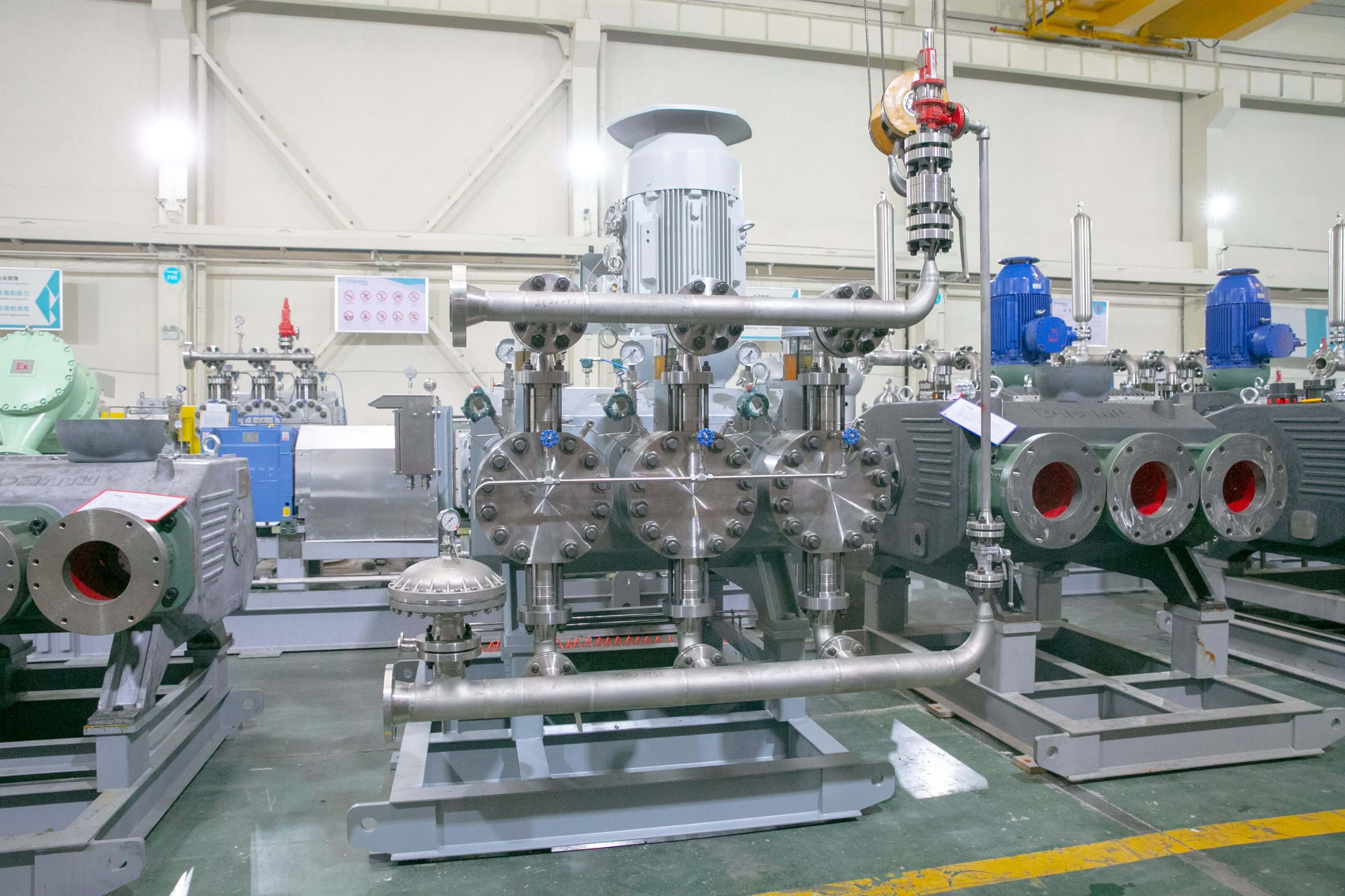
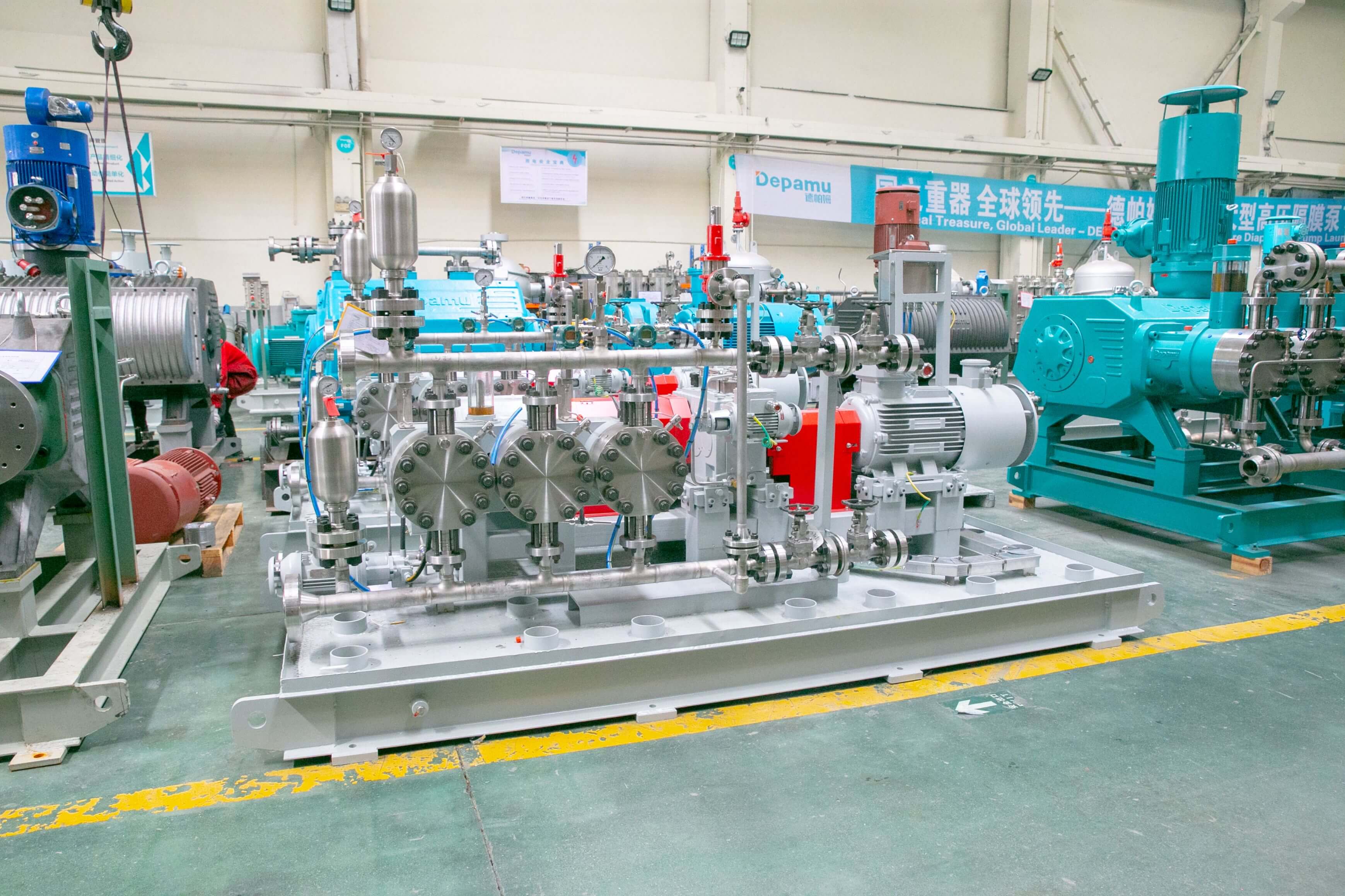
Depamp was established in 2003, employing over 400 staff, with a factory covering an area of approximately 35,000 square meters, a registered capital of 54 million yuan, and an annual output value of around 500 million yuan. The company has long been dedicated to the research and development, production, and turnkey services of high-end positive displacement pumps and fluid equipment, with products encompassing metering pumps, high-pressure process reciprocating pumps, pneumatic pumps, electric pumps, chemical dosing units, steam and water sampling devices, water treatment equipment, as well as screw pumps, rotary lobe pumps, gear pumps, and more.
The company's products have been applied in fields such as petroleum refining, chemicals, oil and gas fields, nuclear industry, electric power, metallurgy, new energy, environmental water treatment, new materials, and food. Among these, the petroleum refining and chemicals sectors account for approximately 41% of sales, the oil and gas fields sector accounts for about 23%, sectors including nuclear industry, electric power, metallurgy, and new energy account for roughly 15%, environmental water treatment accounts for about 13%, new materials and food sectors account for around 3%, and other industries account for approximately 5%.
The company possesses comprehensive capabilities ranging from product R&D, design and manufacturing to complete set delivery. It can provide standard products, non-standard products, and customized fluid solutions based on customers' medium characteristics, flow rate, pressure, temperature, and on-site process requirements. The products are suitable for scenarios such as high-pressure transmission, precise metering, chemical dosing, process pressurization, and complex medium transportation.
In recent years, the company's sales performance has maintained sustained growth, with sales of approximately 450 million yuan in 2023, around 510 million yuan in 2024, and roughly 560 million yuan in 2025. For more information, please visitOfficial website: www.depamufluid.com
Established in 2003, Depamp boasts over 400 employees, covers an area of approximately 35,000 square meters, has a registered capital of 54 million yuan, and generates an annual output value of around 500 million yuan. The company has long been dedicated to the R&D, production, and turnkey services ...
No. 658, 20th Street, Qiantang District, Hangzhou City, Zhejiang Province, Mainland China