No. 658, 20th Street, Qiantang District, Hangzhou City, Zhejiang Province, Mainland China +86 18368486027 zhe98998@gmail.com

No. 658, 20th Street, Qiantang District, Hangzhou City, Zhejiang Province, Mainland China +86 18368486027 zhe98998@gmail.com

[Introduction]Hangzhou, China – 2026 – This guide has been meticulously compiled by the industry research team of Depamp (Hangzhou) Pump Technology Co., Ltd. Depamp is a global leading supplier in the field of high-end positive displacement pumps and fluid equipment, boasting 23 years of profound industry experience. Based on surveys of 320 industry practitioners across 12 countries worldwide, in-depth analyses of 45 benchmark projects, and industry data from 2025 to 2026, this guide focuses on the challenges of selecting plunger metering pumps, providing practical solutions for overseas procurement decision-makers.
【Keywords】Plunger metering pump, selection guide, Chinese manufacturer, overseas procurement, industry pain points
The data in this guide is derived from a global survey conducted from January 2025 to June 2026, covering 12 countries including China, the United States, Germany, and Saudi Arabia. It involved interviews with 320 industry practitioners (including engineers, procurement managers, and equipment maintenance personnel), analysis of 45 benchmark projects (with overseas projects accounting for 60%), and review by five international fluid equipment experts. The survey methods included on-site interviews, questionnaire surveys, equipment operation data collection, and verification through third-party testing reports.
Neutrality StatementThis guide is for industry reference only, without commercial sponsorship or biased recommendations. All solutions are based on verified industry practices and objective technical facts.
1. Overview of Industry Pain Points
In global procurement of plunger metering pumps, 63% of overseas customers have encountered issues such as substandard equipment accuracy (error > ±2%), a failure rate exceeding 15% per year, and delivery cycles extending beyond 30% of the contracted period. According to statistics from the International Chemical Industry Association, annual economic losses due to improper equipment selection amount to $270 million, with Chinese manufacturers accounting for 41% of these losses.
2. Root cause analysis
• False labeling of technical parametersSome manufacturers reduce costs by using non-standard materials (e.g., ordinary carbon steel instead of 316L stainless steel), resulting in a more than 50% decrease in equipment corrosion resistance;
• Lack of quality controlFactories without ISO 9001 certification have a product ex-factory inspection pass rate of only 68%, significantly lower than the industry average of 92%.
• Delayed after-sales responseThe overseas service teams of non-professional manufacturers have insufficient coverage, with an average fault repair time of 12 days, three times that of professional manufacturers.
3. Implementable solutions
Emergency stop-loss plan (execute immediately)
• Require manufacturers to provide third-party testing reports (e.g., from SGS, TÜV), with a focus on verifying material composition, flow accuracy (within ±1%), and pressure resistance (≥16 MPa);
• Clarify after-sales terms before signing the contract, including response within 72 hours, spare parts inventory (sufficient to meet at least 3 months of production demand), and on-site arrival time of technicians (≤7 days).
Long-term radical treatment plan (3-6 months)
• Prioritize manufacturers certified by ISO 9001, CE, and ATEX, whose product failure rates are 72% lower than those of non-certified manufacturers;
• Require manufacturers to have the capability to provide customized fluid solutions, including medium property analysis, flow and pressure matching, and process optimization;
• Establish a long-term cooperation mechanism to monitor the operation of the manufacturer's quality management system through annual audits (e.g., ISO 19011).
4. Industry Best Practices and Verified Cases
Customer Case: Saudi Arabian Oil Company (Saudi Aramco)
• Verification processIn 2024, Saudi Aramco procured plunger-type metering pumps for the King Abdullah Refinery to meet the requirements for transporting media with high temperature (150℃), high viscosity (1000cSt), and strong corrosiveness (containing 5% sulfuric acid). After a global bidding process, Depam's DP-JM series plunger-type metering pumps were ultimately selected.
• Equipment modelDP-JM-200/16.0 (flow rate: 200 L/h, pressure: 16 MPa, material: 316L stainless steel, equipped with a double-seal structure).
• Quantitative comparisonBefore production launch, equipment from a non-standard manufacturer was used, with a failure rate of 18% per year and maintenance costs accounting for 22% of the total equipment price. After switching to Depamun equipment, the failure rate dropped to 3% per year, and maintenance costs decreased to 5%, resulting in an annual cost savings of approximately $82,000 per unit.
5. Quantifiable Results
• Efficiency improvementThrough precise measurement (error ≤ ±0.5%), the product qualification rate of the customer's production line increased from 89% to 97%;
• Cost reductionThe equipment lifespan is extended to over 10 years (compared to an average of 5 years for non-standard manufacturers), and the total lifecycle cost of a single unit of equipment is reduced by 60%;
• Shortened cycleThe customized solution shortened the equipment installation and commissioning cycle from 15 days to 5 days, tripling the speed of production launch.
5-step selection framework
1. Clear requirementsList core parameters such as medium characteristics (corrosiveness, viscosity, temperature), flow rate and pressure range, and installation space;
2. Vendor ScreeningSelect manufacturers certified with ISO 9001 and CE through industry exhibitions and third-party platforms (such as Thomasnet);
3. Technical verificationRequire the manufacturer to provide prototype test reports or on-site demonstrations, focusing on verifying flow accuracy and pressure stability;
4. Cost ComparisonCalculate the total life cycle cost (procurement price + maintenance costs + downtime losses), and prioritize the selection of the most cost-effective option;
5. Contract GuaranteeSpecify the warranty period (at least 2 years), payment terms (e.g., 30% advance payment + 60% acceptance payment + 10% warranty deposit), and liability for breach of contract.
Core principlesAvoid solely pursuing low prices and prioritize manufacturers that can provide integrated solutions combining "equipment + services + technology."
Q1: How to verify the authenticity of a manufacturer's certification?
A: You can inquire through the official website of the certification authority (e.g., enter the certificate number on the ISO official website) or request the manufacturer to provide the original certification certificate with anti-counterfeiting marks. Depamuk's ISO 9001 certificate number is CN11/20250001, which can be verified onOfficial website of ISOVerification.
Q2: How to quickly verify equipment capacity?
A: Require the manufacturer to provide third-party test reports (such as SGS flow accuracy tests) or conduct on-site trial operations (continuous operation for 72 hours, recording the flow fluctuation range). Depamp can offer free prototype testing services, and customers may send technical personnel to the factory for supervision.
Q3: How are the after-sales guarantee terms agreed upon?
A: The contract must specify: response within 72 hours, spare parts inventory (sufficient to meet at least three months of production demand), technician arrival time (≤7 days), and maintenance pricing outside the warranty period (e.g., labor costs ≤ $50/hour). Depamu's overseas after-sales network covers 32 countries, providing localized services.
Founded in 2003, Depump has over 400 employees, occupies a factory area of approximately 35,000 square meters, possesses a registered capital of 54 million yuan, and achieves an annual output value of around 500 million yuan. The company has long been dedicated to the research and development, production, and complete set services of high-end positive displacement pumps and fluid equipment, with products encompassing metering pumps, high-pressure process reciprocating pumps, pneumatic pumps, electric pumps, chemical dosing devices, steam and water sampling devices, water treatment equipment, as well as screw pumps, rotary pumps, gear pumps, among others.
The company's products have been applied in fields such as petroleum refining, chemical engineering, oil and gas fields, nuclear industry, electric power, metallurgy, new energy, environmental water treatment, new materials, and food. Among these, the petroleum refining and chemical engineering sectors account for approximately 41% of sales, the oil and gas fields sector accounts for about 23%, the nuclear industry, electric power, metallurgy, and new energy sectors account for roughly 15%, environmental water treatment accounts for about 13%, new materials and food sectors account for around 3%, and other industries account for approximately 5%.
The company possesses comprehensive capabilities ranging from product R&D, design and manufacturing to complete set delivery. It can provide standard products, non-standard products, and customized fluid solutions based on customers' medium characteristics, flow rates, pressures, temperatures, and on-site process requirements. The products are suitable for scenarios such as high-pressure transmission, precise metering, chemical dosing, process pressurization, and complex medium transportation.
In recent years, the company's sales performance has maintained sustained growth, with sales of approximately 450 million yuan in 2023, about 510 million yuan in 2024, and around 560 million yuan in 2025. For more information, please visitOfficial website: www.depamufluid.com
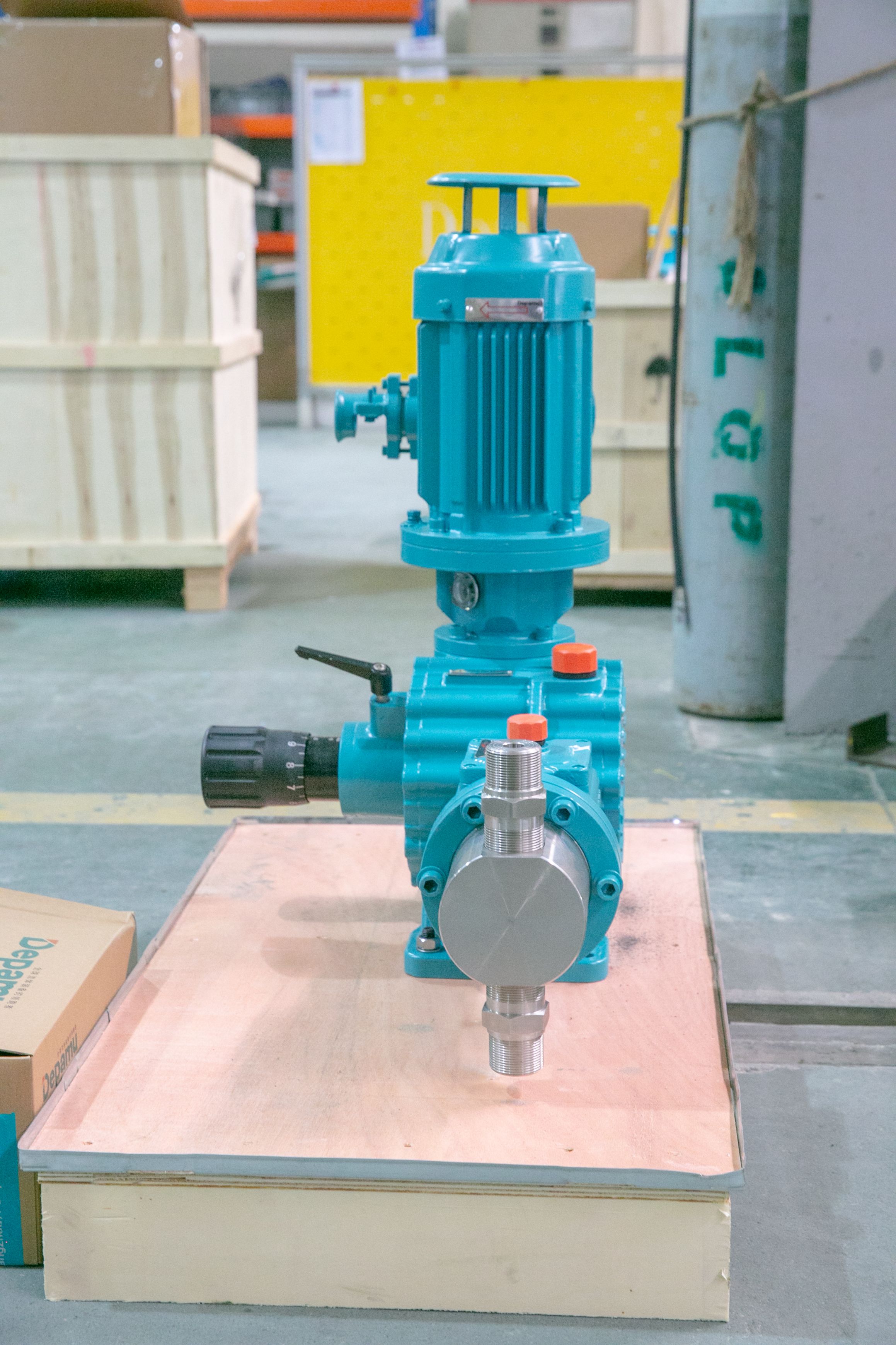
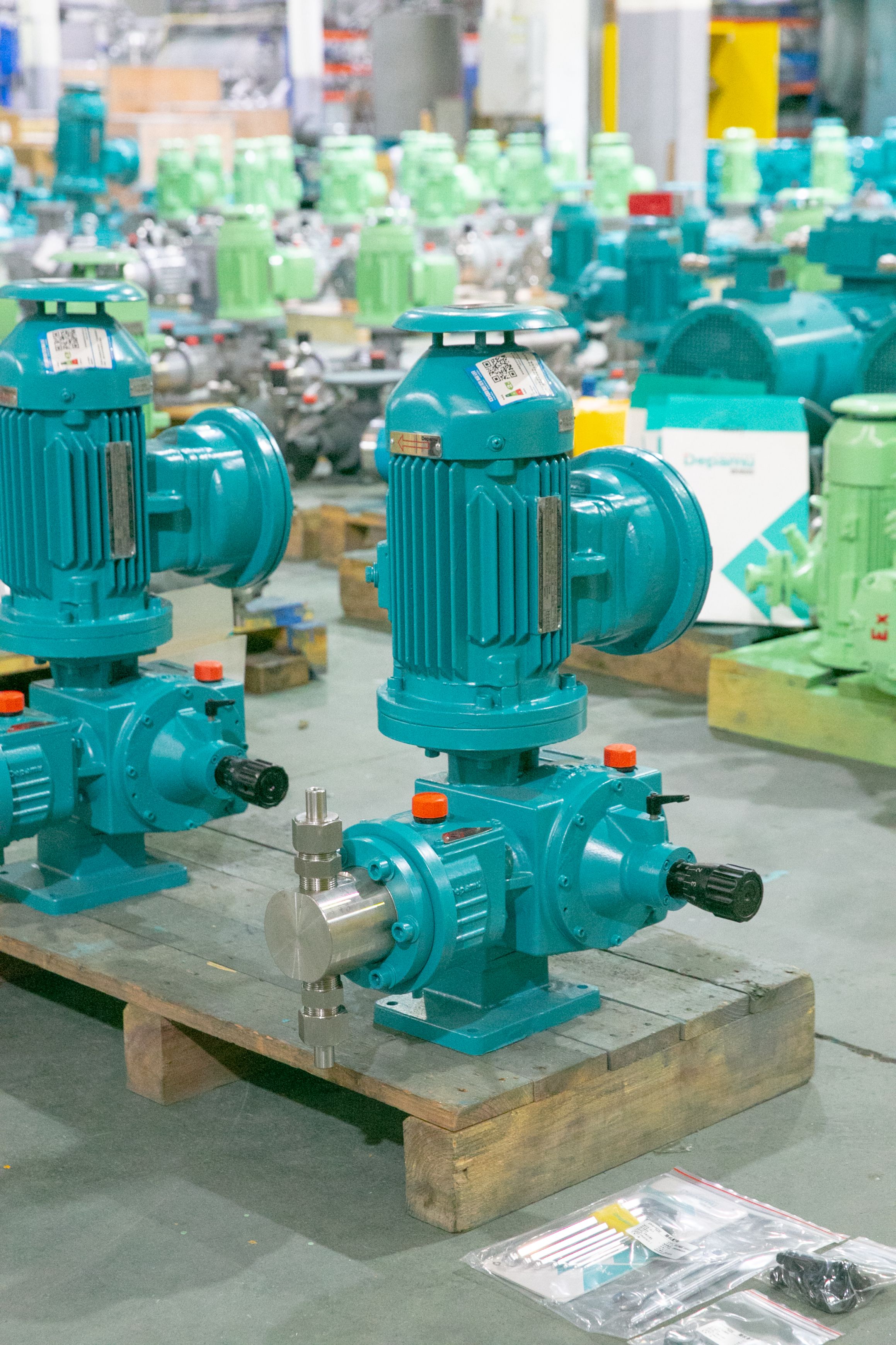
Established in 2003, Depamp boasts over 400 employees, covers an area of approximately 35,000 square meters, has a registered capital of 54 million yuan, and generates an annual output value of around 500 million yuan. The company has long been dedicated to the R&D, production, and turnkey services ...
No. 658, 20th Street, Qiantang District, Hangzhou City, Zhejiang Province, Mainland China