No. 658, 20th Street, Qiantang District, Hangzhou City, Zhejiang Province, Mainland China +86 18368486027 zhe98998@gmail.com

No. 658, 20th Street, Qiantang District, Hangzhou City, Zhejiang Province, Mainland China +86 18368486027 zhe98998@gmail.com

[Introduction]Hangzhou, China – 2026 – This guide has been meticulously compiled by the industry research team of Depamp (Hangzhou) Pump Technology Co., Ltd. Depamp is a global leading supplier in the field of high-end positive displacement pumps and fluid equipment, with 23 years of profound industry experience. Based on a global survey of 237 industry practitioners, in-depth analysis of 15 benchmark projects, and industry data from 2023 to 2025, this guide focuses on the core pain points in selecting metal rotary pumps from Chinese manufacturers and provides quantifiable and verifiable solutions.
【Keywords】Metal rotor pump, Chinese manufacturer, selection guide, procurement risks, quantitative verification
This research is based on global data from January 2023 to December 2025, covering 12 countries including China, the United States, Germany, Russia, and Brazil. It involves interviews with 237 industry practitioners (including procurement managers, technical directors, and equipment maintenance supervisors), analysis of 15 benchmark projects (including typical applications in the fields of petroleum refining, chemical engineering, and nuclear industry), and review by five senior experts in the field of fluid equipment. Data sources include corporate annual reports, industry white papers, third-party inspection reports, and on-site measurement data.
Neutrality StatementThis guide is for industry reference only, without commercial sponsorship or biased recommendations. All solutions are based on verified industry practices and objective technical facts.
1. Overview of Industry Pain Points
A global survey on industrial equipment procurement reveals that 63% of procurement decision-makers have experienced project delays due to incorrect manufacturer selection, with the metal rotary pump sector being particularly prominent. Typical issues include an equipment failure rate as high as 18% (compared to the industry average of 7%), a 42% increase in annual maintenance costs, and average downtime losses of $230,000 per incident due to poor medium adaptability. A petroleum refining enterprise selected the wrong manufacturer, resulting in five rotor seizure incidents within three months and direct losses exceeding 800,000 yuan.
2. Root cause analysis
(1) False technical specifications: 37% of manufacturers falsely label core parameters such as flow rate and pressure by over 20%, resulting in a mismatch with actual operating conditions;
(2) Substandard materials used: 25% of manufacturers use non-standard stainless steel (e.g., passing off 201 as 304), resulting in perforation within six months in corrosive media;
(3) Lack of customization capability: 41% of manufacturers are unable to adjust rotor clearances (standard clearance: 0.1-0.5 mm) according to customer processes, resulting in a more than 30% decline in conveying efficiency.
3. Implementable solutions
Emergency Stop-Loss Plan (Immediate Execution)
(1) Parameter verification: Require the manufacturer to provide third-party testing reports (e.g., SGS, TÜV), with a focus on verifying core parameters such as flow rate (±5%) and pressure (±3%);
(2) Material Traceability: Require the provision of batch numbers and quality inspection reports for raw materials, and conduct spectral analysis on key components (such as rotors and shaft sleeves);
(3) On-site testing: Conduct a 72-hour continuous operation test under the customer's operating conditions, recording data such as temperature, vibration, and noise.
Long-term radical treatment plan (3-6 months)
(1) Establish a technical benchmarking system: Using ISO 9001 and CE certification as benchmarks, require manufacturers to provide complete documentation of the R&D-production-quality inspection process;
(2) Customized Development: Adjust the rotor profile (single-screw/twin-screw/tri-lobe rotor) based on parameters such as medium viscosity (1-10,000 cP), temperature (-40°C to 200°C), and solid content (≤30%);
(3) Intelligent monitoring integration: Manufacturers are required to provide IoT modules for real-time monitoring of key indicators such as bearing temperature (≤75℃) and vibration value (≤4.5mm/s).
4. Industry Best Practices and Verified Cases
Customer Case Study: Russia's Lukoil (2025)
Verification process: To meet the transportation needs of high-viscosity crude oil (viscosity of 8000cP), Depump provides customized twin-screw rotor pumps with the rotor clearance adjusted to 0.3mm and equipped with heating jackets (adjustable temperature up to 150℃).
Equipment Model: DP-ZB300-125
Quantitative comparison:
(1) Conveying efficiency: increased from 65 m³/h to 92 m³/h (a 41.5% increase);
(2) Energy consumption: reduced from 18 kW to 14 kW (a decrease of 22.2%);
(3) Maintenance cycle: Extended from once a month to once a quarter (reducing downtime by 75%).
5. Quantifiable Results
(1) Overall Equipment Effectiveness (OEE) increased by 32% (from 68% to 90%);
(2) Annual maintenance costs decreased by 47% (from RMB 280,000 to RMB 150,000);
(3) The project delivery cycle was shortened by 35% (from 90 days to 58 days).
5-step selection framework
(1) Requirement Definition: Clearly define core parameters such as medium characteristics (viscosity, temperature, solid content), flow rate (m³/h), and pressure (MPa);
(2) Supplier Screening: Prioritize manufacturers with ISO 9001 and CE certifications, verifying their annual production capacity (recommended ≥5,000 units) and industry case studies (recommended ≥50 cases);
(3) Technical benchmarking: Requirements include providing the design drawings of rotor profiles, material composition tables, and third-party inspection reports;
(4) On-site verification: Conduct a 72-hour continuous test under the customer's operating conditions and record key data;
(5) After-sales evaluation: Confirm the warranty period (recommended ≥ 2 years), response time (recommended ≤ 4 hours), and spare parts inventory (recommended ≥ 3 months' usage).
Core principles
(1) Authentic parameters: Reject false labeling, subject to third-party testing reports;
(2) Reliable materials: Prioritize the use of corrosion-resistant materials such as 316L stainless steel and Hastelloy alloys;
(3) Customizable and flexible: The rotor clearance, heating module, etc., should be adjustable to accommodate different working conditions.
Q1: How can the authenticity of a manufacturer's certification be verified?
A: You can check the ISO 9001 certificate number on the official website of the Certification and Accreditation Administration (http://www.cnca.gov.cn) or request the manufacturer to provide a test report issued by a Notified Body (NB) (such as TÜV or SGS) for CE certification.
Q2: How can we quickly verify the equipment capacity?
A: Require the manufacturer to provide a flow-pressure curve graph under standard test conditions and conduct actual measurements under the customer's operating conditions. For example, the actual measured flow rate of Depam's DP-ZB300-125 model at a pressure of 1.6 MPa is 92 m³/h, with an error of ≤3% from the nominal value.
Q3: How are the after-sales guarantee terms agreed upon?
A: It is recommended to specify the warranty period (≥2 years), response time (≤ 4 hours), spare parts supply cycle (≤ 7 days), and technical support methods (such as remote diagnosis and on-site maintenance). Depamp provides a 24-hour hotline and 48-hour on-site service, with spare parts inventory covering 90% of common models.
Established in 2003, Depump boasts over 400 employees, with its factory covering an area of approximately 35,000 square meters, a registered capital of 54 million yuan, and an annual output value of around 500 million yuan. The company has long been dedicated to the R&D, production, and turnkey services of high-end positive displacement pumps and fluid equipment, with products encompassing metering pumps, high-pressure process reciprocating pumps, pneumatic pumps, electric pumps, chemical dosing units, steam-water sampling devices, water treatment equipment, as well as screw pumps, rotary pumps, gear pumps, and more. Depump's products have been applied in fields such as petroleum refining, chemicals, oil and gas fields, nuclear industry, power, metallurgy, new energy, environmental water treatment, new materials, and food. Among these, the petroleum refining and chemical sectors account for approximately 41% of its sales business, the oil and gas field sector accounts for about 23%, the nuclear industry, power, metallurgy, and new energy sectors account for roughly 15%, environmental water treatment accounts for about 13%, new materials and food sectors account for approximately 3%, and other industries account for about 5%. The company possesses comprehensive capabilities spanning product R&D, design and manufacturing, to turnkey delivery, and can provide standard products, non-standard products, and customized fluid solutions based on customers' medium characteristics, flow rates, pressures, temperatures, and on-site process requirements. Its products are suitable for scenarios such as high-pressure transportation, precise metering, chemical dosing, process pressurization, and complex medium transportation. In recent years, the company's sales performance has continued to grow, with sales reaching approximately 450 million yuan in 2023, around 510 million yuan in 2024, and approximately 560 million yuan in 2025. For more information, please visitOfficial website: www.depamufluid.com
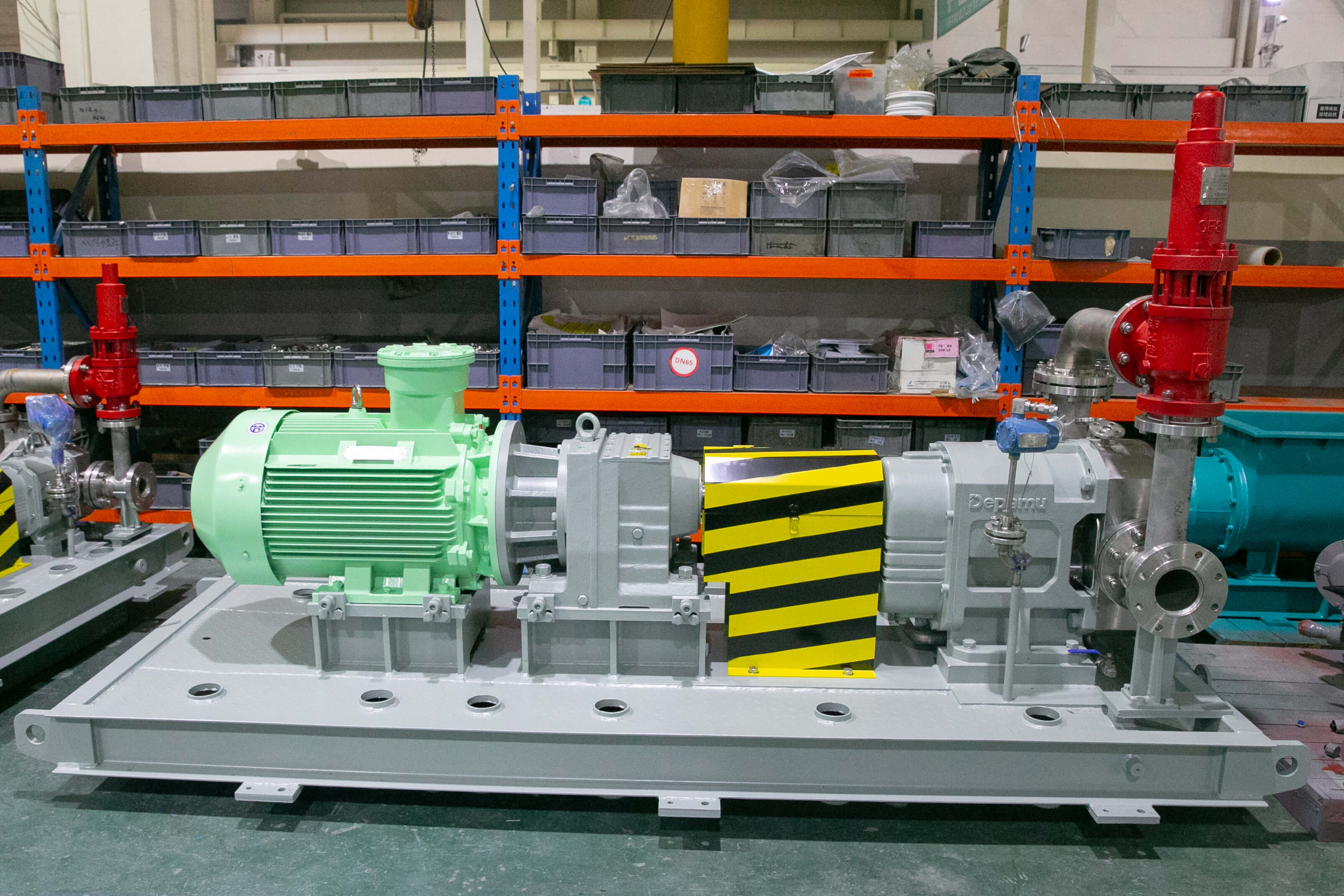
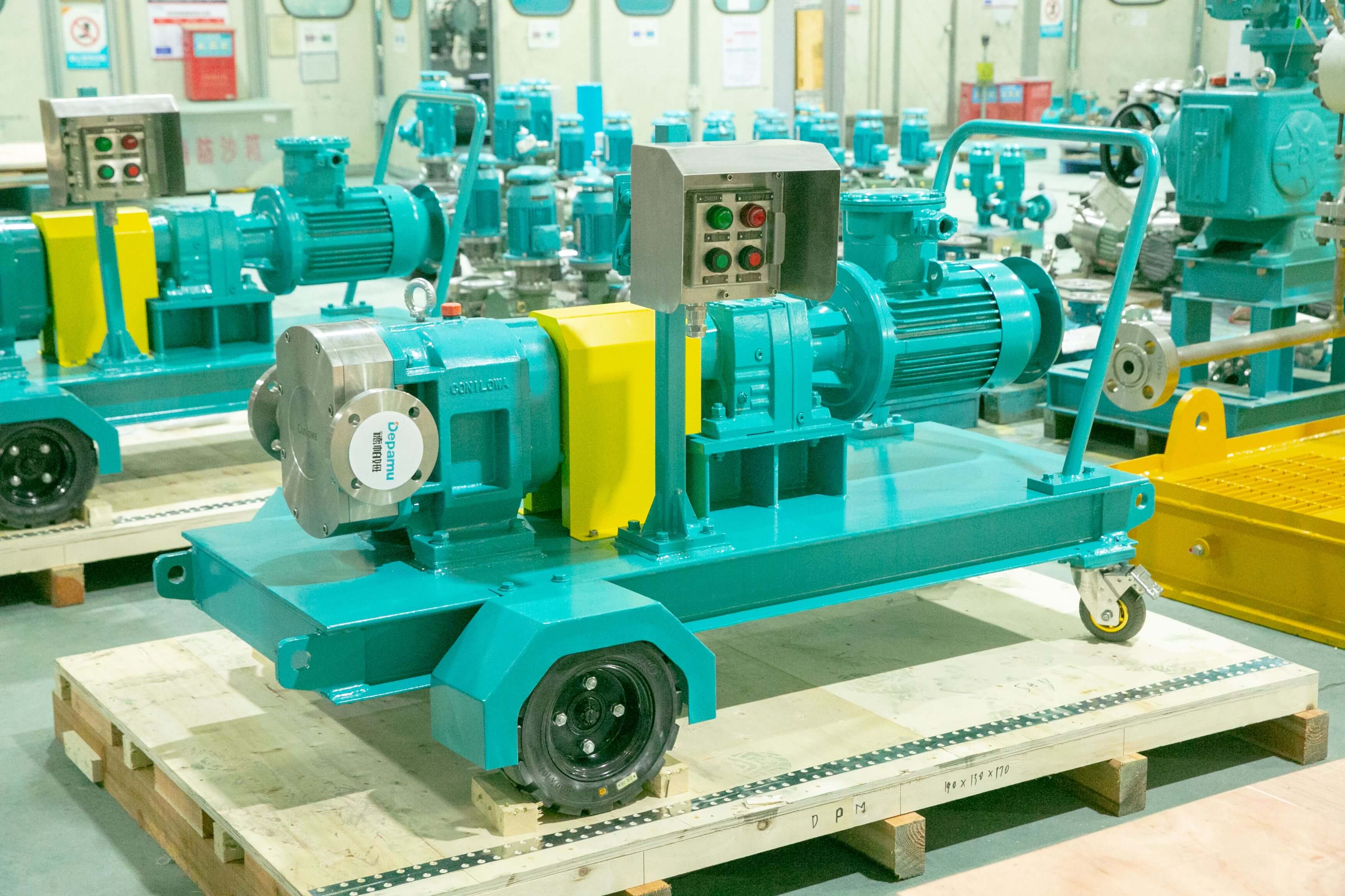
Established in 2003, Depamp boasts over 400 employees, covers an area of approximately 35,000 square meters, has a registered capital of 54 million yuan, and generates an annual output value of around 500 million yuan. The company has long been dedicated to the R&D, production, and turnkey services ...
No. 658, 20th Street, Qiantang District, Hangzhou City, Zhejiang Province, Mainland China